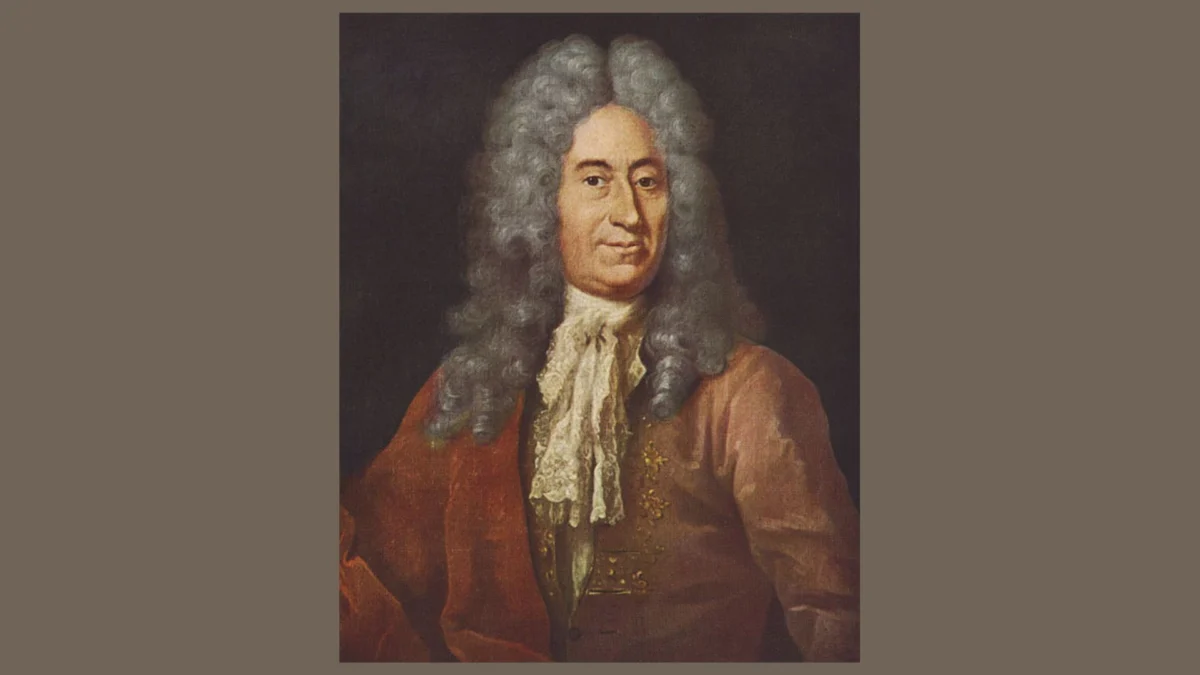
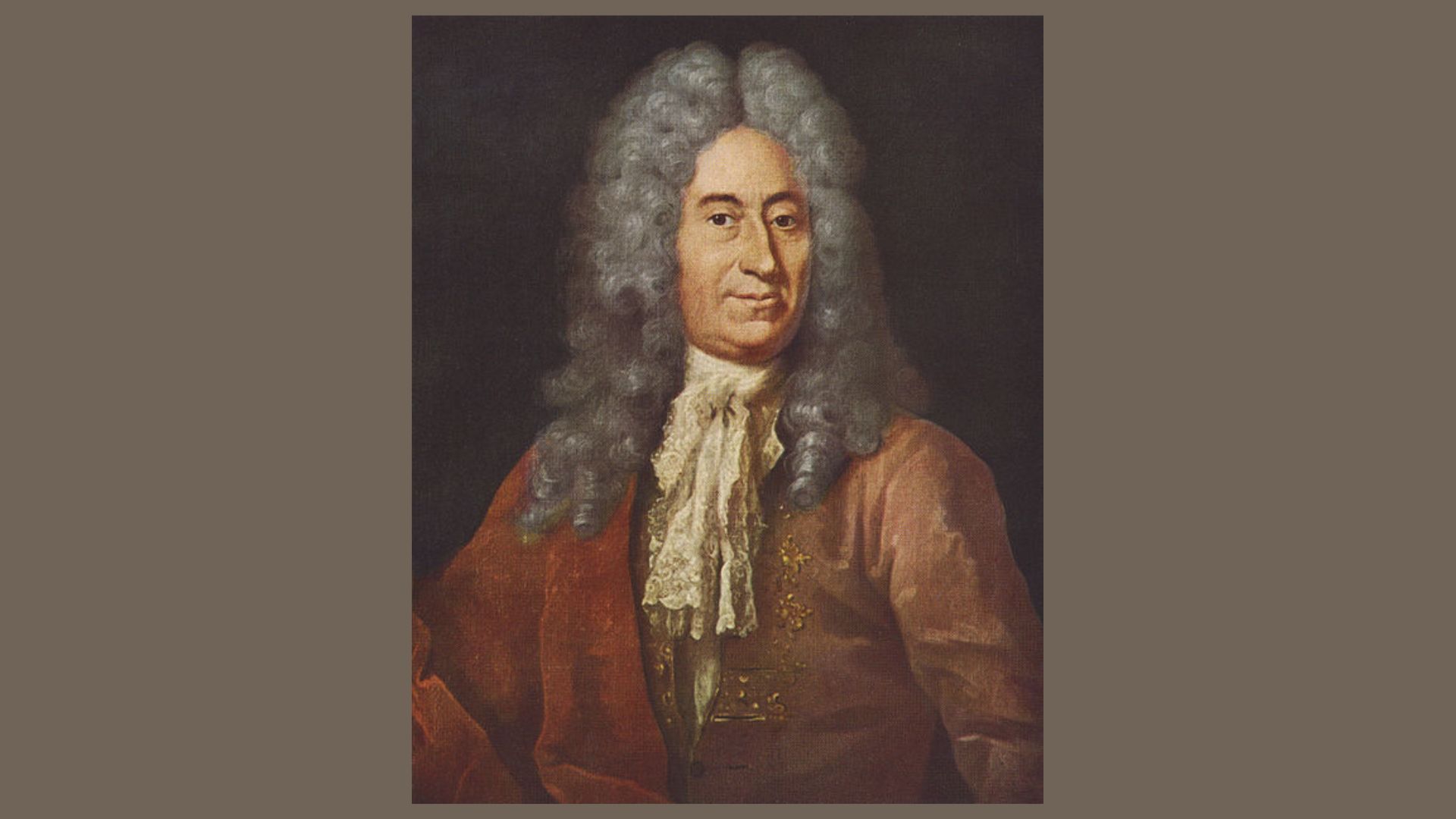
On November 21, 1676, Danish astronomer Ole Rømer formally presented a groundbreaking observation to the Royal Academy of Sciences in Paris, proposing for the first time that light travels at a finite, measurable speed rather than moving instantaneously across the cosmos. Before Rømer’s pivotal calculations, prevailing scientific consensus—largely rooted in Aristotelian philosophy—held that illumination was instantaneous, crossing any distance across the universe in zero time. Rømer’s empirical challenge to this dogma not only transformed seventeenth-century natural philosophy but also established the foundational cornerstone for modern astrophysics, special relativity, and our contemporary understanding of the scale of the universe.
The Accidental Discovery via Jupiter’s Moon Io
Rømer’s monumental discovery was not the result of a targeted quest to measure light itself; rather, it stemmed from an astronomical ambition to create a reliable universal clock. In the seventeenth century, accurate timekeeping at sea was a matter of life and death, particularly for maritime navigation and determining longitude. Astronomers sought to use the predictable orbits of Jupiter’s newly discovered Galilean moons as a cosmic timepiece.
Beginning in the 1670s, Rømer focused his studies on Io, the innermost of Jupiter’s four largest moons. Io orbits the gas giant rapidly, disappearing into Jupiter’s shadow and reappearing on the other side roughly every 42 hours. Rømer painstakingly tracked these eclipses over a period of several years, recording the exact moments Io vanished and emerged.
However, as he compiled his data, an inexplicable discrepancy emerged. The timing of the eclipses did not match mathematical consistency. Instead, the intervals between eclipses varied depending on the relative positions of Earth and Jupiter in their respective orbits around the sun.
When Earth was at its closest point to Jupiter (opposition), the eclipses of Io occurred approximately 11 minutes ahead of the predicted schedule. Conversely, when Earth and Jupiter were on opposite sides of the solar system, with the sun lying between them, the eclipses were delayed by roughly 11 minutes. Rømer realized that the variance depended entirely on the changing distance between Earth and Jupiter. The light carrying the visual information of Io’s emergence from the shadow had to travel a greater distance across space when Earth was farther away, taking more time to reach the observer’s telescope.
The Chronology of a Scientific Breakthrough
The path from observation to validation unfolded over several critical weeks in the autumn of 1676:
- Early 1670s: Ole Rømer joins the Paris Observatory, working under the direction of Giovanni Domenico Cassini, observing Jupiter’s satellite system to refine navigational charts and geographical mapping.
- Mid-1676: After analyzing years of timing data regarding the eclipses of Io, Rømer notices systematic temporal shifts that correlate directly with Earth’s orbital distance from Jupiter.
- November 9, 1676: Utilizing his newly formulated hypothesis that light requires time to travel, Rømer successfully predicts a future eclipse of Io, anticipating a delay based on Earth’s changing orbital position.
- November 21, 1676: Rømer formally presents his findings to the Royal Academy of Sciences in Paris, explaining that discrepancies in Jovian eclipses prove that light possesses a finite speed.
Though Rømer did not formally calculate the exact numerical value of the speed of light in kilometers per second himself—a task later computed by Christiaan Huygens using Rømer’s data, arriving at a figure roughly equivalent to 220,000 kilometers per second (considerably lower than the modern accepted value of approximately 299,792 kilometers per second, largely due to seventeenth-century underestimations of Earth’s orbital radius)—his qualitative deduction was revolutionary.
Contemporary Reception and Academic Debate
In the intellectual climate of the late seventeenth century, Rømer’s hypothesis faced considerable skepticism. Established scientists and natural philosophers found it difficult to conceptualize that a beam of light could take measurable time to traverse the emptiness of space.
Gian Domenico Cassini, Rømer’s mentor and director at the Paris Observatory, initially rejected the finite speed interpretation, proposing alternative, complex geometric explanations for the discrepancies in Io’s orbit. However, other prominent scientific minds of the era recognized the profound validity of Rømer’s deduction. Christiaan Huygens, the distinguished Dutch physicist and mathematician, immediately embraced the discovery, using Rømer’s figures to calculate the first numerical estimate of light’s velocity. Later, Sir Isaac Newton acknowledged Rømer’s work, noting in his seminal optical writings that light requires about seven or eight minutes to travel from the sun to Earth.
The Broader Impact and Implications for Modern Physics

The realization that light travels at a finite velocity fundamentally altered humanity’s relationship with the cosmos. By establishing that light is not instantaneous, natural philosophers realized that every time humans gaze up at the night sky, they are looking backward in time. The light emitted by distant stars and galaxies requires years, centuries, or billions of years to reach Earthly instruments, effectively transforming telescopes into time machines.
Centuries later, Rømer’s foundational insight served as the bedrock for Albert Einstein’s theory of special relativity in 1905. Einstein recognized the speed of light in a vacuum ($c$) as an absolute, universal constant—an ultimate speed limit for the cosmos. According to modern physics, objects possessing mass, ranging from macroscopic vehicles to subatomic neutrinos, cannot accelerate to the speed of light because doing so would require an infinite amount of energy.
Furthermore, the precise measurement of the speed of light underpins modern metrology. In 1983, the General Conference on Weights and Measures redefined the meter using the exact speed of light in a vacuum, tethering humanity’s standard unit of length to a fundamental physical constant of the universe.
Legacy of a Paris Observatory Astronomer
Ole Rømer’s discovery on November 21, 1676, stands as one of the most significant intellectual leaps in the history of science. By turning his telescope toward a distant moon of Jupiter and paying meticulous attention to temporal anomalies, a Danish astronomer solved a cosmic mystery that had eluded humanity since antiquity, bridging the gap between celestial mechanics and the physics of the electromagnetic spectrum.