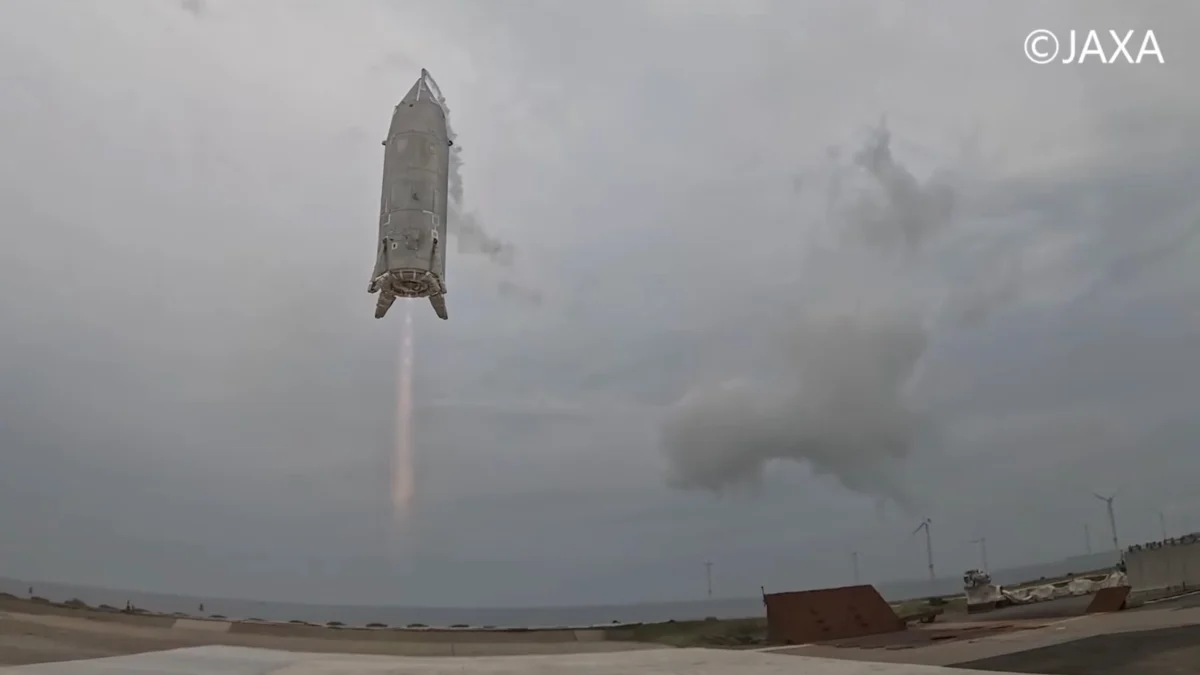
Japan has achieved a significant milestone in its pursuit of advanced spaceflight capabilities with the successful first-ever flight test of its RV-X experimental reusable rocket prototype. This pivotal event, conducted by the Japan Aerospace Exploration Agency (JAXA) in collaboration with Mitsubishi Heavy Industries, marks a crucial step towards developing cost-effective and sustainable access to space. The test, characterized by a brief but precisely controlled "hop," signifies Japan’s growing ambition to join the elite ranks of nations mastering reusable rocket technology, a domain currently dominated by a select few global players.
The Dawn of Reusable Rocketry in Japan: The RV-X Debut
The historic launch of the RV-X prototype took place on July 11 at JAXA’s Noshiro test facility, located in the Akita Prefecture. This initial flight, though modest in duration and scale, was meticulously executed and lasted approximately 40 seconds. The compact, 24-foot-tall (7.3 meters) experimental vehicle, propelled by a single engine, ascended to a height of just over 33 feet (10 meters). It then executed a controlled horizontal maneuver, covering a distance of approximately 50 feet (15 meters) across the concrete launch pad before achieving a soft landing on the opposite side of its liftoff point.
This carefully orchestrated test flight was designed to validate fundamental aspects of vertical takeoff and landing (VTOL) technology, a cornerstone of reusable rocket systems. The successful execution of this "hop" demonstrates JAXA’s progress in developing the complex control systems, engine performance, and structural integrity required for such maneuvers. It is a testament to the years of research and development invested by JAXA and its industrial partners.
A Foundation for Future Innovations: The CALLISTO Initiative
The RV-X program is not an isolated endeavor but serves as a critical precursor to JAXA’s more ambitious single-stage reusable flight experiment project, known as CALLISTO. This international collaborative effort brings together JAXA, France’s Centre National d’Études Spatiales (CNES), and the German Aerospace Center (DLR). The primary objective of CALLISTO is to design, build, and operate a single-stage rocket capable of vertical launch, autonomous landing, refurbishment, and subsequent reuse.
The CALLISTO project aims to leverage the collective expertise of its international partners to accelerate the development of reusable launch vehicles. By creating a platform for shared knowledge and technological advancements, the initiative seeks to reduce the overall cost of space access, thereby opening up new possibilities for scientific missions, commercial ventures, and national security objectives. The RV-X’s successful flight test provides invaluable real-world data and operational experience that will directly inform the development and testing of the larger CALLISTO vehicle.
Japan’s Evolving Launch Capabilities: Beyond the H3
Japan’s current operational launch vehicle, the H3 rocket, introduced in 2023, represents a significant leap forward in terms of efficiency and cost-effectiveness compared to its predecessor, the H-2A. However, the H3 was not designed with reusability in mind. While it offers improved performance and a more streamlined cost structure, its single-use nature places it at a disadvantage in the rapidly evolving global landscape of reusable launch systems.
The H3 has experienced some challenges in its early operational life, with two of its eight launches not achieving full mission success. This, coupled with the escalating economic advantages offered by reusable rocket technology pioneered by companies like SpaceX, underscores JAXA’s strategic imperative to develop its own reusable launch capabilities. The RV-X and the subsequent CALLISTO project are central to this strategy, aiming to position Japan as a competitive player in the future of space transportation.
Learning from the Best: Parallels with SpaceX’s Starhopper
The RV-X’s initial test flight bears a striking resemblance to the early development stages of SpaceX’s reusable rocket program, particularly the Starhopper. SpaceX’s Starhopper, a prototype for their ambitious Starship program, also began with a series of short, low-altitude "hops." The initial untethered hop of the Starhopper in 2019 saw it ascend approximately 65 feet (20 meters) before a vertical landing at SpaceX’s Starbase facility in South Texas.
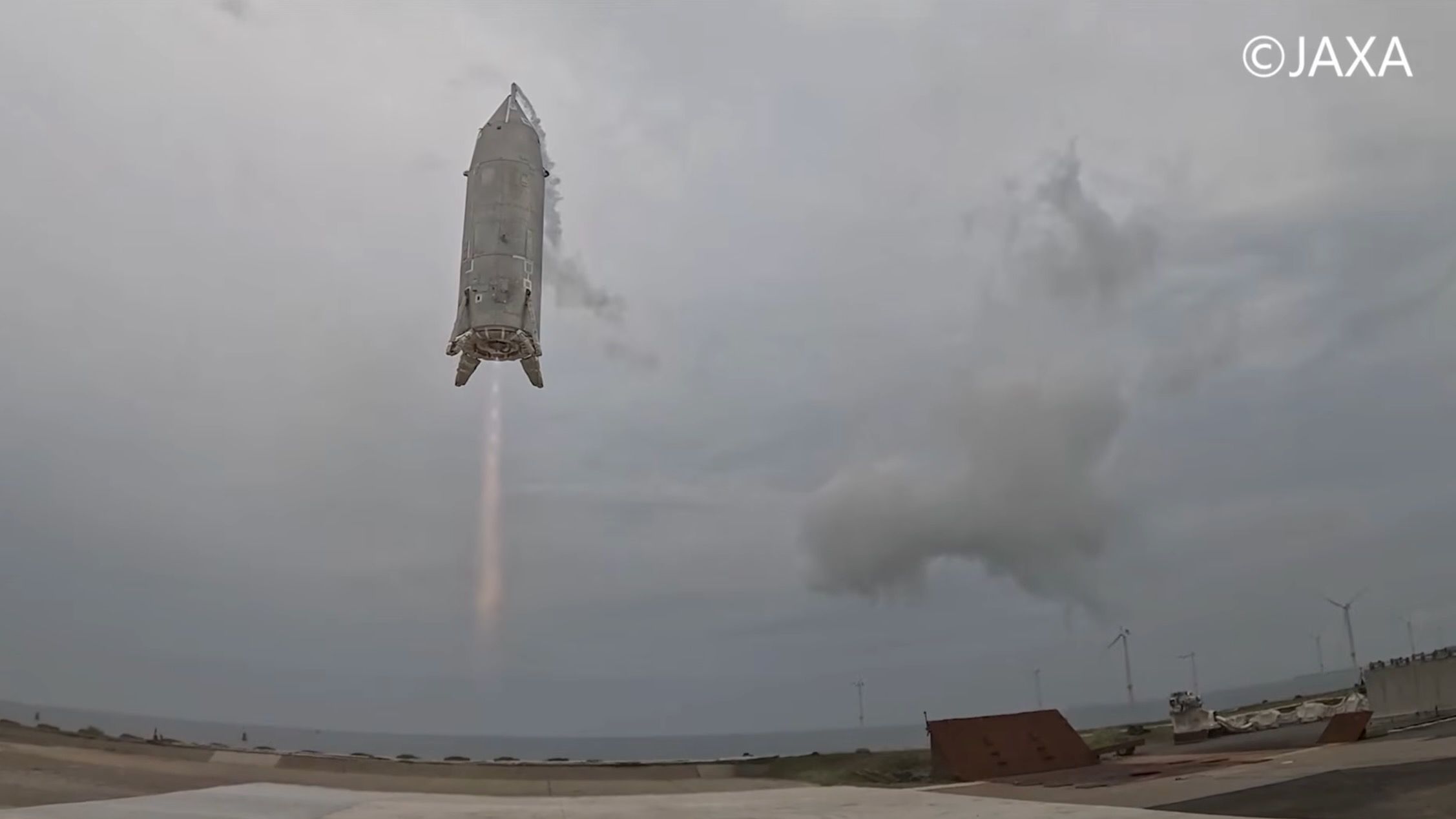
This early phase of Starhopper’s development, though visually rudimentary and at times compared to a water tower, was crucial in validating SpaceX’s landing technology and control algorithms. The success of these initial hops paved the way for progressively higher and longer flights, enabling SpaceX to refine the design and operational procedures for their Starship system. JAXA’s approach with RV-X mirrors this iterative development process, recognizing the importance of mastering fundamental flight dynamics and control before scaling up to more complex missions.
The Road Ahead: Ambitious Goals for RV-X
With the successful completion of its first 33-foot hop, the RV-X is poised for more ambitious flights. JAXA has outlined plans for the prototype’s next test launch, which is expected to reach significantly higher altitudes, targeting up to 330 feet (100 meters). This future test will also incorporate a lateral crossover maneuver, simulating more complex flight trajectories and demonstrating the vehicle’s ability to navigate and land at a different location.
These progressively challenging tests are essential for gathering crucial data on the vehicle’s performance under various flight conditions. This includes evaluating the effectiveness of the engine throttling capabilities, the precision of the guidance, navigation, and control (GNC) systems, and the structural resilience of the rocket during ascent, hover, and landing phases. The insights gained from these future flights will be instrumental in refining the design of both the RV-X and the CALLISTO vehicle, bringing Japan closer to its goal of operational reusable launch systems.
Operational Feasibility: The Key to Reusability
JAXA emphasizes the critical importance of "operational feasibility" in the development of reusable rockets. As stated on their official website, the agency recognizes that simply achieving flight and landing is not enough. A truly reusable rocket system must be practical to maintain, operate, and prepare for subsequent launches efficiently and cost-effectively.
The RV-X program is designed to address these operational challenges head-on. By conducting tests with an actual experimental vehicle, JAXA is systematically verifying maintenance procedures, operational workflows, vehicle movement on the ground, and the setup of launch pads. This hands-on approach allows them to establish robust operational protocols that will be essential for the repeated, reliable operation of future rockets. This focus on the entire lifecycle of a rocket, from launch to refurbishment and back to flight, is a hallmark of mature spaceflight programs.
The Broader Implications: A New Era for Japanese Space Exploration
The successful flight of the RV-X represents more than just a technological achievement for Japan; it signifies a strategic pivot towards a more sustainable and economically viable future for its space program. The ability to reuse rocket components dramatically reduces the per-launch cost, making space exploration and utilization more accessible.
This advancement has several key implications:
- Enhanced Scientific Research: Lower launch costs can enable more frequent and ambitious scientific missions, allowing for greater exploration of our solar system and beyond.
- Commercial Opportunities: A reusable launch capability can attract private sector investment and foster the growth of Japan’s burgeoning space industry, creating new opportunities for satellite deployment, space tourism, and in-space manufacturing.
- International Collaboration: The CALLISTO project exemplifies Japan’s commitment to international cooperation, strengthening its role as a key partner in global space endeavors.
- Technological Leadership: By mastering reusable rocket technology, Japan positions itself as a leader in the next generation of space transportation, fostering innovation and attracting talent.
- National Security: Reliable and cost-effective access to space is increasingly vital for national security, enabling enhanced surveillance, communication, and reconnaissance capabilities.
The RV-X’s journey from concept to its first successful hop is a testament to Japan’s dedication to pushing the boundaries of spaceflight. As the program progresses through more advanced flight tests, it promises to usher in a new era of innovation and accessibility for Japan’s presence in the cosmos, potentially reshaping the global space launch market. The lessons learned from this humble yet significant "hop" will undoubtedly echo through future missions, contributing to a more sustainable and dynamic future for space exploration.