The intricate evolutionary saga of Australia’s iconic marsupials has taken an unexpected turn with the discovery of a potentially ancient and previously unknown lineage. Researchers from UNSW (University of New South Wales) have identified three fossil species that may represent a new order of marsupials, a finding that significantly complicates our understanding of how these unique mammals diversified across the Australian continent. This discovery, detailed in a recent publication in the Journal of Paleontology, suggests that marsupial evolution was far more complex and enigmatic than previously theorized, pushing back the timeline of diversification and hinting at a richer, more diverse early evolutionary period.
Unveiling Keeunamorphia: A Glimpse into Marsupial Origins
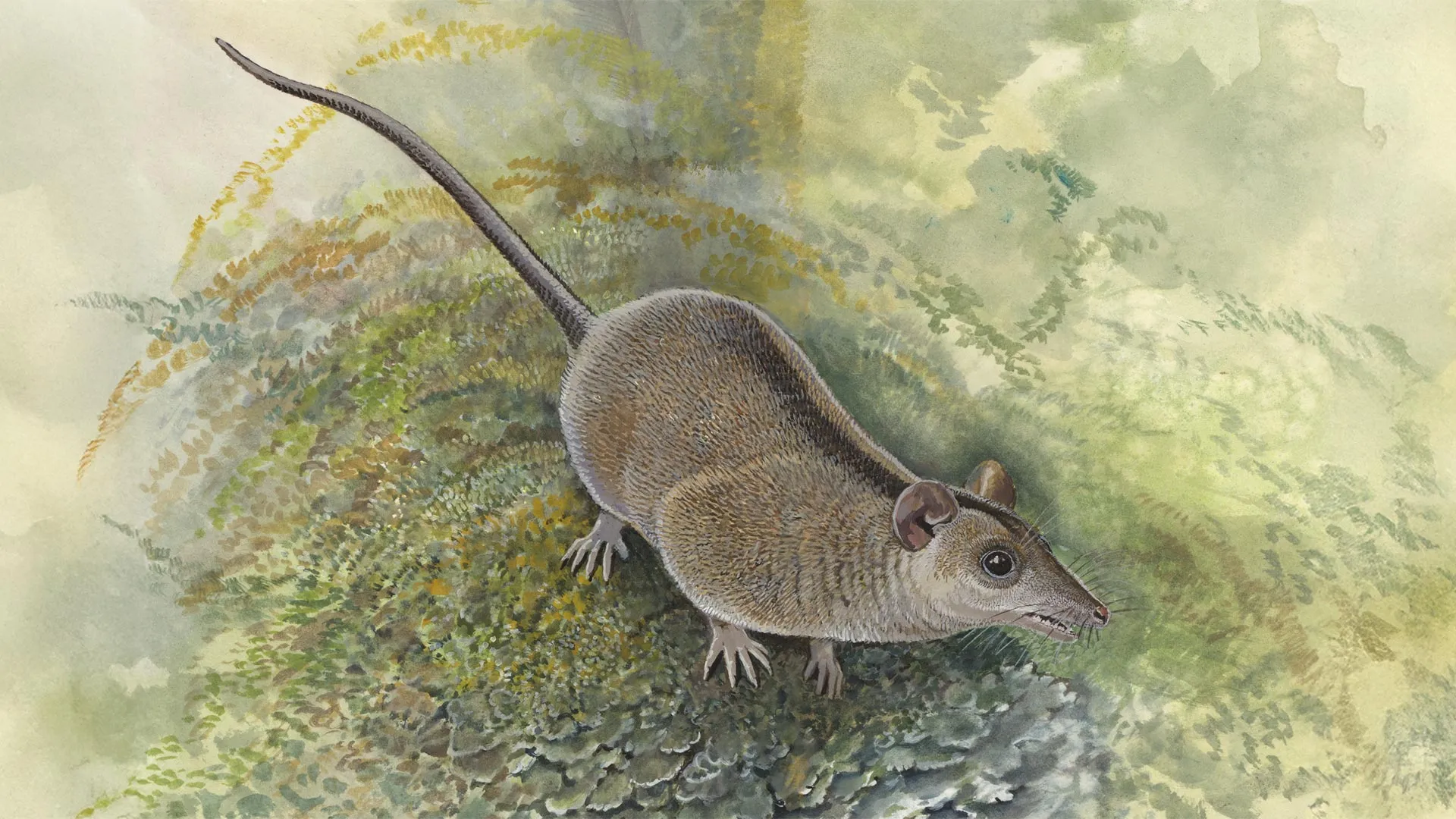
The newly proposed order has been tentatively named Keeunamorphia. Dr. Tim Churchill, a paleontologist at UNSW and lead author of the study, posits that this group could represent the most ancient lineage of all Australian marsupials and potentially the ancestral line of all marsupial carnivores. This hypothesis, if substantiated, would rewrite significant chapters of mammalian evolutionary history, particularly concerning the dispersal and diversification of marsupials on the ancient supercontinent Gondwana and its eventual fragmentation.
The established narrative suggests that marsupials first arrived in Australia over 55 million years ago, likely migrating from South America via Antarctica before the complete breakup of Gondwana. Since their arrival, they have undergone remarkable adaptive radiation, occupying an astonishing array of ecological niches. Today, Australia is home to approximately 160 species of marsupials, ranging from the diminutive thumb-sized possums of the High Country, which exhibit remarkable winter dormancy, to the highly specialized desert dwellers of the Red Centre, such as the eyeless, pink-furred marsupial moles.
Despite this evolutionary success, the precise mechanisms and timeline of marsupial diversification across Australia have remained largely obscure. Significant lacunae in the fossil record have rendered vast swathes of their early history almost invisible to scientific inquiry. The discovery of Keeunamorphia offers a rare and invaluable window into some of the earliest stages of marsupial evolution on the continent, providing tangible evidence for lineages that may have been lost to time and incomplete fossil preservation.
Reconstructing an Ancient Past: The Riversleigh Fossil Beds
The three newly identified species of Keeunamorphia are estimated to have lived around 18 million years ago. Their fossilized remains were discovered in the Riversleigh World Heritage Area in Queensland, Australia, a site renowned globally for its exceptional fossil deposits. During the Miocene epoch, when these animals roamed, the landscape of northern Queensland was vastly different from the arid, open country seen today. It was likely a region dominated by lush, dense rainforests, supporting a rich and diverse fauna, including the ancestors of many extant Australian animals.
The fossilization process at Riversleigh involved the animals’ remains settling into shallow cave pools, where mineral-rich waters gradually encased their bodies, preserving them for millennia. While complete skeletons are a rarity in paleontological finds, researchers were able to identify these new species through the analysis of smaller, yet highly informative, fossil fragments – primarily teeth and pieces of jawbone.
To place these enigmatic creatures within the broader marsupial family tree, the research team employed a sophisticated methodology that combined the analysis of fossil evidence with genetic data from extant marsupial species. This integrative approach allowed them to construct a detailed phylogenetic tree, a visual representation that maps the evolutionary relationships between different species and estimates the divergence times of various branches. This method is crucial for understanding how lineages split and diversified over geological time.
The Cryptic Clues in Ancient Teeth
The phylogenetic analysis revealed that these three Keeunamorphia species coexisted with several other well-studied marsupials. However, their dental morphology presented a significant anomaly. The structure of their teeth did not align with those of their contemporaneous neighbors, suggesting a distinct evolutionary trajectory. Instead, their teeth bore a striking resemblance to those of Djarthia murgonensis, an extinct marsupial that lived approximately 35 million years earlier. Djarthia murgonensis is often considered a proto-marsupial, a potential ancestral form from which many later Australian marsupial groups evolved.
This crucial dental similarity points towards a previously unrecognized marsupial lineage that may have diverged very early in the evolutionary history of Australian marsupials. It is hypothesized that this lineage persisted for millions of years, surviving and evolving independently while other marsupial groups diversified around it. Dr. Churchill elaborates, "Whatever these things were, they seemed to be primitive compared to other marsupials at the time, and they seem to have been doing their own thing and surviving well enough alongside them."
The prevailing scientific model for marsupial evolution in Australia often depicts a single ancestral group arriving on the continent, which then subsequently radiated into the diverse array of species observed today. However, the fossil evidence, particularly the discovery of Keeunamorphia, suggests a more complex and potentially messier evolutionary origin.
A More Complicated Origin Story for Australia’s Mammals
The implications of Keeunamorphia belonging to an ancient and distinct order are profound. If this lineage emerged shortly after the initial marsupial arrival in Australia around 55 million years ago, it challenges the simplified notion of a single ancestral group giving rise to all subsequent marsupial diversity. Instead, it opens the possibility that Australia was already home to multiple, distinct marsupial lineages that coexisted and evolved in parallel.
This scenario suggests that the breakup of Gondwana and the isolation of Australia may have left behind not just one, but several early marsupial forms, each destined for its own evolutionary path. The question then arises: how did such a seemingly primitive group, potentially diverging so early, manage to survive for such extended periods with relatively little apparent change? This suggests a remarkable evolutionary resilience and adaptation to its specific ecological niche.
"Evolutionary history is a lot more complex than just one group leading to all of Australia’s marsupials after being left behind when the continent broke off from Antarctica," Dr. Churchill explains. "It’s more likely that when Australia was part of Gondwana it was swarming with all sorts of bizarre, primitive marsupial-like things, and that several of them survived and led to our modern lineages." This revised perspective paints a picture of early Australia as a crucible of marsupial experimentation, with multiple lineages vying for survival and diversification.
The Enduring Mystery of the Fossil Record
The fossil record of Australian marsupials presents a substantial gap, with a nearly 20-million-year period where evidence is scarce. This hiatus provides ample room for numerous undiscovered lineages that may have played crucial roles in marsupial evolution. The discovery of Keeunamorphia highlights the potential for further surprises hidden within Australia’s ancient geological deposits.
It is plausible that some of these ancient animals shared common ancestors, while others may have originated from entirely separate lineages that were already present in Australia as the continents drifted apart. The exact routes and timing of early marsupial dispersal and evolution may never be fully elucidated. However, each new fossil tooth unearthed from Australia’s rich paleontological sites provides another piece of the puzzle, gradually revealing a more intricate, complex, and ultimately, far richer narrative of marsupial evolutionary history.
Broader Implications for Paleontology and Biodiversity
The identification of Keeunamorphia has significant implications beyond marsupial evolution. It underscores the importance of meticulous paleontological research, particularly in regions with extensive fossil records like Riversleigh. The study also highlights the power of integrating fossil data with molecular phylogenetics, a multidisciplinary approach that is increasingly becoming the gold standard for reconstructing evolutionary histories.
This discovery could also influence conservation efforts by providing a deeper understanding of the deep evolutionary roots of Australia’s unique fauna. Recognizing the ancient divergences within marsupial lineages can help inform strategies for preserving genetic diversity and understanding the long-term evolutionary trajectories of these animals.
Furthermore, the finding serves as a potent reminder of how much remains unknown about Earth’s biological past. The "invisible" stretches of the fossil record, once thought to be barren, may yet yield extraordinary insights, reshaping our understanding of life’s grand tapestry and the remarkable resilience and adaptability of its myriad forms. The ongoing exploration of Australia’s ancient landscapes promises to continue unveiling secrets, further enriching our appreciation for the evolutionary journey of its most iconic inhabitants.