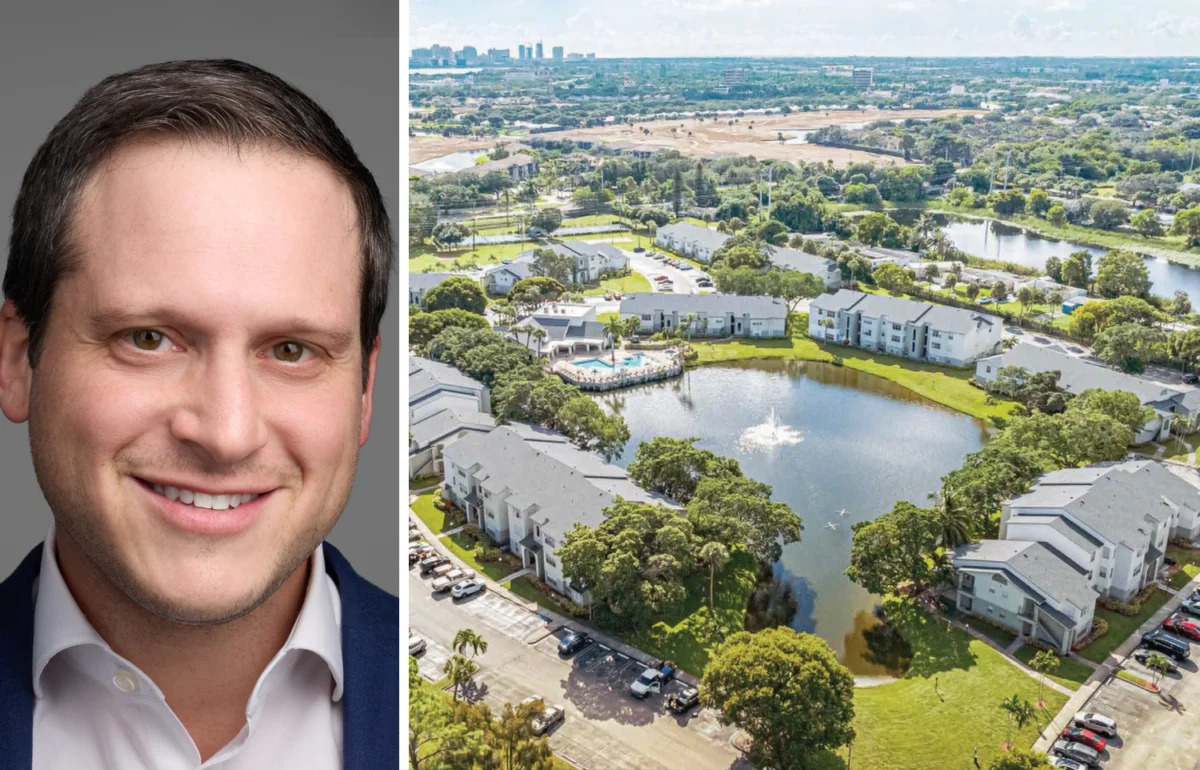
The South Florida real estate market continues to demonstrate its resilience and attractiveness to institutional investors, as evidenced by the recent $90 million acquisition of Ponte Verde at Palm Beach Lakes. A joint venture between the New Jersey-based Kamson Corporation and Joel Gluck’s Scopus Property Management has successfully closed on the 400-unit residential complex, marking a significant transition for a property with a storied and complex history. The transaction, which involves a high-leverage financing package and the culmination of a massive condominium de-conversion process, underscores the shifting dynamics of the West Palm Beach housing market and the broader trend of converting aging condominium stock back into unified rental communities.
Located at 1401 Village Boulevard, the Ponte Verde community encompasses 28 sprawling acres within a prime corridor of West Palm Beach. The acquisition reflects a strategic bet on the continued demand for garden-style multifamily housing in a region that has seen unprecedented population growth and corporate migration over the last several years. The deal was facilitated by an $81 million acquisition loan provided by Prospect Ridge and Blue Owl, a financing arrangement that highlights the confidence lenders have in the "value-add" potential of the asset and the track record of the purchasing entities.
A Chronological Transformation: From Rentals to Condos and Back
The history of Ponte Verde at Palm Beach Lakes is a microcosm of the broader South Florida real estate cycle. Built in 1990, the property was originally designed and operated as a traditional multifamily rental community. During the mid-2000s, a period characterized by a frenetic boom in the Florida housing market, the complex underwent a condominium conversion. This was a common practice at the time, as developers sought to capitalize on the high demand for individual homeownership by selling off units to retail buyers and investors.
However, the "seesaw history" of the property took another turn in the early 2020s. As the costs of maintaining older condominium structures in Florida began to skyrocket—driven in part by rising insurance premiums and stricter structural integrity regulations following the Surfside building collapse—individual owners at Ponte Verde faced mounting financial pressures. Last year, the owners of the 400 individual units collectively decided to terminate the condominium association. This "de-conversion" process effectively paved the way for the property to be sold as a single, unified asset. The restoration of the complex to rental housing was officially completed in August 2025, setting the stage for the $90 million sale to the Kamson-Scopus joint venture.
Detailed Property Specifications and Amenities
Ponte Verde at Palm Beach Lakes is a substantial asset by any metric. The community consists of 23 residential buildings, each standing two or three stories tall in a classic garden-style layout. In total, the property offers approximately 360,488 net rentable square feet. The unit mix is designed to appeal to a broad demographic, featuring a variety of one- and two-bedroom floor plans that cater to young professionals, small families, and retirees alike.
The amenity package at Ponte Verde is extensive, consistent with the lifestyle-oriented demands of the Florida rental market. Residents have access to:
- A centralized resident clubhouse serving as a hub for community activities.
- Two resort-style swimming pools and a dedicated spa area.
- A fully equipped fitness center.
- Multiple sports facilities, including tennis courts, racquetball courts, and a sand volleyball court.
- Outdoor lifestyle features such as a barbecue and picnic area.
The 28-acre site provides a low-density feel that is increasingly rare in the rapidly urbanizing landscape of West Palm Beach. This sense of space, combined with the comprehensive amenity suite, positions the property as a competitive option in the local submarket.
Financing and Strategic Underwriting
Securing the necessary capital for a $90 million acquisition in a fluctuating interest rate environment requires sophisticated brokerage and a compelling business case. Meridian Capital Group took the lead in negotiating the debt for the joint venture. The team, headed by David Bollag and James Darling, successfully arranged the $81 million loan from Prospect Ridge and Blue Owl.
The loan amount represents a high loan-to-value (LTV) ratio, which suggests that the lenders are banking on the operational expertise of the Kamson Corporation and Scopus Property Management. David Bollag noted that the financing solution was predicated on the future potential of the asset rather than its historical performance as a fragmented condominium association.
"Ponte Verde is a well-located community with strong bones and a clear path forward," Bollag said in a statement. "Rather than underwriting to where the property had been, [Prospect Ridge and Blue Owl’s] teams focused on the strength and experience of the buyer and the credibility of the business plan, which allowed us to deliver a financing solution on the timeline the transaction required."
The "credibility of the business plan" likely involves a comprehensive renovation and management overhaul. By operating the 400 units under a single professional management umbrella, the new owners can achieve economies of scale that were impossible under the previous condominium structure.
The Players: Kamson Corporation and Scopus Property Management
The buyers bring significant experience to the table. The Kamson Corporation, headquartered in New Jersey, is a titan in the multifamily sector, managing a portfolio of over 14,000 apartments across the Northeast and beyond. Their entry into this deal signals a continued interest from Northern institutional players in the Florida sunbelt.
Scopus Property Management, led by Joel Gluck, is equally seasoned. Known for its proficiency in managing complex residential assets, Scopus provides the operational "boots on the ground" necessary to execute a successful transition from a terminated condo association to a premier rental community. Together, the joint venture possesses the capital and the administrative infrastructure to revitalize the property and maximize its yield.
The Broader Context: West Palm Beach’s "Wall Street South"
The acquisition of Ponte Verde occurs against the backdrop of West Palm Beach’s transformation into a major financial and corporate hub. Often referred to as "Wall Street South," the city has seen an influx of high-profile firms, including Goldman Sachs, Elliott Management, and Point72 Asset Management. This corporate migration has brought with it a wave of high-earning professionals who require quality housing.
While much of the development focus has been on luxury high-rises in the downtown core, garden-style communities like Ponte Verde provide a critical middle-market housing option. The property’s location on Village Boulevard offers easy access to I-95, the Palm Beach Outlets, and the central business district, making it a highly desirable location for commuters.
Furthermore, the Florida rental market is navigating a period of stabilization. After the astronomical rent hikes of 2021 and 2022, the market has seen a cooling of price growth, yet occupancy remains robust. Investors are now looking for "core-plus" or "value-add" opportunities where they can improve existing assets rather than taking on the risks and timelines associated with new ground-up construction.
Implications of the Condo De-conversion Trend
The Ponte Verde deal is a prime example of the accelerating trend of condominium de-conversions in Florida. This phenomenon is driven by several factors:
- Legislative Changes: Following the Champlain Towers South collapse in Surfside, the Florida legislature passed SB-4D and SB-154. These laws mandate stricter inspections (Milestone Inspections) and require condo associations to fully fund reserve accounts for structural repairs. For many older buildings, the cost of compliance is prohibitively high for individual unit owners.
- Insurance Costs: Florida has faced a crisis in the property insurance market, with premiums for older multifamily buildings rising by 30% to 100% in some cases.
- Institutional Interest: Real estate investment trusts (REITs) and private equity firms see more value in owning an entire building as a rental asset than in owning a minority of units within a condo.
When an investor or a group of owners decides to terminate a condominium, they must navigate complex legal requirements, often requiring a vote of 80% to 100% of the ownership. The successful termination at Ponte Verde and its subsequent sale for $90 million demonstrates that there is a clear financial exit strategy for owners of aging Florida condos who can no longer keep up with the rising costs of ownership.
Future Outlook for Ponte Verde
Under the new ownership of Kamson and Scopus, Ponte Verde at Palm Beach Lakes is expected to undergo a period of modernization. The $81 million loan likely includes a facility for capital expenditures, which could be used to upgrade unit interiors—such as installing stainless steel appliances, quartz countertops, and modern flooring—as well as enhancing the communal amenities.
The successful closing of this transaction serves as a bellwether for the West Palm Beach investment market. It proves that despite higher interest rates compared to years past, capital is still available for well-positioned assets with clear management strategies. As the city continues to grow, properties like Ponte Verde will play a vital role in providing the scale and variety of housing necessary to support a burgeoning economy.
As of the time of publication, representatives for Prospect Ridge, Blue Owl, the Kamson Corporation, and Scopus Property Management have not provided additional comments on their specific long-term plans for the site. However, the scale of the investment suggests a long-term commitment to the West Palm Beach submarket and a belief in the enduring value of Florida multifamily real estate.