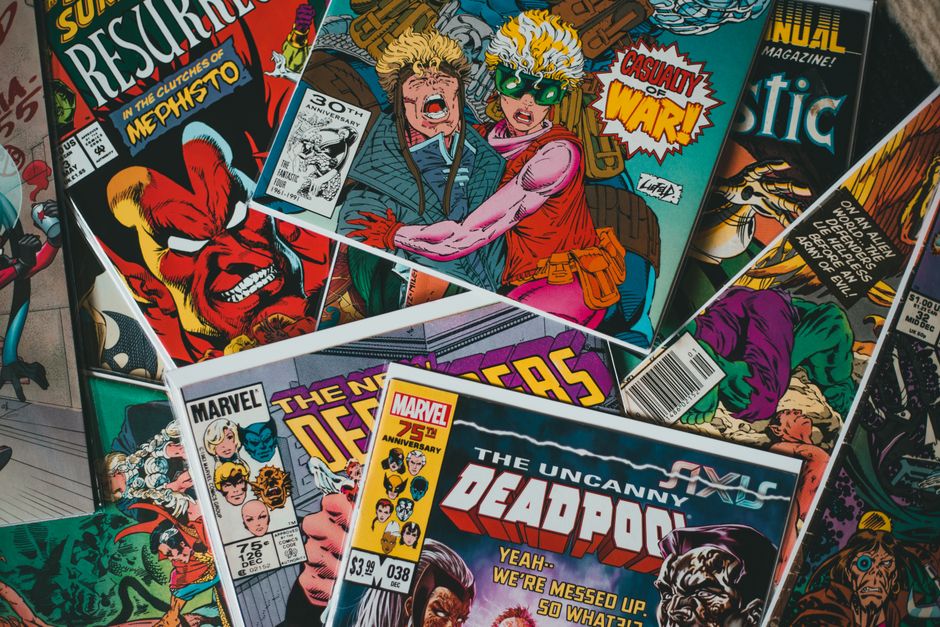
Marvel Comics: A Comprehensive Exploration of Characters, Universes, and Enduring Legacy
Marvel Comics, a titan of the comic book industry, has captivated audiences for decades with its sprawling universe, iconic characters, and groundbreaking storytelling. Founded in 1939 by Martin Goodman as Timely Comics, the company underwent a transformation and rebranding in the early 1960s, ushering in what is now widely considered its "Silver Age" of creativity. This era, spearheaded by visionary writers and artists like Stan Lee, Jack Kirby, and Steve Ditko, birthed many of the characters and storylines that continue to define Marvel today. From the Fantastic Four’s pioneering exploration of the cosmic to the troubled brilliance of Spider-Man, Marvel’s success is built upon a foundation of relatable heroes facing extraordinary challenges, often grappling with personal flaws and real-world issues. The company’s enduring appeal lies not just in its high-octane action and fantastical settings, but in its deep-seated humanity, making its characters resonate across generations. This exploration delves into the core elements that make Marvel Comics a cornerstone of popular culture, examining its most significant characters, its intricate multiversal tapestry, and the profound impact it has had on media and society.
The Pantheon of Marvel’s Heroes: A Closer Look at Iconic Figures
At the heart of Marvel’s immense success are its unforgettable characters. Iron Man, the billionaire industrialist Tony Stark, embodies technological prowess and the struggle for redemption. His journey from a hawkish arms dealer to a selfless protector, fueled by his advanced suit of armor, has resonated with audiences, particularly in the wake of his cinematic ascendancy. Captain America, Steve Rogers, represents the ideal of unyielding morality and unwavering courage, a symbol of hope and justice. His Super-Soldier Serum transformation and his frozen slumber in ice have made him a timeless icon of patriotism and perseverance. Thor, the Norse God of Thunder, brings myth and legend into the Marvel universe, his Asgardian heritage and powerful hammer Mjolnir offering a unique blend of divine power and relatable emotional turmoil. The Hulk, Dr. Bruce Banner, embodies the duality of human nature and the destructive potential of unchecked rage. His transformation into a gamma-powered behemoth highlights themes of scientific hubris and the struggle for control. Spider-Man, Peter Parker, arguably Marvel’s most beloved character, personifies the "everyman" hero. His relatable struggles with adolescence, relationships, and financial woes, coupled with his extraordinary spider-like abilities, have made him a beacon for countless readers. The X-Men, a team of mutant superheroes fighting for acceptance in a world that fears them, explore themes of prejudice, civil rights, and the search for belonging. Characters like Professor X, Magneto, Wolverine, Storm, and Jean Grey have become integral to Marvel’s narrative fabric, their complex moralities and internal conflicts driving compelling storylines. The Fantastic Four, often dubbed Marvel’s "First Family," pioneered cosmic adventurism and scientific discovery. Reed Richards, Sue Storm, Johnny Storm, and Ben Grimm have faced cosmic entities, explored alternate dimensions, and pushed the boundaries of human understanding. Other key figures like the Black Widow, Hawkeye, Doctor Strange, and the Guardians of the Galaxy have further enriched the Marvel tapestry, each bringing unique powers, personalities, and perspectives to the ever-expanding universe.
The Marvel Multiverse: A Tapestry of Infinite Possibilities
Marvel Comics is renowned for its expansive and intricate Multiverse, a concept that allows for infinite parallel realities, each with its own variations of beloved characters and historical events. This concept, while explored in various forms throughout comic history, was significantly expanded and solidified with events like "Secret Wars" and the subsequent exploration of the "Omniverse." The Prime Earth, the primary continuity we are most familiar with, is just one of countless realities. This Multiverse allows for creative freedom, enabling creators to revisit familiar characters in new contexts, explore "what if" scenarios, and introduce entirely new takes on established heroes and villains. For instance, the Ultimate Marvel universe provided a modern reimagining of core Marvel characters for a new generation, introducing fresh origins and narrative arcs. Elseworlds-esque tales, though not a formal Marvel designation, have seen characters like Spider-Man or the Avengers placed in radically different historical periods or social settings, demonstrating the adaptability of their core concepts. The introduction of the Nexus of All Realities and the exploration of different Earth designations (Earth-616 being the primary, with Earth-1610 for Ultimate Marvel, and countless others) allows for complex interdimensional travel, cosmic crossovers, and grand-scale multiversal threats. Villains like Kang the Conqueror, a master of time and a threat across numerous timelines, and the multiversal incursions orchestrated by the powerful Beyonders, have underscored the immense stakes and the interconnectedness of these diverse realities. The concept of the Multiverse is not merely a plot device; it’s a fundamental aspect of Marvel’s storytelling, fostering a sense of boundless possibility and allowing for a continuous reimagining of its iconic characters and narratives. This intricate web of realities fuels fan speculation, encourages exploration of lesser-known characters and storylines, and ensures that the Marvel universe remains a dynamic and ever-evolving entity.
Villains and Antagonists: The Dark Counterparts to Marvel’s Heroes
A compelling universe requires formidable adversaries, and Marvel Comics excels in crafting memorable villains who challenge their heroes both physically and ideologically. Doctor Doom, Victor Von Doom, the tyrannical ruler of Latveria, is a prime example of a complex antagonist. Driven by a thirst for power and a twisted sense of superiority, Doom is a brilliant scientist and sorcerer who constantly clashes with the Fantastic Four. Loki, the God of Mischief and Thor’s adopted brother, embodies cunning, deceit, and a constant yearning for recognition. His serpentine machinations and shapeshifting abilities make him a consistently engaging foe. Thanos, the Mad Titan, is perhaps one of Marvel’s most significant cosmic threats. His pursuit of universal balance through mass extinction, fueled by his desire to impress Death, has led to some of the most epic and devastating storylines. The Green Goblin, Norman Osborn, is Spider-Man’s archenemy, a descent into madness fueled by an experimental serum, transforming him into a maniacal figure who embodies the corruption of ambition. Magneto, while often portrayed as a villain due to his extremist views on mutant supremacy, is a deeply complex character. His tragic past and unwavering conviction in the need to protect mutantkind from human oppression create a compelling ideological conflict with Professor X and the X-Men. Other notable villains like Ultron, a sentient AI driven to eradicate humanity, Galactus, the Devourer of Worlds, and the Kingpin, Wilson Fisk, a criminal mastermind, represent diverse threats, from existential cosmic dangers to grounded, street-level corruption. The effectiveness of Marvel’s villains lies in their well-defined motivations, their ability to exploit their heroic counterparts’ weaknesses, and their capacity to drive compelling narratives that test the very core of what it means to be a hero.
The Art of Storytelling: From Silver Age Innovations to Modern Narratives
Marvel Comics’ narrative prowess is a critical component of its enduring appeal. The Silver Age, marked by Stan Lee’s dynamic writing and Jack Kirby’s revolutionary "Kirby Krackle" cosmic style, introduced a new level of realism and relatability to superhero comics. Characters were given personal struggles, emotional depth, and a sense of humanity that resonated with readers. This era saw the birth of the Marvel Method of storytelling, where plots were often developed collaboratively between writer and artist, allowing for a more organic and visually driven narrative. The subsequent eras have built upon this foundation, with writers and artists continually pushing the boundaries of the medium. The "Bronze Age" saw darker and more socially relevant themes emerge, while the "Modern Age" has embraced intricate continuity, character-driven arcs, and a sophisticated approach to interweaving storylines. Events like "The Infinity Gauntlet," "Civil War," and "House of M" have become landmark moments in comic history, not only for their epic scope but for their ability to explore complex moral dilemmas and fundamentally alter the status quo of the Marvel Universe. The development of serialized storytelling, with ongoing sagas and interconnected character arcs, has fostered deep reader engagement and a sense of investment in the unfolding narratives. The rise of creator-owned initiatives within Marvel, while less prominent than in other publishers, has also allowed for distinct artistic visions to flourish. The ongoing evolution of Marvel’s storytelling, from its foundational Silver Age innovations to its current embrace of sophisticated continuity and thematic depth, ensures its continued relevance and its ability to captivate new generations of readers.
The Impact of Marvel Comics: A Cultural Phenomenon
Marvel Comics’ influence extends far beyond the pages of its comic books, permeating various facets of popular culture. The Marvel Cinematic Universe (MCU), launched with "Iron Man" in 2008, has become the most successful film franchise in history, reintroducing iconic characters to a global audience and demonstrating the power of meticulous long-term storytelling and interconnected narratives. The success of the MCU has, in turn, revitalized interest in the source material, leading to increased comic book sales and a renewed appreciation for the characters and their origins. Beyond film, Marvel characters have found success in television series, video games, animation, merchandise, and theme park attractions, solidifying their status as true cultural icons. The company’s characters and storylines have also served as inspiration for artists, writers, and musicians across various disciplines. The themes explored within Marvel Comics – heroism, sacrifice, prejudice, the struggle for identity, and the nature of good versus evil – resonate universally, making them enduringly relevant. Marvel’s ability to create characters that feel human, despite their extraordinary circumstances, has fostered a deep connection with audiences, allowing them to see themselves reflected in the struggles and triumphs of these iconic figures. The enduring legacy of Marvel Comics is a testament to its innovative storytelling, its unforgettable characters, and its profound ability to capture the imagination and inspire generations. The intricate tapestry of its characters, its expansive Multiverse, and its unwavering commitment to compelling narratives have cemented its place as a cornerstone of modern storytelling and a powerful force in global popular culture.
