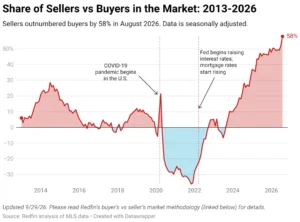
The American housing market in the summer of 2026 remains in a state of complex transition, characterized by a sluggish recovery from the stagnation of 2025. While the seasonal "spring thaw" typically brings a surge in activity, the current landscape is defined by a paradox of rising inventory and persistently high borrowing costs. Current data indicates that while the market has moved away from the frenetic pace of the early 2020s, it has not yet returned to a state of equilibrium. Homebuyers today face a unique set of challenges, ranging from geopolitical instability in the Middle East to domestic economic pressures, including a tightening job market and the looming threat of further interest rate hikes by the Federal Reserve.
The Current State of the U.S. Housing Market
As of mid-2026, the median U.S. home sale price stands at $408,776, representing a .2% increase from the previous year. While this growth rate is significantly lower than the 7% annual appreciation seen between 2012 and 2020, it nonetheless places home values approximately 30% higher than they were five years ago. This sustained pricing floor, combined with mortgage rates that have recently spiked to an 11-month high of 6.77%, has created an environment where affordability remains the primary hurdle for the average consumer.
The market is currently experiencing what economists describe as a "prolonged but uneven reset." Inventory levels have climbed to nearly 1.5 million homes for sale nationwide—the highest monthly level recorded since the pandemic era. This increase in supply is largely driven by a growing number of sellers listing their properties even as buyer demand remains suppressed by high monthly carrying costs. However, this inventory is not distributed equally. In the Sun Belt, particularly in cities like Austin, Texas, supply has surged, granting buyers significant negotiating leverage. Conversely, markets in the Midwest and Northeast, such as Rochester and Buffalo, New York, continue to see low supply and high competition, maintaining a seller’s advantage.
Chronology of the Market Transition: 2025 to Mid-2026
To understand the current climate, one must look at the trajectory of the market over the past eighteen months. The year 2025 was marked by a "deep freeze," where high interest rates and a lack of inventory resulted in the lowest sales volume in over a decade.
- Late 2025: Mortgage rates began to stabilize between 6.1% and 6.3%, leading to optimistic predictions for a robust 2026 recovery. Inventory started to show the first signs of a meaningful increase as the "lock-in effect"—where homeowners refused to sell to avoid losing low mortgage rates—began to weaken.
- Q1 2026: A tentative peace deal in the Middle East briefly lowered global risk premiums, causing mortgage rates to dip. This sparked a minor surge in pending home sales.
- Q2 2026: Tensions flared in Iran, leading to renewed volatility in global energy markets. The resulting upward pressure on inflation forced mortgage rates back toward the 7% threshold. Simultaneously, reports of increased layoffs in the technology and manufacturing sectors began to weigh on consumer confidence.
- July 2026: The market reached its current state. Inventory hit a post-pandemic high of 1.5 million units, but high mortgage rates (6.77%) have caused many prospective buyers to remain on the sidelines.
Macroeconomic Pressures and Geopolitical Influence
The primary driver of mortgage rate volatility in 2026 has been the ongoing conflict in the Middle East, specifically involving Iran. The geopolitical instability has directly impacted the U.S. housing market through two main channels: energy prices and investor sentiment. High oil prices contribute to overall inflation, which the Federal Reserve is mandated to control. Consequently, the Fed has signaled that it may raise the federal funds rate later this year to combat persistent inflationary pressures, a move that would likely keep mortgage rates elevated for the foreseeable future.
Domestic factors are also playing a critical role. The emergence of advanced artificial intelligence has triggered structural shifts in the labor market, leading to "AI fears" and localized layoffs that have made potential buyers cautious about taking on long-term debt. Furthermore, uncertainty regarding international trade tariffs has added another layer of complexity to the economic outlook, influencing both construction costs and general consumer spending power.
Regional Disparities: A Tale of Two Markets
The national data masks a significant divergence between regional housing markets. The Sun Belt, which saw explosive growth during the pandemic, is now leading the transition into a buyer’s market. Austin, Texas, has officially been designated as the slowest major housing market in the country. In these areas, new construction has finally caught up with demand, and the resulting surplus of inventory is forcing sellers to offer concessions, such as mortgage rate buy-downs or closing cost assistance.
In contrast, the "Rust Belt" and parts of the East Coast remain highly competitive. Cities like Rochester and Buffalo continue to attract buyers due to their relative affordability compared to coastal hubs. In these metros, demand still outstrips supply, and homes frequently receive multiple offers, often selling above the asking price. The San Francisco Bay Area has also seen a recent resurgence in popularity, driven by a stabilizing tech sector and a limited supply of luxury inventory.

Expert Analysis and Industry Responses
Industry leaders emphasize that while the market is difficult, it offers opportunities for those with strong financial foundations. Daryl Fairweather, Chief Economist at Redfin, suggests that for those who can afford the current monthly payments, now may actually be an advantageous time to buy. "Prices keep climbing, which is pushing some buyers out of the market and giving those who remain an upper hand in negotiations," Fairweather noted. She cautioned, however, that buyers must be confident in their long-term income stability given the volatile economic backdrop.
Chen Zhao, Head of Economics Research at Redfin, points to the international landscape as the key variable for the remainder of 2026. According to Zhao, the fluctuations in mortgage rates over the last four months are almost entirely attributable to the war in Iran and its ripple effects on global energy prices. "Time will tell how the conflict will impact the U.S. economy, but so far it has put upward pressure on inflation and mortgage rates," Zhao stated.
Financial Implications for Prospective Buyers
The difference between a 6% and a 7% mortgage rate can equate to hundreds of dollars in additional monthly payments and tens of thousands of dollars in interest over the life of a 30-year loan. For a home priced at the national median of approximately $408,000, a 1% shift in rates can alter purchasing power by nearly 10%.
Despite these costs, waiting for rates to fall carries its own set of risks. Real estate analysts warn that if mortgage rates were to drop significantly, the massive pool of "sidelined" buyers would likely rush back into the market. This surge in demand would inevitably lead to increased competition and a sharp rise in home prices, potentially negating any savings gained from a lower interest rate. This "affordability trap" is a central concern for many first-time homebuyers in the current cycle.
The Impact of Climate Risk and Insurance
A burgeoning factor in the 2026 housing market is the rising cost and decreasing availability of homeowners insurance. In disaster-prone areas, particularly in Florida and parts of California, insurers have been withdrawing from the market or drastically increasing premiums due to climate-related risks. This has created a significant imbalance in inventory in these regions, as homeowners seek to exit areas where the total cost of ownership—including insurance and taxes—has become unsustainable. For buyers, assessing climate risk is no longer just an environmental consideration but a fundamental financial one.
Outlook and Broader Implications
The U.S. housing market is currently undergoing a structural realignment. The era of ultra-low interest rates has been replaced by a "higher-for-longer" environment, forcing both buyers and sellers to adjust their expectations. For the remainder of 2026, Redfin predicts that mortgage rates will average around 6.3%, assuming no further escalations in global conflict.
The broader implication of the current market state is a widening gap between affluent buyers and those dependent on financing. Ultra-wealthy individuals, often making all-cash purchases, are largely insulated from mortgage rate volatility and are continuing to drive activity in the luxury segment. Meanwhile, the average American family is increasingly forced to choose between high-cost homeownership and a rental market that is also seeing upward pressure.
In summary, the decision to enter the 2026 housing market depends less on timing the "bottom" of the market and more on individual financial readiness. With inventory at a post-pandemic high and price growth slowing, buyers who possess stable employment and a long-term horizon may find that they have more leverage than they have had in years. However, the path forward remains clouded by geopolitical uncertainty and the Federal Reserve’s ongoing battle against inflation, suggesting that the "sluggish thaw" of the housing market will continue well into the next year.