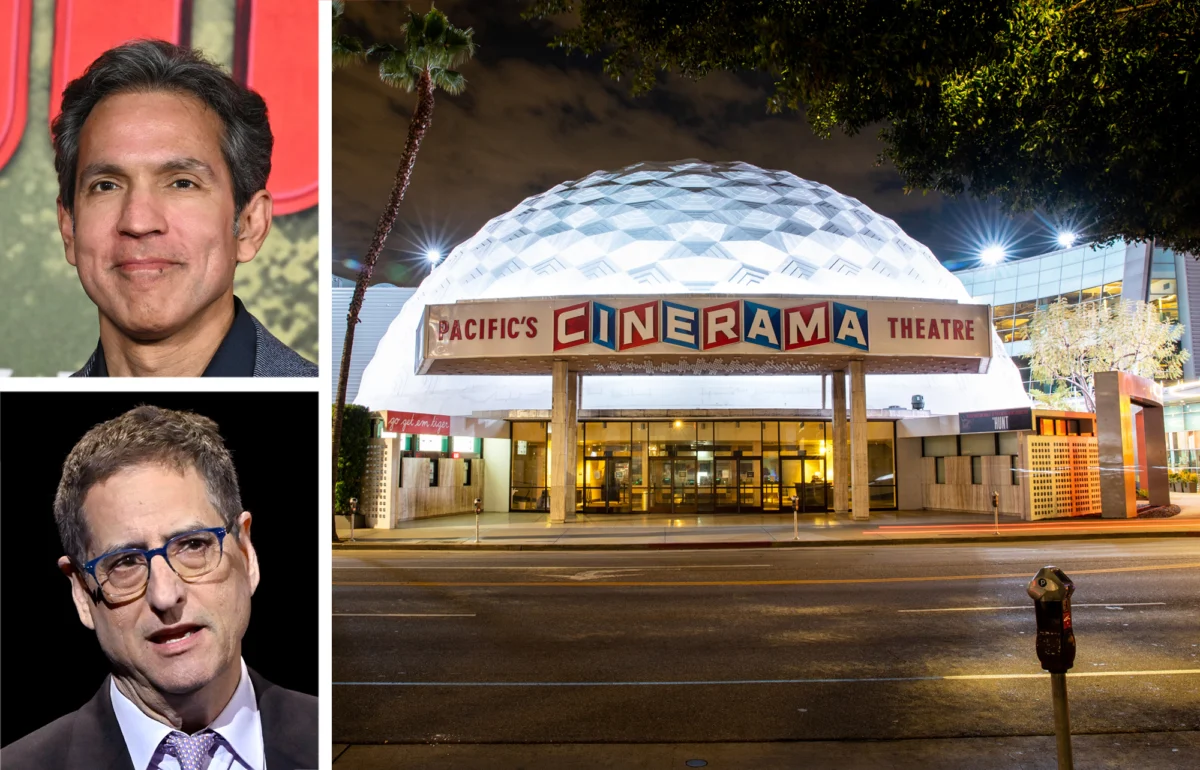
The skyline of Sunset Boulevard is set to regain its most distinctive silhouette as Sony Pictures Entertainment and its subsidiary, Alamo Drafthouse Cinema, officially announced a long-term lease agreement to restore and reopen the world-famous Cinerama Dome. This landmark deal, finalized with the ownership of the Dome Entertainment Center, marks the end of a six-year period of dormancy for the mid-century architectural marvel and the adjacent 14-screen multiplex, formerly operated by ArcLight Cinemas. The announcement has sent ripples through both the global film industry and the local Los Angeles community, signaling a robust reinvestment in the traditional theatrical experience at a time of significant transition for the entertainment capital.
The Cinerama Dome, a Los Angeles Historic-Cultural Monument, has been shuttered since the onset of the COVID-19 pandemic in March 2020. While many theaters across the country eventually reopened as health restrictions lifted, the Cinerama Dome and the wider ArcLight chain remained closed, leading to a 2021 announcement that the parent company, Decurion Corporation, would not be resuming operations. For years, the shuttered dome stood as a somber reminder of the challenges facing the exhibition industry. Now, under the stewardship of Sony Pictures—which acquired the Austin-based Alamo Drafthouse Cinema chain in June 2024—the venue is poised for a grand revival scheduled for early 2028.
A Strategic Partnership for a Cinematic Landmark
The lease agreement involves a complex arrangement between several of the real estate industry’s most prominent firms. Representing Alamo Drafthouse in the negotiations was Ken Shishido of JLL. On the landlord’s side, the ownership of the Dome Entertainment Center was represented by a powerhouse team including Nicole Mihalka of CBRE, Carl Muhlstein of Muhlstein Commercial, and Scott Burns and Shauna Mattis of JLL. The deal secures the future of the property not just as a commercial asset, but as a cultural cornerstone of Hollywood’s historic core.
Tom Rothman, Chairman and CEO of Sony Pictures Entertainment’s Motion Picture Group, expressed a profound emotional and professional commitment to the project. "Hot damn! We’re bringing the Dome back, baby," Rothman stated, highlighting the company’s belief in the intrinsic value of moviegoing. "We believe in moviegoing down to our soul, and no venue on Earth stands more for that than the one-of-a-kind Dome. I am deeply proud that Sony is investing in Hollywood, literally."
The move is particularly significant as it represents Sony’s direct entry into the physical exhibition space in Los Angeles, following the landmark repeal of the Paramount Decrees. These decades-old antitrust rules had previously prohibited major film studios from owning theater chains. By leveraging the Alamo Drafthouse brand—known for its strict "no talking, no texting" policy and high-quality presentation—Sony is positioning itself as a champion of the "prestige" theatrical experience.
Preservation and Modernization: The Road to 2028
Renovations on the historic structure are slated to begin as early as next month. The primary focus of the restoration will be the preservation of the Cinerama Dome’s unique architectural features, most notably its 86-foot-wide curved screen. Built in 1963, the Dome was designed specifically to showcase the Cinerama widescreen process, which utilized three projectors to create a deeply immersive, wrap-around visual experience. While the technology has evolved, the Dome remains one of the few venues in the world capable of large-format presentations that meet the exacting standards of modern auteurs.
While the Dome itself will be meticulously restored to maintain its historical integrity, it will not adopt the full dine-in service model that is the hallmark of typical Alamo Drafthouse locations. Instead, the focus within the Dome will remain on the purity of the cinematic presentation. However, the adjacent 14-screen multiplex—the former ArcLight Hollywood—will undergo a comprehensive transformation into a state-of-the-art Alamo Drafthouse. This portion of the complex will feature the chain’s signature dine-in service, 4K laser projection across all auditoriums, and specialized 70-millimeter cinematic capabilities, ensuring that the facility remains a destination for both casual moviegoers and hardcore cinephiles.
The Historical Significance of the Cinerama Dome
To understand the weight of this announcement, one must look at the history of the Dome. Opened on November 7, 1963, for the premiere of "It’s a Mad, Mad, Mad, Mad World," the Cinerama Dome was the first and only theater of its kind. Its geodesic design, based on the principles of Buckminster Fuller, consists of 316 interlocking hexagonal and pentagonal concrete panels. It was constructed in just 16 weeks, a feat of engineering at the time.
In 1998, the Dome was designated a Los Angeles Historic-Cultural Monument, protecting it from demolition during the development of the surrounding "Dome Entertainment Center," which eventually included the ArcLight multiplex, a gym, and retail spaces. For decades, it served as the preferred venue for Hollywood premieres and exclusive 70mm runs of epic films. Its closure in 2020 was viewed by many as the "end of an era," making its impending return a powerful symbol of resilience for the film industry.
Ravi Ahuja, Chairman and CEO of Sony Pictures Entertainment, emphasized this legacy: "There is no moviegoing destination anywhere in the world that commands the affection, history, and cultural significance of the Cinerama Dome. It represents the kind of singular experience we value and champion. This is a meaningful moment for our company, our industry, and Los Angeles."
Contextualizing the Revival: A New Era for L.A. Theaters
The reopening of the Cinerama Dome is not an isolated event but rather part of a broader trend of "heritage cinema" restoration across Southern California. As streaming services have saturated the home entertainment market, the demand for "eventized" theatrical experiences has grown. Audiences are increasingly willing to pay a premium for high-quality projection, historical atmosphere, and communal engagement that cannot be replicated in a living room.
Several other historic venues have recently seen a resurgence:
- The Alex Theatre (Glendale): This 1925 landmark recently returned to showing first-run films for the first time in over three decades.
- The Village Theatre (Westwood): A coalition of 35 high-profile filmmakers, including Christopher Nolan, Steven Spielberg, and Jason Reitman, recently purchased this historic venue. They are currently spearheading a $25 million restoration project to preserve its status as a premier moviegoing destination.
- The Egyptian Theatre (Hollywood): Following a major renovation by Netflix, this historic venue reopened in 2023, further anchoring the revitalization of the Hollywood Boulevard corridor.
This trend is driven in part by the massive success of large-format "event" films. The source content notes that demand for high-profile releases—such as Christopher Nolan’s recent projects—has reached unprecedented levels. For instance, 70mm IMAX screenings for major releases have frequently sold out weeks in advance, occasionally causing technical failures on ticketing platforms like AMC’s app due to overwhelming traffic. The Cinerama Dome, with its specialized screen and projection booth, is perfectly positioned to capitalize on this appetite for premium formats.
Economic and Cultural Implications
The long-term lease is a "strong vote of confidence" in the future of the Hollywood neighborhood, according to Nicole Mihalka of CBRE. For years, the vacancy at the corner of Sunset and Ivar was a drag on local foot traffic and economic activity. The return of a high-volume anchor tenant like Alamo Drafthouse is expected to stimulate the surrounding ecosystem of restaurants, bars, and retail shops.
Furthermore, the deal represents a stabilization of the local real estate market. While some Los Angeles studio spaces have faced financial distress and defaults in recent years due to shifting production schedules and labor strikes, the exhibition sector—specifically the "luxury" and "historic" niche—appears to be finding its footing.
By integrating the Cinerama Dome into the Alamo Drafthouse ecosystem, Sony is also ensuring the venue’s operational viability. Alamo Drafthouse has built a loyal following through its curated programming, which often includes repertory screenings, film festivals, and themed events. This programming expertise will be vital in keeping the 14-screen multiplex and the massive Dome filled during the weeks between major blockbuster releases.
Timeline Toward Reopening
While the excitement is palpable, the road to 2028 involves significant logistical and construction hurdles. The timeline provided by Sony and Alamo Drafthouse suggests a meticulous approach to the restoration:
- Late 2024: Commencement of site assessments and interior demolition of non-historic elements in the multiplex.
- 2025–2026: Structural reinforcement and technical upgrades, including the installation of 4K laser projectors and the restoration of the Dome’s iconic "honeycomb" exterior.
- 2027: Final interior design and staffing.
- Early 2028: Official grand opening and inaugural film premiere.
As renovations begin next month, the project will be closely watched by architectural preservationists and film historians alike. The goal is to marry the mid-century aesthetic of the 1960s with the 21st-century technology required to screen the next generation of masterpieces. For a city that defines itself by the movies, the return of its most famous "golf ball" is more than just a real estate transaction; it is the restoration of Hollywood’s soul.