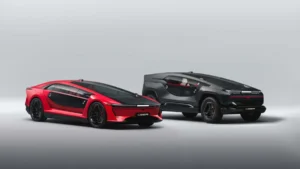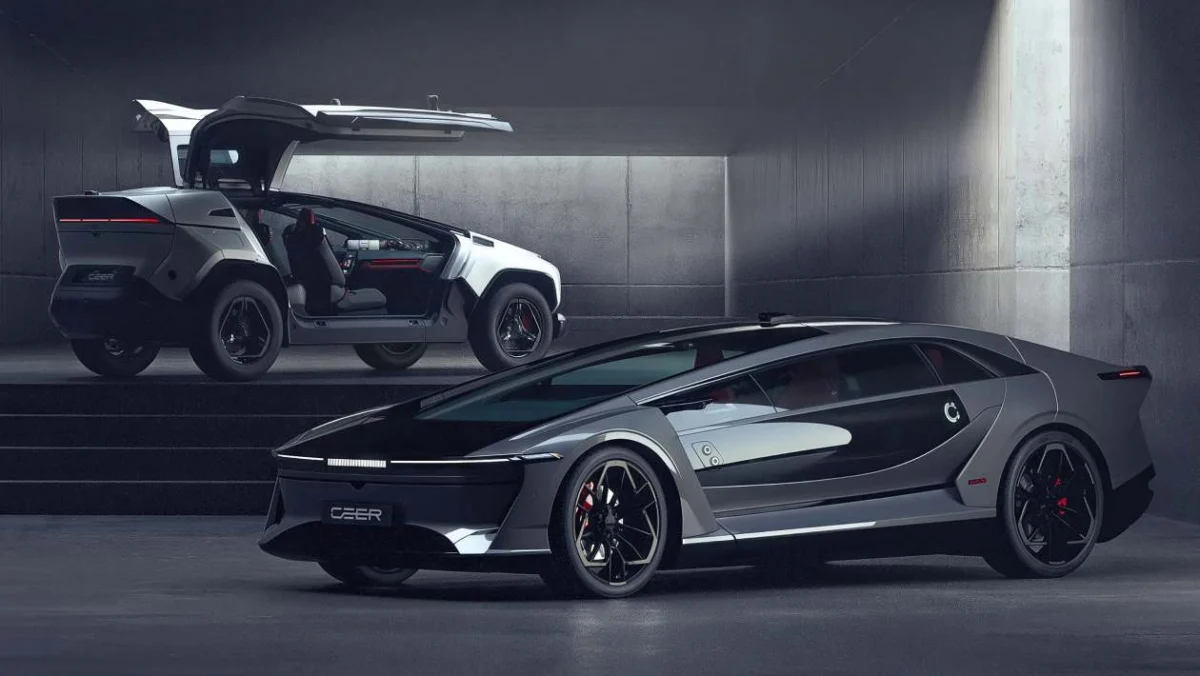
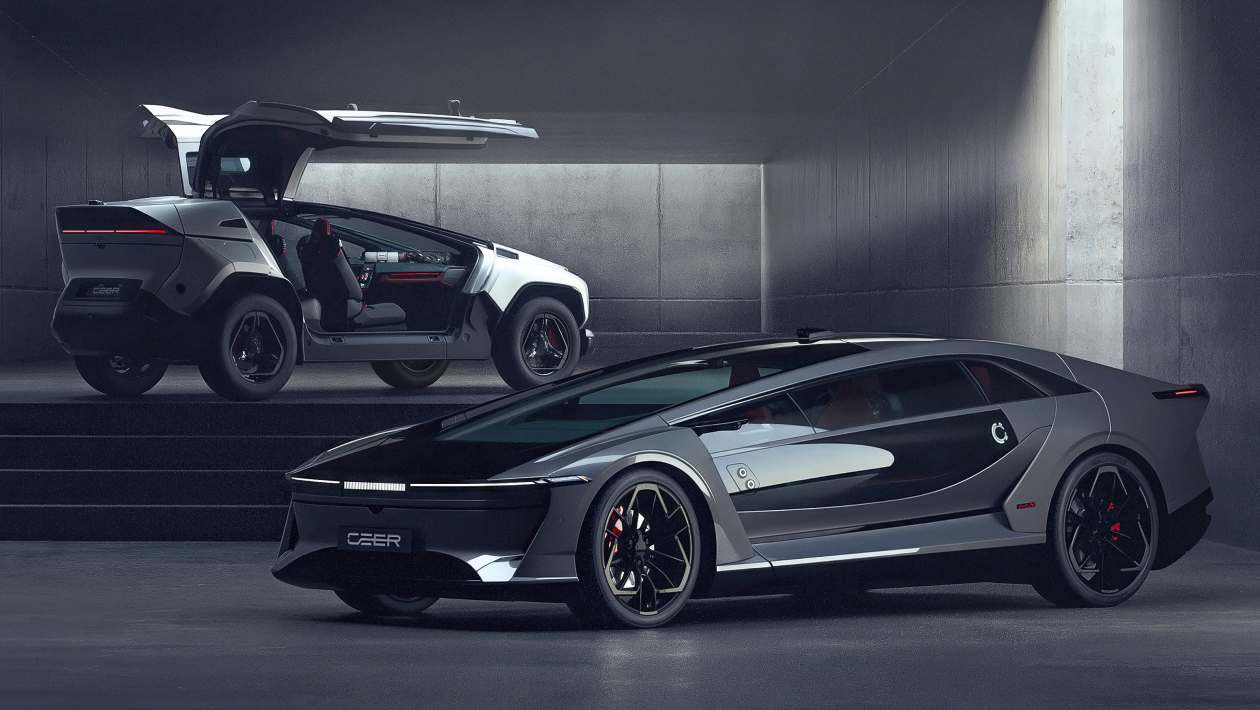
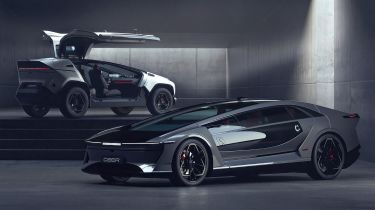
In a significant pivot for a nation synonymous with global hydrocarbon exports, Saudi Arabia has officially entered the electric vehicle (EV) manufacturing sector with the unveiling of the Ceer Exobot. This debut, featuring both a high-performance SUV and a sleek saloon, marks the initial phase of a broader industrial strategy designed to diversify the Kingdom’s economy away from its traditional reliance on fossil fuel revenues. As the first national automotive brand to emerge from the Gulf state, Ceer represents a calculated effort to integrate Saudi Arabia into the global high-tech automotive supply chain.
The launch of the Exobot line is not an isolated development but the cornerstone of a seven-vehicle roadmap. This strategy is managed by Ceer, a joint venture established in 2022 between the Saudi Public Investment Fund (PIF) and the Taiwanese technology titan Foxconn. By leveraging the financial backing of one of the world’s largest sovereign wealth funds—which manages approximately $900 billion in assets—and the industrial manufacturing prowess of the world’s largest electronics contract manufacturer, Saudi Arabia is attempting to bypass decades of organic automotive development to compete directly in the premium EV segment.
The Technological Architecture Behind Ceer
While the vehicles are branded as Saudi-engineered, the underlying architecture reflects a sophisticated international partnership. The Exobot series utilizes modular electric vehicle platforms developed by Foxconn, which has been steadily pivoting from mobile device assembly to the automotive sector through its Foxtron initiative.
To ensure the Exobot meets global performance expectations, Ceer has secured strategic technology licenses from German automotive leader BMW. This collaboration provides the structural and electrical backbone necessary to facilitate high-efficiency energy management and advanced driving dynamics. Furthermore, the high-performance powertrain components—essential for the flagship models—are being supplied by Rimac Technology, the Croatian firm recognized for its world-leading work in electric hypercar engineering.
The aesthetic direction of the Exobot is overseen by Rob Melville, a veteran designer formerly of McLaren Automotive. His tenure at McLaren, which included the design of the P1, the Senna, and the 750S, suggests that Ceer is prioritizing high-impact, futuristic design language to differentiate its products in an increasingly crowded EV market. Early visual cues from the Exobot concept suggest a radical departure from traditional automotive silhouettes, featuring extreme aerodynamic profiles, ultra-thin LED lighting signatures, and unconventional cabin ergonomics.

Chronology of the Saudi Automotive Ambition
The emergence of the Exobot is the result of a multi-year industrial policy trajectory:
- 2016: The Saudi government launches "Vision 2030," a comprehensive economic framework aimed at reducing the Kingdom’s dependence on oil, diversifying its economy, and developing public service sectors.
- 2021: The PIF announces a renewed focus on sustainable mobility, including significant investments in Lucid Motors, a U.S.-based EV manufacturer, to establish a local assembly plant in King Abdullah Economic City.
- November 2022: The official formation of Ceer is announced by Crown Prince Mohammed bin Salman, setting the stage for the country’s first domestic EV brand.
- 2023–2025: Ceer secures land in the Industrial Valley of King Abdullah Economic City, initiates the construction of a state-of-the-art manufacturing complex, and begins recruitment of a global engineering workforce.
- September 2026: The global unveiling of the Exobot SUV and saloon, representing the first concrete product output from the venture.
Manufacturing and Economic Impact
The manufacturing hub for Ceer is situated in the Industrial Valley of King Abdullah Economic City (KAEC) along the Red Sea coast. This location is strategically chosen for its proximity to major shipping lanes, facilitating the export of vehicles to international markets. The facility is designed to be a high-automation environment, integrating advanced robotics and AI-driven supply chain management, aligning with Foxconn’s operational expertise.
Economically, the project is projected to contribute roughly $8 billion to Saudi Arabia’s GDP by 2034. It is expected to create thousands of highly skilled jobs, ranging from automotive engineering and software development to precision manufacturing. By fostering a domestic EV ecosystem, the Kingdom aims to create a secondary market for battery production and renewable energy infrastructure, further embedding itself in the transition to sustainable mobility.
Analysis of Global Market Implications
The entry of Saudi Arabia into the automotive manufacturing landscape carries profound implications for the global market. Traditionally, countries entering the automotive space have focused on low-cost mass-market vehicles. Ceer, however, is taking a "top-down" approach, focusing on premium, high-performance EVs that compete with established luxury brands.
By utilizing a combination of PIF capital, Foxconn’s manufacturing efficiency, and European technology licensing, Ceer is attempting to solve the "barrier to entry" problem that has stifled many automotive startups. The primary challenge remains the development of a localized supply chain. While the Exobot is assembled in the Kingdom, much of the intellectual property and critical components are sourced internationally. The long-term viability of the brand will depend on the degree to which it can localize R&D and establish a domestic vendor base for raw materials such as lithium and steel.
Furthermore, the brand’s ability to export to North American and European markets will hinge on its capacity to meet stringent safety and regulatory standards. While the technical specifications of the Exobot are still being finalized, industry analysts suggest that the focus on high-performance drive units from Rimac indicates an intent to capture the "performance-luxury" segment, a niche that has shown resilience even during broader market downturns.
The Future Roadmap
Beyond the initial Exobot launch, Ceer has committed to a diverse portfolio that includes compact and mid-size sedans and SUVs. This modular approach allows the company to cater to a broader demographic, moving from the initial "halo" products to more accessible, mass-market electric vehicles.
The integration of various propulsion options—ranging from standard battery-electric platforms to potential future-facing energy systems—suggests that Ceer is positioning itself as a technology-first company rather than a traditional legacy automaker. This flexibility is vital, as the global EV market remains in a state of flux regarding charging standards, battery chemistry, and consumer demand.
As of September 2026, the company has not provided a definitive date for international availability. However, the scale of the investment and the high-profile nature of the partnerships suggest that Ceer is not intended solely for the domestic market. The Kingdom’s vision is clearly to transform from an oil-exporting powerhouse into a hub for sustainable industrial innovation.

Conclusion
The unveiling of the Exobot represents a pivotal moment in the history of the Middle East’s industrial development. By combining the financial resources of the PIF with the technical expertise of partners like Foxconn, BMW, and Rimac, Saudi Arabia has signaled a clear intent to participate in the global automotive shift. While the challenges of scaling production and establishing brand loyalty in a saturated market are significant, the Ceer Exobot serves as a tangible demonstration of the Kingdom’s commitment to its "Vision 2030" goals. As the automotive industry continues to move away from internal combustion, the success of this venture will be closely monitored by global analysts as a bellwether for the viability of state-led, capital-intensive transitions into the electric mobility era. The coming months will likely see the release of detailed technical specifications, which will provide the final piece of the puzzle in determining whether the Exobot can truly challenge the status quo of the global luxury EV market.