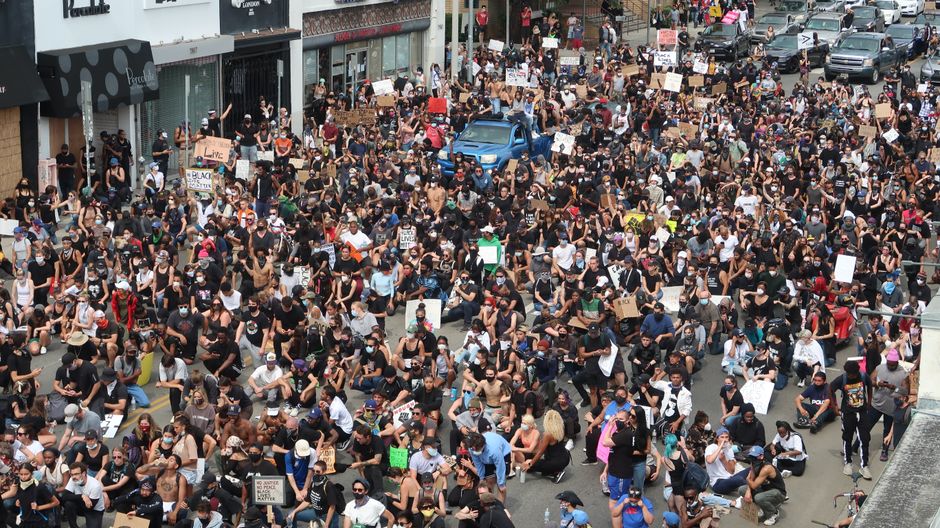
US Cities Brace for More Protests, Parts of Los Angeles Placed Under Curfew
The specter of widespread civil unrest looms over numerous American cities as authorities prepare for a potential surge in demonstrations. Following a period of heightened tension and activism, many urban centers are implementing precautionary measures, including curfews, to manage public gatherings and maintain order. The situation in Los Angeles, in particular, has seen significant developments, with specific areas of the sprawling metropolis placed under immediate curfew restrictions. This proactive stance by law enforcement and city officials underscores the ongoing volatility and the government’s intent to prevent a recurrence of events that have previously led to property damage and public safety concerns. The underlying causes of these protests, which often stem from deep-seated societal grievances related to racial injustice, economic inequality, and political polarization, continue to fuel public engagement and, in some instances, confrontational actions. The preparedness for further protests involves a multi-faceted approach, encompassing increased police presence, coordination between different law enforcement agencies, and strategic communication with community leaders. The deployment of resources is being closely monitored, with a focus on de-escalation tactics while simultaneously ensuring the capacity to respond effectively to any outbreaks of violence or significant disruptions to public life. The economic and social fabric of these cities is a primary concern, and authorities are acutely aware of the damage that can be inflicted during periods of unrest, both physically and in terms of public confidence.
The decision to implement curfews in parts of Los Angeles reflects a complex assessment of risk and the perceived likelihood of continued demonstrations escalating beyond peaceful assembly. These measures, often met with mixed reactions from the public and civil liberties advocates, are typically enacted to reduce opportunities for vandalism, looting, and clashes between protesters and counter-protesters or law enforcement. The specific geographical areas subjected to these curfews are generally those deemed most vulnerable or historically sites of past unrest. This targeted approach aims to minimize the disruption to the broader population while concentrating enforcement efforts where they are deemed most necessary. The logistics of enforcing a curfew are substantial, requiring significant personnel and clear communication channels to inform residents and businesses of the restrictions. Violations can range from warnings to arrests, depending on the severity and circumstances. The effectiveness of curfews in preventing further unrest is a subject of ongoing debate, with some arguing they can inflame tensions and alienate communities, while others contend they are a necessary tool for restoring calm and preventing further damage. The Los Angeles Police Department, in conjunction with other relevant agencies, is tasked with the implementation and enforcement of these orders, a responsibility that carries significant weight in a city as diverse and populous as Los Angeles. The goal, as stated by city officials, is to balance the right to peaceful protest with the imperative to protect public safety and private property.
The nationwide anticipation of further protests is not an isolated phenomenon but rather a continuation of a trend observed across the United States in recent years. Various catalysts, from high-profile incidents of police brutality to broader socio-economic disparities, have ignited widespread public anger and a demand for change. Activist groups and grassroots organizations have demonstrated a sustained capacity to mobilize large numbers of people, and the current climate suggests this momentum is unlikely to dissipate quickly. Cities are therefore engaging in robust planning sessions, often involving inter-agency task forces and intelligence gathering to anticipate potential flashpoints. This includes monitoring social media for emerging trends and potential protest activities, as well as maintaining open lines of communication with community leaders who can serve as intermediaries. The strategy is often a delicate balancing act: to allow for legitimate expression of dissent while rigorously preparing to prevent and respond to unlawful acts. The economic impact of prolonged or severe unrest can be devastating for local businesses, disrupting supply chains, deterring tourism, and leading to significant property damage. Therefore, the economic well-being of these urban centers is a significant consideration in the decision-making process regarding public safety measures. The psychological impact on residents, too, is considerable, with a sense of unease and insecurity often accompanying periods of heightened civil disturbance.
The implementation of curfews, such as those in parts of Los Angeles, is a significant indicator of the current level of concern among urban authorities. These measures are not taken lightly, as they represent a substantial curtailment of individual freedoms and a visible manifestation of public disorder. The rationale behind such decisions typically involves an assessment of intelligence suggesting a high probability of large-scale demonstrations that could potentially lead to violence or widespread property damage. The specific boundaries of a curfew are carefully delineated, often focusing on commercial districts, areas with a history of recent unrest, or proximity to significant public infrastructure. The enforcement of these curfews requires a considerable deployment of law enforcement resources, including uniformed officers, tactical units, and often support from other agencies like the National Guard, depending on the severity of the situation. The objective is to create a deterrent effect and to provide law enforcement with the legal framework to detain individuals found in violation of the order. Civil liberties organizations frequently scrutinize the imposition of curfews, raising concerns about potential overreach and the disproportionate impact on marginalized communities. The legal justification for such measures typically rests on the concept of public necessity, wherein the state’s interest in maintaining order and protecting its citizens outweighs individual liberties during a declared emergency.
The underlying issues that fuel these ongoing protests are multifaceted and deeply entrenched. Racial injustice, stemming from historical and ongoing systemic discrimination, remains a potent and persistent grievance. Incidents that highlight perceived inequities in the justice system, law enforcement practices, and socio-economic opportunities continue to serve as flashpoints, galvanizing activism. Economic disparities, exacerbated by factors such as income inequality, lack of affordable housing, and job insecurity, also contribute significantly to public discontent. These economic pressures can lead to frustration and anger, particularly when coupled with perceptions of unfairness in the distribution of wealth and opportunity. Political polarization further complicates the landscape, creating divisions that can be exploited and amplified, leading to heightened tensions and a greater propensity for confrontation. The current socio-political climate in the United States has created an environment where a wide range of grievances can converge, leading to broad-based movements for social and political change. The demand for accountability from institutions, whether governmental or corporate, is a recurring theme across many of these protest movements.
The preparedness of US cities for continued demonstrations involves a spectrum of strategies designed to manage public gatherings while mitigating the risk of violence and property damage. These strategies often include increased police patrols, the establishment of designated protest zones, and the deployment of specialized units trained in crowd control and de-escalation. Intelligence gathering plays a crucial role, with law enforcement agencies monitoring social media and other communication channels to anticipate potential protest activities and identify potential threats. Coordination among different law enforcement agencies, including local police departments, county sheriffs, and federal agencies, is also a key component of preparedness. This ensures a unified response and efficient allocation of resources. Public information campaigns are often employed to inform residents about planned protests, potential disruptions, and safety guidelines. Community outreach efforts, involving dialogue with protest organizers and community leaders, are also undertaken to foster understanding and to promote peaceful demonstrations. The economic implications of widespread unrest are a significant concern for city officials. Businesses are often urged to take protective measures, and contingency plans are put in place to address potential disruptions to essential services. The goal is to strike a delicate balance between upholding the constitutional right to peaceful assembly and ensuring public safety and the protection of property. The potential for contagion, where protests in one city can inspire or embolden demonstrators in others, means that preparedness is a national, as well as local, imperative.
The specific context of Los Angeles, with its vast size, diverse population, and history of significant public demonstrations, presents unique challenges for law enforcement and city officials. The decision to impose curfews in parts of the city indicates a heightened level of concern about the potential for unrest. These curfews are typically implemented in areas identified as having a higher likelihood of activity, such as downtown commercial districts, areas with a history of looting or vandalism, or neighborhoods adjacent to major thoroughfares. The enforcement of curfews requires a substantial commitment of personnel and resources, and clear communication with the public is essential to ensure compliance. The legal basis for such measures typically relies on emergency declarations that grant authorities the power to restrict public movement in the interest of public safety. Civil liberties advocates often voice concerns about the potential for curfews to infringe upon constitutional rights, particularly the right to assembly and freedom of expression. However, proponents argue that curfews are a necessary tool for de-escalating tense situations, preventing further damage, and restoring order. The economic impact of any prolonged or severe unrest in Los Angeles could be significant, given the city’s status as a major economic hub. Therefore, the implementation of precautionary measures, including curfews, is often viewed as a strategic imperative to protect businesses and maintain economic stability. The ongoing nature of the underlying grievances that fuel these protests suggests that the challenges of managing public demonstrations and ensuring public safety will continue to be a significant concern for urban centers across the United States.
