Taylor Swift Reclaims Her Master Recordings: A Comprehensive Look at Gaining Control of a Music Catalog
Taylor Swift’s triumphant acquisition of ownership over her master recordings represents a watershed moment in the music industry, a hard-won victory that resonates far beyond her personal discography. This monumental shift signifies not only a return of artistic and financial control to the artist but also serves as a potent case study for musicians navigating the complexities of intellectual property and contractual agreements in the digital age. Swift’s journey, marked by public advocacy and strategic business maneuvers, has illuminated the power dynamics inherent in the relationship between artists and record labels, prompting a re-evaluation of traditional industry practices and empowering future generations of creators.
The genesis of Swift’s struggle for control lies in the inherent contractual structures of the music business, particularly concerning the ownership of master recordings. When an artist signs with a record label, they typically grant the label ownership of the sound recordings for their work in exchange for funding, distribution, and marketing. While artists often retain ownership of their publishing rights (the musical composition itself, i.e., the lyrics and melody), the master recordings are the actual audio files that fans purchase and stream. For decades, this model has meant that labels, not artists, held the keys to the financial profits derived from these recordings, dictating their use in films, commercials, and re-recordings. Swift, having signed her initial record deals as a young artist, found herself bound by contracts that, while standard at the time, ultimately placed the stewardship of her life’s work in the hands of others.
Swift’s public stance against Scooter Braun and Scott Borchetta, the individuals who acquired her first six albums’ master recordings through their respective companies, became a pivotal turning point. The sale of her catalog from Big Machine Records to Ithaca Holdings, and subsequently to Shamrock Holdings, ignited a fierce public debate about artist rights and the ethics of music catalog ownership. Swift alleged that she was blindsided by these sales, which occurred despite her attempts to purchase her masters directly. Her vocal opposition brought unprecedented attention to the often-opaque world of music licensing and catalog transactions, exposing the financial incentives that drive such deals and the limited recourse artists might have when their work is sold without their consent or full transparency.
The core of Swift’s strategy to regain control revolved around a bold and unprecedented decision: re-recording her first six albums. This creative and business masterstroke allowed her to generate new master recordings that she would own outright. By releasing "Taylor’s Version" of albums like Fearless, Red, and 1989, she not only reclaimed her artistic narrative but also directly competed with the original recordings. This strategy was multi-faceted in its effectiveness. Firstly, it tapped into the immense loyalty of her fanbase, who eagerly supported the re-recordings, demonstrating their commitment to Swift and her vision. The commercial success of these re-recordings, often surpassing the original releases in sales and streaming numbers, sent a clear economic message to the industry: artists can, and will, find ways to profit from their own work.
Furthermore, the re-recording process allowed Swift to revisit and even enhance her earlier work. She included "From The Vault" tracks, previously unreleased songs that provided new content for fans and further incentivized purchases and streams. This added value proposition was crucial in driving demand for her new masters. The sonic quality of the re-recordings also often benefited from advancements in music production technology, offering a crisper, more contemporary sound that appealed to both long-time fans and new listeners. This demonstrated that re-recordings are not merely reproductions but can be significant artistic and commercial undertakings in their own right.
Beyond the re-recordings, Swift’s victory is also a testament to her strategic business acumen and her willingness to leverage her platform for industry change. She meticulously documented her efforts to purchase her masters, sharing her side of the story with fans and the public. This transparency, a stark contrast to the often-secretive nature of record label deals, fostered immense public support and put significant pressure on the parties involved. Her advocacy extended to encouraging other artists to be more vigilant about their contract terms and to explore options for owning their masters, thereby creating a ripple effect throughout the industry.
The legal and contractual nuances of music ownership are complex and have historically favored record labels. Master recordings are typically considered the property of the label that funded their creation and distribution. Artists receive royalties based on these sales, but they do not possess the ultimate ownership and decision-making power. This has meant that labels can license or sell these masters for any purpose, often without the artist’s explicit consent or a significant share of the profits. Swift’s fight challenged this paradigm, highlighting the imbalance of power and the need for artists to have greater agency over their creative output.
The implications of Swift’s success are far-reaching. For emerging artists, her journey provides a powerful blueprint and a source of inspiration. It underscores the importance of understanding contract terms thoroughly, seeking legal counsel from experienced music attorneys, and prioritizing ownership of masters whenever possible. While not every artist has Swift’s level of fame and influence, her actions have undoubtedly shifted the conversation and may lead to more favorable contract terms being negotiated in the future. The music industry, faced with such a prominent and successful example, may be compelled to offer artists more equitable agreements.
Economically, Swift’s control over her masters means she directly benefits from the profits generated by her music. This includes not only sales and streaming royalties but also licensing fees from films, television shows, commercials, and other media placements. This direct financial benefit is a significant departure from the traditional model where labels reap the majority of the financial rewards. Her ability to control these revenue streams gives her greater financial freedom and control over her career trajectory.
Swift’s advocacy also extends to the realm of digital streaming. While streaming platforms have democratized music access, they have also been criticized for their royalty structures, which can be unfavorable to artists, especially those with smaller fan bases. By owning her masters, Swift has more leverage in negotiating with streaming services and ensuring that her music is presented and compensated in a manner that aligns with her artistic vision and financial expectations.
The narrative surrounding Taylor Swift and her music catalog is not merely a story of an individual artist’s ambition; it is a significant chapter in the evolution of the music industry. Her proactive stance, her strategic re-recordings, and her unwavering commitment to artistic ownership have set a new precedent. The phrase "Taylor Swift says she has gained control her music catalog" is not just a statement of fact but a declaration of power and a beacon of hope for creators worldwide. Her victory underscores the critical importance of understanding intellectual property rights, advocating for fair contracts, and recognizing that an artist’s music is their most valuable asset, deserving of their direct ownership and stewardship. This ongoing saga continues to shape how artists engage with their careers, their labels, and their legacy, promising a more artist-centric future for the music business.
The aspiration for a new, advanced, twin-engine fighter jet, often championed with a vision for American technological dominance, encountered significant headwinds when confronted with the stringent realities of military procurement, technological feasibility, and economic constraints. This ambitious undertaking, conceptually envisioned as a successor to existing fighter platforms, aimed to embody a leap forward in aerial combat capabilities, boasting enhanced speed, range, stealth, and sensor fusion. However, the path from conceptualization to a fully operational airframe is fraught with complexities that demand a rigorous and pragmatic approach, often leading to a recalibration of initial grand designs. The allure of a “next-generation” fighter jet, particularly one that evokes a sense of nationalistic pride and technological superiority, is undeniable. Yet, the development of such a sophisticated weapon system is not merely an exercise in engineering prowess; it is a complex interplay of strategic imperatives, budgetary limitations, and the ever-evolving landscape of global aerial threats.
The initial concept of an F-55, or a similar advanced twin-engine fighter, likely stemmed from a desire to outmaneuver and outfight potential adversaries. This typically involves considerations for superior kinematic performance – meaning faster acceleration, higher top speeds, and greater maneuverability – crucial for gaining an advantage in dogfights and for rapid deployment across vast operational theaters. Furthermore, the integration of advanced stealth technologies, designed to reduce radar cross-section and other signatures, is paramount in an era where adversaries are rapidly developing sophisticated air defense networks. The notion of twin engines often implies increased survivability and redundancy, a critical factor in combat aircraft where engine failure can be catastrophic. This design choice also typically allows for greater payload capacity, accommodating a wider array of weaponry and sophisticated sensor suites. The envisioned F-55 would likely have incorporated cutting-edge avionics, artificial intelligence-driven combat systems, and unprecedented sensor fusion capabilities, allowing pilots (or even autonomous systems) to possess a comprehensive and near-real-time understanding of the battlespace. Such a platform would not only be a deterrent but a potent force multiplier, capable of projecting American air power with unparalleled effectiveness.
However, translating these ambitious desiderata into a tangible reality involves grappling with a series of formidable challenges. The most immediate and perhaps most significant hurdle is the immense cost associated with developing and fielding a next-generation fighter jet. The F-22 Raptor, a previous flagship of American fighter innovation, incurred staggering development costs, and its per-unit price remained a significant factor in its limited production run. A new platform, aiming for even greater technological advancements, would inevitably carry an even heavier price tag. This escalates beyond the initial research and development (R&D) to encompass sophisticated manufacturing processes, advanced materials, extensive testing, and the development of a robust sustainment infrastructure. The economic realities of defense budgets, often subject to political winds and competing national priorities, mean that any program of this magnitude must demonstrate a clear and compelling return on investment, not just in terms of technological capability but also in terms of affordability and long-term viability. The historical precedent of high-cost, low-production fighter programs underscores the inherent tension between cutting-edge ambition and fiscal prudence.
Technological feasibility also presents a critical juncture for such a vision. Pushing the boundaries of aerospace engineering requires significant breakthroughs in numerous disciplines simultaneously. Developing truly effective fifth or sixth-generation stealth technologies, for instance, involves intricate aerodynamic shaping, specialized radar-absorbent materials, and the careful management of heat signatures, all of which are complex and costly to perfect. Similarly, the integration of advanced artificial intelligence, quantum computing for sensor processing, and highly sophisticated electronic warfare suites demands not only theoretical advancements but also practical implementation and rigorous validation. The potential for unforeseen technical challenges, delays in component development, or the inability to achieve desired performance metrics can significantly inflate costs and push back timelines, rendering the initial vision increasingly distant and potentially obsolete by the time it reaches fruition. The history of military aircraft development is replete with examples of programs that faced significant technical hurdles, leading to compromises, increased expenditure, or even outright cancellation.
Furthermore, the strategic and operational context in which the F-55 would be deployed is a constantly shifting landscape. The primary threats that such a fighter would be designed to counter may evolve significantly during its multi-year development cycle. Adversaries are not static; they too are investing in advanced air defense systems, next-generation fighters, and innovative combat doctrines. A fighter jet developed to counter threats of today might be less effective against the threats of tomorrow. This necessitates a flexible and adaptable design that can incorporate future upgrades and modifications, or a highly sophisticated foresight into potential future threats that is notoriously difficult to achieve with absolute certainty. The concept of “future-proofing” a multi-billion dollar weapons system is a daunting task, and any miscalculation in threat assessment can render the investment suboptimal. The emphasis on a twin-engine configuration, for example, while offering survivability advantages, might also come with trade-offs in terms of agility or cost compared to single-engine designs that may offer comparable or superior performance in specific operational scenarios.
The established acquisition processes within military branches also act as a significant constraint on purely aspirational visions. The United States Air Force, Navy, and Marine Corps each have their own unique operational requirements, pilot training doctrines, and logistical chains. A new fighter jet program must satisfy the diverse and often conflicting needs of these different services to achieve broad adoption and justification for its development. This involves extensive requirements definition, iterative design reviews, rigorous testing protocols, and a complex bureaucratic approval process. The desire for a singular, groundbreaking platform might be tempered by the practical necessity of tailoring aspects of the design to meet the specific needs of different branches, potentially diluting the purity of the initial concept and adding further complexity and cost. The current landscape, with the F-35 Joint Strike Fighter already representing a monumental investment in a multi-role, stealthy fighter across multiple services, presents a significant challenge in justifying the development of an entirely new, potentially overlapping, twin-engine platform without a clearly delineated and unique operational niche.
The economic feasibility of such a program also extends beyond the initial acquisition cost to the long-term operational and sustainment expenses. A highly advanced fighter jet, with its complex systems and specialized maintenance requirements, incurs substantial costs throughout its operational lifespan. This includes fuel, spare parts, specialized training for maintenance crews, software updates, and periodic upgrades. If the per-unit cost of acquisition is exceptionally high, the total cost of ownership over several decades can become prohibitive, potentially limiting the number of aircraft that can be procured and fielded, thereby diminishing the overall impact and strategic advantage of the program. A realistic assessment of the total lifecycle cost is therefore as critical as the initial development budget. The lessons learned from programs like the F-22, where the high operating costs contributed to its early retirement from production, serve as a stark reminder of this crucial consideration.
Moreover, the competitive landscape of the global defense industry necessitates careful consideration of cost-effectiveness. While American technological superiority is a stated goal, the ability to field a sufficient number of advanced platforms to maintain air dominance is equally important. If a hypothetical F-55 is so prohibitively expensive that only a limited number can be procured, it could leave the nation vulnerable in certain scenarios compared to adversaries who might field larger numbers of less technologically advanced but still capable aircraft. The development of the F-35, with its emphasis on a more affordable and multi-service approach, reflects this understanding of balancing technological advancement with the need for widespread deployment. The vision of an F-55 would therefore need to demonstrate a clear and sustainable cost-benefit analysis against the existing and emerging threats, and the capabilities of potential adversaries’ air forces.
The narrative surrounding a “visionary” twin-engine fighter jet, while compelling, often requires a rigorous reality check against the multifaceted demands of military modernization. The economic, technological, and operational constraints are not merely bureaucratic hurdles; they are fundamental determinants of whether an ambitious concept can be transformed into a deployable and effective weapon system. The history of military aviation is replete with examples of grand visions that were either scaled back, significantly altered, or ultimately abandoned due to these practical considerations. The aspiration for an F-55, or any similarly advanced fighter, must be grounded in a sober assessment of these realities, ensuring that any proposed development path offers a realistic, affordable, and strategically sound approach to maintaining air superiority. The future of aerial combat development will likely be shaped by a pragmatic blend of groundbreaking innovation and a keen understanding of the inherent limitations and demands of large-scale defense procurement. The success of any future fighter program hinges not just on the brilliance of its initial design, but on its ability to navigate the complex and often unforgiving terrain of real-world implementation.
Jets Darnold Trade Possibilities Point to Broncos, Panthers
The New York Jets are officially moving on from Sam Darnold. The former third overall pick has been the subject of persistent trade speculation for months, and with the Jets holding the second overall pick in the 2021 NFL Draft, the writing has been on the wall for a change at quarterback. While multiple teams have been rumored to have an interest, the Denver Broncos and the Carolina Panthers have emerged as the most prominent potential landing spots for Darnold. Both franchises are in a precarious position with their quarterback situations, making a Darnold acquisition a compelling, albeit risky, proposition.
The Broncos’ quarterback carousel has been spinning since Peyton Manning’s retirement. Since then, John Elway’s tenure as GM was largely defined by his inability to find a stable, franchise-caliber signal-caller. The team has cycled through Trevor Siemian, Paxton Lynch, Case Keenum, Joe Flacco, Drew Lock, and Teddy Bridgewater. While Drew Lock showed flashes of promise, his inconsistency and the team’s overall offensive struggles led to a disappointing 2020 season and an even more uncertain outlook for 2021. General Manager George Paton, who took over from Elway, inherited this quarterback dilemma. He has been vocal about wanting to find a long-term solution and has not definitively committed to Lock as the undisputed starter. This ambiguity opens the door for a trade.
The Broncos possess a talented roster, particularly on defense, which was one of the league’s best in 2020. They boast a strong pass rush with Von Miller (though his future is uncertain) and Bradley Chubb, a solid secondary, and a capable linebacker corps. Offensively, they have playmakers in wide receivers Jerry Jeudy and CeeDee Lamb, tight end Noah Fant, and a promising running back in Javonte Williams. What’s missing is a quarterback who can consistently elevate this talent. Darnold, despite his struggles in New York, offers a potential upgrade in terms of athleticism, arm talent, and a perceived higher ceiling than Lock, especially considering Lock’s relatively limited experience against NFL defenses.
For the Broncos, a trade for Darnold would represent a gamble on his untapped potential rather than a proven commodity. The Jets have struggled to build a competent offensive line and provide a stable coaching environment during Darnold’s tenure, leading to significant scheme changes and an overall lack of support. These factors, combined with injuries, have undoubtedly hampered his development. The Broncos, with a more established offensive line and a potentially more cohesive offensive system under Vic Fangio, could offer a better environment for Darnold to thrive. The cost would likely be a mid-round pick, perhaps a second or third-round selection. This is a reasonable price for a team that needs to find an answer at quarterback and believes they can unlock Darnold’s talent.
The Carolina Panthers present a different, yet equally compelling, scenario for Darnold. After a surprisingly effective rookie season in 2020, Teddy Bridgewater was ultimately deemed not to be the long-term answer for the Panthers. While Bridgewater is a capable NFL quarterback, his limitations in terms of arm strength and downfield passing ability have become apparent. The Panthers have invested heavily in their offense, particularly with the selection of Jaylen Waddle in the 2020 draft and the signing of free agent receiver Curtis Samuel. They also have Christian McCaffrey, one of the league’s most dynamic offensive weapons. However, the lack of a consistent, high-upside quarterback has held them back from reaching their full offensive potential.
Carolina’s head coach, Matt Rhule, is a coach known for his ability to develop talent and build programs. He has shown a willingness to make bold moves, and the acquisition of Darnold fits that mold. The Panthers possess a young, ascending offensive line, and a talented receiving corps. Darnold’s athleticism and ability to push the ball downfield could provide a much-needed spark to their offense, especially when paired with McCaffrey’s versatility. He would be stepping into an offense that is arguably more settled and better constructed than the one he left in New York.
The Panthers’ draft capital is also a factor. They hold the eighth overall pick in the 2021 draft, which is a prime position to address quarterback, but they could also leverage this pick to acquire established talent. Trading for Darnold would allow them to keep their top draft pick and use it to address other needs, such as bolstering their defense or offensive line further. Alternatively, they could use their high pick in conjunction with a trade for Darnold, creating a dual approach to quarterback improvement. The likely trade compensation for Darnold from the Panthers would be similar to the Broncos, a mid-round draft pick.
Evaluating Darnold’s NFL career to date reveals a mixed bag of statistics and performance. In 39 career games, he has thrown for 8,059 yards, 45 touchdowns, and 39 interceptions, with a career passer rating of 78.1. His completion percentage has hovered around 59.4%. These numbers are not eye-popping, especially for a former top-three pick. However, it’s crucial to consider the context. The Jets have had three different head coaches and multiple offensive coordinators during his tenure, leading to significant scheme and personnel instability. He has also dealt with injuries, including mononucleosis which caused him to miss significant time.
The offensive line play for the Jets has consistently been among the worst in the league, making it incredibly difficult for any quarterback to succeed. Protection has been an ongoing issue, leading to hurried throws, sacks, and an inability to establish a consistent offensive rhythm. Furthermore, the receiving corps has often lacked dynamic playmakers, further limiting Darnold’s options. These external factors have undoubtedly contributed to his struggles and make it difficult to definitively assess his true potential.
Both the Broncos and Panthers are teams that believe they are on the cusp of contention, but are held back by their quarterback situations. For the Broncos, the acquisition of Darnold would be a significant step towards solidifying their quarterback position and allowing their talented defense to do their part. They have the pieces around him to succeed if he can simply manage the game and make timely plays. The question for Denver is whether they are willing to roll the dice on Darnold’s potential over the known, albeit inconsistent, performance of Drew Lock.
For the Panthers, Darnold represents a chance to inject a more dynamic and athletic element into their offense. He offers a different skillset than Teddy Bridgewater and could unlock the full potential of their offensive weapons. The Panthers organization, under Rhule, has demonstrated a commitment to building a winning culture, and a move for Darnold would signal their intent to compete now. They are in a position where they can afford to take a calculated risk on a quarterback with his physical tools.
The financial implications of a Darnold trade are also worth noting. As a former first-round pick, he is still on his rookie contract. This makes him a relatively affordable option for any acquiring team, especially compared to veteran quarterbacks who might demand significantly higher salaries. This financial aspect makes him an attractive option for teams looking to upgrade their quarterback without breaking the bank. Both the Broncos and Panthers are in a financial position to absorb his remaining rookie contract.
Ultimately, the decision for both the Broncos and Panthers will come down to their internal evaluations of Sam Darnold. Do they see the same potential that made him a top prospect coming out of USC? Can they provide the stability and coaching that he has lacked in New York? If they believe the answer to these questions is yes, then a trade for Darnold could be a shrewd move that propels them into contention. If they are hesitant, they may opt to explore other avenues, such as the draft or veteran free agency.
The Jets, on the other hand, are clearly prioritizing a new direction at quarterback. Their focus on selecting a quarterback with the second overall pick signals their belief that they can find a franchise signal-caller in the upcoming draft. The trade of Darnold is not about admitting defeat but about moving forward and acquiring assets to build a more complete team. The value they receive for Darnold will likely dictate the extent to which they can further bolster their roster in the draft or through free agency. The Broncos and Panthers represent the most logical destinations due to their current quarterback needs and the perceived value Darnold could bring to their respective offenses. The coming weeks will likely determine where Sam Darnold’s NFL journey continues.
Reforming Pentagon Defense Procurement: The Imperative for Streamlining Regulatory Compliance
The current landscape of Pentagon defense procurement is a complex, multifaceted ecosystem characterized by an overwhelming volume of regulations and bureaucratic processes. This intricate web, while ostensibly designed to ensure fairness, transparency, and fiscal responsibility, has inadvertently become a significant impediment to efficient and effective acquisition. For defense contractors, navigating this labyrinth of Federal Acquisition Regulation (FAR), Defense Federal Acquisition Regulation Supplement (DFARS), and myriad other agency-specific directives represents a substantial investment of time, resources, and personnel. This investment, however, often yields diminishing returns, leading to protracted program timelines, inflated costs, and a potential erosion of competitive advantage for both industry and the Department of Defense (DoD). The sheer volume of compliance requirements, from detailed proposal submissions to stringent reporting mandates, can stifle innovation, discourage smaller, agile companies from entering the defense market, and ultimately, hinder the DoD’s ability to acquire the cutting-edge technologies necessary to maintain its operational superiority. This article will delve into the critical need for a fundamental re-evaluation and subsequent streamlining of the defense procurement regulatory framework, identifying key areas ripe for reform and proposing actionable strategies to foster a more agile, cost-effective, and responsive acquisition environment.
The pervasive issue of regulatory burden in defense procurement is not a recent phenomenon. It has evolved over decades, accumulating layers of complexity in response to historical events, legislative mandates, and a natural inclination towards increased oversight. The FAR, a foundational document, alone comprises thousands of pages, dictating every aspect of the procurement process. DFARS then builds upon this, introducing DoD-specific requirements that further complicate matters for contractors seeking to do business with the Pentagon. Beyond these primary regulations, individual service branches and even specific program offices may impose their own unique compliance demands, creating a fragmented and often contradictory regulatory environment. This fragmentation necessitates specialized legal, contractual, and compliance expertise within defense contracting firms, adding significant overhead costs that are ultimately passed on to the taxpayer. The time spent on deciphering, implementing, and auditing compliance with these regulations diverts valuable engineering, research and development, and production resources away from core mission-critical activities.
One of the most significant pain points for defense contractors is the protracted nature of the acquisition cycle, directly attributable to regulatory hurdles. The process of developing a proposal, responding to solicitations, undergoing source selection, and ultimately executing a contract can stretch for years. Each stage is heavily governed by regulatory requirements, demanding meticulous documentation, detailed cost breakdowns, and rigorous adherence to specified formats. This lengthy cycle not only delays the delivery of vital capabilities to warfighters but also creates uncertainty for industry, making long-term strategic planning and investment more challenging. In a rapidly evolving technological landscape, this glacial pace can render cutting-edge solutions obsolete before they even enter the acquisition pipeline. The DoD’s ability to adapt to emerging threats and capitalize on new technological advancements is directly hampered by a procurement system that struggles to keep pace with the speed of innovation.
The financial implications of this regulatory density are substantial. Compliance costs for defense contractors are not a trivial expense; they represent a significant portion of their operating budgets. These costs encompass hiring specialized personnel, investing in compliance software and systems, conducting internal audits, and potentially engaging external legal and consulting services. These expenditures are often disproportionate to the size and complexity of the contract. Furthermore, the risk of non-compliance, even if unintentional, can lead to severe penalties, including contract termination, debarment from future government contracts, and significant financial penalties. This inherent risk aversion, driven by the fear of non-compliance, can lead to conservative bidding strategies, further driving up contract prices as contractors factor in the potential for unforeseen compliance issues.
The current regulatory framework also inadvertently creates barriers to entry for smaller and non-traditional defense contractors. These entities often lack the extensive resources and established infrastructure to navigate the intricate web of regulations. Their agility and innovative potential, which could be invaluable to the DoD, are stifled by the perceived or actual complexity and cost of compliance. This can lead to a concentration of defense contracts among a few large, established prime contractors, reducing competition and potentially limiting the DoD’s access to a diverse range of solutions. Fostering a more inclusive and competitive defense industrial base requires a deliberate effort to simplify regulatory requirements and make them more accessible to a broader spectrum of companies.
Several key areas within the defense procurement regulatory system are particularly ripe for reform. Firstly, the sheer volume and redundancy of regulations can be significantly reduced. A comprehensive review and consolidation of overlapping and outdated requirements, particularly within FAR and DFARS, is long overdue. This would involve identifying core principles and objectives and then crafting clear, concise, and actionable guidance to achieve them, rather than a prescriptive, exhaustive list of prohibitions and procedures.
Secondly, the proposal submission and evaluation process needs significant simplification. The current emphasis on exhaustive documentation, often with standardized but overly detailed requirements, can be burdensome and detract from the substantive merit of a technical or business proposal. Exploring more agile and iterative proposal processes, perhaps with phased submissions and reduced documentation requirements for initial stages, could expedite the evaluation and selection process. Furthermore, incorporating a greater emphasis on performance-based acquisition strategies, where contracts focus on desired outcomes rather than rigidly defined methods, can allow for more flexibility and innovation from industry.
Thirdly, the reporting requirements associated with defense contracts are often excessive and duplicative. While transparency and accountability are paramount, the current level of detail and frequency of reporting can consume valuable contractor resources that could otherwise be dedicated to project execution. Streamlining reporting mandates, standardizing reporting formats across different agencies and contract types, and leveraging technology to automate data collection and analysis could significantly reduce this burden. Focusing reporting on key performance indicators and critical milestones, rather than exhaustive granular data, would provide the DoD with the necessary oversight without overwhelming contractors.
Fourthly, there is a critical need for greater regulatory harmonization and interoperability across different DoD components and agencies. The current practice of each service or command developing its own unique acquisition regulations and processes creates confusion and inefficiency. A unified approach, where common regulatory principles are applied consistently across the DoD, would significantly reduce the compliance burden for contractors operating in multiple domains. This would require a concerted effort by the DoD to establish overarching regulatory frameworks that can be adapted by individual components, rather than entirely reinvented.
Fifthly, embracing and leveraging technological advancements in regulatory compliance is essential. The DoD and its contractors should actively explore and implement digital solutions for managing compliance, tracking regulations, and facilitating reporting. This could include AI-powered tools for regulatory analysis, blockchain technology for secure contract management and auditing, and integrated digital platforms for communication and data sharing. Investing in these technologies can automate many of the manual compliance tasks, reduce errors, and provide real-time insights into compliance status.
Finally, fostering a culture of partnership and mutual understanding between the DoD and its industry partners is crucial. The current adversarial relationship, often driven by the fear of non-compliance and a focus on punitive measures, can be counterproductive. Creating forums for open dialogue, collaborative problem-solving, and proactive engagement on regulatory issues can lead to more effective and efficient acquisition outcomes. This involves establishing clearer communication channels, providing more transparent guidance, and fostering a willingness on both sides to adapt and learn. The DoD should consider implementing structured feedback mechanisms for industry to identify and suggest improvements to the regulatory framework.
The benefits of such a reform initiative would be far-reaching. A streamlined regulatory environment would accelerate the acquisition of critical defense capabilities, enabling the DoD to adapt more swiftly to evolving threats. It would lead to significant cost savings for both the government and the taxpayer by reducing compliance overhead for contractors and fostering greater competition. Furthermore, it would encourage innovation and attract a wider range of businesses to the defense industrial base, ultimately strengthening the nation’s technological edge. The Pentagon’s commitment to modernizing its procurement processes, by embracing a more pragmatic and less burdensome regulatory approach, is not merely an administrative adjustment; it is a strategic imperative for ensuring national security in an increasingly complex and dynamic global landscape. The current system, with its labyrinthine regulations, risks becoming a bottleneck to progress, and a comprehensive overhaul is not just desirable, it is absolutely necessary.
Oath Keeper Arrested in Capitol Riot: Federal Charges Detail Militant Involvement
The federal investigation into the January 6th Capitol riot has led to the arrest of a New York-based Oath Keeper, identified as [Name – if publicly released and confirmed by reliable sources, otherwise omit or use placeholder like "an individual associated with the Oath Keepers"]. This individual, [Name], faces a litany of charges, including [list specific charges like conspiracy, obstruction of an official proceeding, entering a restricted building, and disorderly conduct on Capitol grounds]. The arrest underscores the deepening federal scrutiny of the Oath Keepers, a far-right anti-government militia, and their alleged role in coordinating and executing the violent breach of the U.S. Capitol. Evidence compiled by the Department of Justice paints a picture of calculated planning and active participation by [Name] and other Oath Keepers in the events of that day, moving beyond mere presence to alleged active involvement in disrupting the certification of the 2020 presidential election results.
The indictment against [Name] details a disturbing pattern of communication and coordination among Oath Keeper members in the days and weeks leading up to January 6th. Prosecutors allege that [Name] was part of a larger conspiracy to prevent the lawful transfer of power. Communication logs and digital evidence, reportedly obtained through warrants and subpoenas, suggest that [Name] was in direct contact with other Oath Keeper leaders and members, discussing strategy and logistics for accessing Capitol grounds. This alleged pre-meditation is a crucial element in the federal case, distinguishing the actions of these individuals from those who may have been swept up in the moment or were simply protestors. The emphasis on conspiracy charges indicates that federal authorities are not just prosecuting individual acts of violence or trespassing, but the alleged organized effort to subvert democratic processes.
Specific to [Name]’s alleged involvement, court documents describe [his/her] actions on January 6th as going beyond passive observation. Prosecutors claim that [Name] was part of a group of Oath Keepers who breached the Capitol building, navigating through barricades and entering restricted areas. Security footage, eyewitness testimony, and social media posts are reportedly being used as evidence to corroborate these claims. The indictment suggests that [Name] may have been equipped with tactical gear, further supporting the argument that [his/her] presence was not incidental. The use of such equipment, in conjunction with alleged coordinated movements, points towards a preparedness for confrontation and a deliberate intent to participate in the disruption.
The Oath Keepers, as an organization, have been a focal point of the Capitol riot investigation. Founded in 2009, the group espouses a radical anti-government ideology, often referencing the U.S. Constitution in a manner that advocates for vigilantism and resistance to federal authority. Members are often drawn from military, law enforcement, and first responder backgrounds, a fact that has raised particular concern among investigators. The alleged involvement of individuals with tactical training and experience in handling weapons and security protocols within the ranks of the Oath Keepers adds a layer of complexity and potential danger to their actions. Federal prosecutors are actively pursuing charges against numerous Oath Keeper members, and the arrest of [Name] represents a significant development in their ongoing efforts to dismantle what they describe as a dangerous extremist organization.
The prosecution of [Name] and other Oath Keepers is being handled by specialized units within the Department of Justice focused on domestic terrorism and extremist groups. This indicates the seriousness with which federal authorities view the threat posed by these organizations. The strategy of targeting leaders and key operatives within these groups aims to disrupt their ability to recruit, plan, and execute future actions. The legal proceedings are expected to be lengthy and complex, involving the presentation of substantial evidence and the legal interpretation of various statutes, including those related to seditious conspiracy, which carries significant prison sentences. The outcome of these cases will have broader implications for how the U.S. legal system addresses organized extremist groups involved in political violence.
The Oath Keepers’ rhetoric leading up to January 6th has also been scrutinized. Public statements, online forums, and private communications allegedly attributed to Oath Keeper leadership and members often contained inflammatory language, calls to action, and predictions of conflict. These communications are being carefully analyzed by investigators to establish motive and intent. The prosecution aims to demonstrate that the Oath Keepers, and by extension individuals like [Name], were not simply reacting to political events but were actively seeking to disrupt them through unlawful means. The concept of "seditious conspiracy," which involves an agreement between two or more people to overthrow, put down, or to destroy by force the Government of the United States, or to levy war against them, or to give aid and comfort unto enemies, appears to be a central charge in many of these cases.
Furthermore, the arrest of [Name] is likely to generate further interest in the Oath Keepers’ membership and activities in New York. The extent to which the organization has established a presence and influence in the state, and the potential for other members to have been involved in the Capitol riot, will likely be subjects of ongoing investigation. Local law enforcement agencies and the FBI are collaborating to identify and investigate any individuals within New York who may have had ties to the Oath Keepers and participated in the events of January 6th. The goal is to ensure accountability and to prevent similar incidents from occurring in the future.
The legal precedent set by the prosecutions of Oath Keeper members could have a significant impact on the future of militia movements in the United States. If the government is successful in proving conspiracy and seditious conspiracy charges, it could serve as a deterrent to other extremist groups contemplating similar actions. Conversely, any acquittals or setbacks for the prosecution could embolden such groups. The legal battles are not only about individual accountability but also about defining the boundaries of free speech, protest, and the limits of political action within a democratic society. The interpretation of laws relating to militia activities and the right to bear arms will also be a critical aspect of these trials.
The public perception of the Oath Keepers and similar groups is also a factor. The charges and convictions of its members are contributing to a broader understanding of the threat posed by these organizations to national security and democratic institutions. The media’s coverage of these arrests and trials plays a crucial role in informing the public and fostering a critical dialogue about extremism. The New York Oath Keeper’s bust is another chapter in this ongoing narrative, highlighting the persistence of these threats and the commitment of federal authorities to address them.
The investigation into the January 6th Capitol riot is one of the largest and most complex in the history of the U.S. Department of Justice. Thousands of individuals have been investigated, and hundreds have been arrested and charged. The focus on groups like the Oath Keepers reflects a strategic approach to dismantling organized extremist networks that seek to undermine American democracy. The charges against [Name] are a testament to the depth and breadth of this investigation, suggesting that federal law enforcement is committed to pursuing justice and holding accountable all those who participated in the attack on the Capitol, regardless of their affiliation or location. The ongoing nature of these investigations means that further arrests and charges are likely, both in New York and across the country.
Samvardhana Motherson International Misses Quarterly Profit Estimates Amidst Global Auto Sales Headwinds
Samvardhana Motherson International (SMI), a leading global automotive component manufacturer, has reported its fiscal second-quarter earnings, falling short of analyst expectations for net profit. While the company showcased revenue growth, a confluence of factors impacting global automotive sales, coupled with specific operational challenges, has led to a dip in profitability. This miss underscores the persistent headwinds faced by the automotive industry worldwide, a sector grappling with supply chain disruptions, inflationary pressures, and evolving consumer demand. SMI’s performance in this quarter offers a granular look into the intricate dynamics affecting auto component suppliers operating at the nexus of global manufacturing and automotive market fluctuations. Understanding these drivers is crucial for investors, industry stakeholders, and analysts seeking to gauge the health and future trajectory of this significant player in the automotive value chain.
The primary driver behind SMI’s profit miss appears to be the impact of softened global automotive sales, particularly in key developed markets. While China, a critical manufacturing hub, has shown some resilience, Western markets, including Europe and North America, have experienced a slowdown. This deceleration can be attributed to several interlocking factors. Firstly, persistent inflation has eroded consumer purchasing power, leading to a cautious approach towards major discretionary purchases like new vehicles. Rising interest rates, a global phenomenon aimed at curbing inflation, have further increased the cost of financing new car purchases, dampening demand. Secondly, the lingering effects of semiconductor shortages, though somewhat easing, have continued to constrain production for many automakers. While the worst of the crisis might be over, the ripple effects on vehicle availability and production schedules remain a concern. This scarcity directly impacts the order volumes for component manufacturers like SMI, as automotive OEMs are forced to scale back production targets. Thirdly, geopolitical uncertainties, including the ongoing conflict in Ukraine and broader trade tensions, have added layers of complexity to global supply chains and economic outlooks, fostering an environment of caution and reduced consumer confidence. These macro-economic and geopolitical forces create a challenging demand environment for the entire automotive ecosystem.
Beyond the broad market trends, SMI’s profitability was also influenced by specific operational and cost-related factors. The company, like many in the automotive supply chain, has been battling rising input costs. Raw materials such as steel, aluminum, and plastics, all critical for component manufacturing, have experienced price volatility, often upwards. The energy crisis, particularly pronounced in Europe, has also significantly increased operational expenses for manufacturing facilities. Furthermore, logistical challenges and elevated shipping costs have added to the overall cost of production and delivery. Labor costs have also seen an upward trend in many regions, driven by labor shortages and increased wage demands. These combined cost pressures have squeezed profit margins for SMI, making it more difficult to translate revenue growth into commensurate profit growth. The company’s extensive global manufacturing footprint, while a strategic advantage for serving diverse markets, also exposes it to varying inflationary pressures and operational complexities across different geographies, requiring intricate management of cost structures.
Despite the profit miss, SMI has demonstrated commendable revenue growth, indicating the underlying strength of its business and its ability to secure orders in a competitive landscape. This revenue expansion can be attributed to several strategic initiatives and the inherent demand for its product portfolio. The company’s diversification across various automotive segments, including traditional Internal Combustion Engine (ICE) components, and a growing presence in Electric Vehicle (EV) components, has provided a degree of insulation from sector-specific downturns. The global transition towards electric mobility, while still in its nascent stages, represents a significant long-term growth opportunity for SMI, as it supplies critical components for EVs, such as battery components, charging systems, and integrated electronic modules. Moreover, SMI’s strategic acquisitions and joint ventures over the years have expanded its product offerings and geographical reach, allowing it to capture market share and cater to a broader customer base. The company’s focus on innovation and its ability to develop advanced technological solutions for the evolving automotive industry have likely contributed to its sustained revenue performance. This dual narrative of revenue growth juxtaposed with profit pressure highlights the complex balancing act faced by many global manufacturing entities.
Looking ahead, SMI’s future performance will be closely watched by the market, with several key factors likely to shape its trajectory. The pace of recovery in global automotive sales will be a primary determinant. A sustained improvement in consumer sentiment, coupled with a stabilization or decline in interest rates, could reignite demand. Furthermore, the continued easing of supply chain constraints, particularly in the semiconductor sector, would allow automakers to ramp up production, directly benefiting component suppliers. The speed and scale of the global adoption of electric vehicles will also be a significant growth catalyst. SMI’s investments in EV-related technologies and its partnerships in this domain will be crucial for capitalizing on this megatrend. On the operational front, the company’s ability to effectively manage input costs, optimize its global manufacturing footprint, and leverage technological advancements to enhance efficiency will be critical for improving profit margins. Strategic pricing adjustments, where feasible, and a continued focus on operational excellence are essential. The company’s commitment to sustainability and the development of eco-friendly components also positions it favorably for the future, aligning with the increasing regulatory and consumer focus on environmental responsibility within the automotive sector.
The competitive landscape for automotive component manufacturers remains intense, with a constant need for innovation, cost efficiency, and strategic adaptation. SMI operates within this dynamic environment, competing with both established global players and emerging regional manufacturers. The increasing complexity of vehicles, driven by advanced driver-assistance systems (ADAS), connectivity features, and electrification, necessitates continuous investment in research and development. Companies that can offer integrated solutions and possess deep technological expertise are better positioned to thrive. SMI’s strategy of backward integration and its focus on developing a comprehensive product portfolio, from basic components to advanced mechatronic systems, aims to solidify its competitive standing. However, the industry is also characterized by consolidation, with larger players acquiring smaller ones to gain scale and technological capabilities. SMI will need to navigate this evolving competitive arena by maintaining its agility, fostering strong customer relationships, and strategically investing in areas that offer the highest growth potential and profitability. The ability to adapt to new business models, such as the increasing trend of software-defined vehicles and the potential for subscription-based services, will also be a differentiator.
In conclusion, Samvardhana Motherson International’s recent quarterly performance, marked by a missed profit estimate, serves as a significant indicator of the ongoing challenges within the global automotive sector. While the company’s revenue growth underscores its operational capabilities and the demand for its diversified product offerings, the impact of softened global auto sales, persistent inflationary pressures on input costs, and logistical complexities have collectively weighed on its profitability. The automotive industry is at a critical juncture, navigating a transition towards electrification, the integration of advanced technologies, and the lingering effects of global economic uncertainties. SMI’s strategic positioning in key growth areas like electric mobility, coupled with its focus on operational efficiency and technological innovation, will be paramount in determining its ability to rebound and achieve sustained profitable growth in the coming quarters. The market will be closely observing how the company adapts to these multifaceted challenges and capitalizes on emerging opportunities in the ever-evolving automotive landscape. Its ability to manage costs, innovate rapidly, and align with the transformative shifts in consumer preferences and regulatory frameworks will ultimately define its success.
John Wick: The Unrelenting Force of Revenge and Reputation in Modern Cinema
John Wick, the titular character of a globally acclaimed action film franchise, represents more than just a skilled assassin. He embodies a modern archetype: the quiet professional pushed beyond his limits, unleashing a meticulously crafted storm of violence born from profound grief and a fiercely protected reputation. The series, initiated by John Wick in 2014, has transcended typical genre fare, becoming a cultural touchstone for its innovative choreography, minimalist yet impactful storytelling, and the magnetic presence of Keanu Reeves in the lead role. The appeal of John Wick lies in a confluence of factors: his unparalleled combat prowess, the intricate and fascinating lore of his underworld, and the primal, relatable emotion that fuels his every action. This article delves into the multifaceted nature of John Wick, exploring the character’s origins, his combat style, the established universe he inhabits, and the enduring impact he has had on action cinema and popular culture, all while optimizing for search engines interested in this iconic figure.
The narrative genesis of John Wick is deceptively simple yet profoundly effective. A retired hitman, legendary for his lethality, Wick has withdrawn from the criminal underworld to live a quiet life with his wife, Helen. Her untimely death from illness leaves him utterly devastated. The catalyst for his return to the life he desperately sought to escape is the theft of his prized 1969 Ford Mustang and, more crucially, the killing of Daisy, the beagle puppy gifted to him by his late wife. This act, seemingly insignificant to outsiders, represents the destruction of his last tangible connection to Helen and the fragile peace he had built. The film’s opening act masterfully establishes the depth of Wick’s loss, making his subsequent rampage not just a quest for vengeance but a desperate attempt to reclaim a sliver of his stolen happiness and to honor Helen’s memory. This emotional core, rooted in grief and loss, is a primary driver of audience engagement, resonating with viewers on a fundamental level even amidst the extreme violence. The subsequent films expand on this premise, exploring the consequences of his actions and the ever-widening ripple effect of his legend.
John Wick’s combat prowess is a cornerstone of the franchise’s appeal. His fighting style, often referred to as "gun-fu," is a seamless integration of firearms, martial arts, and close-quarters combat. This distinct approach, meticulously choreographed and executed, sets him apart from the more conventional action heroes. Wick doesn’t rely on brute strength alone; his movements are precise, efficient, and economical. He utilizes his environment, turning everyday objects into weapons and exploiting tactical advantages with an almost instinctual understanding of combat dynamics. The visual language of his fights is characterized by fluid transitions between shooting, grappling, and striking. The “gun-fu” style draws inspiration from various martial arts disciplines, including judo, jiu-jitsu, and karate, blended with tactical shooting techniques. This unique synthesis creates a ballet of violence, both brutal and beautiful, that is utterly captivating to watch. The detailed attention paid to the physical training and choreography of these sequences is evident on screen, contributing to the realism and visceral impact of the action, making "John Wick fighting style" a highly sought-after search term.
The world of John Wick is as meticulously constructed as its action sequences. The Continental, a neutral ground for assassins, operates under a strict code of conduct, offering sanctuary and services to those within the clandestine fraternity. The gold coins, the universal currency of this underworld, symbolize status, loyalty, and the inherent transactional nature of their existence. The High Table, a council of twelve crime syndicates, presides over this entire ecosystem, dictating rules and enforcing order with swift and unforgiving judgment. This intricate lore, revealed gradually throughout the films, adds a layer of depth and complexity to the narrative. It transforms the story from a simple revenge flick into a detailed exploration of a hidden society with its own rules, hierarchies, and consequences. The concept of "excommunicado," the ultimate penalty for violating Continental rules, highlights the severity of the stakes. The world-building in the John Wick universe, including its unique terminology and established customs, has generated significant interest, driving searches related to "John Wick lore," "The Continental," and "High Table."
The character of John Wick himself is a fascinating study in stoicism and controlled rage. Despite his immense capacity for violence, he is a man of few words, his actions speaking far louder. Keanu Reeves’ performance imbues Wick with a quiet intensity and a profound sense of weariness. He is a ghost in the machine of the criminal underworld, a legend whose reputation precedes him. This reputation is a double-edged sword; it instills fear in his enemies but also makes him a target. Wick’s adherence to a personal code of honor, even within the lawless world he inhabits, adds a moral dimension to his character. He is not a gratuitous killer; his violence is typically a response to a direct threat or a breach of established order. This internal conflict and his persistent struggle to reconcile his past with his present are key elements that make him a compelling protagonist. The "John Wick character analysis" and "Keanu Reeves John Wick" are popular search queries reflecting this audience fascination.
The impact of the John Wick franchise on modern action cinema cannot be overstated. The series revitalized the genre, demonstrating that audiences crave intelligent, well-choreographed, and thematically rich action films. The emphasis on practical effects, intricate fight choreography, and a consistent visual style has influenced subsequent productions. The "gun-fu" style has become a recognizable trope, and the franchise’s success has paved the way for a new wave of grounded, character-driven action narratives. The films have also contributed to the resurgence of Keanu Reeves’ career, solidifying his status as an action icon. The critical and commercial success of the franchise has spawned merchandise, video games, and the upcoming television series The Continental, further expanding the universe and its reach. The franchise’s influence is evident in discussions about "best action movies," "gun-fu movies," and "assassin films."
Beyond the action and lore, the thematic resonance of John Wick’s journey is a significant factor in its widespread appeal. The series explores themes of grief, loss, the consequences of one’s actions, the nature of reputation, and the struggle for redemption or, at the very least, a measure of peace. Wick’s relentless pursuit of vengeance, while extreme, is rooted in a deeply human desire to right wrongs and to honor the memory of those he loved. The films grapple with the idea that once one is deeply entrenched in a particular path, escaping it becomes a Herculean task. John Wick’s journey is a descent into the abyss, a testament to the fact that the past rarely stays buried, and that some wounds, once inflicted, can never truly heal, only be lived with or avenged. The exploration of these profound themes within the context of a high-octane action narrative elevates the franchise beyond mere entertainment, inviting deeper contemplation from its audience, making "John Wick themes" and "meaning of John Wick" relevant search inquiries.
The visual aesthetic of the John Wick films is another crucial element contributing to their success. The directors, particularly Chad Stahelski (who also performs stunts and directs), have a keen eye for composition and cinematography. The use of lighting, color palettes, and camera angles creates a distinctive and immersive visual experience. The neon-drenched streets of New York, the atmospheric interiors of the Continental hotels, and the gritty, urban landscapes all contribute to the film’s unique mood and tone. The practical effects and the tangible nature of the action sequences further enhance the visual appeal, grounding the fantastical elements in a sense of gritty reality. The visual storytelling is as important as the narrative itself, with each frame meticulously crafted to enhance the overall experience. The distinctive visual style has led to searches for "John Wick cinematography" and "John Wick visual style."
The antagonist figures within the John Wick universe are often as intriguing as the protagonist himself. From Viggo Tarasov, a pragmatic and dangerous crime lord in the first film, to Zero, a nihilistic and highly skilled assassin in Parabellum, each adversary presents a unique challenge to Wick. These characters are not mere obstacles; they often possess their own motivations, philosophies, and even grudging respect for Wick’s abilities. The nuanced portrayal of these villains, rather than reducing them to cartoonish caricatures, adds further depth to the narrative and elevates the stakes of Wick’s conflicts. The "John Wick villains" and "best John Wick enemies" are common searches that reflect the audience’s interest in the formidable opposition Wick faces.
The sonic landscape of the John Wick films is equally important in its immersive quality. The use of carefully curated music, from the pulsating electronic scores that underscore the action sequences to the more melancholic pieces that accompany moments of reflection, plays a vital role in shaping the audience’s emotional response. The sound design, particularly the sharp, impactful sounds of gunfire and hand-to-hand combat, adds a visceral layer to the viewing experience. The deliberate choice of music and sound effects contributes significantly to the overall atmosphere and intensity of the films, making "John Wick soundtrack" a popular search query for fans.
In conclusion, John Wick has emerged as a definitive figure in contemporary action cinema, a testament to the power of a compelling character, expertly crafted action, and a richly imagined universe. His journey, fueled by grief and a reputation that precedes him, has captivated audiences worldwide. The franchise’s success lies in its ability to blend visceral, innovative action with relatable human emotion and a meticulously detailed underworld. The enduring legacy of John Wick is cemented by his unique combat style, the intricate lore of his world, and Keanu Reeves’ unforgettable portrayal, making him a benchmark for future action heroes and a perennial subject of interest for film enthusiasts and search engines alike.
The evolving landscape of artificial intelligence is fundamentally reshaping how consumers interact with financial services, yet for the fintech sector, this digital frontier comes with a unique set of stringent demands. Unlike other industries where AI-generated content might serve as a general informational guide, fintech operates within the "Your Money or Your Life" (YMYL) category. This classification, recognized by major search engines and AI models, signifies that the information provided can directly impact a user’s financial well-being, health, or safety. Consequently, financial products and brands must meet exceptionally high verification thresholds before AI systems will even consider mentioning them, let alone recommending them.
AI models, when tasked with answering financial queries, do not merely pull information from a brand’s official website. They aggregate data from a vast array of online sources, including third-party reviews, news articles, regulatory filings, and community forums. This extensive data-gathering process introduces a significant risk of misrepresentation for fintech brands. If external sources convey inaccurate, outdated, or negative information, AI systems may inadvertently propagate these narratives, potentially damaging a brand’s reputation and trust among prospective customers. The critical question for fintech companies, therefore, becomes: do these diverse sources collectively paint an accurate and favorable picture? This article will delve into the mechanisms through which fintech brands can actively influence this narrative, ensuring their presence in AI search is not only visible but also reliably accurate and positively perceived. The ultimate objective is to secure prominent AI search visibility while maintaining an unimpeachable brand representation, a crucial differentiator in the highly sensitive financial domain.
Understanding AI Visibility in Fintech
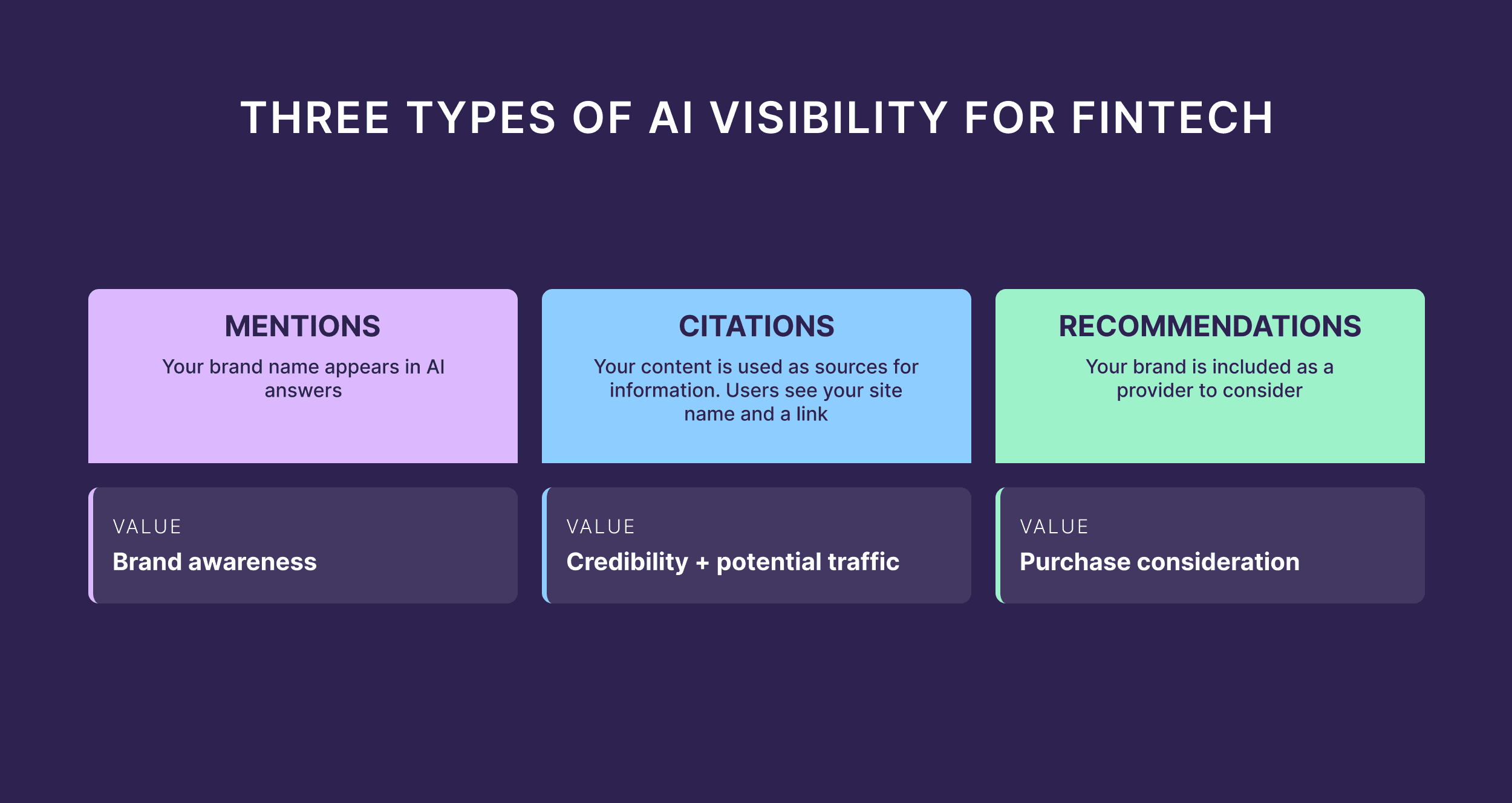
For fintech brands, appearing in AI search is not a monolithic concept; it manifests in three distinct ways, each offering unique benefits and requiring specific strategic approaches. To maximize their reach and influence, brands should strive for visibility across all three categories.
Brand Mentions
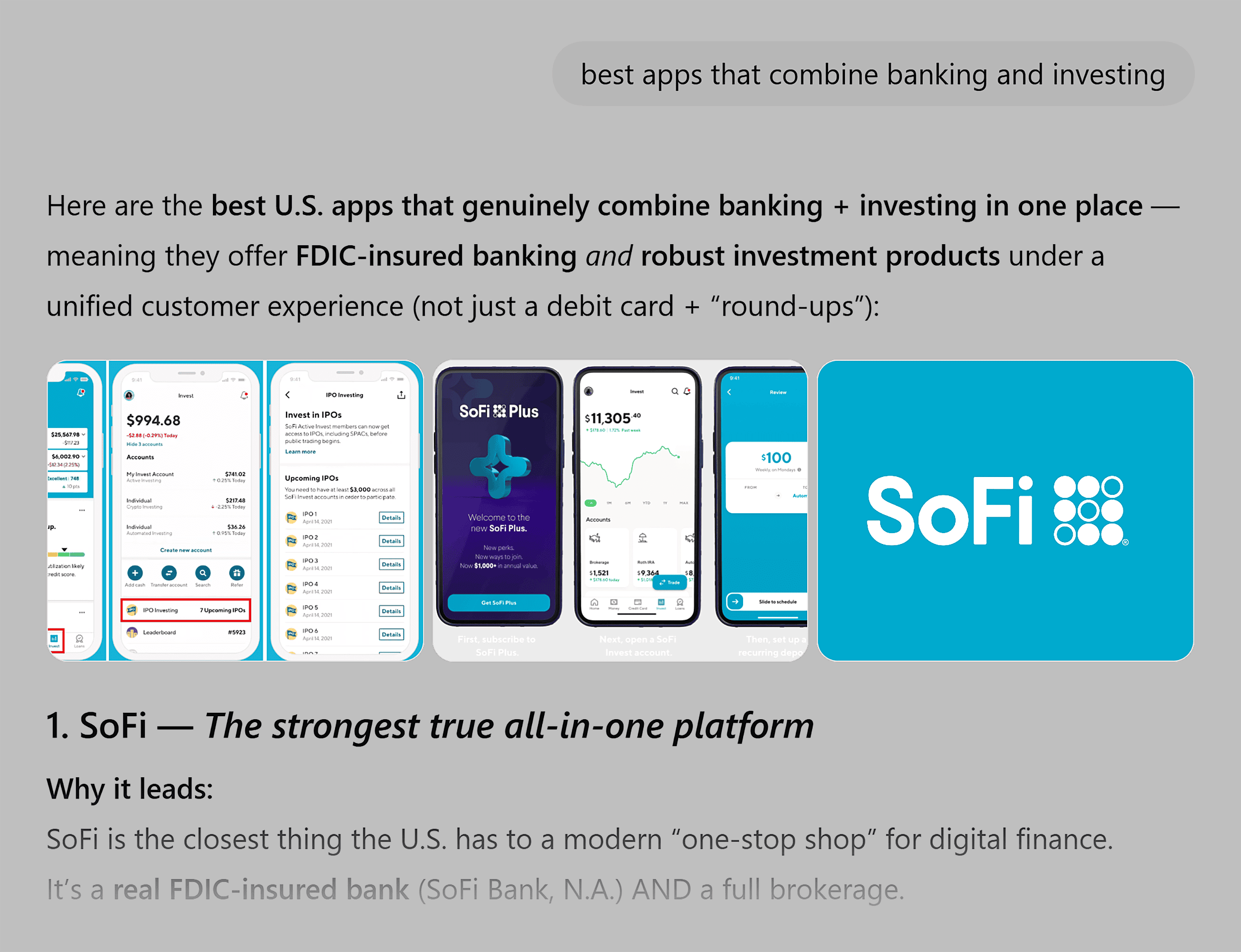
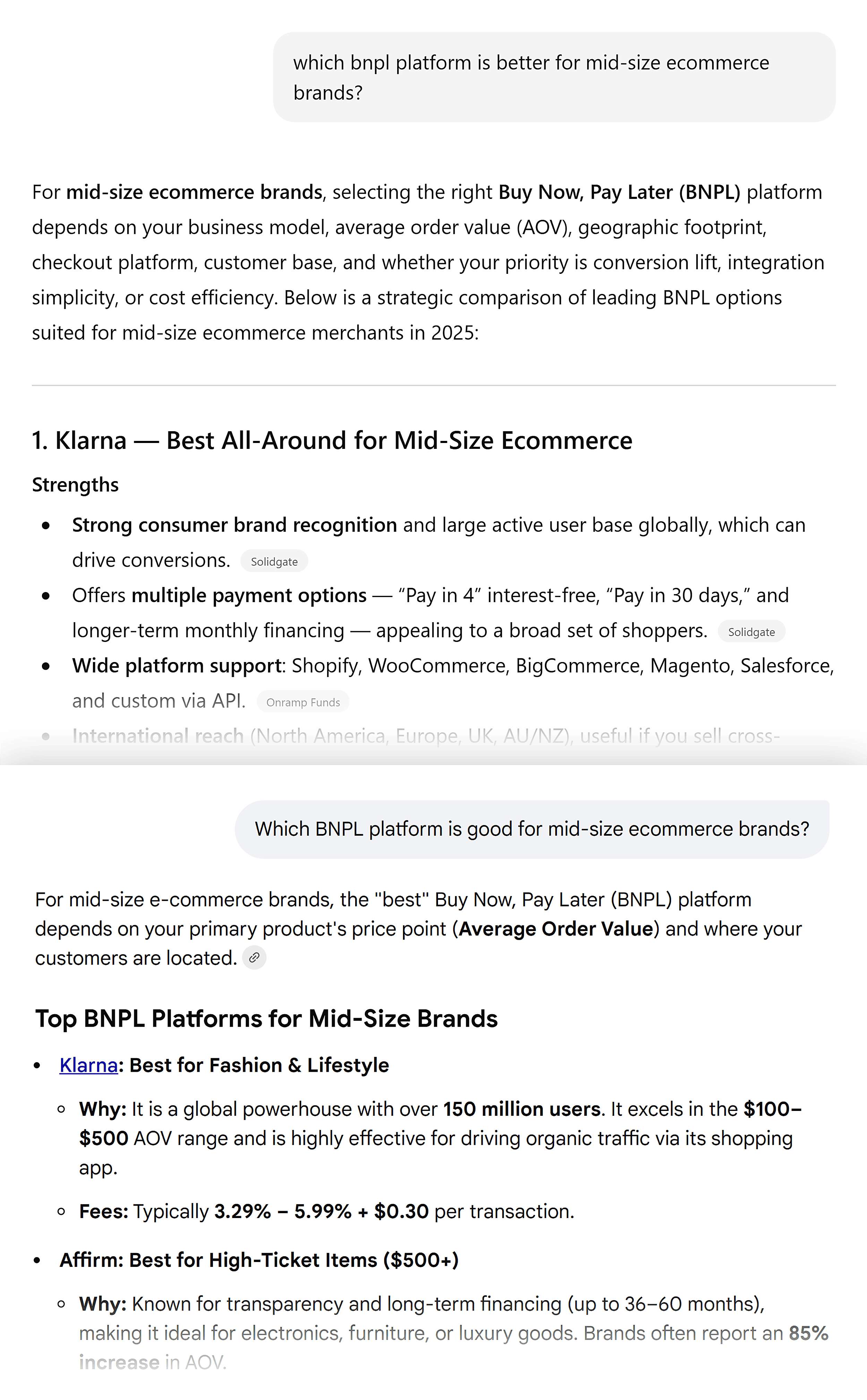
Brand mentions occur when AI systems incorporate a fintech brand’s name within their responses to user queries. These mentions are invaluable for fostering brand awareness, especially among users who may not be actively searching for a specific company. By placing a brand’s name in front of potential customers during their initial exploration phase, these mentions leverage the "mere exposure effect," a psychological phenomenon where repeated exposure to a stimulus increases familiarity and preference. For instance, a user asking "Are buy now, pay later providers ideal for my business?" might receive a ChatGPT response listing several prominent BNPL platforms. This inclusion signals that the AI recognizes these brands as legitimate and relevant players within the category.
Mentions often appear in response to non-brand queries, at a stage where users are beginning to research their options rather than seeking out a particular solution. While a mention is not an explicit endorsement, consistent visibility builds a subconscious familiarity that can prove advantageous as users progress toward a decision. However, the sentiment surrounding these mentions is equally, if not more, critical. If an AI consistently associates a brand with positive attributes like "strong security" or "innovative features," this perception becomes deeply ingrained. Conversely, if a brand is frequently paired with caveats such as "high fees" or "frequent outages," these negative associations can quickly erode trust and raise significant doubts in a user’s mind. Therefore, cultivating a consistently positive brand sentiment across the digital ecosystem is paramount for effective AI visibility.
Citations
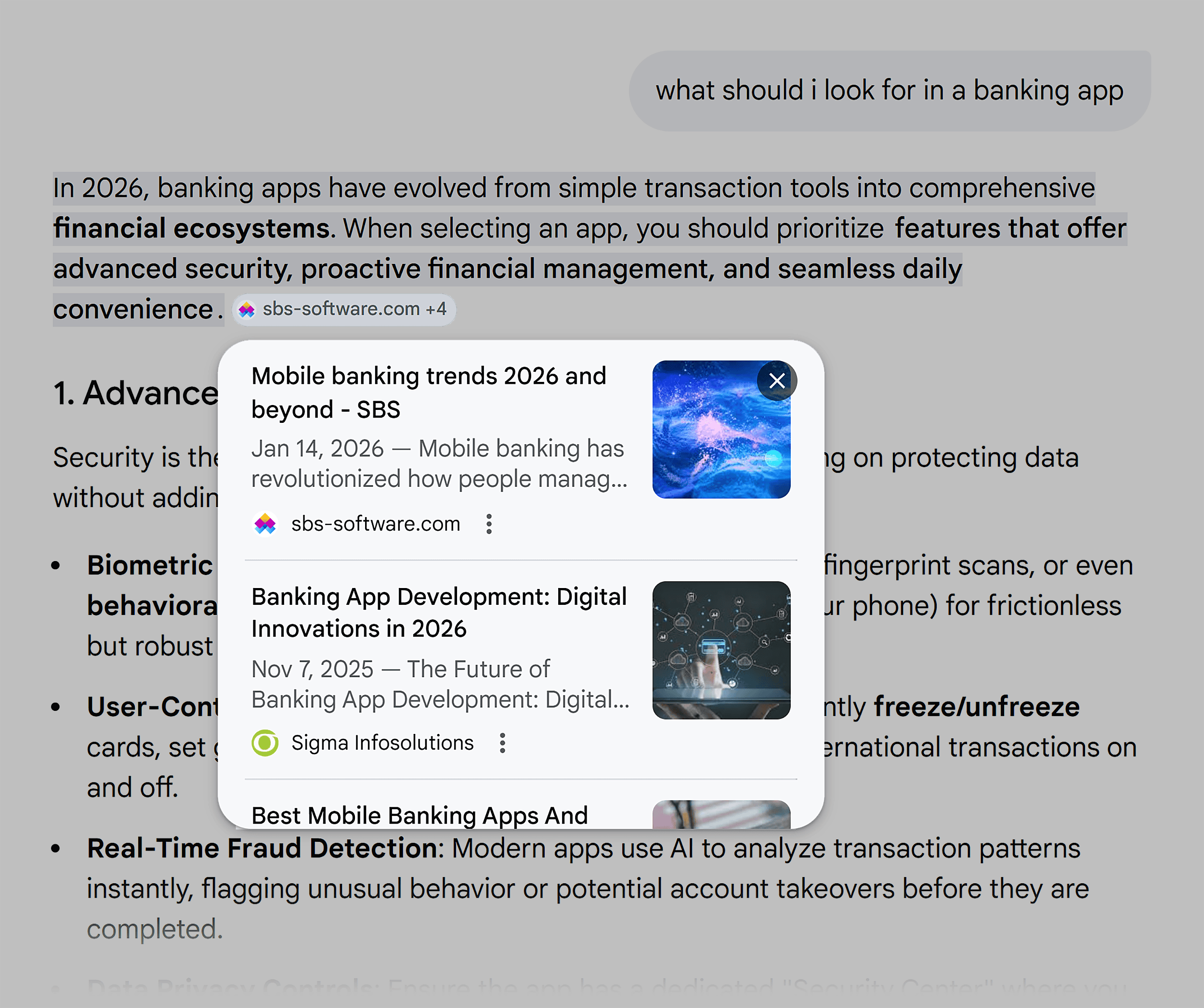
Citations represent instances where an AI system directly uses a brand’s web pages or official documentation to support its generated answer. This form of visibility is crucial for bolstering credibility and fostering consumer trust. When AI references a brand’s content as a source, it implies an endorsement of that content’s authority and reliability. Consistent citations establish a brand as an expert in its field, a trusted repository of accurate information.
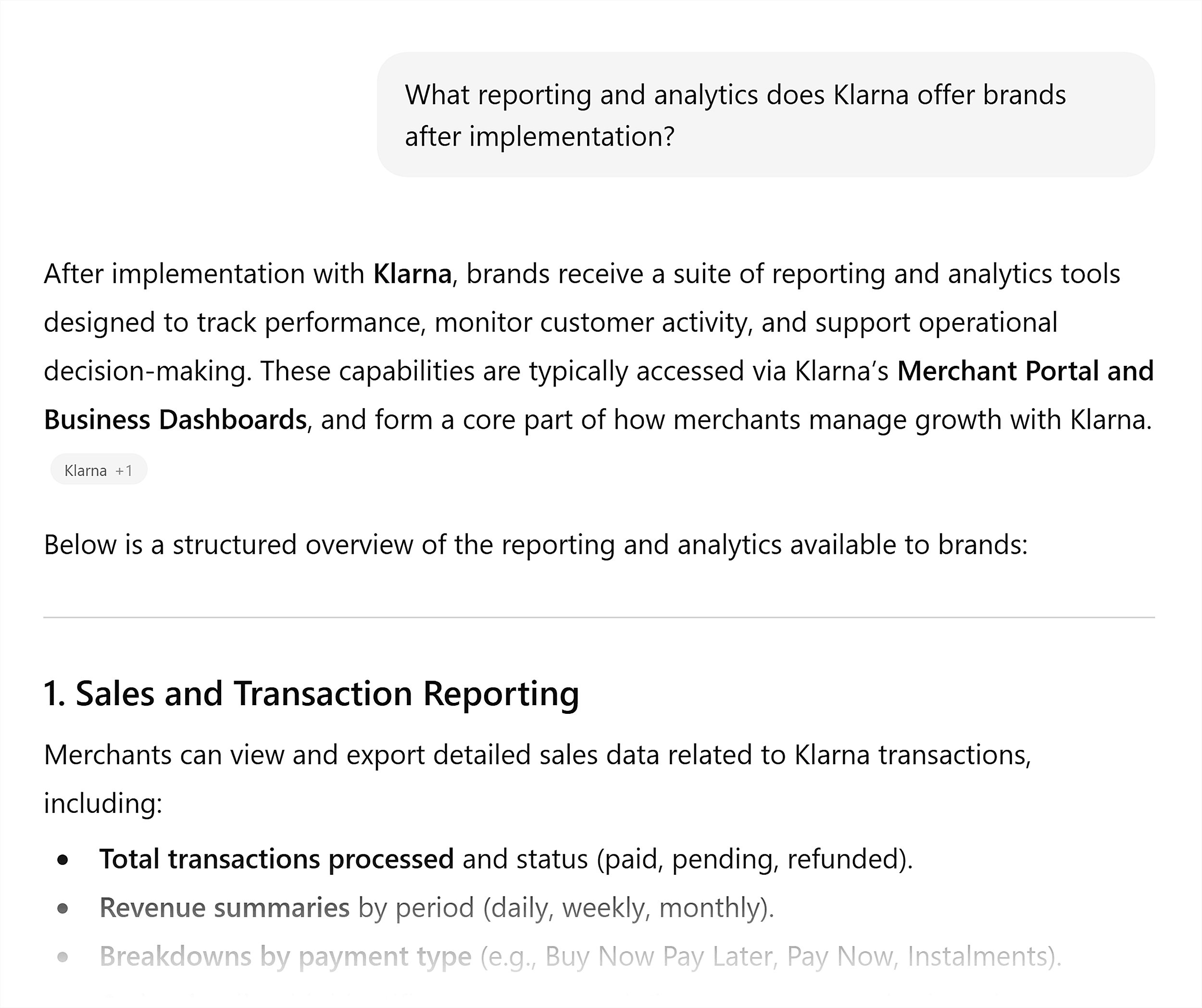
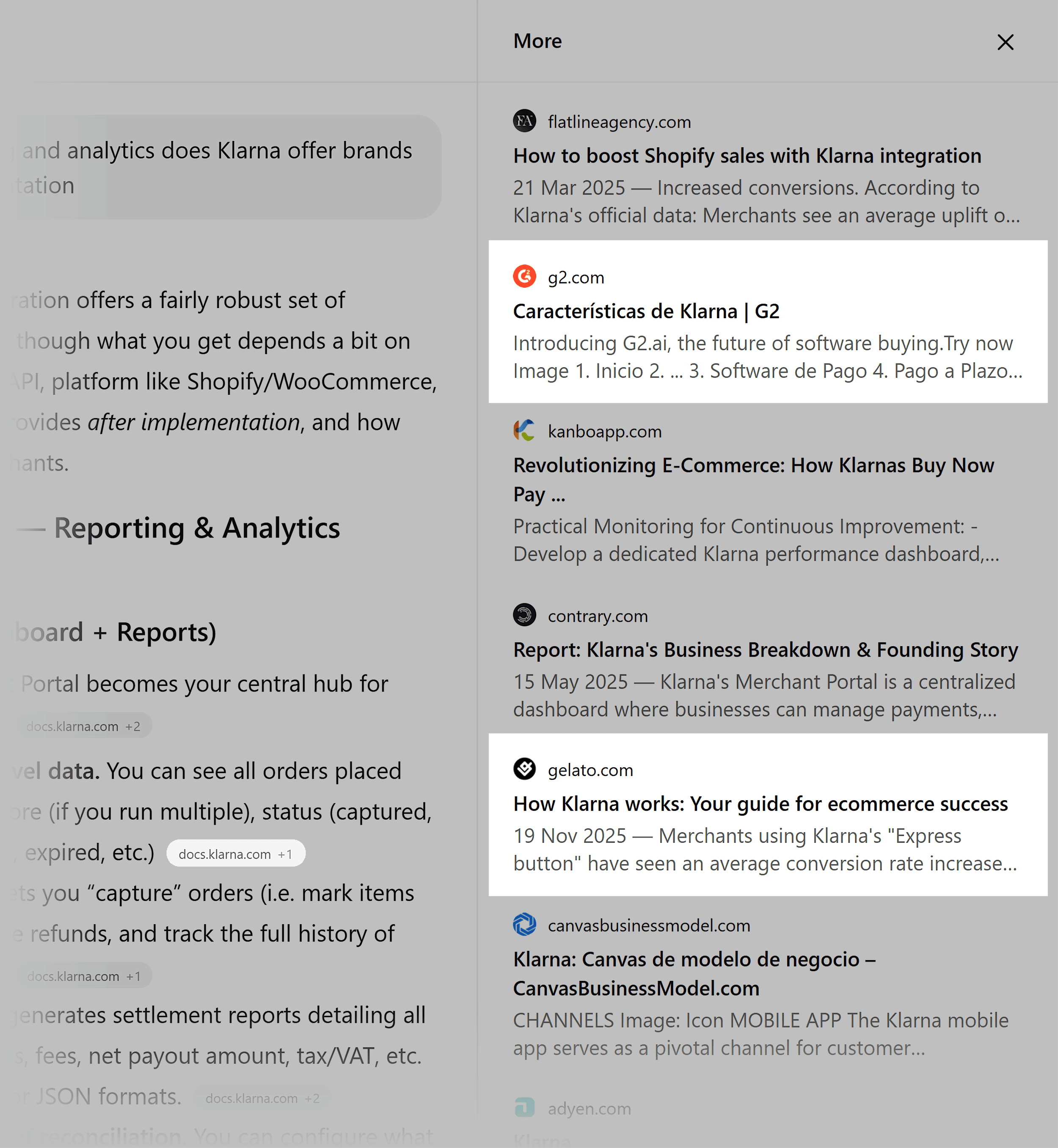
The format of citations can vary across different AI platforms. They might appear as footnotes, inline hyperlinks, sidebar panels with grouped sources, or even as visual thumbnails within the AI’s response. Regardless of the presentation, the underlying principle remains constant: AI systems are drawing information directly from a brand’s resources to construct their answers. This direct linkage provides fintech brands with a powerful opportunity to influence the precise language and details through which their products and services are explained. For example, when asked about Klarna’s reporting and analytics capabilities, ChatGPT might cite several pages from Klarna’s official documentation. This demonstrates that Klarna has a degree of control over how the AI articulates its product functionalities.
However, a critical nuance of citations is their impact on direct traffic. While they signal trust, users may not always click on citation links. Many prefer to continue their inquiry within the AI interface or pivot to traditional search engines if deeper investigation is required. Despite this, the foundational trust built through consistent citations is a prerequisite for the most impactful form of AI visibility: product recommendations.
Product Recommendations
Product recommendations are the most influential type of AI visibility, occurring when AI systems include a fintech brand or product in a curated shortlist of suggested options. These recommendations directly shape which brands users consider during their decision-making process and ultimately, which products they choose. For instance, a query like "Which BNPL platform is good for mid-size e-commerce brands?" might result in both ChatGPT and Google AI Mode listing Klarna as a top contender. This direct recommendation positions the brand prominently as buyers evaluate their choices.
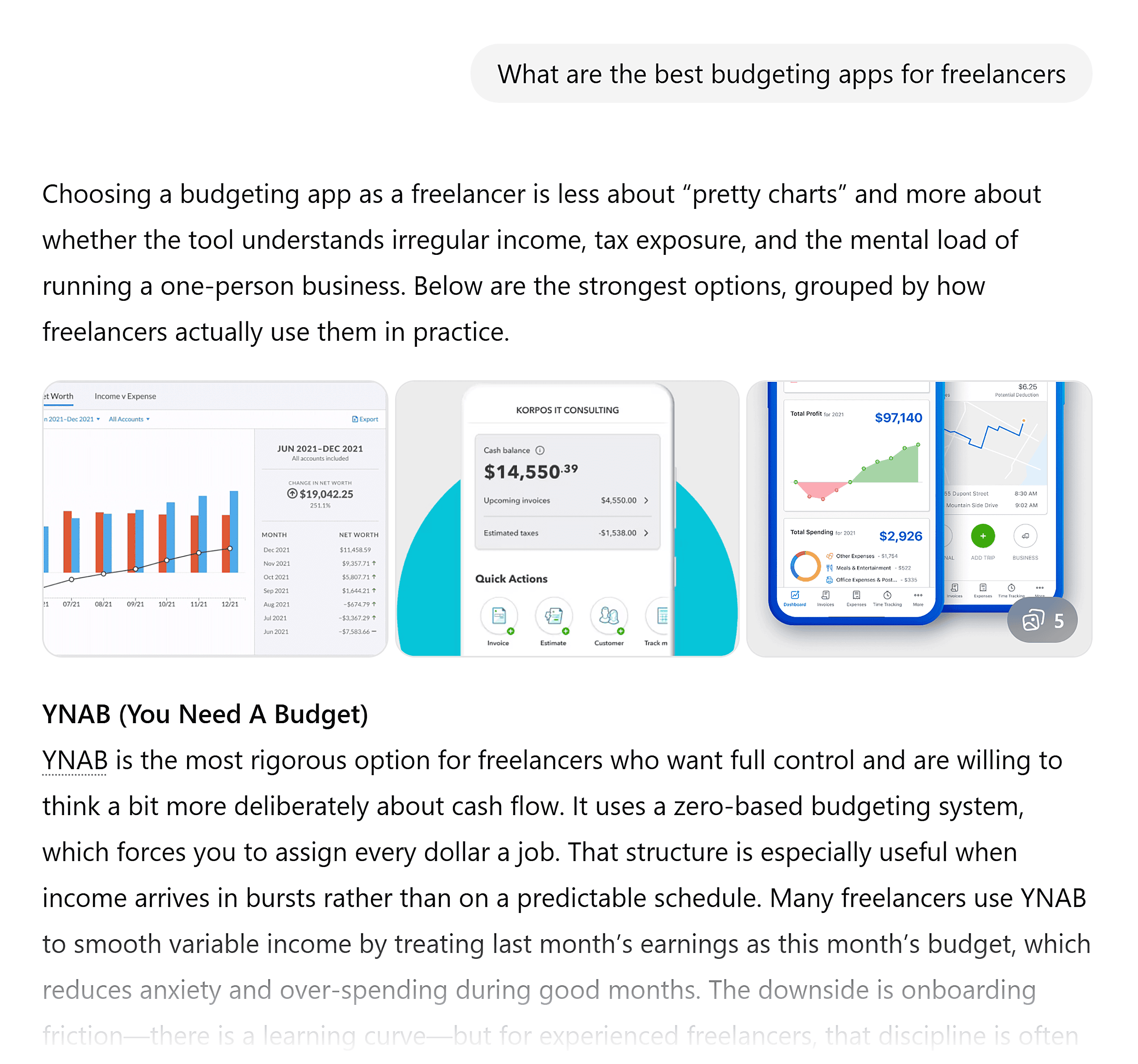
Securing recommendations is vital, particularly for "high-intent queries" – those containing keywords such as "top," "best," "compare," or "alternative." These queries indicate a user is actively seeking solutions and is close to making a purchasing decision. Examples include "best budgeting apps," "top investment platforms for beginners," or "compare digital banks." Appearing in these critical moments is not automatic; AI systems rely on specific signals to determine which brands to endorse. The subsequent sections will explore these underlying signals: consensus and consistency.
The Pillars of AI Trust: Consensus and Consistency
AI models act as sophisticated filters, sifting through vast amounts of information to present users with what they deem the most relevant and trustworthy answers. For fintech, this filtering process is exceptionally rigorous, boiling down to two primary signals that dictate which brands get featured: consensus and consistency.
Consensus
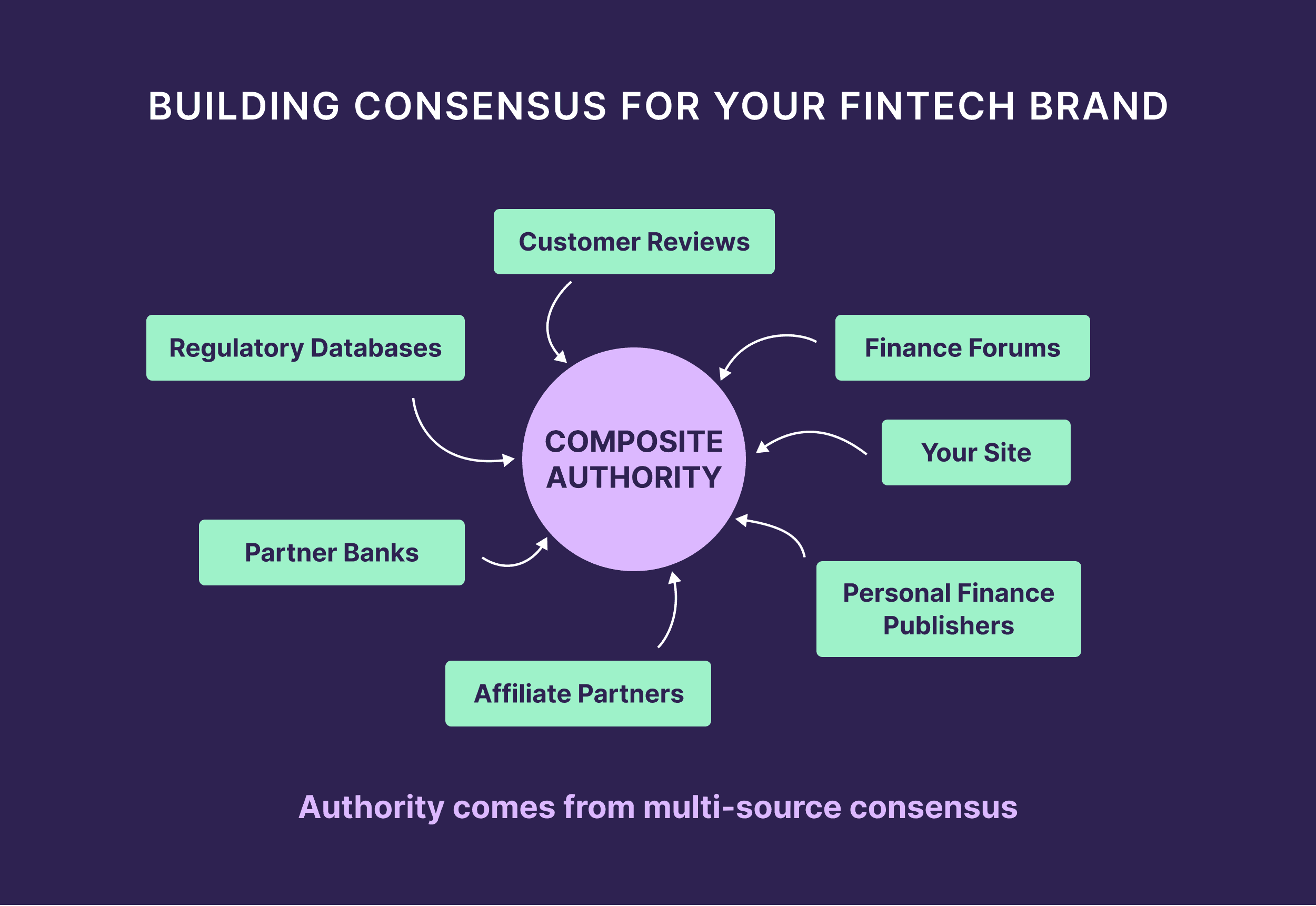
Consensus refers to the widespread agreement among multiple reputable sources regarding a brand and its products. When numerous credible entities mention a fintech brand, it provides AI systems with a form of social proof, suggesting that the brand is legitimate, reliable, and worthy of recommendation. The stronger and more widespread this consensus, the greater the AI’s confidence in featuring the brand. This dynamic, however, is a double-edged sword: if a multitude of sources consistently highlight negative aspects, the AI is likely to reflect these warnings in its responses.
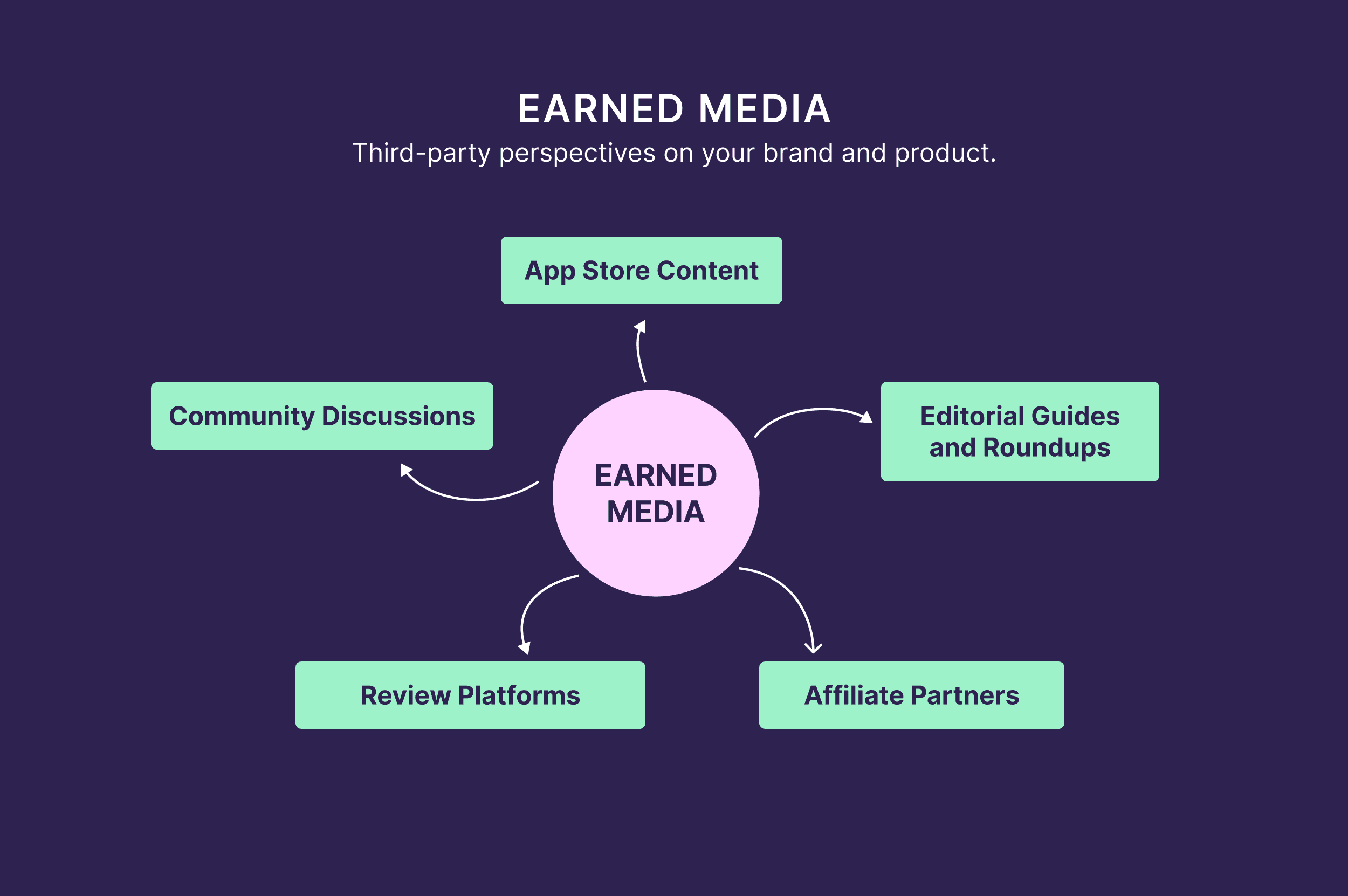
In the fintech sphere, AI systems typically assess consensus from a diverse range of sources, including:
Industry News Outlets & Financial Publications: Reputable news sites and specialized financial journals (e.g., Bloomberg, Wall Street Journal, Forbes, TechCrunch Fintech sections) carry significant weight.
Independent Review Platforms: Sites like G2, Capterra, Trustpilot, and Yelp provide user-generated feedback and expert reviews, offering insights into real-world product experience.
Consumer Advocacy Groups & Forums: Organizations like the Consumer Financial Protection Bureau (CFPB) or discussions on platforms like Reddit’s r/personalfinance or myFICO Forum reflect public sentiment and common concerns.
Academic Research & Whitepapers: Scholarly articles or industry reports can provide foundational validation for innovative fintech solutions.
Governmental & Regulatory Bodies: Official records from financial regulators (e.g., SEC, FDIC, FCA) confirming licenses and compliance are paramount.
To identify which sources AI models prioritize for consensus, fintech brands should conduct regular "brand-related prompts" in generative AI tools. For instance, querying "Best banks for international transfers" and then examining the citations will reveal the websites the AI model deems authoritative in that specific domain. These are the platforms where cultivating a strong, positive presence is most impactful. When these trusted sites consistently discuss a brand in a favorable light, it significantly increases the likelihood of that brand being mentioned and recommended by AI. This highlights the strategic importance of not just existing online, but actively engaging with and being positively covered by the ecosystem of sources AI relies upon.
Consistency
Beyond mere mentions, consistency is the second critical signal for AI trust. It means that the core factual details and narrative surrounding a fintech product remain uniform across all online sources. AI systems struggle with conflicting information; discrepancies undermine their ability to confidently present accurate answers. This consistency extends to:
Product Features and Functionality: What the product does, its key benefits, and how it operates.
Pricing Models and Fee Structures: Clear and consistent reporting of costs.
Regulatory Compliance and Security Measures: Details about licensing, data protection, and user safeguards.
Target Audience and Use Cases: Who the product is designed for and the problems it solves.
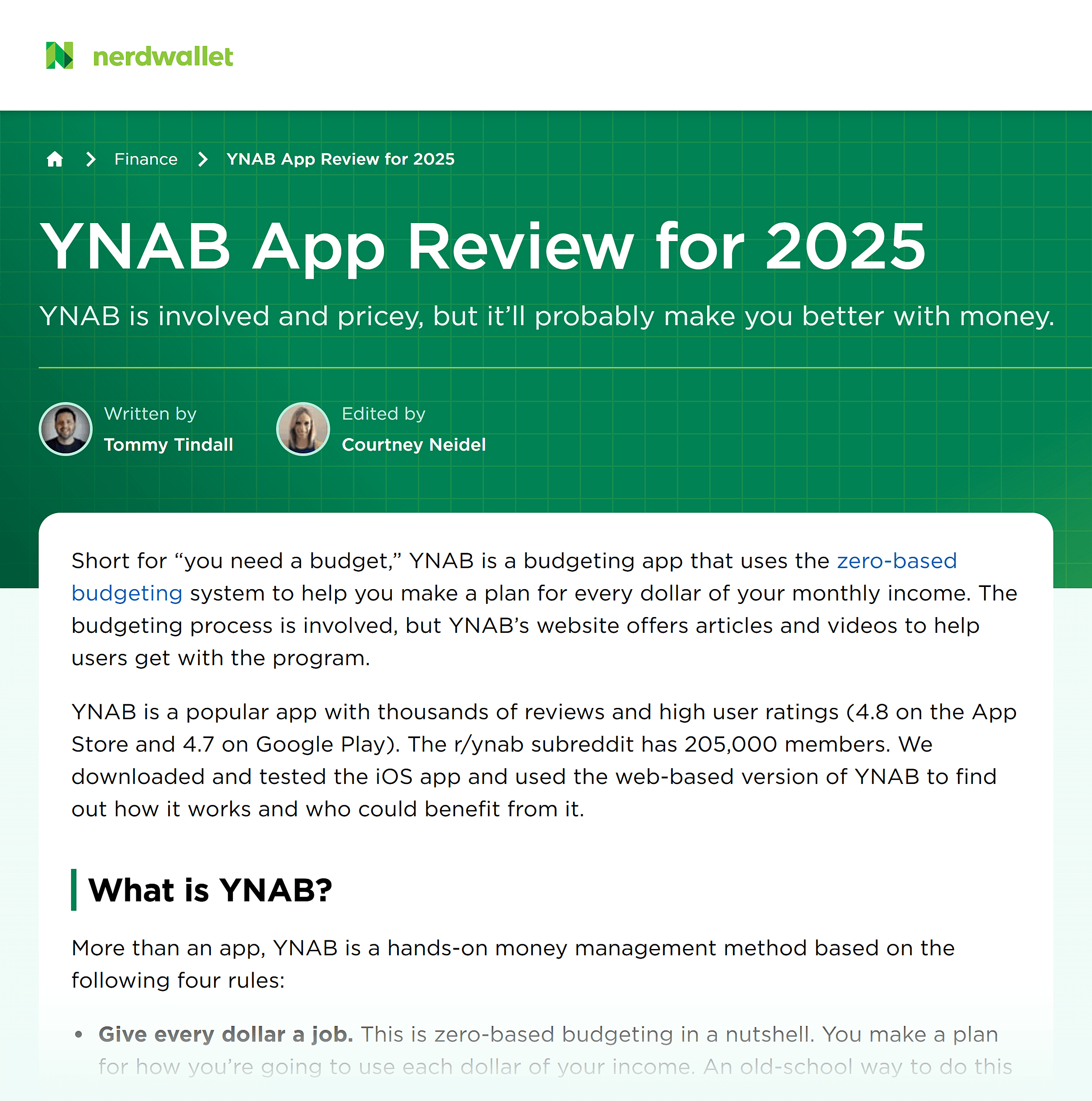
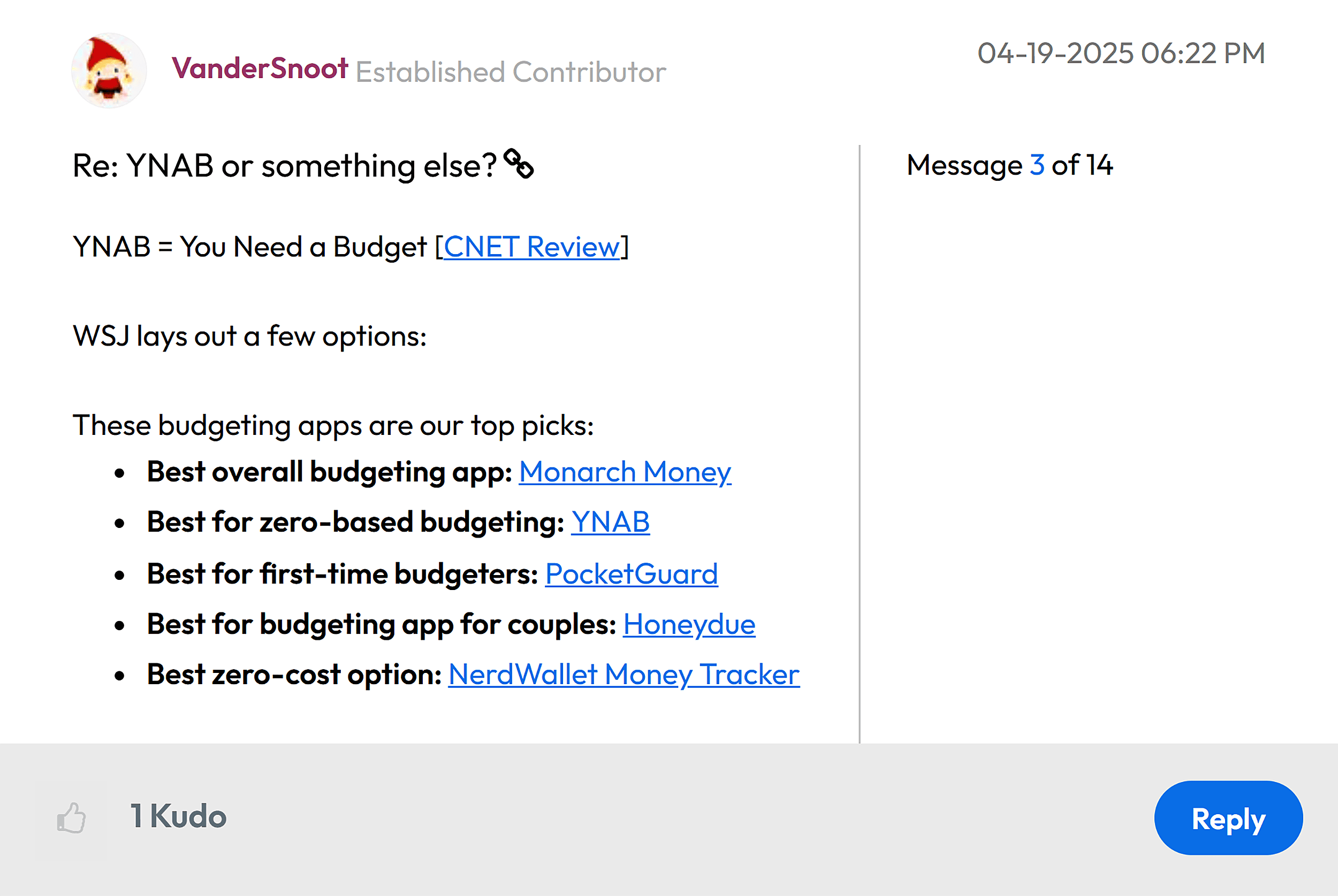
Consider the example of YNAB (You Need A Budget), a budgeting app often recommended by AI. This consistent recommendation is a direct result of its uniform positive portrayal across dozens of reputable sources, including Money, CNBC, NerdWallet, and Wirecutter, as well as finance communities like myFICO Forum. These sources consistently highlight YNAB’s efficacy for specific use cases, such as college students, goal-setting, and overall budgeting discipline. This strong alignment of messaging across diverse platforms provides AI with the confidence to recommend YNAB for those precise scenarios.
Achieving such consistency requires a proactive approach to reputation management and public relations. Fintech brands must ensure that their owned content aligns perfectly with how third-party publishers and affiliates describe them. This often involves collaborative efforts with content partners to shape the brand narrative. Ultimately, consistency begins with a clear, unified message originating from the brand itself and then being faithfully echoed across the broader digital landscape. Any divergence, whether in product details, pricing, or security claims, can lead to mixed signals that prompt AI to adopt a cautious, less definitive stance towards a brand.
3 Types of Content That Dominate Fintech in AI Search
Large Language Models (LLMs) are voracious consumers of public content, and in the sensitive realm of fintech, three specific categories of content carry the most weight in shaping AI responses. Optimizing these content types is crucial for enhancing AI search visibility and accuracy.
1. Owned Content
Owned content encompasses all material a fintech brand publishes and controls on its proprietary platforms, including its official website, comprehensive documentation, help centers, and branded social media channels. AI systems meticulously analyze these sources to understand a brand’s self-defined narrative and factual claims. Therefore, the clarity, completeness, and accessibility of owned content are paramount.
Content that directly addresses fundamental questions like "What does this product do?" or "How does it work?" is especially vital. For instance, when comparing ATM withdrawal limits, card spending caps, and international FX fees for services like Wise, Revolut, and Monzo, AI models frequently cite the pricing and product pages of these brands to construct their comparative answers. This direct reliance means that a brand’s website serves as both a primary marketing tool and a critical educational channel for AI.
Fintech brands should treat their website as the definitive source of truth. This involves publishing detailed product specifications, clear explanations of services, and transparent fee structures. Insights from sales conversations, customer support tickets, and competitive research can help identify common questions, concerns, and pain points that should be explicitly addressed in owned content. Intuit’s TurboTax, for example, features landing pages with extensive product details, covering security guarantees, key tax filing information, and user benefits. This comprehensive approach ensures that both AI and human users can easily grasp the product’s scope, functionality, and target audience.
To further optimize owned content for AI, brands should adopt structured data formats, use clear headings, and employ bullet points and tables to present information concisely. These formatting choices make it easier for AI to extract and cite specific data points. Regular updates are also critical; any changes in product features, pricing, or regulatory partners must be immediately reflected across all owned platforms to prevent the spread of outdated information.
2. Earned Media and Reviews
Earned media and reviews represent third-party perspectives on a fintech product or brand. This category includes everything from editorial coverage in financial news outlets to independent user feedback on review platforms. LLMs leverage these sources to validate a brand’s self-proclaimed attributes, fact-check claims, and understand the real-world user experience. In essence, earned media provides an external layer of consensus and sentiment.
For fintech, influential third-party sources include:
Financial News & Analysis Sites: Publications that review and analyze financial products (e.g., NerdWallet, Investopedia, The Ascent).
Industry Analyst Reports: Assessments from firms like Forrester, Gartner, or specialized fintech analysts.
User Review Platforms: Aggregators like G2, Capterra, Trustpilot, and app store reviews.
Blogs and Influencer Content: Reputable financial bloggers or influencers who review fintech products.
When an AI responds to a query about Klarna’s reporting and analytics, for example, it might cite not only Klarna’s documentation but also articles from Forbes, reviews on G2, and even discussions on platforms like Gelato. This mixed citation pattern demonstrates that AI actively cross-references a brand’s claims against independent evaluations.
A key strategy for fintech brands is to cultivate positive earned media. One highly effective tactic is to publish original research, industry reports (like KPMG’s Pulse of Fintech report), or data-driven insights that journalists and industry analysts can cite. Reporters are constantly seeking newsworthy statistics and expert commentary, and providing these resources can generate valuable media coverage. Other actions to increase positive earned mentions include:
Proactive PR Outreach: Engaging with relevant journalists and influencers to pitch stories, offer expert commentary, or provide product demonstrations.
Customer Testimonials & Case Studies: Actively collecting and promoting positive user experiences to influence review platforms and showcase success stories.
Thought Leadership: Positioning key executives as industry experts through speaking engagements, webinars, and bylined articles.
By actively shaping and encouraging positive third-party coverage, fintech brands can build a robust external narrative that reinforces their credibility and influences AI’s perception.
3. Official Records
Official records are indispensable documents that formally confirm a fintech brand’s legal authorization to operate, its compliance with regulations, and its overall standing within the financial ecosystem. In the YMYL category, LLMs treat these records as definitive proof of legitimacy and a strong trust signal, which is critical for making recommendations that could impact users’ financial lives.
The types of official records frequently cited by LLMs include:
Regulatory Filings and Licenses: Documents from bodies like the SEC, FINRA, FDIC (for banks), state money transmitter licenses, or equivalent international regulators.
Business Registrations: Official records confirming company incorporation and legal entity status.
Security Certifications: Proof of adherence to industry security standards (e.g., ISO 27001, PCI DSS compliance).
Partnership Agreements: Details about collaborations with licensed banks or financial institutions that underpin a fintech service.
These sources enable AI to confidently answer user questions regarding a brand’s legal standing and the protections afforded to its users. For instance, if a user asks Perplexity, "Is Wise licensed to operate in the U.S., and what protections apply to Wise balances?", the AI might cite Wise’s own documentation alongside regulatory information from the Federal Reserve, the CFPB, and details from partner banks. These official confirmations assure both AI and users that Wise:
Is appropriately licensed across relevant jurisdictions.
Complies with federal and state regulations.
Safeguards customer funds through recognized financial institutions.
This regulatory validation is a potent trust signal in AI search. It tells AI systems that a product is not only legitimate but also operates within a secure and regulated framework, making it safe to mention and recommend. Fintech brands have a significant opportunity to proactively manage this aspect of their digital footprint. By making their regulatory standing explicit, structured, and easily retrievable, they can directly influence AI’s confidence in their services.
Practical steps include:
Transparent Disclosure: Clearly naming partner banks, custodians, and key infrastructure providers on the company website, often in the footer, "About Us" section, or dedicated "Trust & Security" pages.
Dedicated Information Hubs: Publishing comprehensive pages that detail:
Regulatory Licenses: A list of all licenses held and the jurisdictions covered.
Security Protocols: Explanations of data encryption, fraud prevention, and account protection measures.
Partner Institutions: Information about the licensed financial institutions that hold customer funds.
Data Hygiene: Ensuring that all regulatory documentation on the website is current and accurate. Outdated PDFs or help documents should be updated, redirected, or removed to ensure AI only accesses the most recent and relevant information.
By meticulously curating and maintaining these official records and making them discoverable, fintech brands can build an unassailable foundation of trust that resonates strongly with AI systems and, by extension, with their potential customers.
How Fintech Brands Can Improve AI Search Visibility and Accuracy
The increasing reliance on generative AI for financial research presents both a challenge and a monumental opportunity for fintech brands. A 2023 Motley Fool Money study revealed that 54% of Americans now consult ChatGPT for financial inquiries, meaning the "AI version" of a brand often precedes its official website. While this might seem daunting, a Microsoft study found that traffic originating from AI converts at three times the rate of other channels, including traditional search, direct visits, and social media. The crucial caveat, however, is that this conversion advantage only materializes if the AI accurately and favorably describes the product. Here’s how fintech brands can ensure they capitalize on this trend.
1. Establish Verifiable Trust and Clarity
LLMs require concrete, verifiable proof of a brand’s legitimacy and trustworthiness before incorporating it into their answers. Therefore, transparently showcasing trust details across all owned platforms is non-negotiable.
Create a Centralized Trust Hub: A dedicated section on your website, such as a "Trust & Security Center" (like SoFi’s) or a comprehensive "Help Center" (similar to Venmo’s), should serve as the primary source of truth. This hub must clearly articulate:
Regulatory Compliance: Licenses, registrations, and affiliations with regulatory bodies (e.g., FDIC membership, SEC registration).
Security Measures: Detailed explanations of data encryption, fraud protection, multi-factor authentication, and other safeguards.
Data Privacy Policies: Clear outlines of how customer data is collected, stored, and used.
Partner Banks/Custodians: Identification of the regulated financial institutions that hold customer funds.
Insurance/Protections: Information on deposit insurance or other protective schemes.
Integrate Trust Signals Across Your Site: Don’t confine trust details to a single page. Reiterate key information on the homepage, "About Us" page, and within relevant FAQ sections on service pages. Many fintech brands strategically place disclosures (e.g., "Member FDIC," partner bank language) in their website footers for consistent visibility.
Address User Concerns Proactively: Utilize keyword research tools like Semrush’s Keyword Magic or Google’s People Also Ask feature to identify common safety and trust-related questions users have about your company or industry. Create content that directly and thoroughly answers these questions, ensuring the information is presented in an easy-to-digest format (FAQs, bullet points, clear headings) that AI can readily parse and cite.
Maintain Impeccable Data Hygiene: Operational changes, new partnerships, or updated regulatory frameworks necessitate immediate updates to all relevant documentation. Old PDFs, help articles, or product specs should be promptly updated, redirected, or removed to ensure AI systems only access the most current version of information. This proactive approach prevents the spread of outdated or conflicting details.
2. Harmonize Brand Messaging and Reduce Mixed Signals
Contradictions in online information severely undermine AI’s trust in a brand, breaking the crucial consistency signal. As companies evolve, outdated content can persist, leading to AI confusion about which information is current. Mitigating mixed messages is essential.
Synchronize Owned Content: Ensure your core narrative, product details, and trust documentation are perfectly aligned across all landing pages, help centers, and marketing materials on your own site. SoFi, for example, consistently reinforces its "all-in-one app" positioning throughout its digital properties. Cross-functional collaboration between marketing, product, and compliance teams is vital to ensure uniformity in promotional messaging, regulatory disclosures, and product specifications.
Influence Third-Party Coverage: Affiliate sites and finance publishers are frequently cited by AI models (as shown by the Semrush AI Visibility Index). Regularly audit what these influential third parties are saying about your brand, particularly in "best-of" lists, comparison articles, and reviews.
Monitor Key Queries: Research how users evaluate your product (e.g., "Is [Brand] reliable?", "What are the pros and cons of [Brand]?", "Alternatives to [Competitor]?").
Review Cited Sources: Use AI visibility tools or manual searches to identify the specific pages and websites AI cites for these queries.
Proactive Engagement: If you find inaccuracies or outdated information, reach out to publishers with clear, publish-ready facts and request corrections or updates. Building relationships with these publishers can facilitate smoother information flow.
Engage in Online Communities: Forums and social media platforms often have a long shelf life, meaning outdated discussions can remain discoverable for years, potentially influencing AI.
Monitor Conversations: Track mentions of your brand on platforms like Reddit, Quora, and specialized financial forums.
Official Presence: Consider establishing an official presence or actively participating in relevant communities (e.g., Fidelity’s subreddit). This allows direct influence over the public record and provides opportunities to correct misinformation or clarify product details.
Provide Current Information: When engaging, always link to the most current and accurate information on your owned platforms.
3. Proactively Manage Brand Perception and Sentiment
AI systems analyze the overall public sentiment surrounding a brand, and this collective perception directly shapes the answers users receive. For example, if a user asks ChatGPT "Is PayPal safe?", the AI’s response uses qualifying language ("generally considered," "not perfect") and adds caveats, citing sources that highlight both its security features and potential user risks. This demonstrates that external sentiment, even if nuanced, directly impacts AI’s portrayal.
Conduct Regular AI Search Visibility Audits:
Manual Audits: Periodically run a consistent set of high-intent, brand-related, and category-related prompts on leading generative AI tools (e.g., ChatGPT, Google AI Overviews).
Analyze Sentiment: Note the sentiment (positive, neutral, negative) in AI responses, observing any discrepancies across models. Look for patterns in how your brand is described:
Positive: Emphasizes strengths, benefits, and trustworthiness.
Neutral: Presents factual information without strong emotional framing.
Negative: Highlights weaknesses, risks, or criticisms.
Leverage AI Visibility Tools: Tools like Semrush’s AI Visibility Toolkit can automate and scale this process, providing insights into:
Overall Sentiment & Share of Voice: A high-level view of your brand’s emotional perception and how often it’s mentioned relative to competitors.
Platform-Specific Breakdown: Sentiment analysis across different AI models and platforms (e.g., ChatGPT, Google AI, Perplexity).
Competitor Benchmarking: How your brand’s sentiment and visibility compare to major rivals.
Narrative Drivers: This feature is particularly valuable, showing the exact questions users ask about your brand and the percentage of favorable sentiment in each AI-generated answer. This allows you to pinpoint areas where perception is strong or weak, guiding targeted content and reputation management efforts.
By understanding and actively managing sentiment at scale, fintech brands can proactively address negative narratives, amplify positive ones, and ensure AI systems consistently present them in the most favorable and accurate light.
Make Your Fintech Brand Easy for AI to Trust
The integration of AI into financial research marks a pivotal shift in consumer behavior, positioning AI-generated answers as the crucial first touchpoint for many potential customers. For fintech brands, this means that a lack of presence or, worse, inaccurate representation in these AI responses equates to being excluded from the purchasing decision process entirely.
The solution lies in a deliberate and sustained effort to build robust consistency and strong consensus signals around your fintech brand. This involves a multi-faceted approach: meticulously curating owned content for clarity and accuracy, actively cultivating positive earned media and reviews, and transparently publishing and maintaining official regulatory records. By making your brand’s legitimacy, security, and value proposition undeniably clear and consistently verifiable across the digital ecosystem, you empower AI systems to confidently mention, cite, and recommend your products.
The burgeoning era of AI search is not merely a technological evolution; it’s a strategic imperative for fintech. Brands that proactively embrace AI optimization, focusing on verifiable trust and consistent messaging, will not only enhance their visibility but also harness the power of AI to drive highly qualified, high-converting traffic. The opportunity to shape your brand’s AI narrative is immense; the time to act is now.
Top Cloud Accounting Software for Businesses: Streamlining Your Finances in the Digital Age
Cloud accounting software has revolutionized how businesses manage their finances. Moving from desktop-based, often siloed systems, to accessible, integrated cloud platforms offers unparalleled flexibility, real-time insights, and enhanced collaboration. This transition is no longer a luxury but a necessity for businesses of all sizes aiming for efficiency, accuracy, and strategic financial management. The best cloud accounting software empowers entrepreneurs and finance teams to automate tedious tasks, gain a clearer picture of their financial health, and make informed decisions with greater speed and confidence. When selecting a platform, key considerations include scalability, ease of use, feature set relevant to your industry and business model, integration capabilities with other business tools, security protocols, and, of course, pricing. Understanding these core aspects will guide you toward a solution that not only meets your current needs but also supports your future growth. The market offers a diverse range of options, each with its strengths, catering to different business complexities, from sole proprietors requiring basic invoicing to large enterprises demanding advanced reporting and multi-currency support.
QuickBooks Online remains a dominant force in the cloud accounting software market, particularly for small to medium-sized businesses (SMBs). Its enduring popularity stems from a user-friendly interface that significantly lowers the learning curve for those new to accounting software. QuickBooks Online offers a comprehensive suite of features covering invoicing, expense tracking, bank reconciliation, and financial reporting. A major strength lies in its extensive app marketplace, allowing users to integrate with hundreds of third-party applications, including CRM systems, payroll providers, and e-commerce platforms, creating a unified business management ecosystem. This interconnectivity is crucial for automating workflows and eliminating manual data entry. For businesses that require more than just basic bookkeeping, QuickBooks Online offers tiered plans, such as Plus and Advanced, which unlock features like project profitability tracking, inventory management, and advanced reporting with custom fields. Its strong emphasis on accessibility means businesses can access their financial data from anywhere, on any device with an internet connection, facilitating remote work and collaboration among team members. Security is a top priority, with robust encryption and regular backups safeguarding sensitive financial information. The platform also provides a wealth of educational resources, including tutorials, webinars, and a large community forum, ensuring users can readily find support and maximize their use of the software. Despite its widespread adoption, some users note that while powerful, the Advanced plan can become quite expensive, and customization of reports, while present, might not be as granular as some enterprise-level solutions. Nevertheless, for the vast majority of SMBs, QuickBooks Online provides a robust, scalable, and intuitive solution for all their accounting needs.
Xero is another leading contender in the cloud accounting software arena, widely recognized for its sleek interface and strong international capabilities. Xero is particularly appealing to growing businesses and those operating across multiple jurisdictions due to its robust multi-currency support, enabling seamless transactions and reporting in different currencies without complex conversions. The platform excels in automation, with features like automatic bank feeds that import transactions in real-time, significantly reducing the manual effort required for reconciliation. Xero’s invoicing system is intuitive and customizable, allowing for professional-looking invoices that can be sent and tracked electronically. Expense management is also streamlined, with features for capturing receipts and categorizing spending efficiently. For inventory-reliant businesses, Xero offers robust inventory management capabilities, including stock tracking, cost of goods sold (COGS) calculation, and stock valuation. The platform’s reporting tools are comprehensive, providing key financial statements such as profit and loss, balance sheets, and cash flow statements, with the ability to drill down into details for deeper analysis. Xero’s app marketplace is also extensive, boasting integrations with a wide array of business applications, further enhancing its functionality and enabling businesses to tailor the software to their specific workflows. Collaboration features are well-developed, allowing multiple users to access and work on the same financial data simultaneously, which is invaluable for teams and accountants. Xero’s pricing structure is competitive, with different plans offering varying levels of functionality, making it adaptable to different business sizes and needs. While Xero is highly praised for its design and functionality, some users might find its payroll features to be less comprehensive than dedicated payroll solutions, though integrations can bridge this gap. For businesses prioritizing a modern, integrated, and internationally capable accounting solution, Xero stands out as an excellent choice.
Zoho Books is a powerful and comprehensive cloud accounting solution that is particularly attractive to businesses seeking an all-in-one approach to financial management, especially those already invested in the Zoho ecosystem. Zoho Books offers a feature-rich platform designed for SMBs, encompassing everything from invoicing and expense tracking to inventory management and project accounting. Its strength lies in its deep integration with other Zoho applications, such as Zoho CRM, Zoho Inventory, and Zoho Projects, creating a seamless operational flow and eliminating data silos. This integration allows for a holistic view of business operations, linking sales, projects, and finances in real-time. The invoicing module is highly customizable, allowing for professional branding and automated reminders. Expense tracking is simplified through receipt scanning and bank feeds. Zoho Books also provides strong inventory management features, including multi-warehouse support and serial/batch tracking, making it suitable for businesses with complex stock needs. Project accounting is a standout feature, enabling businesses to track time and expenses against specific projects, bill clients based on project progress or milestones, and analyze project profitability. The platform’s reporting capabilities are extensive, offering a wide range of standard financial reports and the ability to create custom reports for deeper insights. Security is paramount, with SSL encryption and regular data backups. Zoho Books offers competitive pricing with various plans, often bundled with other Zoho applications, making it a highly cost-effective solution for businesses looking to leverage a connected suite of tools. While its core accounting features are robust, some users may find the learning curve slightly steeper compared to more simplified interfaces, especially when exploring the full breadth of its integrated functionalities. However, for businesses that can benefit from its interconnected ecosystem and comprehensive feature set, Zoho Books presents a compelling and powerful option.
Sage Intacct is a leading cloud-based financial management solution designed for mid-sized to large businesses and complex organizations. It moves beyond traditional accounting by offering a true system of record for finance, providing unparalleled visibility and control over financial operations. Sage Intacct excels in areas such as multi-entity management, complex revenue recognition, and robust reporting and analytics, making it ideal for companies with multiple subsidiaries, diverse revenue streams, or stringent compliance requirements. Its architecture allows for deep customization to fit unique business processes, a crucial advantage for growing or specialized organizations. The platform’s core strengths include its ability to handle complex general ledger structures, accounts payable and receivable automation, and sophisticated budgeting and forecasting tools. A significant differentiator is its advanced reporting and dashboard capabilities, which offer real-time insights into key performance indicators (KPIs) and can be tailored to specific departmental or executive needs. Sage Intacct’s compliance features are also noteworthy, assisting businesses in adhering to industry-specific regulations and accounting standards. The software integrates seamlessly with a wide range of other business applications, including CRM, payroll, and HR systems, further enhancing its utility and enabling a unified view of business performance. Security is a top priority, with industry-leading protocols and certifications ensuring the protection of sensitive financial data. While Sage Intacct offers immense power and flexibility, its complexity and advanced feature set typically come with a higher price point and require a more dedicated implementation process, often necessitating professional guidance. This makes it less suitable for very small businesses or those with basic accounting needs. However, for mid-sized and larger enterprises requiring sophisticated financial management, scalability, and in-depth analytical capabilities, Sage Intacct is a premier choice that can significantly enhance financial efficiency and strategic decision-making.
Wave Accounting is a compelling option for freelancers, solopreneurs, and very small businesses, offering a free suite of accounting, invoicing, and receipt scanning tools. This makes it an incredibly accessible entry point into cloud-based financial management. Wave’s core accounting features include double-entry bookkeeping, bank and credit card connections for automatic transaction import, and a chart of accounts customization. The invoicing feature is professional and easy to use, allowing for the creation and sending of unlimited invoices. Receipt scanning through its mobile app simplifies expense tracking. Where Wave excels for its target audience is in its simplicity and cost-effectiveness. The core accounting and invoicing functionalities are entirely free, which is a significant draw for businesses with limited budgets. For more advanced needs, Wave offers paid services for payroll and payment processing, which are competitively priced. Its user interface is clean and intuitive, making it easy for users with minimal accounting knowledge to get started. Wave also provides basic reporting, offering essential insights into income, expenses, and profit and loss. However, the limitations of Wave become apparent as a business grows. Its inventory management capabilities are non-existent, and its project accounting features are very basic. The reporting, while sufficient for simple needs, lacks the depth and customization required by larger or more complex businesses. Furthermore, customer support, while generally responsive, can be slower than paid-tier offerings from other providers. Despite these limitations, for freelancers and small businesses prioritizing affordability and ease of use for fundamental accounting tasks, Wave Accounting is an excellent and highly recommended choice.
NetSuite ERP stands as a comprehensive enterprise resource planning (ERP) solution with robust cloud accounting capabilities, targeting mid-sized to enterprise-level businesses. While it offers far more than just accounting, its financial management module is exceptionally powerful and integrated. NetSuite’s accounting functions encompass a full suite of features including general ledger, accounts payable, accounts receivable, cash management, and fixed asset management. What sets NetSuite apart is its ability to manage complex financial structures across multiple entities, currencies, and tax jurisdictions. It offers advanced revenue recognition capabilities that comply with various accounting standards, as well as sophisticated financial planning and budgeting tools. The platform’s real-time dashboards and reporting provide deep insights into financial performance, enabling strategic decision-making. Crucially, NetSuite integrates accounting seamlessly with other critical business functions such as CRM, supply chain management, manufacturing, and e-commerce, creating a unified operational view. This end-to-end integration is a significant advantage for businesses looking to streamline their entire operation. Security is robust, with stringent access controls and data protection measures. NetSuite’s scalability is a major benefit, allowing businesses to grow and adapt without outgrowing their financial system. However, due to its extensive capabilities, NetSuite is a significant investment in terms of both cost and implementation time. It is typically suited for companies with complex operational requirements and the resources to leverage its full suite of features. For businesses seeking a truly integrated, scalable, and powerful financial management and ERP solution, NetSuite is a leading contender, though it represents a more substantial commitment than standalone accounting software.
SAP Business One is a comprehensive and scalable ERP solution designed for small and medium-sized businesses that require integrated business management, including strong financial accounting functionalities. For accounting, it offers a robust general ledger, accounts payable, accounts receivable, and bank reconciliation modules. It supports multiple currencies and facilitates the generation of financial statements, budget reporting, and cash flow analysis. A key advantage of SAP Business One is its ability to integrate accounting with other core business processes such as sales, purchasing, inventory management, and customer relationship management. This creates a unified view of the business, reducing manual data entry and improving accuracy across departments. The software is highly customizable, allowing businesses to tailor it to their specific industry needs and workflows. Its reporting capabilities are also strong, providing real-time access to critical business data through customizable dashboards and a range of standard reports. Security is a priority, with role-based access controls and data encryption. SAP Business One can be deployed on-premise or in the cloud, offering flexibility in how businesses choose to manage their IT infrastructure. While it offers a powerful and integrated solution, the implementation process for SAP Business One can be more involved than standalone accounting software, and its pricing reflects its comprehensive nature. It is best suited for growing SMBs that are looking for a foundational ERP system to manage their finances and other key operations in an integrated manner, rather than just a pure accounting package. Its depth and breadth make it an excellent choice for businesses aiming for operational efficiency and strategic growth through unified data management.
Microsoft Dynamics 365 Business Central is a cloud-based business management solution that combines financial management with other operational capabilities like sales, service, and operations. Its accounting module is robust, offering a comprehensive general ledger, accounts payable, accounts receivable, budgeting, and cash flow forecasting. It supports multiple companies and currencies, making it suitable for businesses with diverse financial structures. Dynamics 365 Business Central’s strength lies in its deep integration with the Microsoft ecosystem, including Microsoft 365 (formerly Office 365) and Power BI. This allows for seamless data flow and enhanced analytics, enabling users to leverage familiar tools for reporting and decision-making. The platform is highly scalable and can be customized to meet specific business requirements, whether through its built-in configuration tools or by leveraging the extensibility of the Dynamics 365 platform. It offers strong inventory management, warehousing, and production capabilities, making it a comprehensive solution for businesses involved in manufacturing, distribution, and retail. Security is a significant focus, with Microsoft’s enterprise-grade security infrastructure protecting sensitive financial data. While Dynamics 365 Business Central provides a powerful and integrated solution, it is generally aimed at mid-sized businesses and larger enterprises due to its extensive feature set and the typical implementation requirements. Its pricing is subscription-based and tiered, offering different levels of functionality. For businesses already invested in the Microsoft ecosystem or those seeking a deeply integrated ERP solution that goes beyond basic accounting, Dynamics 365 Business Central presents a compelling and powerful option for managing their entire business operations.
Odoo is an all-in-one open-source business management software that offers a modular approach, allowing businesses to select and pay only for the applications they need. Its accounting module is highly comprehensive, featuring a double-entry bookkeeping system, chart of accounts management, bank reconciliation, and accounts payable/receivable. Odoo’s strength lies in its extensive range of integrated applications, which include CRM, sales, purchasing, inventory, project management, and manufacturing, among many others. This modularity means businesses can start with a few core applications, such as accounting, and add more as their needs evolve. The accounting module seamlessly integrates with other Odoo applications, eliminating data silos and providing a holistic view of business operations. Odoo’s invoicing is robust, with features for recurring invoices, automated follow-ups, and payment processing integrations. Its reporting capabilities are also strong, offering a variety of financial statements and customizable reports that can be generated in real-time. The open-source nature of Odoo provides flexibility and the potential for extensive customization, appealing to businesses with unique requirements. Security is managed through Odoo’s hosting infrastructure, with options for both cloud and on-premise deployment. While Odoo offers significant flexibility and a powerful integrated suite, the user interface can sometimes feel less polished than some proprietary solutions, and the depth of customization may require technical expertise or the engagement of an Odoo partner. For businesses seeking a highly integrated, flexible, and cost-effective solution that can grow with them, Odoo’s modular approach to accounting and business management is a very attractive proposition.
Wall Street Futures Subdued as US-China Trade Talks Loom
Futures on major US stock indices experienced a period of subdued trading as investors braced for the highly anticipated, yet cautiously approached, US-China trade talks. The cautious sentiment stemmed from a confluence of factors, primarily the persistent uncertainty surrounding the trajectory of the trade dispute between the world’s two largest economies. Analysts widely interpreted the muted market reaction as a reflection of the delicate balance between the potential for positive breakthroughs and the ever-present risk of renewed escalation. This article delves into the underlying reasons for this subdued outlook, examining the key economic indicators, geopolitical considerations, and market sentiment that are collectively shaping investor behavior as these crucial negotiations commence.
The global economic landscape, a primary driver of market sentiment, remained a significant consideration. While pockets of resilience have emerged in certain sectors and regions, broader macroeconomic headwinds continue to cast a shadow. Inflationary pressures, though showing signs of moderation in some developed economies, persist as a concern, potentially influencing central bank policy decisions. Similarly, the specter of a global economic slowdown, fueled by factors such as geopolitical instability and supply chain disruptions, contributed to an underlying caution among market participants. In this context, the outcome of the US-China trade talks was viewed not merely as a bilateral issue but as a potential catalyst capable of either alleviating or exacerbating these existing global economic vulnerabilities. A successful de-escalation could unlock pent-up investment and boost consumer confidence, thereby providing a much-needed tailwind for global growth. Conversely, a breakdown in negotiations or a deepening of trade hostilities would undoubtedly amplify existing risks, potentially leading to a sharper economic contraction and increased market volatility.
On the corporate front, the ongoing trade tensions continued to exert pressure on multinational corporations. Supply chain diversification efforts, while strategically sound in the long term, represent an immediate cost and operational challenge. Companies with significant exposure to both the US and Chinese markets found themselves navigating a complex web of tariffs, import/export restrictions, and shifting consumer demand. The uncertainty surrounding future trade policies made long-term strategic planning and capital allocation more difficult, leading many businesses to adopt a more conservative approach to investment and expansion. This, in turn, translated into a cautious outlook for corporate earnings, a key determinant of stock market performance. The potential for a resolution, even a partial one, could offer much-needed clarity, allowing businesses to recalibrate their strategies and potentially unlock new avenues for growth. However, the absence of such clarity maintained a lid on aggressive bullish sentiment, contributing to the subdued trading environment in Wall Street futures.
Geopolitical considerations extended beyond the immediate trade dispute, encompassing a broader spectrum of US-China relations. Issues such as technological competition, intellectual property rights, and national security concerns have become inextricably linked to the trade dialogue. The US administration’s focus on safeguarding critical technologies and preventing the dominance of Chinese companies in strategic sectors added another layer of complexity to the negotiations. Similarly, China’s pursuit of technological self-sufficiency and its assertiveness on the international stage contributed to an environment of strategic rivalry. Investors closely monitored these broader geopolitical dynamics, understanding that a breakthrough on trade alone might not fully resolve underlying tensions, and that future friction points could easily emerge. The market’s subdued reaction reflected a recognition that sustainable stability would likely require addressing these multifaceted geopolitical challenges in conjunction with trade-related issues.
Market sentiment, a powerful, albeit often intangible, force, played a crucial role in shaping the subdued trading environment. A discernible risk-off bias had taken hold among many investors, prompting a shift away from more speculative assets towards safer havens. This cautious posture was fueled by a history of volatile price swings associated with previous trade negotiations, where optimism was often followed by disappointment. The cyclical nature of these trade discussions, characterized by periods of intense negotiation followed by plateaus or even regressions, had conditioned market participants to expect the unexpected. Consequently, rather than betting heavily on a positive outcome, many investors adopted a wait-and-see approach, preferring to preserve capital and avoid significant exposure until a clearer picture emerged. This collective caution translated into lower trading volumes and narrower price movements, a hallmark of subdued market activity.
The specific details of the upcoming trade talks were also a source of conjecture. Reports indicated that discussions would focus on a range of contentious issues, including agricultural purchases, intellectual property protection, forced technology transfer, and market access for American companies in China. The sheer breadth of these topics underscored the difficulty of achieving comprehensive agreement in a single round of talks. For market participants, the key question was not just whether an agreement would be reached, but what the scope and durability of that agreement would be. A superficial deal that failed to address fundamental structural issues was unlikely to provide sustained market relief. Conversely, a substantive agreement that tackled key grievances could signal a genuine shift in the bilateral relationship and provide a robust foundation for future economic cooperation. This nuanced perspective contributed to the tempered expectations evident in the subdued futures market.
The performance of key economic indicators in both the US and China served as a backdrop to these trade discussions. In the United States, inflation data, employment figures, and manufacturing indices provided insights into the health of the American economy. While some indicators pointed to resilience, others suggested a potential cooling. Similarly, in China, economic growth figures, consumer spending data, and industrial production numbers offered a glimpse into the performance of the world’s second-largest economy. The interconnectedness of these economies meant that any significant divergence in their respective economic trajectories would have ripple effects across global markets. Investors were keenly observing these indicators to gauge the broader economic context in which the trade talks were taking place, and how potential outcomes might impact overall economic stability.
The role of central banks also remained a significant factor. In the face of persistent inflation, the US Federal Reserve and other major central banks had embarked on monetary policy tightening cycles. The pace and magnitude of these rate hikes, and their potential impact on economic growth and corporate borrowing costs, were closely scrutinized. The outcome of the trade talks could influence central bank decisions, with a resolution potentially providing more room for accommodative policy, while an escalation might necessitate further tightening to combat inflationary pressures. This intricate interplay between trade policy and monetary policy added another layer of complexity for investors trying to decipher the market’s direction.
The impact on specific sectors was also a point of consideration. Industries heavily reliant on global trade, such as manufacturing, technology, and agriculture, were particularly sensitive to the developments in US-China relations. Companies involved in the production of goods subject to tariffs, or those with extensive supply chains spanning both nations, faced heightened uncertainty. Conversely, sectors less exposed to international trade, or those that could potentially benefit from a shift in trade patterns, might exhibit different responses. The subdued futures market reflected a broad-based caution, suggesting that investors were not making sector-specific bets with high conviction until the trade outlook became clearer.
The historical precedent of US-China trade negotiations offered valuable, albeit sometimes cautionary, lessons. Past rounds of talks had often been characterized by periods of intense diplomatic activity, followed by announcements of partial agreements or, at times, a return to escalating rhetoric. This cyclical pattern had instilled a degree of skepticism among market participants, leading them to temper their enthusiasm until concrete and lasting agreements were solidified. The subdued reaction in Wall Street futures could be interpreted as a manifestation of this learned caution, a recognition that past experiences demanded a measured and dispassionate assessment of the current situation.
Furthermore, the evolving nature of the global trade landscape, with increasing protectionist tendencies in various regions, added a broader context to the US-China trade dispute. The US-China trade war was not occurring in a vacuum; it was part of a larger trend towards a more fragmented and protectionist global economy. This broader trend amplified concerns about the long-term stability of international trade agreements and the potential for further disruptions. Investors were therefore assessing the US-China trade talks not only in isolation but also as a significant determinant of the future direction of global trade policy.
The sheer volume of capital deployed by both nations in their respective economies meant that any significant disruption to their trade relationship had far-reaching implications. The interconnectedness of global financial markets ensured that developments in the US-China trade arena could quickly transmit to other regions and asset classes. This global contagion risk contributed to a sense of caution among investors worldwide, reinforcing the subdued trading sentiment observed in Wall Street futures. The potential for spillover effects, either positive or negative, meant that even investors not directly involved in US-China trade were keenly observing the proceedings.
In conclusion, the subdued trading in Wall Street futures ahead of the US-China trade talks was a multifaceted phenomenon driven by a complex interplay of economic, geopolitical, and market sentiment factors. The persistent uncertainty surrounding the trade dispute, coupled with broader macroeconomic headwinds and geopolitical rivalries, fostered a cautious environment. Investors, having learned from past experiences, adopted a wait-and-see approach, prioritizing capital preservation over aggressive bullish bets. The outcome of these crucial negotiations, while holding the potential for significant market impact, was viewed through a lens of tempered expectations, reflecting the inherent complexities and the delicate balance of power between the two global economic giants. The subdued market sentiment served as a clear signal of the trepidation that pervaded financial markets as they awaited clarity on the future of US-China economic relations.