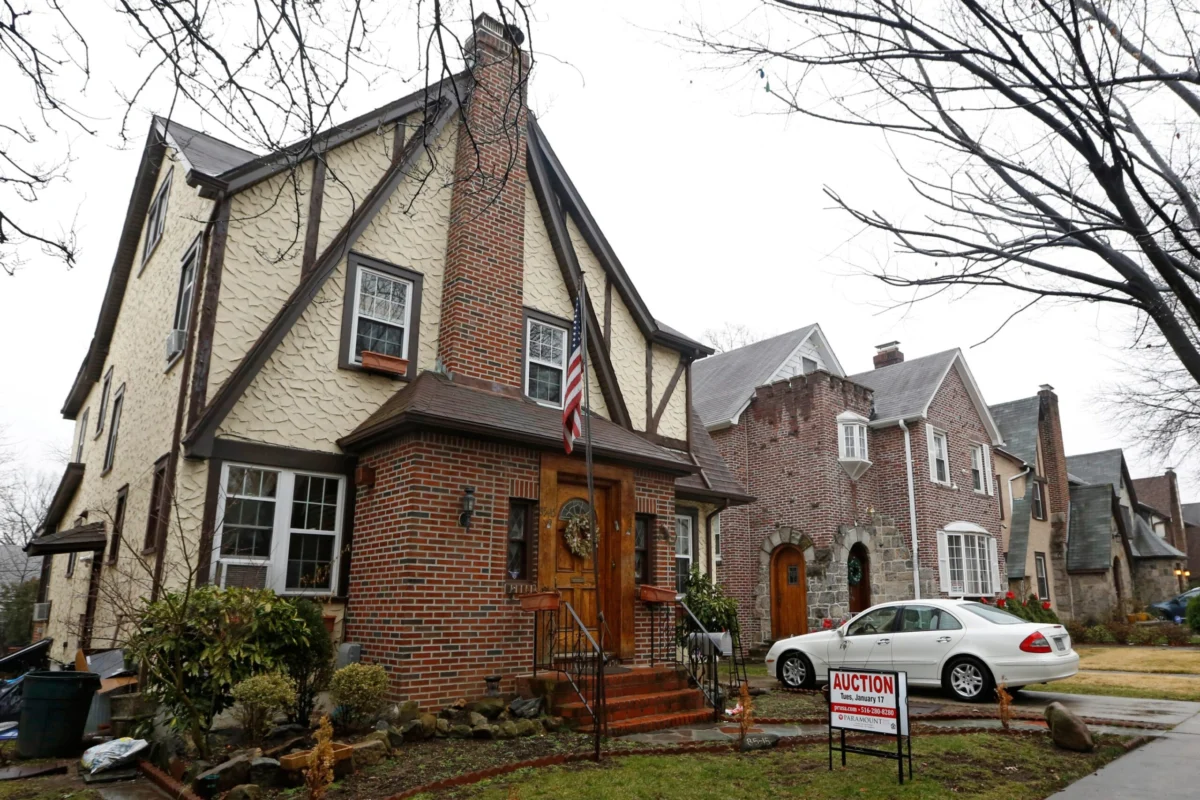
The Tudor-style residence, located in the prestigious Jamaica Estates enclave of Queens, has long served as a symbol of the former president’s humble beginnings in the real estate industry. Built in 1940 by Fred Trump, a prominent developer who would later shape the skyline of New York City, the house provided a backdrop for the early life of the future 45th president until he was four years old. Following a period of neglect that saw the property suffer from structural decay and environmental hazards, the home has undergone a rigorous rehabilitation, culminating in its sale for $1.93 million.
A History of Fluctuating Value and Speculation
The trajectory of the Jamaica Estates home serves as a case study in the intersection of real estate investment and political celebrity. The property, which features five bedrooms and three bathrooms, has experienced extreme volatility in its market valuation over the last decade.
In 2017, shortly after Donald Trump ascended to the presidency, the home was purchased by an entity known as Trump Birth Home LLC for $2.14 million. At the time, the acquisition was viewed as a strategic investment based on the potential for tourism and historic interest. The owners briefly converted the property into a short-term rental listing on Airbnb, curating an interior design that leaned heavily into the Trump brand. Guests were greeted by life-sized cardboard cutouts of the president, copies of his seminal book, "The Art of the Deal," and framed magazine covers documenting his career.
However, the novelty eventually waned, and the property languished on the market. By 2019, the owners attempted to offload the asset with an ambitious asking price of $2.9 million. When the market failed to support that valuation, the home sat vacant, leading to a precipitous decline in its condition. Reports surfaced detailing severe water damage caused by a burst pipe and the emergence of a feral cat colony within the walls, transforming the once-stately residence into a neglected eyesore that contrasted sharply with the luxury properties associated with the Trump name.
The Restoration Effort
The recent turnaround of the property began when developer Tommy Lin purchased the house in 2023 for $835,000. Recognizing the underlying value of the architecture in one of Queens’ most affluent neighborhoods, Lin initiated an intensive eight-month interior overhaul. According to reports from the New York Post, the renovation process required an investment of approximately $500,000 to strip the home down to its studs and address the systemic issues left by years of vacancy.
The modern incarnation of the residence now boasts high-end finishes intended to appeal to contemporary buyers. Key upgrades include a gourmet chef’s kitchen, the installation of intricate herringbone wood flooring, and the construction of spa-like bathrooms. These improvements were designed to marry the home’s historical Tudor charm with the amenities expected of a modern luxury estate. The $1.93 million sale price, which appeared on public records this past Friday, reflects a successful exit strategy for the developer, who managed to stabilize the property’s value while insulating it from the stigma of its period of decay.
The Role of Jamaica Estates in Trump’s Legacy
The Jamaica Estates neighborhood is historically significant within the context of Donald Trump’s professional development. It was here that Fred Trump established his reputation as a builder of middle-class housing, laying the groundwork for the fortune that his son would eventually leverage into a global real estate empire.
The house itself is representative of the suburban expansion that defined the post-war era in New York City. While Donald Trump eventually moved on to the grandeur of Manhattan—specifically his namesake Trump Tower, where he resided for decades—the Queens home remains a focal point for those studying the origins of his aesthetic and business philosophy. The contrast between the modest, albeit comfortable, suburban beginnings in Queens and the gilded interiors of his later properties is often cited by biographers as a key component of his branding strategy, which prioritizes opulence and recognizable luxury.
Market Context and Real Estate Implications
The sale of the home at $1.93 million serves as a benchmark for the current state of the Queens luxury market. In recent years, Jamaica Estates has remained a stable, if not explosive, market. The fact that the home reached nearly $2 million following a total renovation suggests that while the "Trump factor" initially inflated the price, the fundamental value of the property is now tied more to its architectural quality and neighborhood location than to its political provenance.
Real estate analysts have noted that properties associated with controversial or highly visible political figures often present unique challenges. Investors must weigh the potential for increased visibility against the risk of public backlash or unwanted scrutiny. In this instance, the transition from a "Trump-themed" rental to a modernized, neutral family home appears to have been the catalyst for the successful sale. By distancing the property from the political circus that characterized its 2017 ownership, the developers were able to attract buyers based on the merits of the house itself.
Broader Perspectives on Presidential Residences
The preservation of presidential childhood homes is a complex issue. While some homes are preserved as national historic sites or museums, many remain in the private sector, subject to the whims of the real estate market. The case of the Jamaica Estates property highlights the difficulty of maintaining a residence that is simultaneously a private home and a public curiosity.
When a property is imbued with the fame of a former president, it often becomes a target for speculators. This can lead to periods of intense activity followed by deep neglect, as seen between 2019 and 2023. The eventual restoration of the home represents a return to normalcy for the structure, stripping away the "museum-like" attempts to capitalize on the Trump brand and restoring it to its functional purpose as a high-end residence.
The Intersection of Personal and Political Aesthetics
It is noteworthy that as the former president approaches his 80s, his personal aesthetic—defined by gold-plated fixtures, ornate marble, and a sense of maximalist grandeur—has become a hallmark of his political tenure. His efforts to modify the White House, including the addition of a massive ballroom and the curation of the Oval Office, reflect a continuity of style that began in his early real estate projects in New York.
While the Jamaica Estates house lacks the overt opulence of Trump Tower or Mar-a-Lago, it represents the starting point of this trajectory. The house was built by a man who valued property as an instrument of status and power. The fact that his childhood home became a subject of intense market fluctuation underscores how deeply the Trump brand is tied to the physical environment. Whether it is the restoration of a mold-ridden house in Queens or the renovation of a federal building in Washington, the properties associated with Donald Trump are rarely static; they are constantly being reimagined, renovated, and repurposed to fit the evolving image of the man who once lived within them.
Final Outlook
The sale of the Jamaica Estates home closes a chapter on a tumultuous period of ownership that saw the property fluctuate between a tourist destination and a neglected relic. With the home now fully restored and in the hands of a new owner, it is likely to disappear from the headlines, settling into the quiet, affluent rhythm of its neighborhood.
For the real estate market, the sale provides a clear data point on the value of restoration in the current economic climate. For those interested in the history of the Trump family, the home serves as a permanent, if evolving, artifact of the mid-century suburban dream that helped produce one of the most polarizing figures in modern American politics. As the house enters its next phase under new ownership, it stands as a testament to the enduring, and sometimes unpredictable, power of real estate in the American imagination.