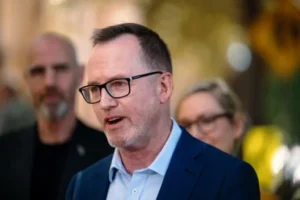
The nascent administration of Prime Minister Andy Burnham faced a barrage of criticism on Thursday, July 23, 2026, as Conservative leader Kemi Badenoch accused him of lacking national ambition and operating with a "mayor of Manchester" mindset. This sharp critique coincided with Burnham’s latest economic initiative – a 20% cut in business rates for pubs, clubs, and live music venues in England – which immediately drew fire from the opposition as a potentially "unfunded spending commitment."
Burnham’s Latest Economic Intervention for High Streets
Prime Minister Andy Burnham, who recently assumed office, announced a significant intervention aimed at bolstering local high streets. From April next year, pubs, clubs, and live music venues across England are set to benefit from a 20% reduction in their business rate bills. This £100 million package, according to government estimates, is projected to save a typical pub approximately £1,100 in the upcoming financial year. The policy is specifically targeted, excluding the largest live music venues, to focus support on smaller, community-centric establishments.
Burnham framed the policy as a crucial step to prevent the disappearance of "cherished local spaces" that form "the beating heart of our communities." In a statement, he asserted, "For too long, governments have stood by while cherished venues have disappeared from our local high streets. So today I am changing that. This government will back the businesses that people want to see in their communities. I said I would protect pubs and local high streets – the beating heart of our communities – and that’s what we will do."
This business rate cut is the latest in a series of cost-of-living announcements made by the new Prime Minister this week. On Tuesday, Burnham announced a cap on bus fares across England at £2 per journey, a reduction from the current £3 cap, to be funded primarily by reclassifying international climate donations into repayable loans. The previous day saw a commitment to cut VAT on electricity bills, promising an average saving of £45 per year for households from October, with the funding source identified as the scrapping of the digital ID scheme. These swift policy introductions have placed considerable pressure on the new administration to provide comprehensive details on their financing.

Government Assurances on Funding Amidst Opposition Doubts
The funding mechanism for the business rate cuts quickly became a focal point of contention. Chief Secretary to the Treasury Emma Reynolds robustly defended the policy, insisting it was "fully funded." Speaking to Sky News, Reynolds outlined two primary methods for financing the relief: "Firstly, by looking at business rate reliefs on businesses that cause social harm, such as vape shops, and secondly by cracking down on those online businesses who are not paying VAT." She expressed confidence in the numbers, stating, "I am confident as chief secretary, having looked at the numbers, and we will set out the numbers in more detail at the budget, that we will fund this announcement in the ways that I’ve just mentioned. There may be additional measures that we look at as well, but it is those two principal ways that we’re going to fund this business rate relief."
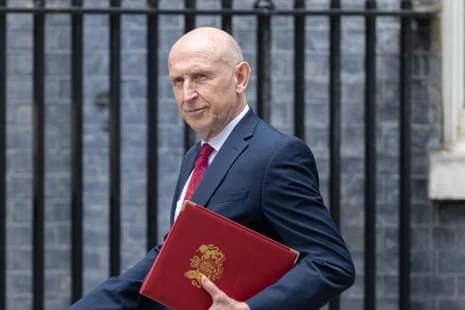
Concurrently, Chancellor John Healey addressed business leaders in central London, reiterating the government’s commitment to supporting UK businesses that have "felt really squeezed." Healey outlined his five key priorities as Chancellor: maintaining fiscal discipline with a buffer against uncertainty, fostering growth in every postcode, backing British industry through government procurement, driving wealth creation via increased investment and innovation, and curbing both the cost of living and the cost of doing business. He emphasised a desire to "step up the Treasury’s support for and work with business" to deepen their relationship, acknowledging that firms, like households, have been suffering from a "lack of a breathing space."
Conservative Opposition Unleashes Scathing Criticism
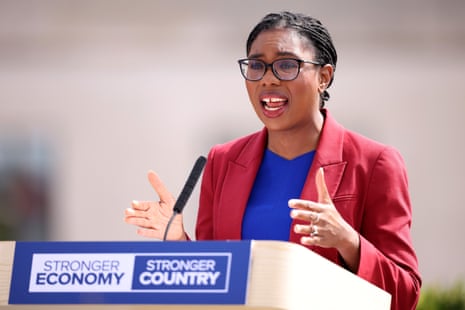
Despite the government’s assurances, the Conservative opposition wasted no time in attacking Burnham’s economic proposals. Kemi Badenoch, the Conservative leader, delivered a sharp rebuke during a speech in central London. She asserted that Andy Burnham was "still thinking like the mayor of Manchester" and that "going by what he’s announced so far, Andy Burnham’s ambitions for Britain are too small." Badenoch also criticised Burnham’s perceived unseriousness in engaging with cross-party collaboration, highlighting his lack of response to her letter offering to work together, contrasting it with his "tweets and memes and jokes." She challenged him to "start getting serious" by agreeing on key issues such as defence funding and welfare cuts.
Echoing Badenoch’s concerns, Conservative deputy chairman and shadow crime and policing minister Matt Vickers branded the business rate cut as "the third unfunded spending commitment in three days." Speaking on GB News, Vickers drew a stark comparison with the previous government’s policies: "When this government came to office, this Labour government, those businesses, all leisure, hospitality, and retail businesses, on the high streets, those small businesses, were getting a 75% reduction in their business rates. They took away the 75% and now he’s telling them he’s giving them 20% back, and he doesn’t know how he’s going to pay for it. It’s pitiful. We need to be realistic in how we support these businesses." He was referring to the temporary business rate discounts, sometimes reaching 75%, which were in place for several years from 2020/21 to aid retail properties in their recovery from the Covid-19 pandemic.
Mixed Reactions from the Business Community
The announcement received a mixed reception from the hospitality and small business sectors, reflecting the complex financial pressures they face.
Steve Perez, a hotel owner with establishments including pubs and restaurants, expressed significant skepticism regarding the impact of the 20% cut. He told BBC Radio 4’s Today programme that the relief "won’t make any material difference" for many, especially after recent re-evaluations. "Our business rates went up to about 130% [in April]. So this tiny, well, obviously it’s welcome £1,000, but this won’t make any material difference to any pub," Perez stated. He also highlighted a perceived oversight, noting that the policy primarily addressed pubs, clubs, and music venues, without explicitly mentioning restaurants and hotels, despite many pubs now serving food and offering accommodation. Perez further pointed to other rising costs, such as national insurance increases and the Extended Producer Responsibility (EPR) tax, suggesting the 20% cut felt like a small concession against a backdrop of broader financial challenges.
Iain Hoskins, owner of Ma Pub Group in Liverpool, offered a cautiously optimistic but still reserved view. While acknowledging that an extra 20% relief would "go some way to chipping away" at rising costs, he also questioned the breadth of its coverage. Hoskins highlighted the substantial increases his venues experienced following revaluation, with rates surging by 100% to 150% from last year to this. "While 20% – particularly if that 20% is on top of the 15% and other help that’s there – that can be very meaningful for businesses, independent businesses such as mine; I don’t want to sound ungrateful, but the increases were so huge last year that now we’re sort of chipping away at some of those increases," he explained. He concluded that while 20% is "not an insignificant figure," businesses are "not actually getting better value than we had before."
In a more positive vein, the Federation of Small Businesses (FSB) welcomed the proposal, though its policy chair, Tina McKenzie, stressed that it must be considered a "downpayment" on further comprehensive action. McKenzie called on the government to plan for a "significant increase in small business rates relief at the heart of the next budget," urging them to "deliver on promises made campaigning for the role, and fix the damage caused by business rates decisions that sent bills up and are holding back SME growth and jobs in every postcode."
The Music Venue Trust (MVT), an organisation dedicated to supporting UK grassroots music venues, also lauded the announcement. Chief Executive Mark Davyd hailed the 20% additional reduction as "an encouraging first step in a range of opportunities available to Andy Burnham’s new team to not just protect and secure live music, but begin to restore its central role at the heart of our towns and cities." Davyd, however, called for the same relief to be extended to Scotland, Wales, and Northern Ireland, arguing that "venues in Wales, Scotland and England must be confident of a level playing field of economic conditions for touring across the UK." He also urged the government to reconsider limiting eligibility criteria, advocating for "all live music spaces of all sizes" to qualify for the relief.
Broader Political Landscape and Future Challenges
The debate over the business rate cuts and their funding is emblematic of the challenges facing the new Burnham administration. Having made a series of high-profile cost-of-living pledges within days of taking office, the government is under intense scrutiny to demonstrate fiscal responsibility and transparency in its funding mechanisms. The proposed funding sources – reviewing reliefs for vape shops and cracking down on online VAT non-compliance – are currently described as being "in review and consultation," leading to questions about the immediate and guaranteed nature of the funding.
Beyond economic policy, the government is grappling with other significant issues. Prime Minister Burnham has initiated a review of controversial plans for the early release of thousands of prisoners, including killers, rapists, and sex offenders, from September. This decision followed a deepening political row, exacerbated by reports of ministers Wes Streeting and Shabana Mahmood making "cheap jokes" about the scheme, drawing sharp criticism from victims’ groups.
In a move with implications for devolved politics, Scottish Labour leader Anas Sarwar unexpectedly resigned his post to join Andy Burnham’s new government, a decision that has been met with accusations of opportunism and "lying to voters" from his Holyrood rivals.
Meanwhile, the Conservative party has escalated its pressure on a separate front, asking HMRC to investigate whether Nigel Farage should have paid tax on a substantial £5 million gift he received from crypto billionaire Christopher Harborne.
As the new government settles into power, the coming weeks are expected to see continued political jousting over economic policy, with the first budget under Chancellor John Healey anticipated to provide more comprehensive details on the administration’s fiscal strategy and its commitment to addressing both the cost of living and the cost of doing business across the UK.