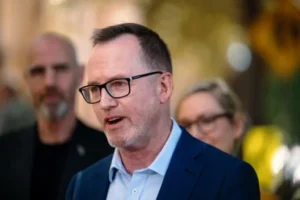
Chalmers articulated seven significant challenges, stressing that no single issue could encapsulate the current difficulties. He cited "serious challenges in our economy," "intensifying global pressures," and "very substantial generational challenges." Expanding on these, he specifically named "the AI revolution," "the energy transformation," "changes to our industrial base," "the ageing of our population," and "the fragmenting of geopolitics." These, he asserted, collectively present "parties of the sensible centre and the centre left parties like the Australian Labor party with a series of very serious economic challenges."
Earlier in his appearance, Chalmers highlighted a key policy announcement from the Prime Minister, Anthony Albanese: the extension of the paid practical placements program for students. He lauded the existing program as "a really important and successful policy," underscoring the government’s commitment to supporting students in gaining essential work experience. This initiative is seen as a proactive measure to address workforce development and ease financial burdens on students, particularly those in critical sectors requiring extensive practical training.
ALP National Conference: Setting the Policy Agenda

The commencement of Labor’s 50th national conference in Adelaide marks a pivotal moment for the party, as thousands of "true believers" gather to shape its future platform. The conference aims to articulate "practical" policies designed to alleviate public anxiety and frustration stemming from various national pressures.
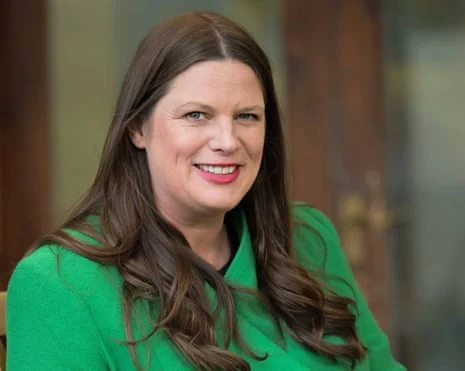
Day one of the conference features addresses from prominent Labor figures, including incoming Labor president Kate Ellis, South Australian Premier Peter Malinauskas, and Prime Minister Anthony Albanese. Debates throughout the day are scheduled to focus on crucial economic issues, led by Treasurer Jim Chalmers, and climate and environmental policies, spearheaded by Energy Minister Chris Bowen. The extension of financial assistance for students undertaking mandatory placements, a significant expansion of the federal government’s paid work experience program, was unveiled as a key policy initiative ahead of the conference. This move reflects a broader focus on addressing cost-of-living pressures and strengthening the workforce pipeline in essential services.
The Intensifying Debate on Gas Taxation
Amidst the conference proceedings, Jim Chalmers also addressed a contentious issue raised in a new left-wing manifesto circulating within the party. This manifesto advocates for a higher tax rate for top income earners, the introduction of wealth and inheritance taxes, and, critically, extracting more revenue from gas companies. The document explicitly states, "Labor will ensure that Australian people receive a fairer return from their natural resources, including through appropriate taxation arrangements."
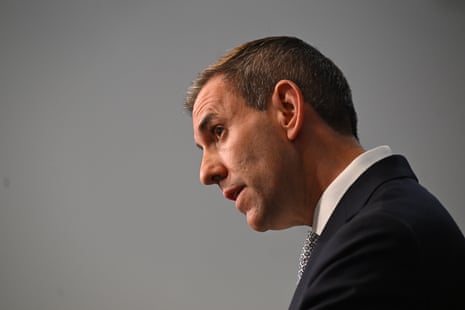
When pressed on whether the government should reconsider its approach to gas taxation, a call echoed by former Labor leader Bill Shorten, Chalmers acknowledged the "strong views and varied views about this issue" not only within the Labor party but across the broader Australian community. He pointed to previous adjustments made to the Petroleum Resource Rent Tax (PRRT) as evidence of the government’s efforts to secure a "fairer return" from natural resources. The PRRT, a tax on the profits of offshore oil and gas projects, has long been a subject of debate, with critics arguing it fails to adequately capture the super-profits of major resource companies, particularly during periods of high commodity prices. The government implemented reforms to the PRRT in 2023, which were projected to raise an additional $2.4 billion over four years, but many within the party and public believe further measures are needed.
Chalmers conceded that the issue is likely to be a significant talking point during the conference, having "come up before." He reiterated the government’s focus on international responsibilities and the gas reservation policy, which aims to secure more gas for domestic use, suggesting a multi-faceted approach to energy security and revenue rather than solely focusing on a new tax regime for gas. The discussion highlights the internal tension within Labor between fiscal pragmatism and progressive policy aspirations.
Australia’s Hidden Crisis: The Scourge of Hygiene Poverty
A stark new report from leading charity Good360 Australia has unveiled a growing and often unseen crisis: hygiene poverty. A survey of over 2,000 Australians revealed that a staggering one in five (20%) have foregone purchasing essential personal hygiene or cleaning products in the past year, prioritising food, housing, and petrol. The research indicates that one in three Australians (35%) have experienced hygiene poverty at some point, with one in ten facing it for the first time this year, underscoring its rapid escalation and reach beyond traditional low-income demographics.

The study found that hygiene poverty is now affecting middle-income households, including full-time workers, signalling a widespread impact of the cost-of-living crisis. The consequences are profound and often concealed: one in three individuals reported avoiding social situations due to lack of hygiene products, while another third experienced embarrassment, shame, or mental health repercussions. Nearly one in four admitted to delaying crucial doctor or dental appointments, further exacerbating potential health issues.
Alison Covington, founder and managing director of Good360 Australia, expressed deep concern over the findings. "Hygiene poverty is no longer a problem at the margins, it cuts across our communities, impacting millions of Australians who are being forced to skip basic hygiene products to afford food, rent, housing and petrol," she stated. Covington highlighted that the issue’s expansion to include full-time workers and diverse family types in middle-income Australia reveals a systemic problem. "The impacts are serious and often hidden, with major implications for personal health and wellbeing, as well as for our society and economy. People are withdrawing from social life, delaying medical appointments, even avoiding work or job interviews." Her message was clear: "No one in a country like Australia should have to make these choices. Everyone deserves to live with dignity, and that starts with the basics." This report serves as a critical reminder of the pervasive and multifaceted nature of economic hardship in contemporary Australia.
Domestic Violence: Discrepancies in Data Amidst Tragic Realities
New data from the Bureau of Crime Statistics and Research (Bocsar) in New South Wales presents a complex picture of domestic and family violence (DFV) in the state. While self-reported incidents have shown a decline over the past eight years, the number of women and children murdered or hospitalised due to DFV has remained stubbornly stagnant.

Bocsar’s report, which analysed five indicators from June 2017 to June 2025, revealed no significant change in three key measures: fatalities of women and children, hospitalisations from DFV incidents, and police-recorded incidents of grievous bodily harm. However, two indicators based on the annual ABS survey on crime victimisation showed notable declines. Self-reported violent victimisation dropped from 4.1% in 2017-2018 to 3% in 2024-2025, and self-reported DFV victimisation decreased from 0.91% in July 2016-June 2019 to 0.65% in July 2022-June 2025.
Jackie Fitzgerald, Bocsar executive director, emphasised the significance of the self-reported decline. "The decline in self-reported violence is significant because it reflects underlying levels of violence in the community, not just what is reported to police. It suggests that, despite rising reports of domestic violence to police, domestic violence in the community is not increasing and may be trending down." She acknowledged the "strong perception that violence against women is rising," attributing increases in police-recorded incidents to "more proactive policing and increased reporting, rather than clear evidence of underlying violence."
Despite the nuanced statistical picture, Australia recently confronted another crisis point for domestic and family violence, with four women and two girls allegedly murdered within a span of four days. These tragic incidents included Lavanya Chappa and 13-year-old Layla Jeffery in Victoria, Jana Armstrong in Queensland, and a 17-year-old Yolngu girl in the Northern Territory. In May, a Sydney woman and her two children were also allegedly murdered. These events underscore the urgent need for continued efforts to combat DFV.
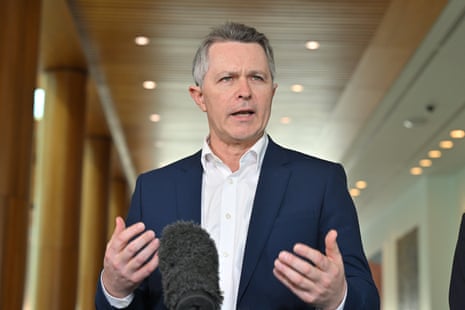
In a strong rebuke to controversial comments made by Pauline Hanson, Federal Education Minister Jason Clare emphatically condemned the notion of domestic violence as a "two-way street." Hanson had suggested on radio that while domestic violence was a scourge, society was under "so much pressure," describing the issue as "wrong" but also a "two-way street." Clare retorted: "One in four Australian women are victims of domestic violence… that’s one in four women who are violently attacked by people who tell them that they love them. You know, that’s not a two-way street. That’s a crime." He anticipated that domestic violence would be a topic of discussion at the Labor conference, adding that such comments might cause voters to reconsider their support for Hanson’s party.

Victorian Teachers Strike: Demands for Better Pay and Conditions
Victoria’s public education system faces its second major disruption this year as over 35,000 teachers, principals, and education support staff are striking today. The industrial action, which will see educators gather in Melbourne’s CBD, follows the Australian Education Union (AEU) Victorian members’ rejection of a pay deal proposed by the state government. While all public schools are expected to remain open, numerous classes will be disrupted, forcing thousands of families to make alternative arrangements.
The AEU members on Tuesday rejected an updated offer of a 28.3% pay rise over the next four years, arguing for a more substantial offer to address persistent issues of under-resourcing and staffing pressures. Justin Mullaly, Victorian branch president of the AEU, criticised the government, stating, "The government’s done precious little to do anything meaningful to address that and our members are carrying the weight of all the excessive workload." He highlighted the dire situation of graduate teachers in Victoria, who are reportedly the worst paid in the country, earning $13,000 less than their counterparts in the Northern Territory, where salaries are highest.
Melinda Davis, a former deputy principal and education expert from Swinburne University, underscored that the strike transcends mere pay disputes, focusing instead on broader concerns regarding working conditions and class sizes. "The government has cut funding to government schools over the past 10 years and that slow decrease in funding has meant we have schools needing repairs, but also we have lost so many teachers in the profession," Davis explained. This long-term underfunding, she argued, has led to a significant drain of experienced educators from the profession and a decline in infrastructure quality.
Federal Education Minister Jason Clare expressed his hope for a swift resolution to the dispute. "I hope this gets sorted out as quick as it possibly can," he said on ABC News Breakfast. Clare acknowledged the critical role of teachers and the need for competitive remuneration. "The teachers do the most important job in the world. I want to see them being paid as good as they possibly can be. We know that when you pay people more, more people want to do the job." He cited evidence from New South Wales, where a significant pay increase for teachers has seen a boost in recruitment. While commending Victoria’s "big offer" of a 28% pay rise, which he noted would be "even bigger than New South Wales," Clare refrained from direct involvement in the negotiations. However, he reaffirmed the federal government’s view that teachers, facing a national shortage, should be paid "what they deserve."
Geopolitical Tensions: Australia’s Stance on the South China Sea
Australia is considering increasing its joint patrols of the South China Sea alongside the United States and Japan, following what it describes as "destabilising" missile testing by China in the region. Foreign Affairs Minister Penny Wong addressed the issue during her attendance at the ASEAN foreign ministers’ meeting in Manila.
Wong expressed Australia’s serious concerns about "some of the aggression we are seeing" and "some of the destabilising conduct" in the maritime zone, which she described as "critical to stability in the region." Her comments came after China’s recent launch of nuclear-capable missiles, which has heightened regional anxieties. Wong met with her Chinese counterpart, Wang Yi, on the sidelines of the talks to convey Australia’s concerns directly, emphasising the importance of "mutual understanding" and discussions around "peace and stability in our region, safe and professional military conduct, and the importance of transparency and reassurance of intent."
China’s foreign ministry swiftly retaliated, with spokesman Lin Jian asserting that Australia "was not party to the South China Sea issue and had no right to intervene." During a regular briefing in Beijing, Lin Jian urged "relevant countries to stop stirring up tension and inciting confrontation." He further accused unnamed countries of routinely blaming China for maritime incidents, questioning whether their intent was to promote peace or destabilise the region. Lin Jian maintained that China would "continue firmly safeguarding its sovereignty, rights and interests" in the South China Sea and described the missile launch as a "routine training activity" not directed at any specific target, for which relevant countries, including Australia, had been notified in advance. This exchange highlights the deepening diplomatic chasm between Australia and China over regional security. Penny Wong is also preparing to deliver a speech today, warning China that Australia will not be "bullied" by Beijing’s "provocative actions" and its military build-up.
Commonwealth Games: Australian Leadership in Glasgow
In a moment of national pride, pole vault star Nina Kennedy and decorated para-swimmer Tim Hodge have been announced as the leaders of the Australian team at the Commonwealth Games opening ceremony in Glasgow. Kennedy will have the honour of carrying the Australian flag, while Hodge will serve as the Games baton bearer when the team marches out early tomorrow morning AEST at the city’s Hydro indoor arena.
This year’s ceremony introduces a new tradition: instead of a single King’s baton, each of the 74 participating countries and territories has been given its own baton to decorate, each containing a single word from King Charles III’s message, which he will read in full from the main Scotland baton.

Both Kennedy and Hodge are reigning gold medallists from the Birmingham Games four years prior and continue to be at the pinnacle of their respective sports. Kennedy, fresh from winning pole vault gold at the Paris Olympics, recently demonstrated her formidable form by breaking the Australian record with a 4.95m vault at the Monaco Diamond League, despite recovering from a hamstring injury. Hodge, a celebrated para-swimmer, brings a wealth of experience and achievement to his role, symbolising Australia’s strength in both able-bodied and para-sports. Their selection underscores their exceptional athletic prowess and leadership qualities, embodying the spirit of the Australian team.