The traditional food chain taught in classrooms across the globe—where primary producers are eaten by herbivores, which are in turn consumed by secondary carnivores in a clean, predictable line—presents a heavily sanitized and fundamentally incomplete view of nature. In reality, biological communities operate as dense, highly complex trophic networks rather than linear hierarchies. A typical ecosystem involves countless overlapping interactions: parasites feed on apex predators; scavengers devour the carcasses of the fallen; and even species once thought to occupy rigid ecological niches exhibit behaviors like cannibalism. Capturing this profound ecological complexity has historically required immense investments of time and labor from field researchers, who spent decades tracking individual animals, observing nests, and analyzing scat contents. Today, however, a new digital initiative known as "Who Eats Whom" is transforming ecological research by harnessing the power of global citizen science to map the intricate web of life on Earth.
The Evolution of Ecological Data Collection
For generations, field ecology was defined by meticulous, slow-moving observation. Scientists would spend months or even years in remote habitats, waiting for rare predatory events to unfold or systematically sifting through animal waste to identify the skeletal remains of prey. While these traditional methods yielded invaluable insights into predator-prey dynamics, they suffered from severe limitations in scale, geography, and temporal resolution. A single researcher could only monitor a minute fraction of an ecosystem at any given time, leaving vast gaps in our understanding of global biodiversity interactions.
The landscape of ecological data acquisition shifted dramatically with the advent of digital photography and crowdsourced platforms. Built atop the nonprofit social network iNaturalist—a repository where millions of users worldwide upload and geotag photographs of flora and fauna—Who Eats Whom bridges the gap between casual nature photography and rigorous scientific inquiry. Launched as an open-source platform, the project systematically mines geotagged photographic observations to document active trophic interactions.
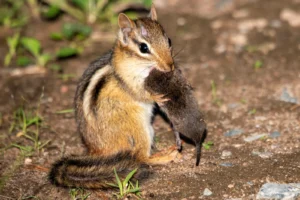
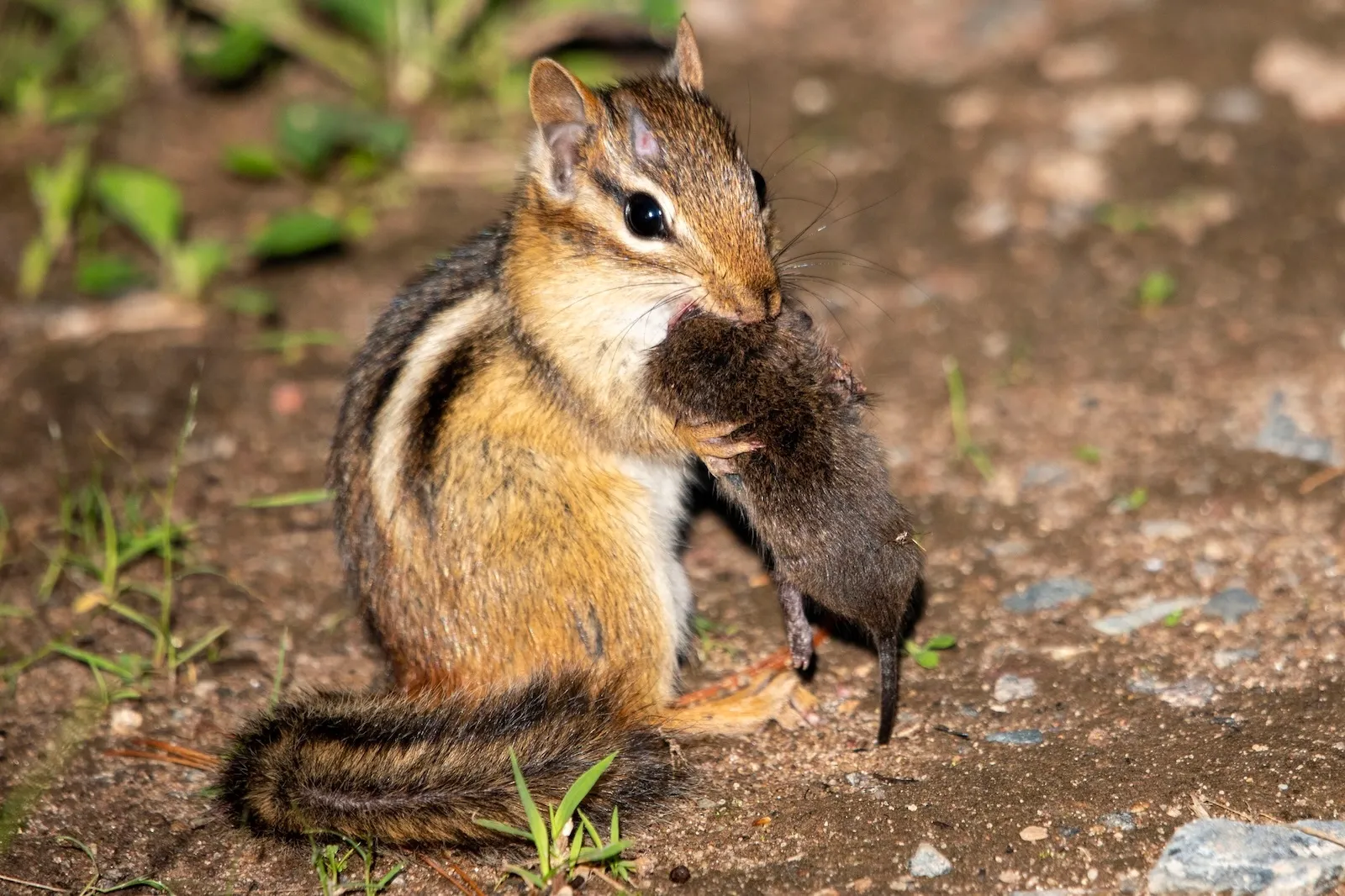
By searching specific species names within the platform, users and researchers alike can unearth extraordinary photographic evidence of wildlife behavior. Instances range from an American ermine hauling away a brown rat in suburban Ottawa, Canada, to red-tailed hawks subduing prey across North America. More unexpected entries feature New World vultures consuming diverse carrion, including a documented instance of a vulture feeding on a stillborn baby white shark along a beach in San Luis Obispo County, California.
Scaling Up: Data Metrics and Global Reach
The quantitative scope of Who Eats Whom has expanded rapidly since its inception. Developed primarily by ecologist Bradley Allf—formerly of North Carolina State University and currently at Colorado State University—alongside computer scientist Aditi Mallavarapu and their colleagues, the platform has successfully cataloged approximately 17,000 distinct trophic interactions involving roughly 5,700 species across more than 100 countries.
This monumental accumulation of data was detailed in a seminal research paper published in the journal PLOS Biology. The research team emphasizes that crowdsourcing provides a volume and velocity of ecological data that individual researchers simply cannot match through traditional field methods alone.
Rather than functioning merely as a static photo gallery, Who Eats Whom features an interactive food web interface. When users examine a specific node—such as the red-tailed hawk or the Western honey bee—the platform generates a dynamic visualization of the energy pathways flowing into and out of that organism. Arrows trace the directional flow of energy, illustrating, for example, how a red-tailed hawk preys upon small mammals that in turn consume specific flora, or how the goldenrod crab spider preys upon pollinators like the Western honey bee, which simultaneously facilitate the reproduction of diverse plant species such as honeysuckles, thistles, and buttercups.
The Urgency of Trophic Mapping in a Warming World
The development of advanced ecological databases arrives at a critical juncture for global biodiversity. As anthropogenic climate change drives global temperatures upward, ecosystems are undergoing rapid transformations. Species worldwide are shifting their geographic ranges toward the poles and higher elevations in search of cooler microclimates, fundamentally disrupting historical predator-prey dynamics and assembling novel ecological communities.
Researchers behind the project stress that documenting these shifts requires tracking not only what is currently observed within an ecosystem, but also noting noticeable absences. As feeding patterns evolve under thermal stress, real-time tracking via citizen science offers an early-warning system for ecological disruptions.
Independent experts in conservation biology and paleobiology have underscored the immense value of this data stream. Peter Roopnarine, curator of invertebrate zoology and geology at the California Academy of Sciences, who was not involved in the creation of Who Eats Whom, points out that biological interactions are frequently ephemeral—occurring perhaps only once in the lifespan of a given animal—and highly dispersed geographically. Acquiring comprehensive datasets on these fleeting events has historically been the single greatest hurdle for macroecologists.
Furthermore, the expansion of invasive species poses an escalating threat to native biodiversity. Across marine and terrestrial environments, invasive organisms—such as lionfish in marine reefs—are devastating native populations already weakened by rising temperatures and protracted droughts. Understanding the exact dietary preferences and impacts of these invasive species is paramount for targeted mitigation. By utilizing crowdsourced observations, conservationists can rapidly identify whether invasive predators are consuming vulnerable native taxa that require immediate protection.
Redefining Conservation: Protecting Relationships, Not Just Habitat
The implications of platforms like Who Eats Whom extend directly into practical conservation policy and land management strategies. For decades, traditional conservation paradigms focused heavily on spatial preservation: setting aside tracts of land or marine reserves, designating protected status, and measuring success largely by acreage conserved.
However, contemporary ecologists argue that spatial preservation alone is insufficient to halt the biodiversity crisis. Animals and plants require more than mere physical territory or passive habitat; they depend entirely on the functional relationships that sustain their existence. Carnivores and omnivores must have access to their historic prey bases, herbivores require specific forage plants, and mutualists rely on their ecological partners to complete life cycles.
Rebecca Johnson, director of the Center for Biodiversity and Community Science at the California Academy of Sciences, notes that participatory science fundamentally alters how everyday nature enthusiasts view and document the natural world. By encouraging the public to look beyond the individual organism and capture behavioral interactions, platforms like Who Eats Whom cultivate a deeper, systems-level understanding of ecology among citizen scientists.
As the global climate continues to shift and human pressures on natural systems mount, bridging the gap between professional researchers and the public will remain vital. By transforming millions of smartphone-wielding observers into an integrated network of ecological data collectors, science is gaining the comprehensive, high-resolution view of nature required to protect the delicate, messy, and interconnected webs of life upon which all planetary health depends.