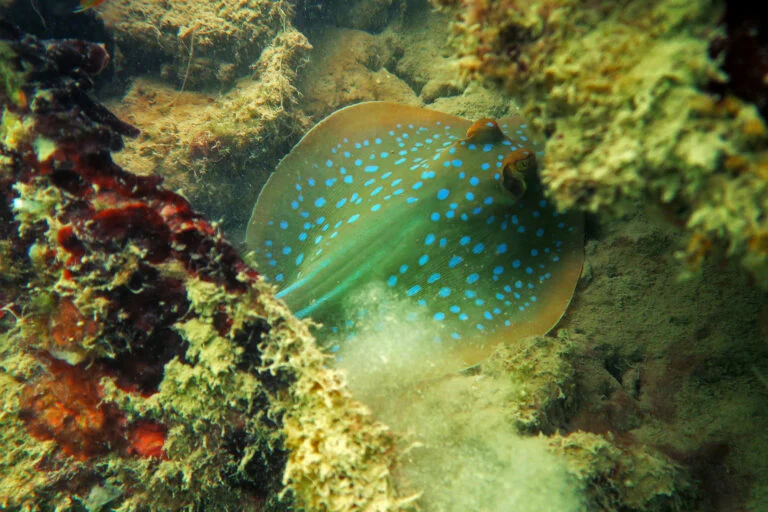
For seven millennia, the reefs surrounding the southern coast of Singapore have served as a silent witness to the island nation’s transformation. Through the eras of colonial trade, the devastation of global conflict, and the rapid industrialization that turned a colonial port into a global financial powerhouse, these ecosystems have remained remarkably resilient. However, a new government proposal to merge a cluster of islands into a single, 590-hectare industrial zone has ignited a firestorm of concern among scientists, conservationists, and the indigenous Orang Laut community, who fear that this expansion may finally push these fragile reefs beyond the point of no return.

The announcement, delivered by Prime Minister Lawrence Wong during the National Day rally on August 23, 2026, outlined a bold vision for the future of Singapore’s economy. The proposed "western island" is intended to serve as a strategic hub for advanced manufacturing, high-tech energy production, and defense infrastructure. While the government has yet to release a definitive timeline, officials have described the project as a multi-decade endeavor, emphasizing that the reclamation process will be subject to careful study and environmental assessment.
Despite the promise of long-term economic security, the project has drawn immediate criticism for its potential to irreversibly alter the southern maritime landscape. The region earmarked for development includes ecologically significant areas such as Pulau Semakau—already the site of the nation’s offshore landfill—and Pulau Bukom, home to a massive oil refinery. Furthermore, the zone encompasses Pulau Sudong, Pulau Hantu, Pulau Jong, and Pulau Sebarok. According to marine data, these waters harbor approximately 60% of Singapore’s remaining coral reefs, 22% of its seagrass meadows, and 5% of its mangrove forests.

A Legacy of Reclamation and the Cost of Progress
Singapore’s history is inextricably linked to the sea, and its physical footprint has grown significantly since the 1960s through aggressive land reclamation. It is estimated that the country has lost roughly two-thirds of its original coral reefs over the past six decades. The creation of Jurong Island in the 1980s, which involved merging seven smaller islands to form the bedrock of the country’s petrochemical industry, serves as the template for the current proposal. Prime Minister Wong noted that Jurong Island has been vital to Singapore’s growth for half a century, suggesting that the western island is the logical next step for the nation’s survival and prosperity over the coming fifty years.
However, the ecological reality is stark. Dredging and land reclamation inevitably lead to increased turbidity, where sediment clouds the water and prevents sunlight from reaching deep-water coral colonies. While natural turbidity levels in the area typically hover below 20 formazin turbidity units (FTU), construction activities can cause these levels to spike above 150 FTU. This reduction in light penetration is fatal to many coral species, which rely on photosynthetic symbionts to survive.

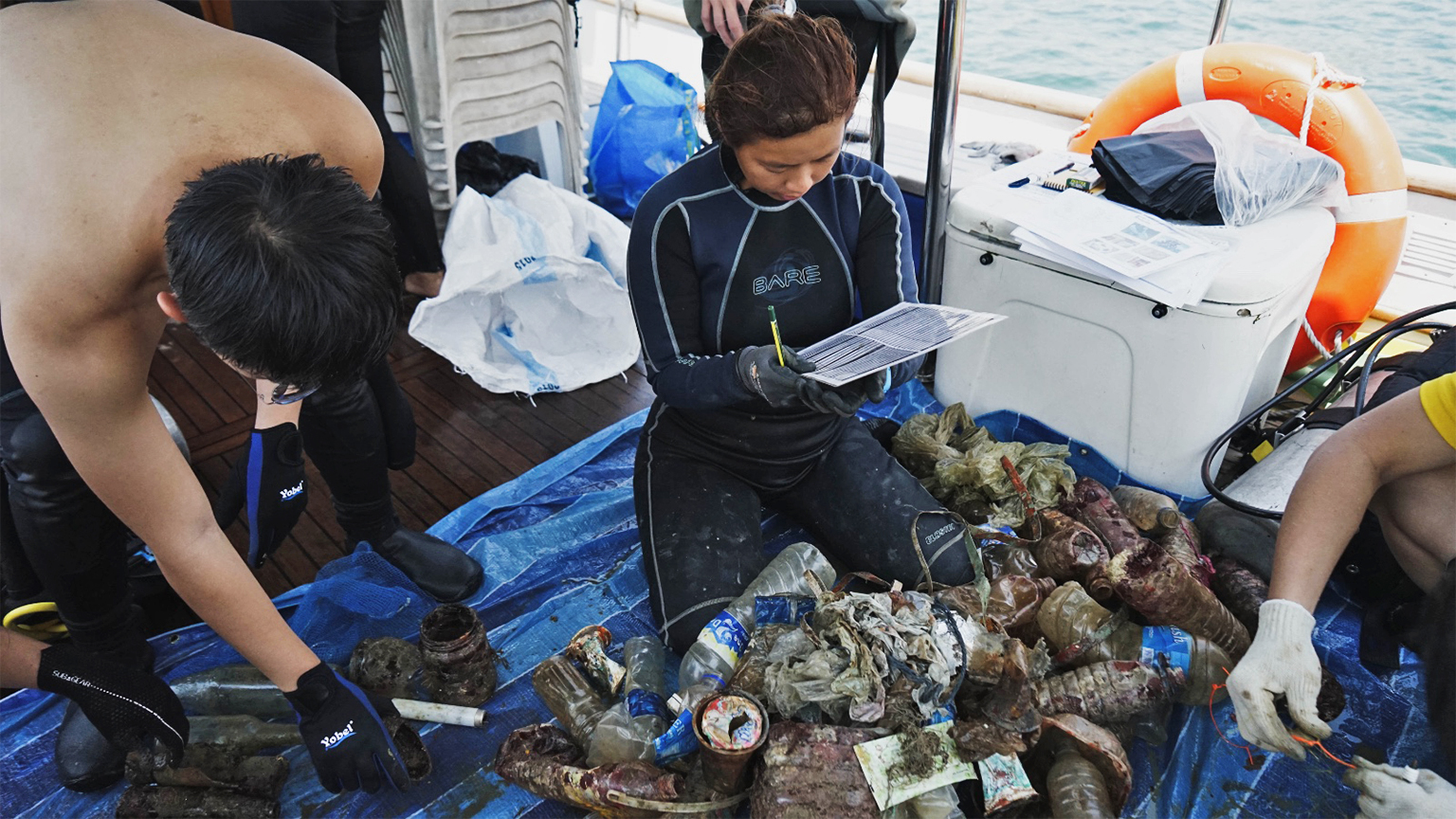
Marine biologist Debby Ng, who has spent years documenting the resilience of Singapore’s coastal ecosystems, warns that the loss of these reefs would be a tragedy of both scientific and cultural proportions. "It would be a tragedy if we were to lose them now—in peacetime, at the height of our prosperity, when we possess more knowledge and capacity to protect them than any generation before us," Ng stated. She notes that the area is home to over 250 species of hard corals and 120 species of reef fish. Crucially, the southern waters contain massive, breeding-age coral colonies that serve as the primary source of larvae for surrounding ecosystems. Once these "mother" colonies are destroyed, their biological history—and their ability to replenish damaged reefs—is lost forever.
The Human Dimension: Indigenous Displacement and Heritage
The proposed development has brought the grievances of the Orang Laut, or "sea people," to the forefront of the national conversation. For generations, the Orang Laut have maintained a maritime way of life, navigating the waters of the Riau archipelago that connect Indonesia and Singapore. While many members of this community were resettled onto the mainland during the 20th century, their cultural and economic ties to the southern islands remain unbroken.

Firdaus Sani, founder of the advocacy group Orang Laut SG, argues that the community was excluded from the initial planning stages. "We hope that Indigenous voices will hold the same weight as scientists or environmental groups," Sani said, calling for the government to include traditional ecological knowledge in the mandatory Environmental Impact Assessment (EIA) process.
The fear is not merely academic. Cik Hamsa, a 71-year-old elder who was evicted from Pulau Sudong in the 1970s, continues to fish in the area using traditional bubu traps. He warns that any significant change to the seafloor will disrupt current patterns and fish migration, potentially rendering his traditional fishing methods obsolete. "I know the coral reefs and fishing grounds in these waters; that is where my experience is. If those places disappear, it is not easy to simply move somewhere else," he explained. The community also worries about the downstream effects on their relatives in the Riau Islands, who have historically seen their own livelihoods impacted by increased sedimentation and water pollution stemming from Singapore’s coastal development projects.
The Global Sand Crisis and Strategic Transparency
The sheer scale of the proposed western island project necessitates a massive influx of infill material, raising questions about the ethics and sustainability of Singapore’s sand procurement. Although the government has not yet disclosed the volume of sand required, researchers point to the neighboring Long Island project—estimated to require 240 million tons of fill—as a benchmark for the potential environmental toll.
Singapore is one of the world’s largest importers of sand, a commodity that has become increasingly controversial as environmental degradation from sand mining intensifies across Southeast Asia. In the Mekong region, excessive dredging has been linked to the destabilization of riverbanks and the ecological decline of Cambodia’s Tonle Sap lake. In Indonesia, the island of Pulau Nipah was nearly erased by intensive mining in the early 2000s, leading to a long-standing diplomatic tension and a subsequent ban on sea-sand exports, which was only partially relaxed in 2023.

Madhumitha Ardhanari, an expert on mineral security, argues that there is an urgent need for greater transparency in the global sand supply chain. While Singapore maintains that it adheres to legal procurement standards, Ardhanari emphasizes that legal compliance does not equate to sustainability. "There is no such thing as ‘sustainable’ sand," she noted. "The only gold standard right now is the legality—which is wild." She suggests that for a project of this magnitude, the government should consider alternatives such as ore sand—a byproduct of mineral processing—and adopt a more inclusive decision-making framework that accounts for the regional environmental and social costs of extraction.
Looking Toward an Uncertain Horizon
The scientific community is currently grappling with a sense of disillusionment. Following the launch of the National Parks Board’s "100k Corals Initiative" in 2024, many researchers felt that Singapore was finally shifting toward a model of robust marine stewardship. Sam Shu Qin, a marine scientist and co-founder of Our Singapore Reefs, described the announcement of the western island project as a "big step backwards." She warns that such large-scale developments threaten to undermine years of public-private investment in conservation, creating uncertainty among donors who fear their contributions toward reef restoration will be buried under millions of tons of concrete and sand.

In response to the public outcry, the Singaporean government has signaled that a series of environmental, technical, and feasibility studies will be conducted before any construction begins. In September 2026, the state announced a new initiative to map marine and coastal habitats, a move that conservationists hope will provide a comprehensive baseline for evaluating the project’s impact.
Ultimately, the western island project represents a profound test for a nation balancing its survival as an industrial hub with its responsibility as a steward of biodiversity. As the city-state looks to secure its economic future for the next 50 years, the question remains: what price is it willing to pay in natural capital, and who will bear the burden of that cost? For the corals, the fish, and the Indigenous communities who have called these waters home for centuries, the answer could determine the survival of an irreplaceable heritage.