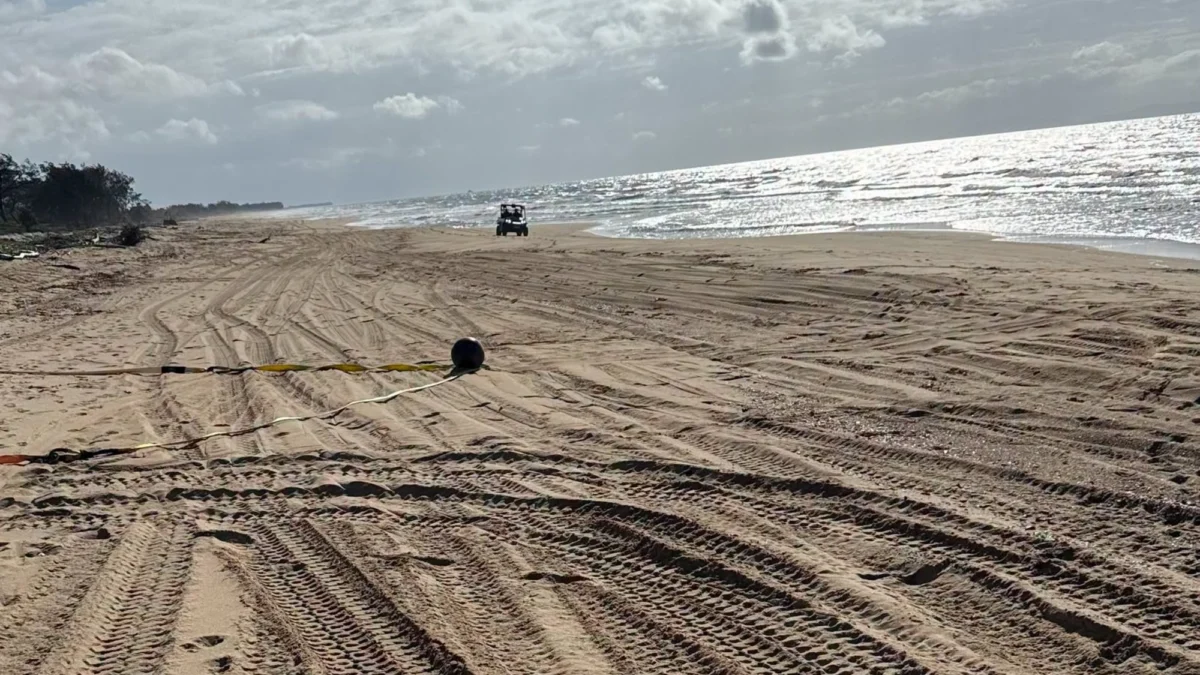
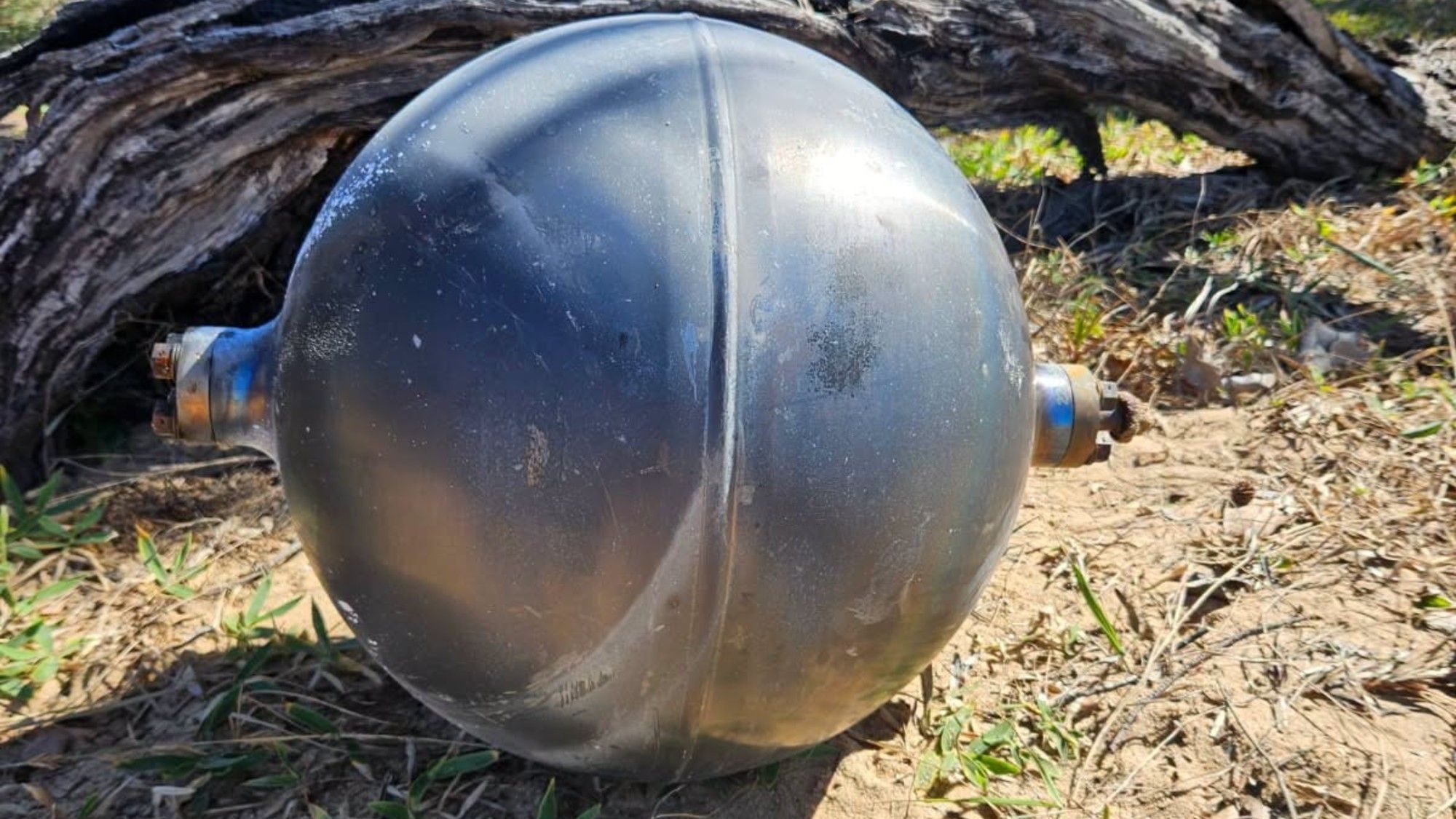
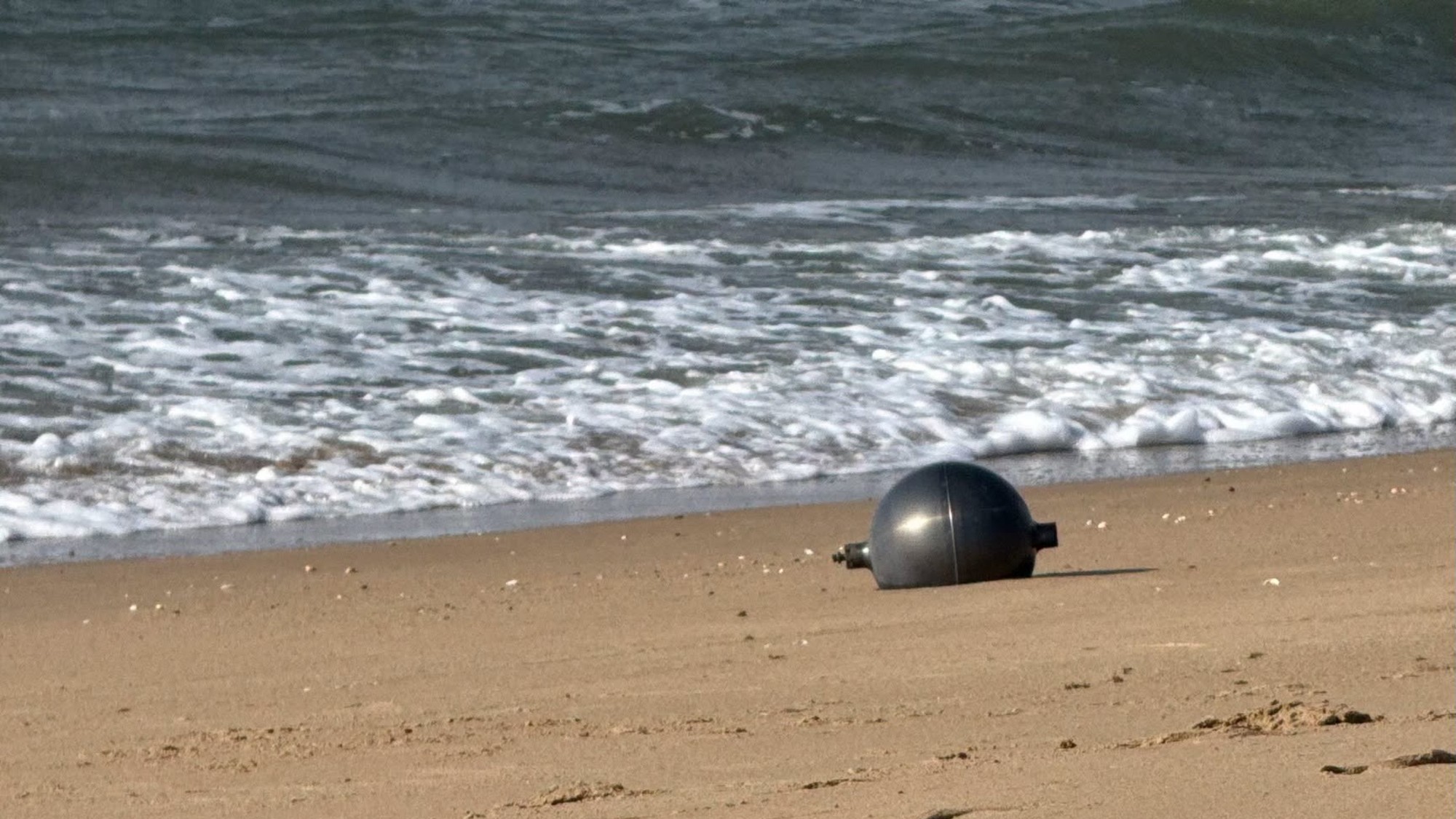
The "Land Down Under" is once again finding itself as an unexpected, and sometimes concerning, landing zone for remnants of humanity’s ventures into space. In early July 2026, the Australian Space Agency confirmed that several metallic spheres discovered on a Queensland beach are highly likely to be pressure vessels from a foreign rocket body, adding another chapter to Australia’s peculiar history with falling space junk.
The discovery was made in the small seaside community of Forrest Beach, near Ingham, where local residents stumbled upon the unusual objects. The Queensland Fire Department swiftly mobilized, collaborating with other agencies to ensure public safety and secure the potentially hazardous materials. A 165-foot (50-meter) exclusion zone was established around the debris as scientific teams began their investigation into the nature and origin of these "space balls." While initial assessments point towards them being components of a launch vehicle, the exact mission and the country responsible remain under active investigation.
This latest incident is far from an isolated event for Australia, which has a long and varied history of receiving space debris. From the dramatic re-entry of the U.S. Skylab space station, which scattered fragments across Western Australia in 1979, to more recent arrivals, the continent has become an unwitting repository for the byproducts of space exploration. In 2022, a chunk of a SpaceX Dragon trunk was found in New South Wales, followed by a pressure vessel from an Indian booster washing ashore in Perth in 2023. Most recently, in October 2025, a section of a Chinese Jielong-3 rocket was discovered in the Australian Outback.
The increasing frequency of these events has prompted the Australian Space Agency to establish clear protocols for the public. While the specific steps haven’t been detailed in this report, it’s understood that citizens are advised on how to report potential space debris and to maintain a safe distance until authorities can assess the situation. Under international law, specifically the Outer Space Treaty, Australia, as the nation where the debris has landed, has obligations to notify the launching state. Furthermore, upon request, the Australian government may be required to return the recovered space junk to its country of origin.
A History of Uninvited Cosmic Visitors
Australia’s unique geographical position, coupled with its vast, sparsely populated landmass and extensive coastline, makes it a frequent, albeit unintentional, recipient of orbital debris. The sheer scale of the continent means that objects re-entering the atmosphere can land in remote areas, sometimes remaining undiscovered for extended periods. Conversely, the surrounding oceans can carry debris to the shore, as seen in several recent cases.
-
1979: Skylab’s Fiery Descent The most iconic incident involved NASA’s Skylab space station. After its operational life, the 77-ton orbital laboratory re-entered Earth’s atmosphere on July 11, 1979. While much of it burned up, significant pieces, including a significant chunk of the hull, shower of metal fragments, and a 4.5-ton oxygen tank, landed in the sparsely populated region of Western Australia. Local authorities were largely unprepared, and the event generated considerable media attention and some scientific curiosity.
-
2022: SpaceX Dragon Trunk In July 2022, a large, charred metallic object was discovered on a sheep farm in Jindabyne, New South Wales. It was later identified by the Australian Space Agency as a piece of a SpaceX Crew-1 Dragon trunk. The object had survived re-entry and had been traveling for nearly two years after being jettisoned from the spacecraft.
-
2023: Indian Booster Debris In July 2023, a large, cylindrical object was found washed ashore on a beach in Jurien Bay, Western Australia. Investigations by the Australian Space Agency and international partners concluded it was a pressure vessel from an Indian Space Research Organisation (ISRO) launch vehicle. This discovery highlighted the potential for debris from various international space programs to reach Australian shores.
-
2025 (Reported October): Chinese Rocket Segment In October 2025, what was initially described as mysterious, smoldering wreckage was found in the Australian Outback. It was subsequently identified as likely being part of a Chinese Long March rocket, specifically from a Jielong-3 launch. The remote location of this find underscored the challenge of tracking and recovering such objects.
The Science Behind Surviving Reentry
The metallic spheres recently found on Forrest Beach are not anomalies in their ability to survive the fiery ordeal of atmospheric re-entry. According to experts, the materials and design of certain space components are specifically engineered for extreme conditions.
Marlon Sorge, executive director of the Aerospace Corporation’s Center for Orbital and Reentry Debris Studies (CORDS), explained that the composition of these objects plays a crucial role. "Very often they will be made of something like titanium, which is really good at surviving," Sorge told Space.com. "In spite of them being metal, they tend to decelerate more than, say, a solid hunk of metal. They can ‘float down’ a little bit more gently than some other things."
This gentler descent, combined with the material’s inherent resilience, means that such pressure vessels can often remain largely intact. Sorge further elaborated that titanium, in particular, is remarkably resistant to the heat generated during re-entry. "Even if they heat up, they don’t care," he stated, emphasizing their ability to endure extreme temperatures without significant degradation.
Beyond titanium, other materials like Composite Overwrapped Pressure Vessels (COPVs), frequently used in spacecraft, also present challenges in terms of survivability during re-entry. The study of these recovered components provides invaluable data for scientists, offering insights into the temperatures and stresses they endure, and importantly, what they don’t experience, which is equally useful for understanding re-entry dynamics.
Mitigation Strategies and International Responsibility
The recurring issue of space debris reaching populated areas like Australia highlights the broader challenge of space sustainability. Experts advocate for more responsible practices from space agencies and launch providers to mitigate these risks.
"In the bigger picture with [rocket] upper stages," Sorge suggested, "just don’t let them randomly reenter. Bring them down via controlled re-entry and then if they are survivable, it doesn’t matter because you dump them somewhere where there aren’t any people." Controlled re-entries, where the decaying stage is deliberately steered into a designated, unpopulated area (typically a remote section of the ocean), are a key strategy for minimizing the risk to life and property.
The current incidents involving the Australian "space balls" are indicative of uncontrolled re-entries, where the fate of the debris is left to the unpredictable forces of atmospheric drag. The Aerospace Corporation actively studies recovered pressure vessels, offering its expertise to countries that find themselves on the receiving end of such space objects. Analyzing the condition of the debris, the temperatures it was exposed to, and even what it didn’t endure, provides critical data for improving future re-entry predictions and mitigation efforts.
A significant challenge in identifying the origin of space debris lies in tracking its descent. While the impact location and time of re-entry are crucial pieces of information, precisely monitoring these events can be difficult. Improved tracking capabilities and more robust international data-sharing mechanisms are seen as vital for understanding and managing the growing problem of space junk.
The Growing Congestion of Orbit
The increasing number of space debris incidents, while concerning, is also a reflection of the booming space sector. Michelle Hanlon, executive director of the Center for Air and Space Law at the University of Mississippi School of Law, points out that more launches naturally lead to more re-entries. "One thing I’d also point out is that we’re seeing more of these simply because we’re launching a lot more things into space," Hanlon stated. "That’s actually a sign of how active the space sector has become, not necessarily that it’s becoming less safe."
Even with highly reliable re-entry procedures, a 99.9% success rate means that with a significant increase in launches, the absolute number of re-entries, and therefore the potential for unexpected debris landings, will also rise. Hanlon explained that objects in low Earth orbit traverse vast distances, and the precise landing point of a decaying object can vary significantly based on atmospheric conditions and the timing of re-entry.
"Objects in low Earth orbit pass over much of the planet as the Earth rotates underneath them," Hanlon elaborated. "If a re-entry isn’t controlled, the exact point where it finally comes down can shift by thousands of kilometers depending on when atmospheric drag finally wins."
Given that approximately 70% of the Earth’s surface is covered by oceans, most debris naturally ends up in the sea. However, as Hanlon noted, "Every now and then, though, a tough piece survives and lands somewhere people can find it – or lands in the ocean and gets swept swiftly to shore."
Traceability Over Labels
The question of identifying the country of origin for recovered space debris is complex. While some might suggest labeling all space components with their country of origin, Hanlon argues that this may not be the most effective solution. "I’m not sure stamping everything with a country-of-origin is the answer," she said. "Many of these objects can already be identified by their design, serial numbers or by matching them to launch and registration records. And there’s no guarantee a label would even survive re-entry."
Instead, Hanlon emphasizes the importance of "traceability." The ability for authorities to quickly ascertain what an object is, whether it poses any danger, and which state should be contacted is far more critical than a simple "Made in" stamp. Enhanced information-sharing and improved tracking systems are seen as more practical and beneficial approaches to managing space debris.
The recent discovery of metallic spheres on an Australian beach serves as a stark reminder that the lifecycle of space activities extends far beyond the mission’s operational phase. "End-of-life disposal is now just as much a part of responsible space operations as launch," Hanlon concluded.
Interestingly, the timing of this event has a peculiar cosmic coincidence. As this report was being prepared, the much-anticipated sequel to the cult classic "Spaceballs," titled "Spaceballs: The New One," was reportedly gearing up for filming in Australia, adding a layer of pop-culture resonance to the ongoing reality of space debris landing on Australian shores. This juxtaposition highlights the evolving relationship between humanity and the space environment, a relationship that demands increasing attention to responsibility and sustainability.