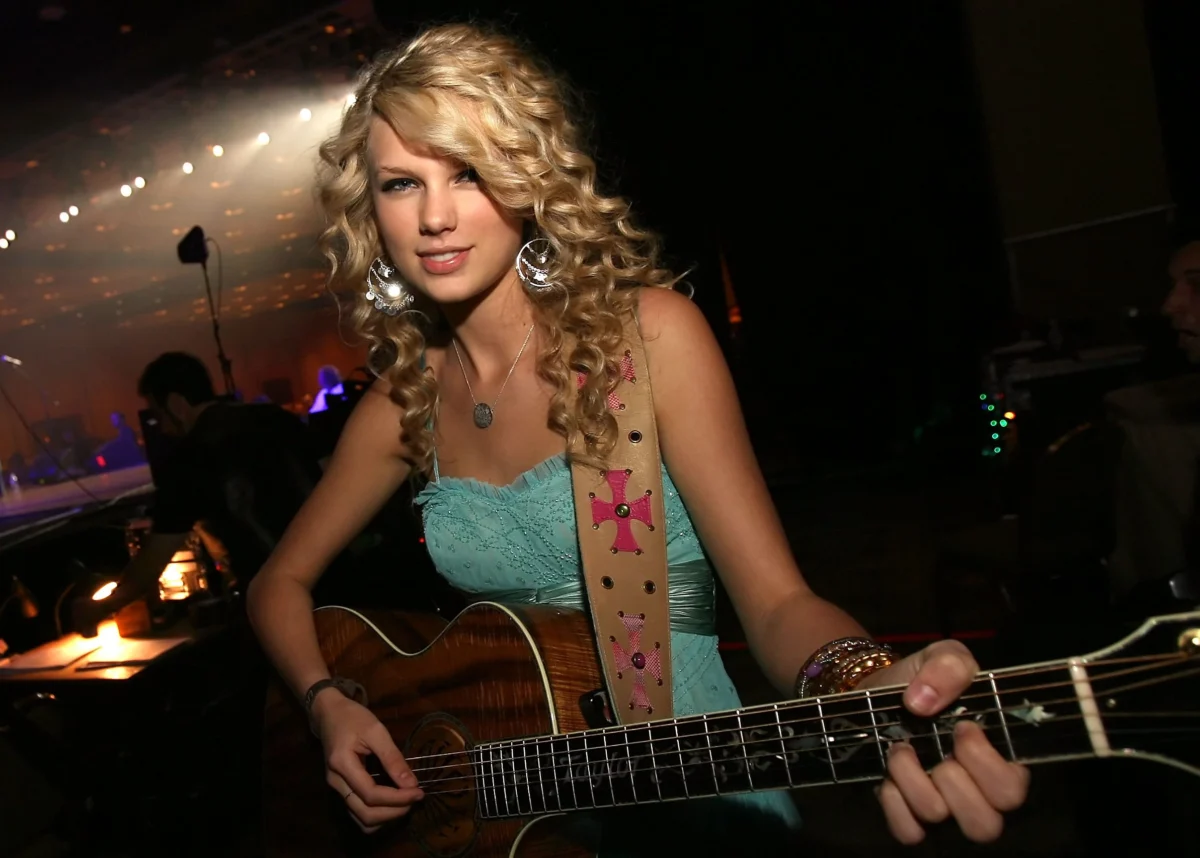
Today marks the twentieth anniversary of the release of Taylor Swift’s self-titled debut album, a record that arrived quietly on October 24, 2006, before eventually shifting the tectonic plates of the global music industry. Released when Swift was just sixteen years old, the album initially faced steep skepticism from traditional gatekeepers in Nashville and mainstream media alike. Few industry analysts at the time could have predicted that the teenage newcomer—singing about high school alienation on tracks like "The Outside" and finding a voice on "A Place in This World"—would evolve into one of the most commercially successful and culturally influential singer-songwriters in modern music history.
Two decades later, the landscape of both country and pop music bears the indelible stamp of that initial project. While Swift has historically avoided conventional milestone marketing ploys, choosing not to drop a blockbuster deluxe anniversary edition to commemorate the record often referred to simply as "Debut," her global fanbase—the Swifties—have transformed the anniversary into a worldwide celebration. Looking back at the formative era of 2006 through 2008 reveals a vastly different music ecosystem, one where the boundaries between country and pop were heavily policed and young female artists faced an uphill battle to be taken seriously as self-contained writers of their own material.
The Rocky Road to Nashville and the Genesis of Debut
Long before record-breaking stadium tours and multi-platinum certifications, Swift’s entry into the industry was defined by relentless persistence. Growing up in Pennsylvania, she immersed herself in local talent shows, karaoke nights, and guitar practice. Recognizing that the heart of country music beat in Tennessee, she made frequent trips to Nashville’s Music Row beginning when she was just eleven years old, walking into publishing houses and handing out demo compact discs with a direct message: she wanted a record deal.
Her family eventually relocated to Hendersonville, Tennessee, to support her burgeoning career. This move positioned her close enough to the epicenter of country music to secure a development deal with RCA Records at age thirteen. However, creative friction quickly emerged. Major label executives at the time were hesitant to take a chance on a teenage artist writing her own songs—a demographic risk that had seen little commercial success in country music since LeAnn Rimes a decade prior. Furthermore, label executives pushed for Swift to record outside material written by veteran Nashville songwriters rather than her own compositions.

Choosing artistic integrity over guaranteed safety, Swift walked away from the RCA development deal, stepping into uncharted territory by signing with an independent startup label, Big Machine Records. Founded by Scott Borchetta, the fledgling company initially lacked basic office furniture. In the early days of promoting her debut single, "Tim McGraw," Swift and her mother spent hours sitting on the floor of the nascent office, stuffing compact discs into envelopes to mail directly to country radio stations across the United States.
Overcoming Industry Resistance and Chart Success
The obstacles facing the young artist were formidable: gender biases within country radio that routinely sidelined female vocalists, deep-seated skepticism toward teenage songwriters, and the financial precariousness of a newly formed independent record label. Yet, the strategy of leaning into authentic, conversational songwriting paid off exponentially.
Released in October 2006, Taylor Swift produced five charting singles, including "Tim McGraw," "Teardrops on My Guitar," "Our Song," "Picture to Burn," and "Should’ve Said No." Notably, "Our Song" climbed to the top of the country charts, making Swift the youngest sole writer and singer of a number-one country hit at the time. The album demonstrated unexpected staying power, lingering on the Billboard 200 and Soundscan charts for over a year and ultimately earning multi-platinum certification from the Recording Industry Association of America (RIAA).
Interviews conducted during this promotional window, including extensive conversations in early 2008 near Universal City, California, highlighted a remarkably focused artist who viewed the music industry through a lens of pragmatic determination. Reflecting on her early reception, Swift noted that her struggles to fit in socially during middle school inadvertently prepared her for the commercial rejections of the professional world. Where others might have been deterred by closed doors, Swift channeled those experiences directly into her lyrics, refusing to dilute the specific, diary-like details of her teenage experiences.
The Crossover Phenomenon and Industry Implications
While the album was initially marketed strictly to country audiences, cultural shifts were already underway. MTV began integrating pop remixes of "Teardrops on My Guitar" into its regular rotation, testing whether a Nashville newcomer could appeal to the "Total Request Live" demographic. This gradual crossover paved the way for a broader structural shift in popular music.

Swift’s unprecedented success began to alter expectations for how confessional and transparent pop and country superstars were expected to be. By insisting on writing or co-writing every track on her debut—including sole authorship of hits like "Our Song" and "The Outside"—she challenged the traditional Nashville assembly-line model of songwriting. This advocacy for self-penned material helped forge a path for a new generation of singer-songwriters who prioritized personal narrative over studio polish.
The broader implications of Swift’s debut became clearer in the years that followed, as she transitioned from a regional country breakout star to a global pop monolith. Yet, the foundational elements established in 2006—direct emotional vulnerability, conversational lyricism, and a tireless work ethic in engaging directly with supporters—remained constants throughout her career.
Broader Impact on Modern Pop Culture
Two decades after its initial release, the self-titled debut album is frequently reassessed by music critics not merely as a quaint precursor to blockbuster records like "Fearless," "Red," or "Midnights," but as a vital blueprint for modern independent pop-country crossover success. The hurdles Swift cleared—proving that a teenager could write commercially viable, deeply personal songs without relying on established industry hit-makers—fundamentally transformed the economics of youth-oriented music.
As the music community reflects on the twentieth anniversary of Taylor Swift’s arrival, the narrative remains a testament to the power of perseverance, artistic autonomy, and the enduring resonance of a well-crafted song written on a bedroom floor. What began as an independent release from a label with no furniture ultimately laid the groundwork for an era-defining career that continues to shape the global cultural landscape.