Decades of relentless aridification have brought the American Southwest to a historic ecological and infrastructural crossroads. The Colorado River, a vital liquid lifeline that sustains roughly 40 million people, seven U.S. states, two Mexican states, and millions of acres of agricultural land, is experiencing its most severe drought in 1,200 years. This 27-year dry spell, supercharged by human-induced climate change, has depleted the river’s principal reservoirs to alarming lows, laid bare the fragility of 20th-century water laws, and forced policymakers to contemplate previously unthinkable solutions. Among them is a radical proposition once dismissed as a fringe environmental fantasy: draining Lake Powell entirely and dismantling the core operational assumptions of the Glen Canyon Dam.
The crisis stems from a compounding hydrological deficit. Roughly 80 percent of the Colorado River’s annual flow originates as snowpack in Colorado’s Rocky Mountains. Higher global temperatures are shrinking this vital snowpack while accelerating its melt. Consequently, runoff peaks much earlier in the spring, leaving the late summer and fall seasons starved of natural replenishment. At the same time, persistently warmer weather intensifies evaporation rates across the river’s vast network of 40 reservoirs. This dual pressure has hit the system’s two crown jewels—Lake Mead and Lake Powell—with devastating force, reducing their combined storage capacity to historic fractions of their historical norms.
A System Nearing Collapse
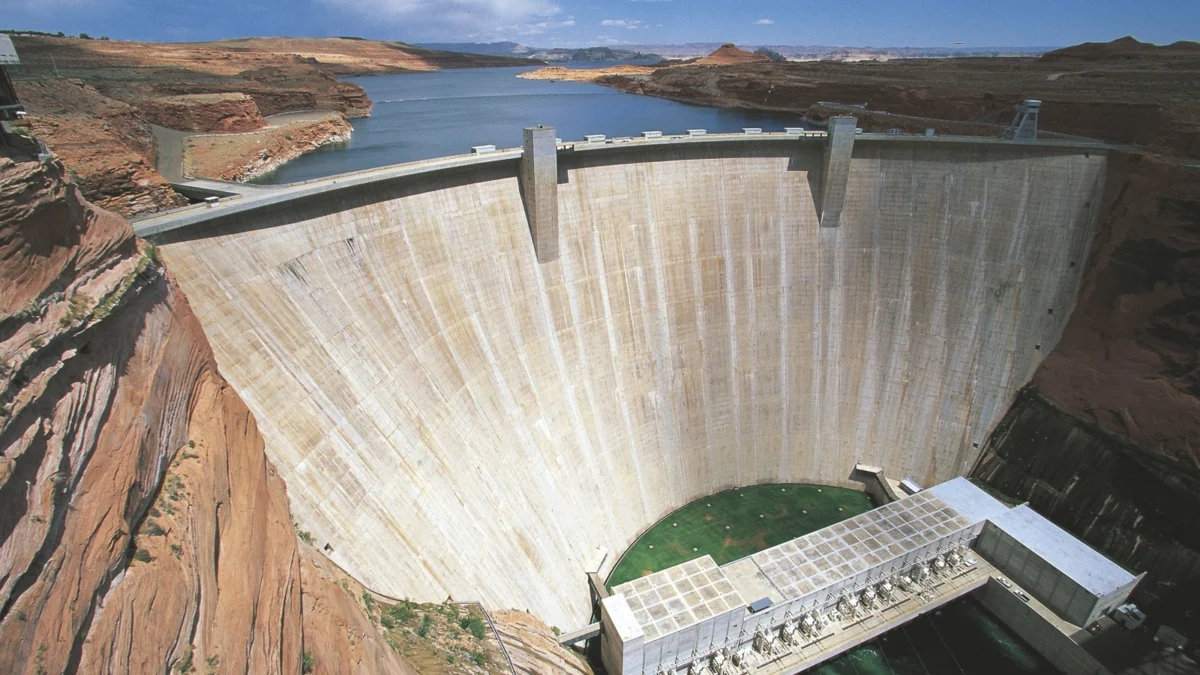
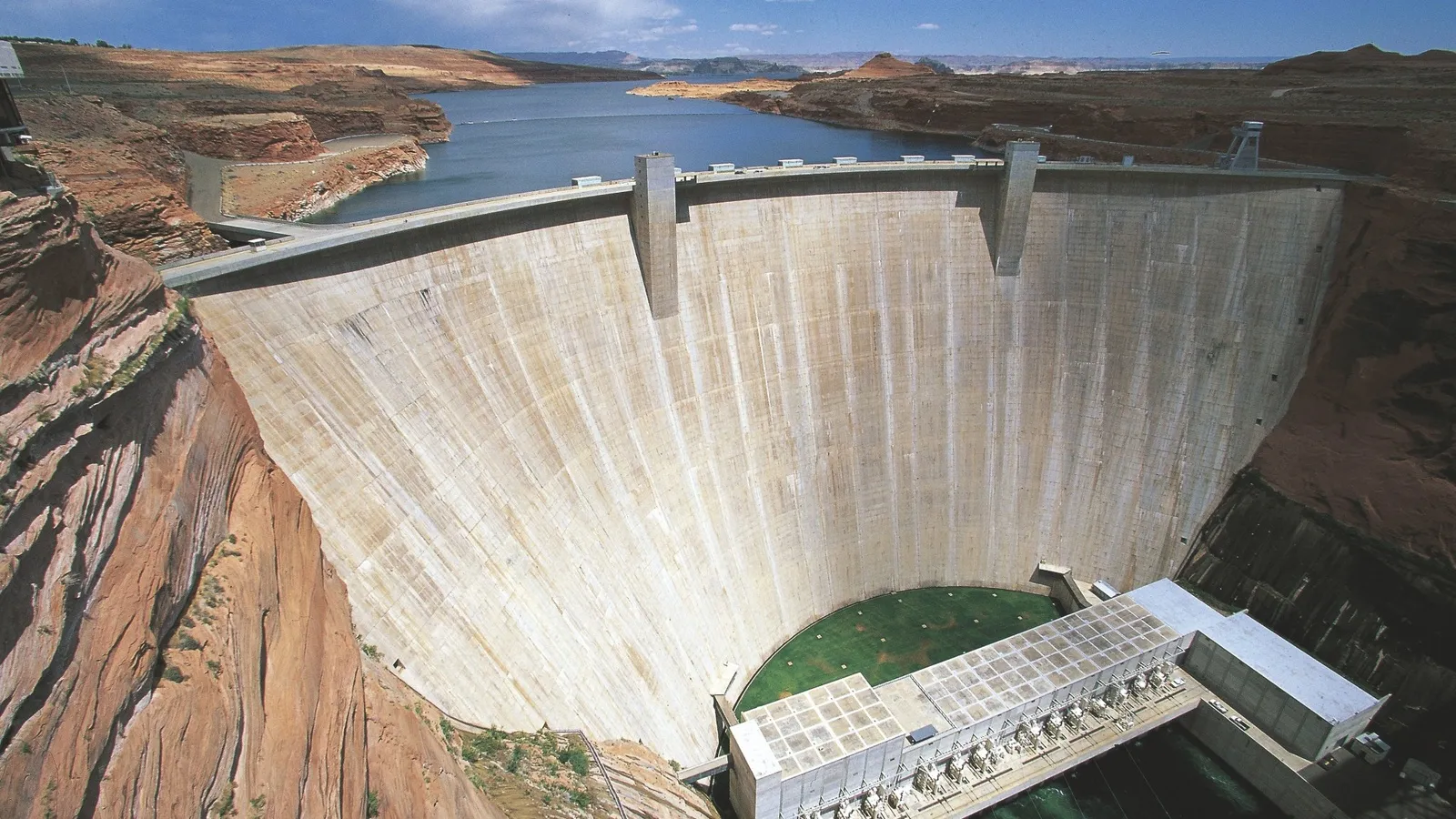
Last month, Lake Powell—straddling the Utah-Arizona border behind the towering concrete barrier of the Glen Canyon Dam—reached a record low. The reservoir’s surface elevation dropped to less than 150 feet above "dead pool," the critical threshold where water can no longer flow naturally through the dam’s infrastructure to reach Lake Mead, situated 300 miles downstream behind the Hoover Dam.
This dramatic loss of volume has triggered cascading failures across the basin. Hydroelectric generation at both the Glen Canyon and Hoover dams has plummeted, straining regional power grids and forcing utilities to seek replacement energy sources. Riverine ecosystem management has become an administrative nightmare, while the federal Bureau of Reclamation has been forced to slash water deliveries to the Lower Basin states of Arizona, California, and Nevada.
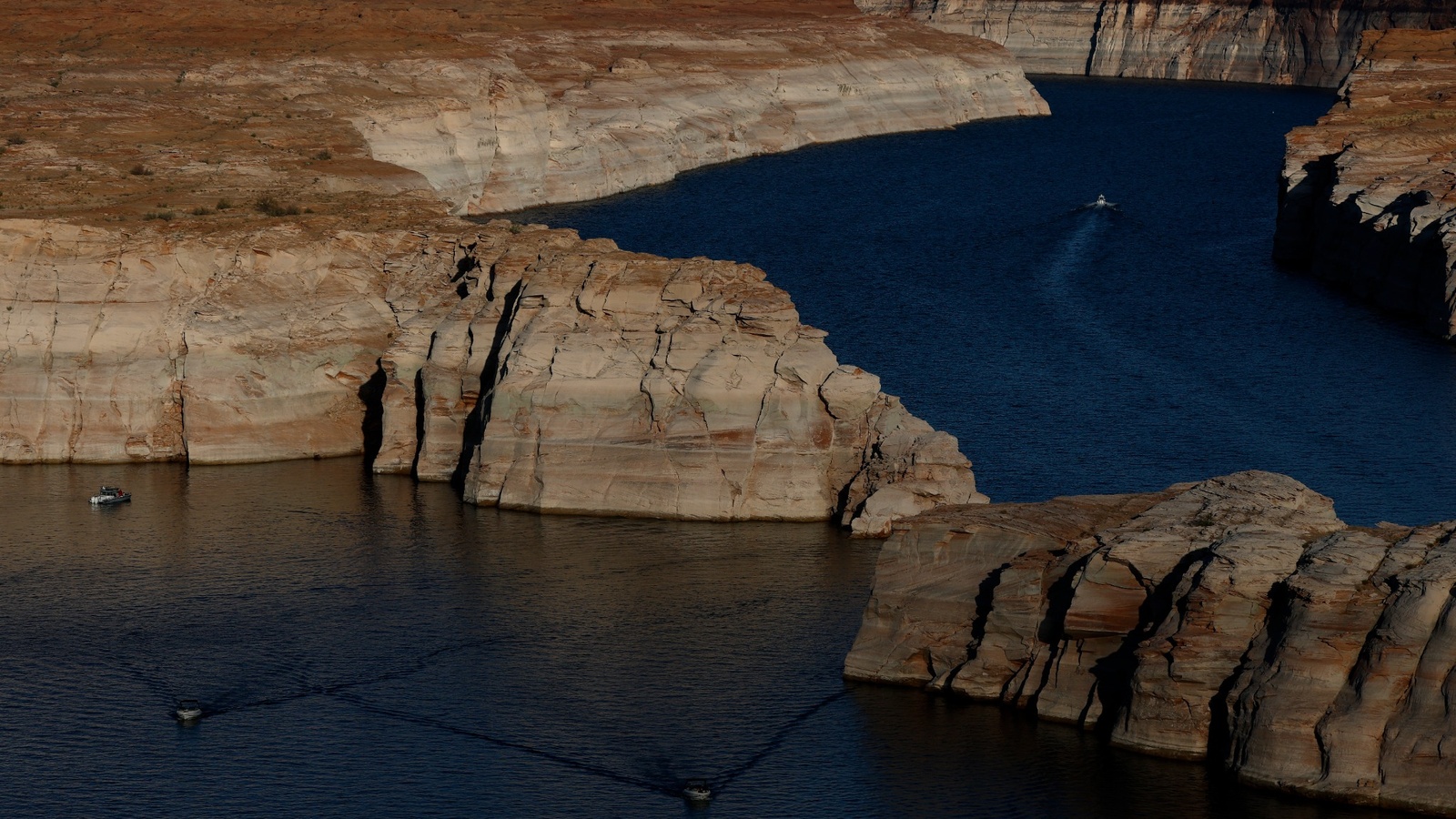
The socioeconomic ripples are profound. Across the agricultural hubs of the Southwest, farmers are reluctantly fallowing productive fields, abandoning generations of crop cycles. In booming municipal corridors, urban developers have paused housing construction projects due to a lack of guaranteed, long-term water supplies. Furthermore, the Bureau of Reclamation has curtailed essential "environmental flows"—scheduled releases of cold water designed to protect endangered native fish species and rebuild downstream sandbars that serve as critical wildlife habitats in the Grand Canyon.
The Chronology of an Overallocated River
To understand the current emergency, one must examine the legal and environmental history of the basin. The management of the Colorado River is governed by the 1922 Colorado River Compact, an agreement forged during a period of anomalously wet years. The compact allocated more water to the Upper Basin (Colorado, New Mexico, Utah, and Wyoming) and Lower Basin (Arizona, California, and Nevada) than the river actually yields on average.
For decades, the system masked its own structural deficit through massive civil engineering projects. Completed in the 1960s, the Glen Canyon Dam was hailed as a monumental triumph of modern engineering. Proponents promised cheap hydropower, subsidized irrigation water for cotton and alfalfa growers, lucrative real estate markets along newly formed shorelines, and a vast aquatic playground for recreational boaters.
However, these benefits came at a staggering environmental and cultural cost. The construction of the dam submerged Glen Canyon—a labyrinth of red rock gorges, soaring spires, hidden grottoes, and hanging gardens that many conservationists considered even more breathtaking than the Grand Canyon itself. Indigenous nations lost access to ancestral homelands and sacred cultural sites now buried beneath hundreds of feet of water and sediment.
For more than forty years, the dam was viewed as an unmitigated asset. Today, however, hydraulic engineers and environmental scientists view it as a liability. "All of the core assumptions around the dam have been turned on their head," notes Eric Balken, executive director of the Glen Canyon Institute.

Structural Vulnerabilities and the Threat of Dead Pool
The immediate danger lies in the physical design of the dam. As Lake Powell’s water level recedes toward dead pool, the reservoir drops below its "minimum power pool." At this threshold, the massive penstocks—the large steel pipes that channel water to the dam’s eight hydroelectric turbines—are left high and dry, halting power generation entirely.
To bypass the stranded penstocks, water must be discharged through lower bypass tubes. However, these tubes possess less than half the discharge capacity of the penstocks and were never engineered for sustained, long-term operational use. Running high volumes of water through them risks severe vibrations, cavitation, and structural scouring that could inflict catastrophic damage on the dam itself.
While the Bureau of Reclamation inspected and relined the bypass tubes in 2025, asserting they could function in an emergency, severe operational bottlenecks remain. Relying on these narrow conduits makes it exceedingly difficult for Upper Basin states to fulfill their legal water delivery obligations to the Lower Basin and, under international treaty obligations, to Mexico.
The Rise of "Fill Mead First"
Faced with these structural realities, a coalition of scientists, economists, and environmental advocates is championing a controversial alternative known as "Fill Mead First." Pioneered by groups like the Glen Canyon Institute, the proposal suggests moving away from the dual-reservoir management strategy. Instead of propping up a depleted Lake Powell, the plan advocates for drilling new diversion tunnels near the riverbed, close to the canyon floor, to completely drain Lake Powell and consolidate the remaining water volume in Lake Mead.
Proponents argue that the benefits of this approach are manifold. Draining Lake Powell would eliminate the massive evaporative losses that plague the shallowing reservoir—losses that currently consume roughly 11 percent of the river’s annual flow. According to Kathryn Sorensen, director of research at the Kyl Center for Water Policy at Arizona State University, draining the lake could save "a couple hundred thousand acre-feet" of water annually. "On a river that is much smaller than anyone expected, that water really matters," Sorensen explains.
Additionally, consolidating water in Lake Mead would maximize hydroelectric efficiency at Hoover Dam. It would also allow the lost generating capacity of Glen Canyon to be replaced by modern renewable infrastructure, such as utility-scale solar installations. For instance, the newly constructed Gemini solar plant near Las Vegas boasts a capacity of 690 megawatts, closely rivaling the current 730-megawatt capacity of the Glen Canyon Dam.
Culturally and ecologically, draining Lake Powell would trigger a breathtaking restoration. As the reservoir recedes, the hidden wonders of Glen Canyon would reemerge from the muck. Drowned red rock arches, natural amphitheaters, and waterfalls would return to the light, alongside thousands of archaeological and sacred sites vital to Native American tribes. Native flora like cottonwoods and willows would re-establish themselves, helping to crowd out invasive species like tamarisk, while native fauna, including river otters, beavers, and migratory birds, would reclaim the riparian corridor.
Official Responses and Competing Solutions
Despite growing interest from academic and policy circles, the "Fill Mead First" proposal faces formidable institutional and political hurdles.
The federal government has thus far resisted the idea. In its comprehensive environmental impact statement released in August to govern Colorado River operations over the next decade, the Bureau of Reclamation did not evaluate complete drainage as a viable management alternative. Federal officials remain focused on short-term mitigation strategies, such as compensating farmers to fallow fields and mandating voluntary water-use reductions across municipal sectors.
Meanwhile, regional stakeholders are fiercely divided. Officials in Page, Arizona—a municipality whose economy relies heavily on Lake Powell’s thriving boating and tourism industries—strongly oppose any plan that would empty the reservoir. They are joined by recreation advocacy groups like the BlueRibbon Coalition, which has countered with legislative proposals such as the Colorado River Abundance Act. This model bill champions a $40 billion infrastructure investment into nuclear-powered seawater desalination and advanced wastewater recycling technologies to supply the Lower Basin, thereby allowing more natural runoff to be retained within Lake Powell.
Conversely, Lower Basin states, which have borne the brunt of mandatory delivery cuts intended to preserve upstream storage, have increasingly pointed toward infrastructure modifications at Glen Canyon as a more equitable path forward. In a joint letter sent last year to Interior Secretary Doug Burgum, representatives from the Lower Basin urged the federal government to prioritize engineering solutions, such as installing lower outlet works, rather than imposing permanent economic strangulation on downstream communities.
The Complex Trade-Offs Downstream
While draining Lake Powell would revitalize the upper canyon, it would introduce profound ecological shifts downstream through the Grand Canyon. For the past 70 years, the river’s hydrological regime has been heavily modified, eliminating natural seasonal floods and altering sediment transport.
Jack Schmidt, director of the Center for Colorado River Studies at Utah State University, warns that a sudden shift in management would create complex, unpredictable consequences. "Suddenly the river would have great fluctuations. The river would have much more sediment. The river would be much more turbid," Schmidt explains. Furthermore, flushing the reservoir would release vast quantities of accumulated sediment and potentially introduce non-native sport fish—previously stocked in Lake Powell—into the delicate native fish refugium of the Grand Canyon. "It just keeps getting more complicated," Schmidt concedes. "It’s all a trade-off in this screwy manmade world."
Looking Ahead: Running Out of Road
As global temperatures continue to climb and the hydrological deficit deepens, ideas once dismissed as pipe dreams are earning a serious hearing in policy discussions. Constructing new deep-water diversion tunnels would require an immense capital investment and a decade of rigorous environmental review, design, and construction. Yet, as current water reserves dwindle toward critical thresholds, observers argue that status-quo management is no longer viable.
Propping up Lake Powell, analysts warn, is merely a temporary delay of an inevitable reckoning. As Eric Balken puts it, continuing current policies is equivalent to "kicking the can down the road"—with one critical caveat: policymakers and millions of water users across the American Southwest are rapidly running out of road.