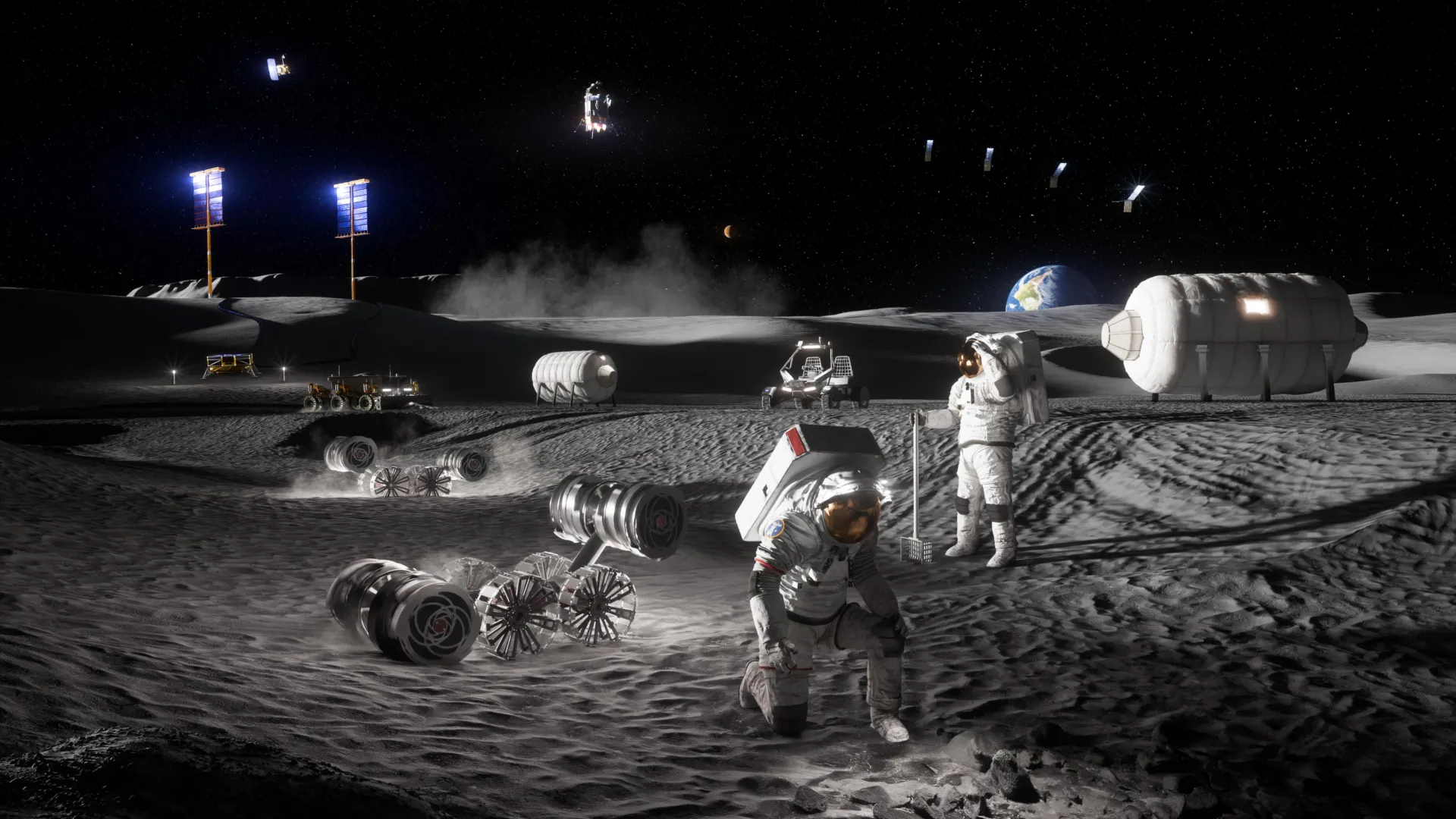
The National Aeronautics and Space Administration (NASA) has officially inaugurated a $1 million Moon Base Challenge, a high-stakes, multi-disciplinary competition designed to crowdsource innovative solutions for humanity’s permanent presence on the lunar surface. Announced during a high-profile "MAX POWER" event at the Kennedy Space Center Visitor Complex in Florida, the initiative serves as a cornerstone of the agency’s broader strategy to integrate the next generation of American students into the mechanics of deep-space exploration. By inviting high school and college students to tackle the architectural, logistical, and technical hurdles of lunar habitation, NASA is effectively bridging the gap between theoretical classroom learning and the pragmatic demands of the Artemis generation.
A Strategic Pivot Toward Sustainable Lunar Presence
The Moon Base Challenge represents a significant evolution in how NASA manages its research and development pipeline. While the agency traditionally relies on internal engineering teams and established aerospace contractors, the complexity of establishing a base near the lunar South Pole necessitates a broader spectrum of ingenuity. The South Pole is of particular scientific and operational interest due to the presence of water ice in permanently shadowed regions, which could theoretically be harvested for life support, radiation shielding, and hydrogen-based rocket propellant.
NASA’s current trajectory for the Moon involves moving from short-duration missions to a semi-permanent lunar surface infrastructure. This evolution is vital for the agency’s "Moon to Mars" objective, which treats the lunar environment as a testing ground for the technologies required for human travel to the Red Planet. Establishing a base that can withstand the extreme temperature fluctuations of the lunar day-night cycle, mitigate the abrasive nature of lunar regolith, and maintain consistent life support requires a paradigm shift in civil and mechanical engineering.
The Six Pillars of Lunar Survivability
The competition is structured around six critical engineering and logistical categories that represent the most significant barriers to long-term survival in space:
- Energy Generation and Storage: Developing robust solar, nuclear, or kinetic systems capable of surviving the 14-day lunar night.
- Infrastructure Construction: Utilizing in-situ resource utilization (ISRU) to turn local regolith into building materials for habitats and landing pads.
- Life Support Systems: Designing closed-loop systems that can recycle air and water with near 100% efficiency.
- Surface Mobility: Engineering vehicles capable of traversing rugged, cratered terrain while transporting heavy equipment or personnel.
- Communications Networks: Establishing high-bandwidth, low-latency relay systems that can function through the unique electromagnetic environment of the Moon.
- Radiation and Micro-meteoroid Protection: Implementing shielding solutions that safeguard both human crews and sensitive electronic hardware from solar flares and debris.
These categories are not merely abstract exercises; they mirror the internal trade studies currently being conducted by NASA’s Moon Base Program managers. Participants are expected to provide rigorous analysis, evaluating competing technical options with the same level of scrutiny applied to professional aerospace proposals.
Chronology of the Initiative
The launch of the Moon Base Challenge marks the beginning of an extensive, multi-year engagement phase:
- Launch Phase (Current): The registration period is now open via the NASA STEM Gateway, providing students access to the competition guidelines and resource library.
- Design and Proposal Phase (2025–2026): Participating teams will conduct research, develop prototypes, and refine their proposals based on environmental data provided by the agency.
- Submission Deadline: Registration and preliminary design documentation are required by January 25, 2027.
- Evaluation and Award Phase: A panel of industry experts, NASA engineers, and academic researchers will review submissions, culminating in the distribution of the $1 million prize pool to winning teams across the various challenge categories.
Official Perspectives on the Challenge
During the announcement at the Kennedy Space Center, NASA Administrator Jared Isaacman emphasized the necessity of diverse perspectives. "We’re looking for students ready to think creatively, work as a team, and take on real problems connected to NASA’s future on the Moon," Isaacman stated. "You do not have to wait until graduation to contribute. Curiosity, creativity, and the willingness to tackle hard problems without obvious answers are exactly the qualities we need as we build what comes next."
This sentiment was echoed by Carlos García-Galán, manager of the Moon Base Program. "As we build and design the foundations of Moon Base, we want to leverage all the ingenuity and innovation to think of every consideration our explorers might need to live and work there," García-Galán remarked. He noted that the project is inherently generational, as the students participating today are the demographic most likely to serve as the architects and inhabitants of lunar colonies in the coming decades.
Elaine Ho, associate administrator for the Office of STEM Engagement at NASA Headquarters, highlighted the educational impact of the initiative. "Students are the next generation of explorers and innovators. Their unique perspectives are key to helping us envision a future away from Earth, and I’m excited to see the creativity and ingenuity spurred by this challenge," Ho said.
Implications for the Future Workforce
The Moon Base Challenge is managed by the Institute of Competition Sciences under a contract with NASA’s Center of Excellence for Collaborative Innovation. By formalizing this competition, NASA is addressing a critical talent pipeline issue. The aerospace sector is currently experiencing a high demand for engineers who possess not only technical proficiency but also systems-level thinking.
By forcing students to consider the "how" behind the "what"—for example, considering how a power generation system must integrate with a habitat’s thermal control unit—the competition builds professional competencies that are often missing in traditional undergraduate curricula. The requirement to present proposals to stakeholders mimics the real-world environment of NASA’s Research and Technology Mission Directorate, where project viability is constantly assessed against budget, mass, and performance constraints.
The Broader Impact of Lunar Expansion
The significance of this competition extends beyond the $1 million prize. It serves as a signaling mechanism to the private sector and the global scientific community that NASA is committed to an open-innovation model. By democratizing the problem-solving process, NASA is able to capture "outside-the-box" solutions that might otherwise be missed by rigid, legacy-driven engineering firms.
Furthermore, the focus on the lunar South Pole aligns with international efforts to establish a sustainable human footprint. As multiple space agencies and private corporations eye the same lunar real estate, the ability to develop efficient, lightweight, and autonomous infrastructure will be the primary determinant of who leads the next era of space exploration.
For participating students, the challenge offers a rare opportunity to contribute to the national interest. Whether or not their specific designs are implemented, the process of solving these six major hurdles provides a tangible connection to the history of human spaceflight. It shifts the perception of the Moon from a distant object of scientific curiosity to an active, operational theater where the future of human civilization may soon reside.
Interested student teams are encouraged to review the comprehensive documentation available at the NASA STEM Gateway. The registration window remains open until January 25, 2027, allowing sufficient time for interdisciplinary teams to form and develop high-fidelity proposals. As NASA continues to refine its lunar roadmap, the contributions from these young innovators may well serve as the blueprint for the next giant leap in human history.