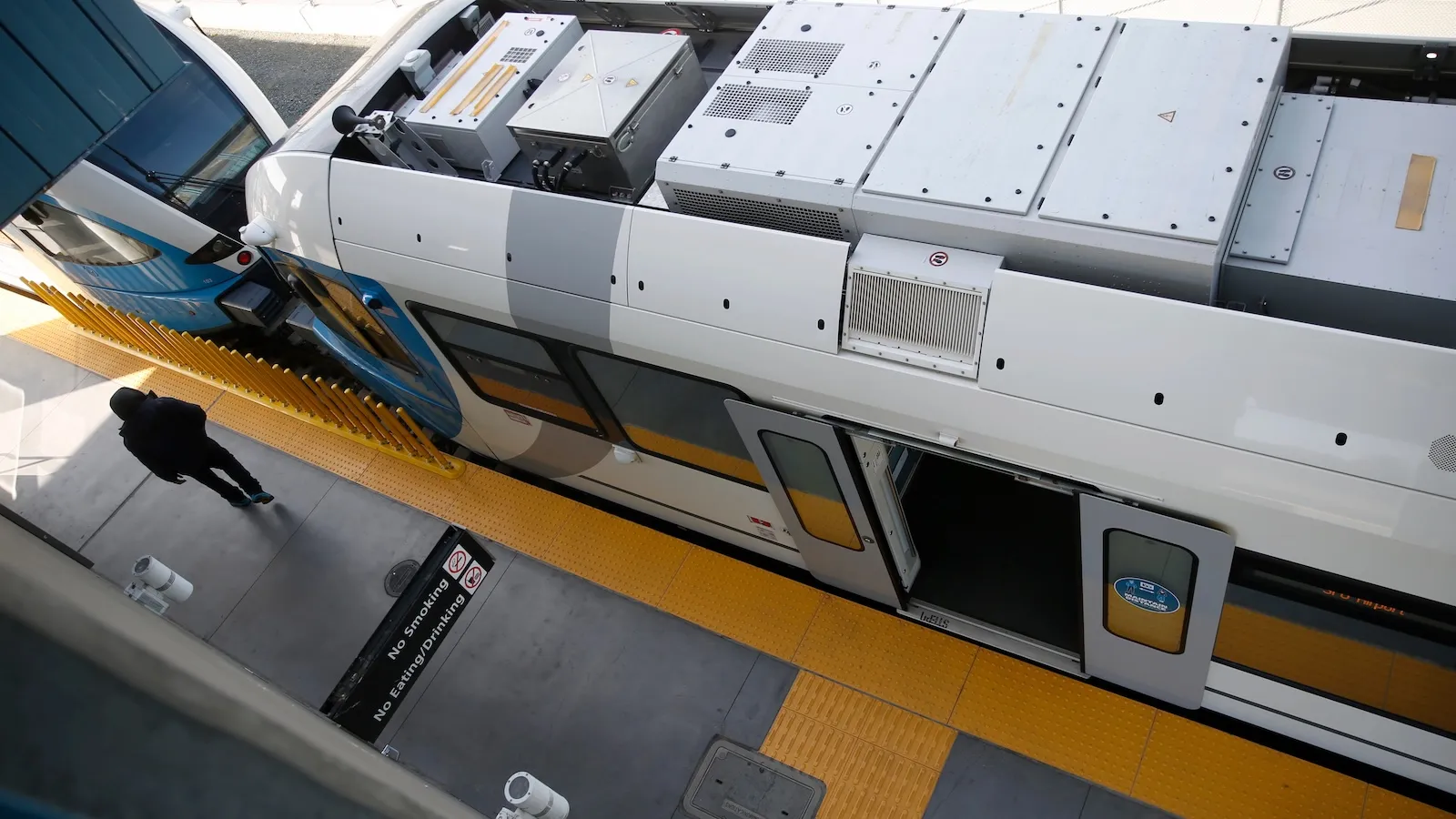
In a political climate defined by intense voter anxiety over the cost of living and household economics, Americans across the United States delivered a resounding message at the ballot box: public transportation is not a luxury, but an essential economic lifeline. During the recent election cycle, voters overwhelmingly chose to raise taxes upon themselves to preserve, rescue, and expand public transit systems in their communities.
Out of 27 high-stakes ballot measures dedicated to supporting public transportation, an impressive 22 passed on November 3. This wave of approvals unlocked a staggering $27.4 billion in critical funding. These financial injections are designed to pull faltering regional networks back from the brink of catastrophic budget cliffs while funding the expansion and construction of brand-new transit lines. Major victories spanned the country, ranging from the San Francisco Bay Area—where voters successfully warded off apocalyptic service cuts to the Bay Area Rapid Transit (BART) and its sister agencies—to Colorado, where residents endorsed sweeping new regional rail initiatives, and the Pacific Northwest, where Seattle and Pierce County approved major expansions to bus and transit services.
This robust showing of public support follows a similar trend from the 2024 elections, when 19 out of 25 transit-supporting measures passed. Analysts note that these consistent electoral triumphs, bridging both red and blue political landscapes, demonstrate that voters increasingly view public transit as a direct solution to financial strain rather than a competing budgetary priority.
The Economic Paradox: Why Transit is Winning Amid Affordability Concerns
For decades, conventional political wisdom suggested that tax increases for infrastructure or public services faced steep uphill battles during periods of inflation and economic anxiety. However, transportation policy experts argue that modern voters are looking at the bigger picture of household expenditures.
Sohail Husain, a policy analyst at the Eno Center for Transportation, highlighted the shifting psychological landscape of the American electorate. "It’s an indication that the public is willing to pay for these public transit improvements," Husain observed. "That’s very telling—especially in a world like today where people are concerned about affordability. I think people are still also concerned about mobility and having options to move."
This sentiment is heavily backed by empirical data regarding the true cost of car-centric lifestyles. According to industry estimates from the American Public Transportation Association (APTA), relying on robust public transit rather than owning and operating a private automobile can save an average household more than $14,000 annually. In specific regions like Washington state, where the average cost of car ownership hovers around $12,000 per year, local transit advocates frame service expansions not merely as mobility projects, but as direct anti-poverty and cost-of-living measures.
Kirk Hovenkotter, executive director of the Transportation Choices Coalition, encapsulated this perspective while discussing the historic transit win in Washington’s Pierce County—where voters approved a tax increase for bus expansion for the first time since 2002. "The average cost of car ownership in Washington state is about $12,000," Hovenkotter noted. "The fastest way we can put $12,000 back in someone’s pocket is making it easier for them to live without a car or with one fewer car."
Local Victories and Regional Lifelines
The local measures approved by voters will yield immediate, tangible impacts on regional mobility, keeping vital economic arteries functioning and preventing massive systemic contractions.
In the San Francisco Bay Area, a newly approved 14-year regional sales tax is projected to generate roughly $1 billion annually. This predictable, dedicated revenue stream will staunch the bleeding for BART and interconnected regional networks that had been staring down unprecedented fiscal deficits. Without this funding, millions of daily commuters faced the prospect of reduced operating hours, cancelled routes, and overcrowded carriages.
Meanwhile, Colorado voters greenlit a 0.333 percent sales tax specifically earmarked to build, operate, and maintain a transformative passenger rail corridor. This new artery will seamlessly connect the communities of Pueblo and Colorado Springs northward through Denver and all the way to Fort Collins, stitching together the explosive growth of the Front Range urban corridor.
In the Pacific Northwest, Seattle voters doubled down on their commitment to mass transit by doubling an existing sales tax over the next decade. This maneuver will pump an additional $138 million per year directly into expanding transit service capacity. Neighboring Pierce County followed suit, clearing the path for an overdue modernization and expansion of its bus network to serve a rapidly growing population.
Statehouse Shifts and Changing Legislative Horizons
Beyond municipal ballot boxes, the election results reshaped state legislatures across the country, creating new avenues for policy advancement and infrastructure investment. With Democrats taking control of the governorship and both legislative chambers in 22 states, transit advocates are eyeing a rare window of opportunity.
Pennsylvania stands out as a primary beneficiary of these shifting political dynamics. The commonwealth has spent recent years locked in bitter, partisan combat over the fiscal health of the Southeastern Pennsylvania Transportation Authority (SEPTA), which serves the greater Philadelphia metropolitan area. Last year, as SEPTA faced a crippling 45 percent service reduction due to a structural deficit, Governor Josh Shapiro leveraged executive authority to direct the state Department of Transportation to shift nearly $400 million from capital accounts to operational budgets, subsequently supplementing the agency with another $220 million.
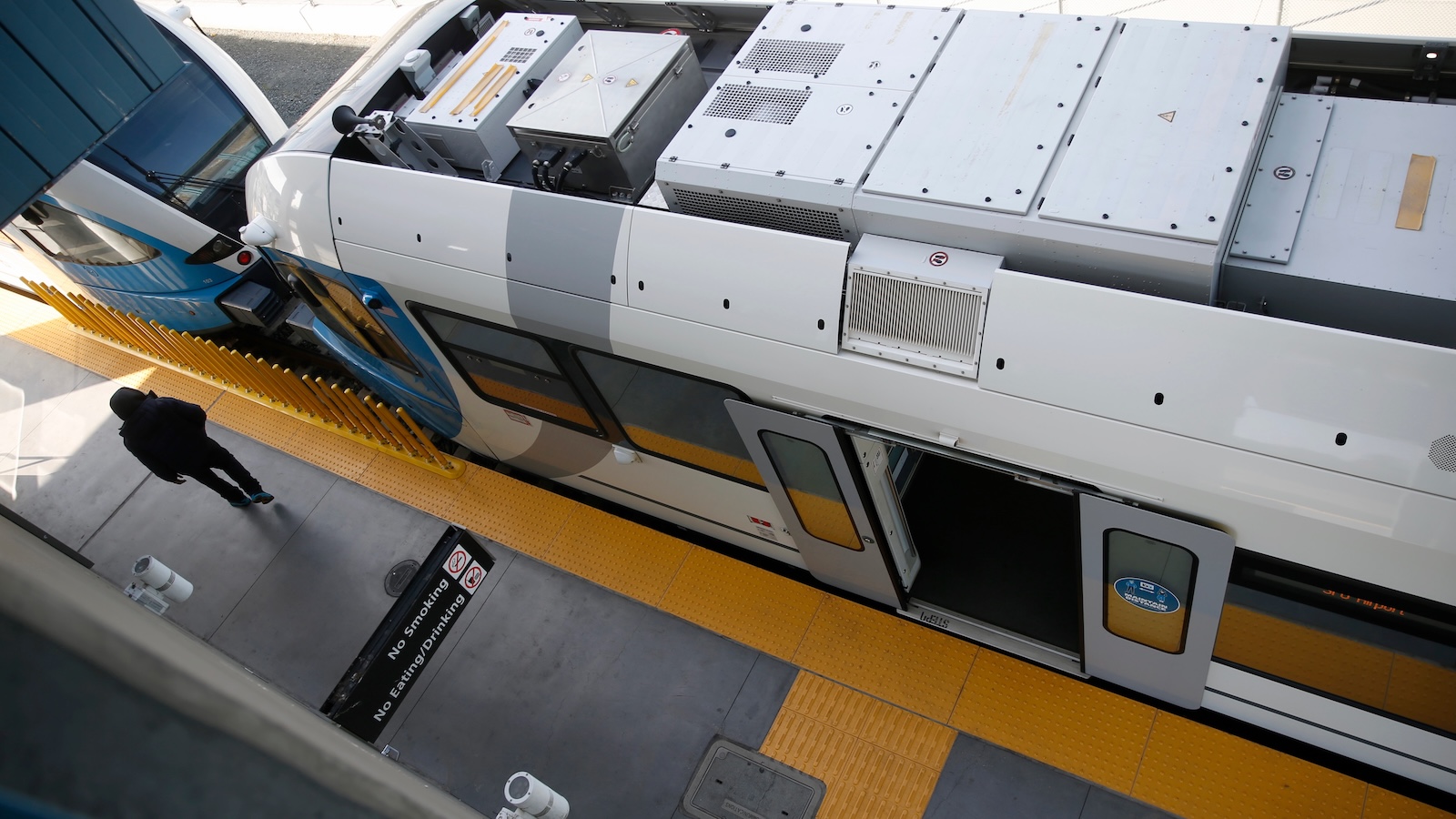
Now, with Democrats seizing full control of the state legislature, advocates argue that SEPTA can finally graduate from crisis management to long-term modernization. Stephen Bronskill of Transit Forward Philadelphia pointed toward an ambitious slate of overdue projects, including comprehensive trolley modernization, the replacement of rolling stock dating back to the 1970s, increased frequencies for regional rail lines, and the complete ADA accessibility retrofitting of transit stations.
"This is a once-in-a-generation moment to invest in public transit—safe, reliable, accessible transit that Philly needs, but all of Pennsylvania deserves," Bronskill stated.
In contrast, states with split or conservative-led legislatures present a more nuanced battlefield. In Texas, where Republicans maintain control of the state Senate, transportation policy has historically prioritized highway expansion over multi-modal transit options. Public transit funding currently accounts for a meager 0.72 percent of the Texas Department of Transportation’s overall budget.
However, advocates like Jay Blazek Crossley, executive director of the urban policy nonprofit Farm & City, sense a cultural and political softening. For over a decade, Crossley has fought an uphill battle to introduce legislation that would empower municipalities to reduce speed limits on residential streets and secure increased transit funding. While state leadership remains hyper-focused on moving automobiles swiftly through massive highway projects, Crossley believes the political climate is evolving. "At the very least, the state, I believe, will get out of the way on things like building good light rail and transit," he noted.
Bigger ambitions are also percolating in the Lone Star State. State Representative John Bucy III has reintroduced legislation directing the Texas Department of Transportation to establish a public-private partnership aimed at constructing a high-speed rail line connecting Dallas and San Antonio. Proponents argue that such a corridor is desperately needed to alleviate nightmarish congestion along the heavily traveled Interstate 35 corridor.
"I think the voters spoke loud and clear that they want a Texas government that is going to work on kitchen table issues," Representative Bucy said. "I think that’s healthcare, education. It’s also mobility and transit, and how do we get around this big, vast state?"
Similar dynamics are unfolding in Georgia, where Democrats flipped the state House and captured the governorship, though Republicans retain a slim margin in the Senate. This legislative balance will severely test incoming Governor-elect Keisha Lance Bottoms, who campaigned heavily on establishing dedicated state funding streams for the Metropolitan Atlanta Rapid Transit Authority (MARTA) and other struggling mass transit networks throughout the state that have long depended entirely on fragile local sales taxes and federal grants.
The Federal Landscape and the Upcoming Infrastructure Battles
The ripple effects of the election will ultimately reach Washington, D.C., where Congress stands on the precipice of rewriting federal transportation law and determining future capital allocations for passenger rail and mass transit.
Earlier in the legislative cycle, the BUILD America 250 Act advanced out of a key House committee with bipartisan backing in May. However, the initial iteration of the bill deeply alarmed public transit advocates, who warned that its funding structures would result in severe cuts to urban and rural transit systems alike.
With Democrats securing control of Congress following the recent elections, the trajectory of the legislation is expected to pivot sharply. Representative Jerry Nadler of New York, who served as the lone Democrat on the committee to oppose the initial advancement of the bill, signaled that major revisions are imminent.
"Unlike the current Republican proposal, next year’s bill should not prioritize one mode of transportation at the expense of others," Nadler said in a formal statement. "This bill must make robust investments in rail and public transit, to connect communities, create good-paying jobs, lower transportation costs for families, and reduce the cost of moving goods across the country."
Despite the shift in legislative control, overhauling the federal transportation framework will be a complex and time-sensitive endeavor. Rebecca Higgins, vice president of policy at the Eno Center for Transportation, noted that lawmakers will operate under tight procedural deadlines because federal transit funding is currently sustained via a short-term congressional extension. Furthermore, leadership will need to provide newly elected members ample opportunity to weigh in on contentious provisions—such as the fate of intercity passenger rail funding allocations that were originally embedded in the landmark Infrastructure Investment and Jobs Act but subsequently stripped from early drafts of the BUILD America 250 Act.
Conclusion: A Paradigm Shift in American Mobility
As federal lawmakers prepare for high-stakes negotiations on Capitol Hill and statehouses adapt to shifting political majorities, the most profound victories for public transit remain anchored at the grassroots level.
The willingness of voters to tax themselves during an era of profound economic anxiety demonstrates a fundamental evolution in how Americans perceive infrastructure. For millions of citizens, public transit is no longer viewed as a secondary municipal service or a niche environmental policy. Instead, it has been validated at the ballot box as an indispensable economic engine, a shield against the rising cost of living, and a practical solution to the daily challenges of modern mobility.