The arrival of this second-generation model follows a lengthy anticipation period, with the vehicle’s design first previewed in the summer of 2025. Volkswagen has opted for a philosophy of evolution rather than revolution, a strategy previously employed with the success of the Golf. The latest iteration aims to address previous criticisms regarding interior material quality while integrating modern design cues from the company’s all-electric "ID" family. As the automotive industry navigates the transition to electrification, the T-Roc remains a dedicated internal combustion engine (ICE) offering, albeit with significant hybridization upgrades to meet tightening emissions standards.
Design Evolution and Aesthetic Refinements
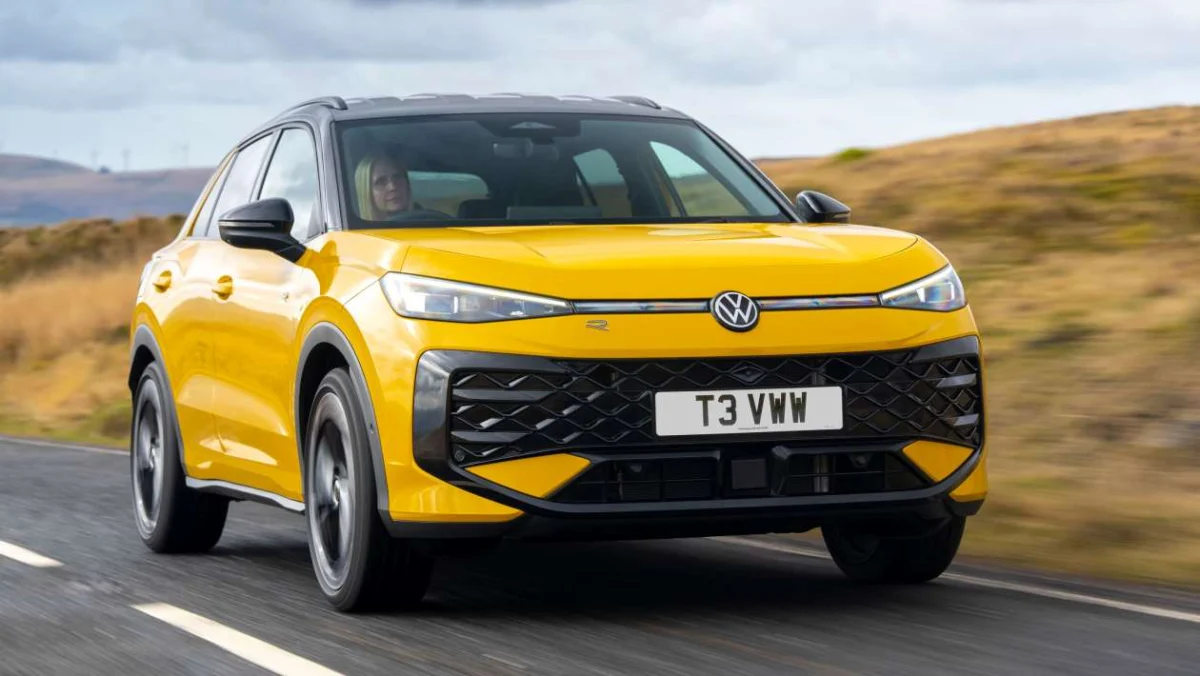
The second-generation T-Roc introduces a sophisticated visual language that aligns the crossover with Volkswagen’s contemporary design identity. The most striking updates are found at the front, where a lower-profile grille is complemented by a full-width LED lighting signature. In a notable first for a Volkswagen internal combustion model, the badges are now illuminated, mirroring the aesthetic of the ID.4 and ID.5 electric SUVs.
Despite these modern touches, the T-Roc retains several signature design traits that contributed to the original model’s popularity. The distinctive "hockey stick" body crease remains prominent above the rear wheel arches, and the thick, forward-leaning C-pillar continues to define the vehicle’s silhouette. For the 2026 model year, Volkswagen has expanded the customization options, offering a two-tone color scheme that has become a hallmark of the nameplate.
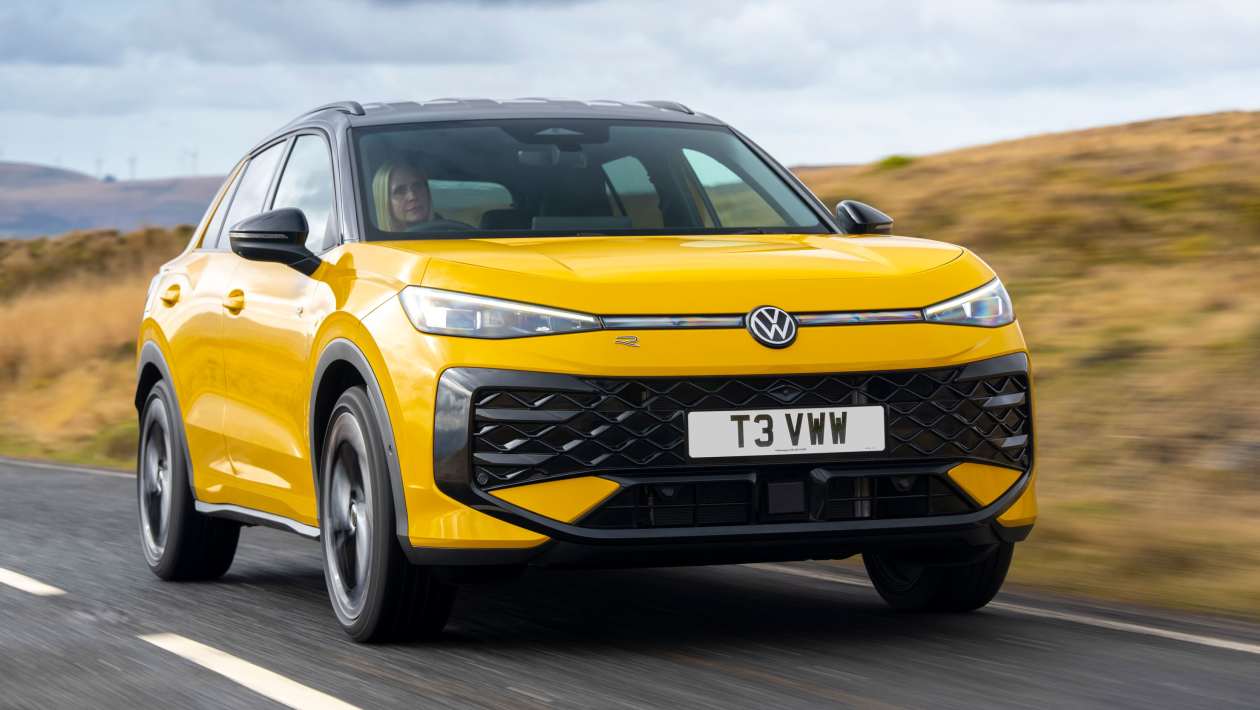
Color palettes have also been refreshed. While standard options include Solid White (£520), Flame Red Premium (£930), and various metallic shades like blue, black, and grey (£830), Volkswagen has introduced "Canary Yellow" as a no-cost vibrant option. This move is seen by industry analysts as an attempt to inject personality into a segment often dominated by conservative greyscale tones.
Engineering and the MQB Evo Platform
Underpinning the new T-Roc is the MQB evo platform, the latest iteration of the Volkswagen Group’s modular architecture. This platform is shared with the current Mk8.5 Golf, as well as the newest Tiguan and Passat models. The transition to the MQB evo architecture allows for greater integration of advanced driver-assistance systems (ADAS) and more sophisticated powertrain technologies.
At launch, the UK engine lineup is centered on the 1.5-liter eTSI four-cylinder turbocharged petrol engine. This unit features a 48-volt mild-hybrid system designed to improve fuel efficiency and provide smoother stop-start transitions. Two power outputs are available: a 115bhp base version and a more potent 148bhp variant. The latter, which serves as the primary test subject for initial market evaluations, delivers 250Nm of torque and is paired exclusively with a seven-speed dual-clutch (DSG) automatic transmission.
The mild-hybrid system utilizes a variable geometry turbocharger and an electric motor that provides a small boost during acceleration. This setup allows the vehicle to "coast" with the engine off under low-load conditions, such as highway cruising or deceleration.

Performance and Driving Dynamics
The 148bhp eTSI model offers a balanced performance profile, achieving a 0-62mph sprint in 8.9 seconds. While this is marginally slower (by 0.1 seconds) than the outgoing model, the flexible power delivery across the rev range ensures that the vehicle remains capable in real-world driving scenarios. The DSG transmission remains a highlight for its smooth shifts, though testers have noted that inconsistent throttle inputs can occasionally cause the gearbox to hold onto gears longer than necessary, particularly when the vehicle is set to Sport mode.
One of the T-Roc’s enduring strengths is its "Golf-like" driving experience. Despite its elevated ride height, the crossover maintains predictable steering weight and consistent pedal feel. The braking system now incorporates energy regeneration to charge the mild-hybrid battery. Drivers can choose between "low" and "automatic" regeneration settings, though neither offers the aggressive "one-pedal" braking feel common in full-electric vehicles.
Refinement has been a primary focus for the second generation. By utilizing hardware components from larger MQB evo models, Volkswagen has significantly reduced engine, road, and wind noise. However, ride quality remains sensitive to wheel choice. While the base Life trim on 17-inch wheels offers a compliant ride over rougher country roads, the R-Line’s 19-inch wheels—and the optional 20-inch rims—introduce a firmer edge that can transmit road imperfections into the cabin.
Interior Ergonomics and Technological Overhaul
The interior of the second-generation T-Roc represents a significant course correction for Volkswagen. Following feedback regarding the touch-sensitive interfaces found in earlier versions of the Golf Mk8, the company has reintroduced physical buttons on the steering wheel. The cabin ergonomics have been further enhanced by the inclusion of a 13-inch central touchscreen, which features backlit sliders for volume and temperature control—a feature previously omitted in older models.

A new standout feature is the multi-function rotary controller on the center console. Borrowed from the Tiguan, this knob allows drivers to adjust volume levels and switch between driving profiles without relying solely on the touchscreen. Material quality has also seen an upgrade; felt-lined door bins and soft-touch plastics are now standard across most touchpoints, lending the cabin a more premium feel.
To add a layer of brand heritage, Volkswagen has included several "Easter eggs" throughout the interior. These include small drawings of a pretzel, an ice cream cone, and a suitcase on the center console, alongside swimmer icons on the wireless charging pad—details inspired by the classic design quirks of the original Golf.
Practicality and Dimensions
The new T-Roc has grown in size, measuring 12cm longer than its predecessor. This increase in length directly benefits interior packaging and luggage capacity. The boot space has expanded from 445 liters in the old car to 475 liters in the new model, making it more competitive against the likes of the Nissan Qashqai.
The 4,373mm length provides ample room for front and rear passengers. The rear seats feature angled backrests designed to improve comfort on long-distance journeys. However, some critics have noted that the absence of a panoramic sunroof option can make the rear cabin feel somewhat dark, particularly in trims with the black roof lining.

Future Roadmap: Hybrids and the T-Roc R
While the initial launch focuses on mild-hybrid petrol engines, Volkswagen has a clear roadmap for expanding the T-Roc lineup. Later in 2026, two full-hybrid (HEV) variants will be introduced, offering 134bhp and 167bhp respectively. These models will utilize a 1.5-liter engine mated to a dedicated hybrid module, allowing for pure-electric driving in urban environments. Volkswagen claims these full hybrids will offer a 15 percent improvement in efficiency over the mild-hybrid versions. Notably, the company has confirmed there are no plans for a plug-in hybrid (PHEV) version of the T-Roc, citing the Tiguan as the primary offering for that segment.
For performance enthusiasts, a new T-Roc R is scheduled for release in 2027. This flagship model is expected to adopt the 328bhp turbocharged engine from the Mk8.5 Golf R, featuring all-wheel drive and a specialized chassis setup to maintain its status as one of the fastest crossovers in its class.
Market Positioning and Pricing
The UK pricing structure for the new T-Roc begins with the Life trim, which offers the most comfortable ride and a comprehensive suite of standard equipment. The R-Line trim tested here is priced at £38,935, representing a £615 premium over the mid-range Style trim. However, the R-Line is over £5,000 more expensive than the entry-level Life model when equipped with the same 148bhp engine.
2026 Volkswagen T-Roc R-Line eTSI Specifications:

- Price: £38,935
- Engine: 1.5-litre four-cylinder turbo petrol MHEV
- Power/Torque: 148bhp / 250Nm
- Transmission: Seven-speed DSG, Front-wheel drive
- 0-62mph: 8.9 seconds
- Top Speed: 131mph
- Fuel Economy: 50.2mpg (WLTP)
- CO2 Emissions: 128g/km
- Dimensions (L/W/H): 4,373 / 1,828 / 1,573mm
Industry Implications and Analysis
The release of the second-generation T-Roc underscores Volkswagen’s commitment to its internal combustion portfolio even as it aggressively pursues its "Way to Zero" electrification strategy. By refining a proven formula, Volkswagen is catering to a significant demographic of buyers who are not yet ready to transition to full-electric vehicles but demand modern technology and improved efficiency.
The T-Roc’s success is vital for Volkswagen’s financial stability, as the high-margin crossover segment continues to fund the research and development of future ID models. The decision to prioritize ergonomics and material quality suggests that the company is taking consumer feedback seriously, moving away from the "all-touch" interiors that polarized the market in the early 2020s.
As the T-Roc enters a crowded market, its combination of brand prestige, improved practicality, and conservative but effective styling updates positions it as a frontrunner in the mid-size crossover segment. While the lack of a plug-in hybrid or a full EV variant may deter some buyers, the upcoming full-hybrid models and the performance-oriented "R" version ensure that the T-Roc remains a versatile and relevant player in the European automotive landscape through the end of the decade.