When discussing the lexicon of sophisticated short haircuts, the conversation has historically been dominated by a specific set of perennial favorites. The pixie cut remains a cornerstone of chic, short-hair aesthetics, popularized by a lineage of high-profile actresses such as Zendaya, Emma Watson, and Jennifer Lawrence, who have utilized the style to signify transformative personal and professional chapters. The classic bob remains the industry standard for fashion-forward versatility, lauded for its structural elegance and ease of maintenance. Meanwhile, the shaggy bob or “shag” continues to serve as the shorthand for effortless, rock-star-inspired charisma. Conversely, the bowl cut has long occupied the periphery of acceptable style, often relegated to childhood memories of restrictive maternal haircuts or uninspired utilitarian grooming. However, the Thom Browne Spring/Summer 2027 runway presentation has effectively challenged this long-standing cultural stigma, reframing the silhouette through a lens of high-concept artistry and entomological inspiration.
The Entomological Blueprint: A Technical Breakdown
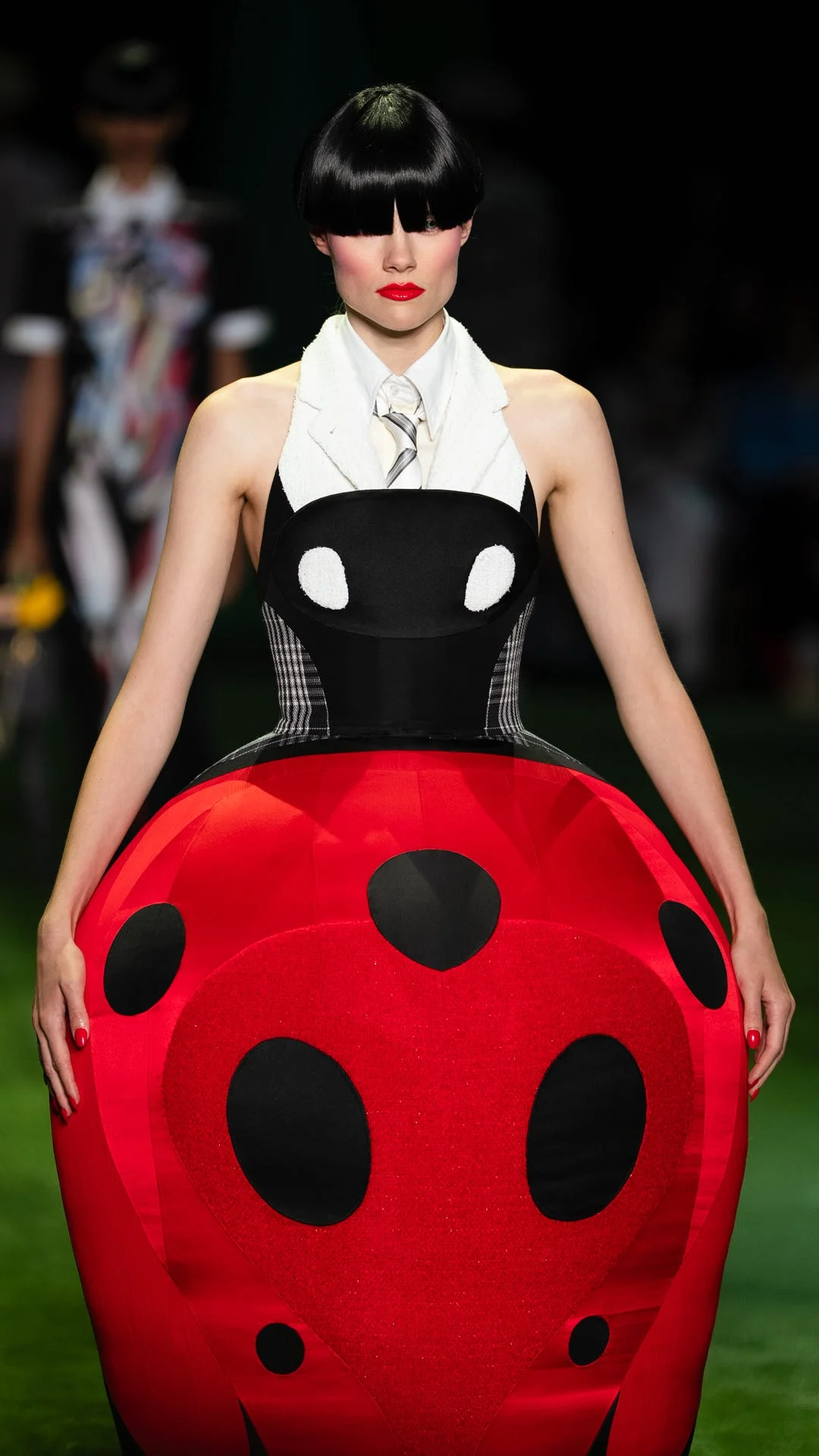
The Thom Browne show, a spectacle of rigorous conceptual design, relied on the expertise of hair stylist James Pecis to translate the designer’s vision into reality. The aesthetic core of the collection was rooted in the morphology of insects. According to Pecis, the directive from Browne was to achieve a profound level of uniformity, specifically mimicking the hard, glossy, and rounded appearance of a beetle’s shell.
To achieve this, Pecis and his team executed a meticulous technical process. Rather than attempting to cut the models’ natural hair into the required shape, the team sourced approximately 90 distinct wigs. The construction involved a “wig wrap” methodology, where hair was secured using a circular wrapping technique or complex braiding to ensure a seamless foundation. The tops of the wigs were then surgically sliced to create a heavy, blunt fringe that obscured the forehead, creating the characteristic "mushroom" or "beetle-shell" aesthetic. This process prioritized artificiality and hyper-realism, creating a look that felt intentionally manufactured rather than organic.
Historical Context and Evolution of the Style
While the bowl cut—frequently referred to as a “pageboy” or “mushroom” cut in various historical iterations—is currently experiencing a avant-garde revival, its presence in fashion history is not entirely unprecedented. The most iconic historical reference remains the 1960s, specifically the era of The Beatles, whose uniform “mop-top” bowl cuts defined a generation of pop culture.
In the contemporary era, the style has seen sporadic high-fashion endorsements. Notably, Zendaya debuted a polished, sleek version of the look at the 2016 Met Gala, demonstrating that the silhouette could be elevated through precision styling and high-glamour context. The Thom Browne iteration, however, shifts the focus from wearable, red-carpet-ready beauty toward a more theatrical, conceptual interpretation.
Both Pecis and lead makeup artist Aaron de Mey identified the work of visionary Serge Lutens as a primary touchstone for the beauty direction. Lutens, known for his stark, uncompromising approach to color and shape, provided the template for the collection’s blunt, low-hanging bangs and the accompanying pigmented aesthetic.
Makeup Artistry: Juxtaposing Matte and Gloss
The beauty narrative of the S/S 2027 show was bifurcated, with De Mey designing two distinct makeup palettes to complement the rigid, structural hair. One segment of the models, representing the show’s more playful, "70s festival hippie" aesthetic, wore intricate rainbow cat-eye makeup. This served as a colorful, chaotic contrast to the severe, uniform bowl cuts.

The second group of models embraced the Lutens-inspired aesthetic, defined by sharp, angular contouring on the cheekbones and deeply pigmented lips. De Mey emphasized the use of matte, velvet-finish skin as a canvas. This base allowed the saturated colors of the eyes and cheeks to appear more vivid. Furthermore, the deliberate use of high-gloss lip lacquer was intended to provide a tactile contrast against the matte skin and the artificial, "beetle-shell" finish of the hair. Each model’s skin was prepped using the Dr. Diamond’s Metacine line, ensuring a high-quality, professional base that would withstand the rigors of the runway.
Analysis of Runway Implications
The decision to center a major runway show around the bowl cut is an intentional disruption of standard beauty norms. In an industry that often prioritizes traditional notions of femininity and face-framing softness, the bowl cut acts as a "hard" element. It obscures the forehead and creates a geometric barrier, forcing the viewer to engage with the model’s features in a more clinical, detached manner.
Industry analysts suggest that this choice reflects a broader trend toward "hyper-realism" and the rejection of the "undone" look that has dominated street style for the past decade. By opting for a look that is unapologetically artificial, Thom Browne is moving away from the "no-makeup" makeup aesthetic and toward a form of fantasy. As Pecis noted, "Thom likes hyper-realism, almost like it’s artificial in a way. But it’s fantasy."
This transition into fantasy is significant for several reasons:
- The Rejection of Utility: By focusing on a style historically viewed as "ugly" or "childish," the designers are asserting their creative autonomy, forcing the audience to re-evaluate what is considered "beautiful" within a fashion context.
- Technological Craftsmanship: The process of sourcing and cutting 90 individual wigs indicates a shift toward couture-level preparation for hair, where the hairstyle is as much a constructed garment as the clothing itself.
- Cultural Normalization: While the bowl cut remains extreme for the average consumer, the consistent appearance of blunt, heavy fringes on high-fashion runways over several seasons suggests a slow integration of these structural elements into mainstream beauty trends.
The Future of the Bowl Cut in Mainstream Beauty
Whether this trend will transition from the runway to the sidewalk remains a matter of debate. Historically, high-fashion interpretations of extreme styles often filter down into more wearable iterations. We have seen this with the "shag," which transitioned from a subculture symbol to a mainstream salon staple. The bowl cut faces a higher hurdle due to its severe nature, yet the endorsement of designers like Thom Browne provides a significant platform for the style.
As the beauty industry continues to oscillate between the extremes of "clean girl" minimalism and the maximalist, surrealist trends seen in recent seasons, the bowl cut offers a unique middle ground. It is structurally minimalist, requiring little to no daily heat styling, yet it makes a maximalist statement in terms of shape and visual impact.
Chronology of the Aesthetic Shift
- 1960s: The "mop-top" era establishes the bowl cut as a global cultural phenomenon.
- 2016: Zendaya’s Met Gala appearance introduces the bowl cut to the modern red-carpet lexicon.
- 2023-2025: A gradual rise in the popularity of "micro-bangs" and blunt-cut bobs creates a foundation for shorter, more architectural hair trends.
- 2027: Thom Browne’s S/S 2027 collection brings the bowl cut to the forefront of high fashion, utilizing professional wig-crafting to achieve an entomological, "beetle-shell" finish.
Conclusion
The Thom Browne S/S 2027 show serves as a case study in how fashion can dismantle long-held biases regarding specific aesthetics. By stripping away the common associations of the bowl cut and replacing them with a narrative of insect-inspired fantasy, the production team has successfully reclaimed a silhouette that was once considered a social faux pas.
While the average person may not opt for a "beetle shell" wig, the influence of this show will likely be felt in the coming seasons through an increased focus on blunt, structural, and ultra-short haircuts. The professional consensus, as suggested by the work of Pecis and De Mey, is that beauty should be a tool for storytelling rather than a pursuit of traditional symmetry. In this regard, the bowl cut is not just a haircut; it is a deliberate, calculated, and highly effective artistic statement. The industry’s willingness to embrace such an unconventional look underscores a broader shift toward individualistic, challenging, and highly curated personal aesthetics. Whether or not it catches on in the mainstream, the "bowl cut era" of the S/S 2027 runways has firmly established that in the world of high fashion, no silhouette is beyond the reach of creative reinvention.