The Hashemite Kingdom of Jordan has long served as a vital geopolitical and humanitarian anchor in the Middle East, balancing domestic health reform with the immense regional responsibility of hosting millions of displaced persons. Against this backdrop, World Health Organization (WHO) Director-General Dr. Tedros Adhanom Ghebreyesus arrived in Amman for a high-stakes, two-day State visit designed to evaluate public health milestones, reinforce international cooperation, and inspect emergency medical operations. The visit underscores Jordan’s enduring model of resilience, primary healthcare integration, and humanitarian generosity amid persistent regional volatility.
Throughout the opening day of the mission, Dr. Tedros engaged in high-level diplomatic talks, visited specialized medical facilities treating evacuees from conflict zones, convened international donors, and collaborated with prominent global advocates for mental health and humanitarian action, including Prince Harry, Duke of Sussex, and Meghan, Duchess of Sussex, representing Archewell Philanthropies. The comprehensive itinerary reflects WHO’s strategic priorities: advancing Universal Health Coverage (UHC), strengthening primary health networks, expanding mental health integration, and sustaining life-saving medical supply chains for refugees and vulnerable populations across the Levant.
Royal Audience and Strategic Health Priorities
A central focal point of the first day was an official audience with His Majesty King Abdullah II of Jordan. The high-level meeting emphasized Jordan’s proactive leadership in positioning health security as both a national imperative and a global public good. Discussions between the monarch and the WHO Director-General centered on structural reforms to strengthen national health systems, broaden healthcare access for marginalized groups, and ensure the long-term sustainability of emergency response architectures in the region.
Particular attention was devoted to Jordan’s steadfast support for displaced populations. The Kingdom currently hosts upwards of three million refugees, predominantly from neighboring Syria and the besieged Gaza Strip. Despite constrained domestic resources and complex economic pressures, Jordan has consistently integrated these populations into its national public health infrastructure, providing access to vaccinations, maternal and child health services, and chronic disease management.
Dr. Tedros commended the Jordanian monarch for this unprecedented solidarity, singling out His Majesty’s Medical Corridor initiative as a sterling example of humanitarian execution. This vital logistical pathway has successfully bypassed bureaucratic and physical barriers to deliver advanced, specialized medical care to critically ill and injured children evacuated directly from Gaza. By prioritizing human dignity above geopolitical divides, Jordan continues to demonstrate a global benchmark for compassionate governance in times of crisis.
On-the-Ground Realities: Medical Evacuations and Pediatric Care
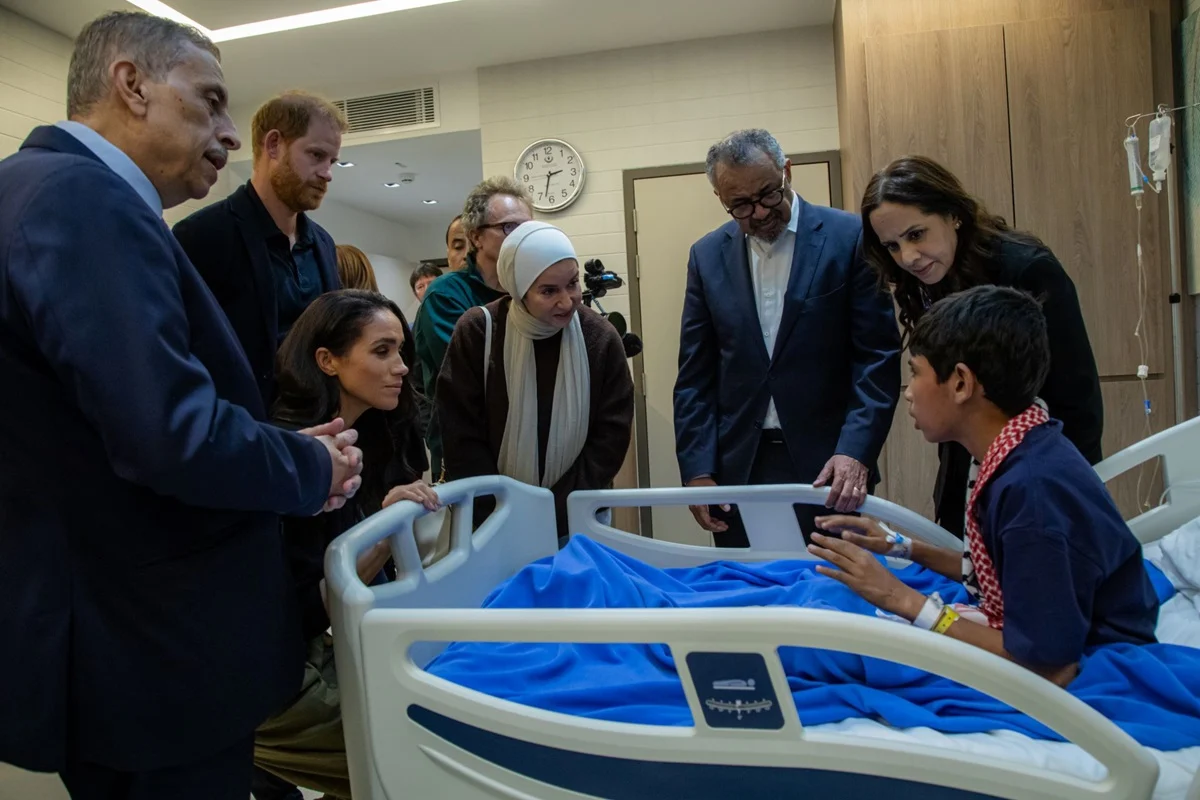
Moving beyond diplomatic chambers, Dr. Tedros transitioned from policy to practice by visiting a specialized WHO-supported hospital in Amman dedicated to treating pediatric patients evacuated from the ongoing conflict in Gaza. The facility represents a critical node in the medical evacuation network, offering advanced interventions for severe blast injuries, pediatric oncology, and other life-threatening medical conditions that cannot be managed locally due to the collapse of the healthcare infrastructure in Gaza.
During his tour of the pediatric wards, the WHO chief met directly with young patients, their families, and the multidisciplinary teams of physicians, nurses, and allied health professionals operating on the front lines of emergency medicine. These healthcare providers deliver continuous, high-level clinical care under immense psychological and operational strain.
The visit underscored the indispensable nature of the Jordan medical corridor. Without seamless cross-border coordination, diplomatic clearances, and dedicated logistical hubs, hundreds of children requiring urgent surgical and oncological interventions would face catastrophic prognoses. Dr. Tedros emphasized that while these heroic individual interventions save lives, they must be underpinned by sustained, predictable international funding and unhindered humanitarian access to scale up operations and meet escalating regional demands.
Mobilizing Donor Support and High-Level Partnerships
To address the severe structural funding deficits facing regional health operations, Dr. Tedros convened a strategic high-level roundtable meeting in Amman. The gathering brought together key health partners, donor governments, United Nations agencies, and philanthropic organizations to evaluate financing priorities for health system resilience in Jordan and the wider region.
Discussions at the ministerial and institutional levels focused on mobilizing multi-year funding streams for several key pillars:
- Scaling up integrated mental health and psychosocial support services within primary care settings.
- Bolstering the operational capacities of host-country health systems straining under high refugee demographics.
- Securing the supply chain for essential pharmaceuticals, medical devices, and specialized diagnostics.
- Enhancing regional epidemiological surveillance and emergency preparedness to preempt potential outbreaks in displacement settings.
Participants welcomed the renewed commitment of international partners to invest in Jordan’s healthcare infrastructure, recognizing that supporting frontline host nations is a critical investment in global health security.
Advancing Universal Health Coverage and Mental Health Integration
In addition to multilateral engagements, Dr. Tedros held bilateral discussions with Jordan’s Minister of Health to review domestic health system reforms. Jordan has earned international acclaim for its methodical approach to achieving Universal Health Coverage through the strengthening of its primary healthcare networks.
A cornerstone of this reform has been the systematic integration of mental health services into routine primary healthcare clinics. Historically, psychiatric and psychological care has remained siloed, stigmatized, and inaccessible to large segments of populations in developing and middle-income countries. Jordan, however, has broken this mold by decentralizing mental health care, ensuring that trained general practitioners can diagnose and manage common mental health disorders at the community level.
This progressive model has been heavily supported by the WHO Director-General’s Special Initiative for Mental Health. By embedding mental health into universal health coverage packages, Jordan ensures that psychological support is treated with the same urgency and resource allocation as physical health conditions—a vital intervention for populations carrying the invisible wounds of conflict, displacement, and prolonged trauma.
The Role of Philanthropy and Global Advocacy
A notable dimension of the WHO Director-General’s visit was the participation of Prince Harry, Duke of Sussex, and Meghan, Duchess of Sussex, attending in their capacities as founders of Archewell Philanthropies. The organization has maintained a long-standing strategic partnership with the WHO, supporting global public health initiatives ranging from equitable access to medical countermeasures during the COVID-19 pandemic to targeted mental health advocacy and humanitarian logistics.
Throughout the engagements, Prince Harry participated actively as a global advocate for mental health reform, emphasizing the urgent need to destigmatize psychological distress and expand access to psychosocial support across communities grappling with acute emergencies. Particular focus was placed on the mental health vulnerabilities of young people, children, and men—demographic groups frequently overlooked in traditional humanitarian response frameworks.
Expressing gratitude for the collaboration, Dr. Tedros noted that the involvement of high-profile advocates brings vital visibility, operational resources, and renewed hope to populations that might otherwise be forgotten by the international community.
Prince Harry echoed these sentiments during a joint appearance, reflecting on the profound insights gained through their partnership with WHO:
"It is an honour to join the Director-General of the World Health Organization in Jordan, a country that is leading by example in compassion, resilience and innovation. Through our work with Archewell Philanthropies, my wife and I have seen first-hand the impact of WHO’s efforts to support mental health and deliver life-saving care in emergencies. We remain deeply committed to advancing awareness, reducing stigma and expanding access to mental health support for all those affected by conflict and crisis. Mental health is fundamental to recovery, dignity and long-term peace, and we are proud to stand with WHO and partners around the world to make it a global priority."
Chronology and Forward-Looking Agenda for Day Two
The state visit is meticulously structured to cover the full spectrum of Jordan’s public health architecture, moving from macro-level policy coordination to specialized clinical care and community-level social interventions.
The comprehensive timeline of the mission encompasses:
- Day One: High-level audience with His Majesty King Abdullah II; bilateral talks with the Minister of Health; inspection of pediatric oncology and trauma wards treating Gaza evacuees; and convening of the international donor roundtable alongside Archewell Philanthropies.
- Day Two (Upcoming Itinerary): A planned site visit to Jordan’s National Center for Rehabilitation of Addicts, an innovative WHO-supported facility offering integrated medical, psychological, and social treatment modalities; community-level consultations with women’s empowerment networks, including the Jordanian Hashemite Fund for Human Development (JOHUD); and a high-level technical tour of the King Hussein Cancer Center to review advanced oncology care, training programs, and regional clinical networks.
The mission is scheduled to conclude with final operational debriefings with humanitarian partners, solidifying Jordan’s strategic role as the premier regional hub for medical evacuations, disaster response coordination, and resilient health system design.
Broader Implications and Strategic Analysis
Public health analysts observing the visit note that Jordan occupies a precarious yet critical position in the Middle Eastern health landscape. As protracted crises in Syria, Palestine, and neighboring territories continue to generate massive humanitarian caseloads, the international community faces a stark choice: either underwrite the structural resilience of frontline host nations or risk the total collapse of regional health security.
By spotlighting Jordan’s successful integration of refugees into national healthcare frameworks and primary care-led UHC models, the WHO is signaling a broader strategic shift. The global health body is increasingly advocating for sustainable, development-oriented humanitarian aid that transitions away from isolated emergency relief toward systemic strengthening. When host governments like Jordan are properly supported, they do not merely absorb shocks—they model sustainable pathways for healthcare delivery under extreme adversity.
Ultimately, Dr. Tedros’s visit to Amman serves as both an endorsement of Jordanian leadership and an urgent call to action for international donors. As geopolitical tensions continue to strain health systems worldwide, the lessons of Jordan—rooted in equity, innovation, and unwavering humanitarian commitment—provide a vital blueprint for the future of global health governance.