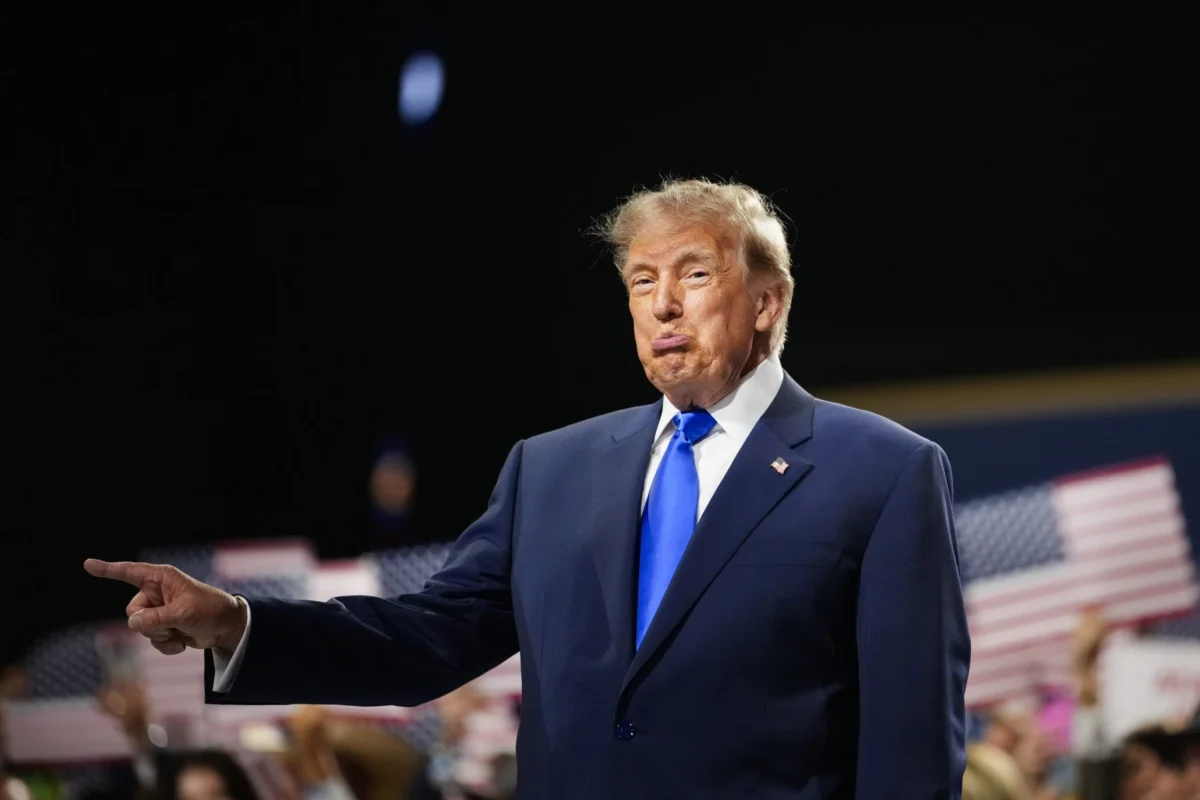
President Donald Trump’s recent campaign appearance in the critical battleground state of North Carolina served as a focal point for his latest economic policy proposal, a $5,000 direct payment to American citizens dubbed the “Trump dividend.” Standing before a crowd of supporters, the former president framed the initiative as a simple, transformative economic lever. “If we win,” he declared, “we’re going to get you $5,000. So that’s it. Very simple.” However, as the proposal reverberates through the political landscape, it has been met with a notable absence of enthusiasm from the very Republican candidates currently vying for seats in the House and Senate.
This disconnect between the top of the ticket and the rank-and-file candidates suggests a strategic divergence. While the proposal aims to capture the attention of voters grappling with persistent inflation and high energy costs, it has largely failed to find a place in the campaign materials, television advertisements, or stump speeches of those running in the most competitive districts.
The Origins of the Dividend Proposal
The $5,000 pledge made its debut during a unique and widely scrutinized midterm convention held in Dallas. In the week since that announcement, the initiative has struggled to gain traction as a cornerstone of the Republican platform. When pressed by reporters, most candidates have opted to sidestep the topic entirely, focusing instead on traditional pillars of conservative economic policy, such as deregulation, tax cuts, or specific legislative packages like the One Big Beautiful Bill Act.
The silence from the campaign trail is not necessarily a reflection of the Republican National Committee’s (RNC) official stance. The RNC continues to characterize the payment as a key component of the former president’s broader economic vision. RNC spokesperson Natalie Baldassarre maintained that the party encourages all candidates to align with the Trump agenda, emphasizing that the goal is to provide relief to American households. Despite this encouragement, the practical implementation of such a policy remains a subject of intense debate among political analysts and fiscal conservatives.
Fiscal Realities and Economic Implications
The proposal, which would require an estimated expenditure exceeding $1 trillion, has drawn sharp criticism from economic experts who point to the inflationary risks inherent in such a massive infusion of cash into the economy. The plan, as articulated by the former president, would theoretically be funded through revenue generated by tariffs on imported goods and savings realized from the Department of Government Efficiency.
However, historical precedent and current legislative realities complicate this vision. Similar promises made in the past regarding direct payouts to citizens—often cited as being in the range of $2,000—failed to materialize. Furthermore, while the former president has suggested that executive authority might be sufficient to enact the plan, House Speaker Mike Johnson has publicly indicated that any such payout would necessitate formal congressional approval. This constitutional requirement introduces a significant hurdle, as it would require the backing of lawmakers who are already cautious about the national debt and the long-term inflationary consequences of unchecked government spending.
Why Candidates Are Avoiding the Narrative
The reticence of Republican candidates is not merely a tactical preference; it is, according to some political strategists, a necessary distance from a policy that lacks a clear fiscal foundation. Doug Heye, a veteran Republican strategist and former RNC communications director, offered a blunt assessment of the situation. “It’s a dumb idea,” Heye noted. “There’s no way to pay for it and it would spike inflation.”
For candidates in battleground states, where independent voters often decide the outcome, the risk of embracing a proposal that is viewed by many as fiscally irresponsible is substantial. Instead, these candidates are focusing on more concrete legislative efforts. Many are prioritizing the temporary elimination of taxes on tips and overtime, a policy that is easier to quantify and defend within the framework of existing tax law. Others are leaning into local issues, such as school board policies, regional economic development, or direct critiques of their Democratic opponents’ records.
The Democratic Response
The Democratic Party, meanwhile, has moved quickly to categorize the $5,000 pledge as a campaign-season gimmick. Spokespeople for Democratic campaign arms have consistently characterized the promise as a “recycled broken promise.” By invoking the history of failed payout proposals, Democrats are working to undermine the credibility of the pledge, framing it as an attempt to distract voters from more pressing economic realities.
The timing of the proposal is particularly critical. With the nation facing rising interest rates, volatile fuel costs, and the persistent pressure of the consumer price index, voters are highly sensitive to economic rhetoric. Democrats argue that the $5,000 figure is an arbitrary number designed to generate headlines rather than a serious policy proposal intended for implementation. They point to the fact that, to date, no legislative language for the dividend has been introduced in either the House or the Senate, leaving the proposal as a campaign talking point rather than a concrete bill.
A Chronology of the Policy Debate
- Initial Announcement: The $5,000 dividend is formally introduced during the party’s midterm convention in Dallas, intended to address voter frustration over the cost of living.
- The North Carolina Rally: President Trump reaffirms the pledge in North Carolina, framing it as a direct benefit of a Republican victory in the upcoming elections.
- Congressional Skepticism: House Speaker Mike Johnson signals that the proposal would require legislative action, contradicting suggestions that it could be achieved through executive order.
- Candidate Silence: In the week following the announcement, an analysis of campaign advertising and public statements confirms that the proposal has not been incorporated into the platforms of the vast majority of Republican candidates in competitive races.
- Public and Expert Critique: Economists and political strategists begin to highlight the potential for increased inflation and the lack of a clear funding mechanism, leading to a tepid response from the candidate pool.
The Broader Impact on Midterm Strategy
The friction surrounding the dividend proposal highlights a deeper tension within the Republican Party regarding its economic identity. On one hand, the “populist” wing of the party, represented by the former president, is pushing for direct, high-impact interventions to win over working-class voters. On the other hand, the “institutionalist” wing remains focused on traditional fiscal restraint, debt reduction, and supply-side economic principles.
As the election cycle progresses, the failure of the $5,000 dividend to gain traction suggests that Republican candidates are increasingly wary of policies that cannot be easily explained or defended under rigorous economic scrutiny. The preference for the “One Big Beautiful Bill Act” and other tax-focused legislation indicates that candidates are seeking a middle ground—offering tax relief that is viewed as more sustainable and less prone to the criticisms leveled against the $5,000 direct payment.
Conclusion
The $5,000 dividend pledge represents a significant gamble by the former president to reshape the midterm discourse. By placing the economy at the center of his campaign, he has forced a debate on government spending that has caught many of his party’s candidates off guard. While the RNC continues to support the initiative as a centerpiece of the party’s platform, the silence from the ground level suggests that the proposal may ultimately serve as an outlier in an election cycle where candidates are prioritizing more traditional and structurally sound economic policies.
Whether this disconnect will impact the overall performance of the Republican ticket remains to be seen. However, the current trajectory suggests that the $5,000 dividend is more likely to remain a campaign-trail soundbite than a legislative reality, reflecting the broader challenges of translating populist promises into actionable, fiscally responsible governance in an era of intense economic uncertainty. As voters prepare to head to the polls, the focus will likely return to the core issues of inflation, interest rates, and the long-term sustainability of federal spending—issues that continue to dominate the discourse regardless of the proposed dividends being offered on the stump.