The landscape of global entertainment is undergoing its most radical transformation in decades as the impending consolidation of Paramount Skydance and Warner Bros. Discovery prepares to cross the finish line. Following months of intense legal battles, regulatory scrutiny, and corporate restructuring, the path has finally cleared for what will become one of the largest media conglomerates in human history. David Ellison, spearheading the newly merged corporate behemoth, informed employees during a Monday morning briefing that the transaction is officially on track to close within approximately two weeks. This monumental timeline comes on the heels of a successful settlement resolving a 12-state antitrust lawsuit that had sought to put a permanent halt to the transaction.
Unlike previous media mega-mergers that primarily focused on eliminating direct competitors or expanding regional cable footprints, the Paramount Skydance and Warner Bros. Discovery union stands out due to the sheer, unprecedented concentration of intellectual property, production facilities, and distribution channels falling under a single corporate umbrella. The combination brings together two historic Hollywood studios that have already undergone significant internal transformations—Paramount’s acquisition by Skydance Media last year and Warner Bros.’ previous merger with Discovery Inc.—to form an empire of unprecedented scale.
As the ink dries on the final regulatory agreements, industry analysts, investors, and consumers are left to examine the staggering breadth of assets that will soon report to Ellison and his executive team. From legendary cinematic universes and global streaming platforms to foundational television networks, premier news organizations, and massive interactive gaming studios, the scope of this new corporate entity touches virtually every corner of modern media consumption.
A Landmark Chronology: The Road to Consolidation
The journey toward this historic mega-merger has been marked by high-stakes corporate maneuvering, shifting market dynamics, and fierce legal opposition from state regulators. To fully understand the magnitude of the current moment, it is necessary to trace the chronology of events that brought these two entertainment giants to the altar.
The foundational groundwork for this pairing began years prior, catalyzed by the streaming wars and the desperate need for traditional media companies to achieve massive economies of scale. Warner Bros. completed its high-profile merger with Discovery in April 2022, creating Warner Bros. Discovery under the leadership of CEO David Zaslav. That deal aimed to combine WarnerMedia’s prestigious film and television production capabilities with Discovery’s lucrative unscripted and lifestyle television networks. However, the resulting company grappled with substantial debt loads and the turbulent economics of transitioning from linear cable to profitable streaming models.
Concurrently, Paramount Global was exploring strategic alternatives to secure its long-term future amid an accelerating cord-cutting crisis. In 2025, Skydance Media—led by media entrepreneur David Ellison and backed by prominent financial partners—successfully acquired Paramount in a deal designed to infuse fresh technological vision and capital into the historic studio.
Barely had the dust settled on the Skydance-Paramount integration when rumors began swirling regarding an even more ambitious target: a combination with Warner Bros. Discovery. By late 2025 and early 2026, formal talks materialized into a definitive merger agreement. The announcement immediately triggered alarm bells across regulatory agencies and state capitals. A coalition of 12 states filed a sweeping antitrust lawsuit seeking to block the transaction, arguing that the reduction from major Hollywood studios to a smaller pool of competitors would stifle creative output, reduce labor opportunities for industry professionals, and potentially lead to higher prices for consumers across theatrical ticketing and streaming subscriptions.
Despite these formidable legal hurdles, corporate legal teams worked relentlessly to negotiate terms that would satisfy antitrust concerns. The breakthrough arrived recently when a settlement was reached with the prosecuting states, effectively removing the final major roadblock to the transaction. With the legal cloud lifted, Ellison’s announcement to employees on Monday confirmed that the final closing procedures are scheduled to wrap up within two weeks, setting the stage for an aggressive corporate integration.
An Unrivaled Catalog of Top Intellectual Property and Franchises
At the heart of the newly merged company is a treasure trove of intellectual property that spans generations, genres, and global demographics. The combination of Paramount’s historic film slate and television empire with Warner Bros. Discovery’s legendary franchises creates a content library that has few historical precedents.
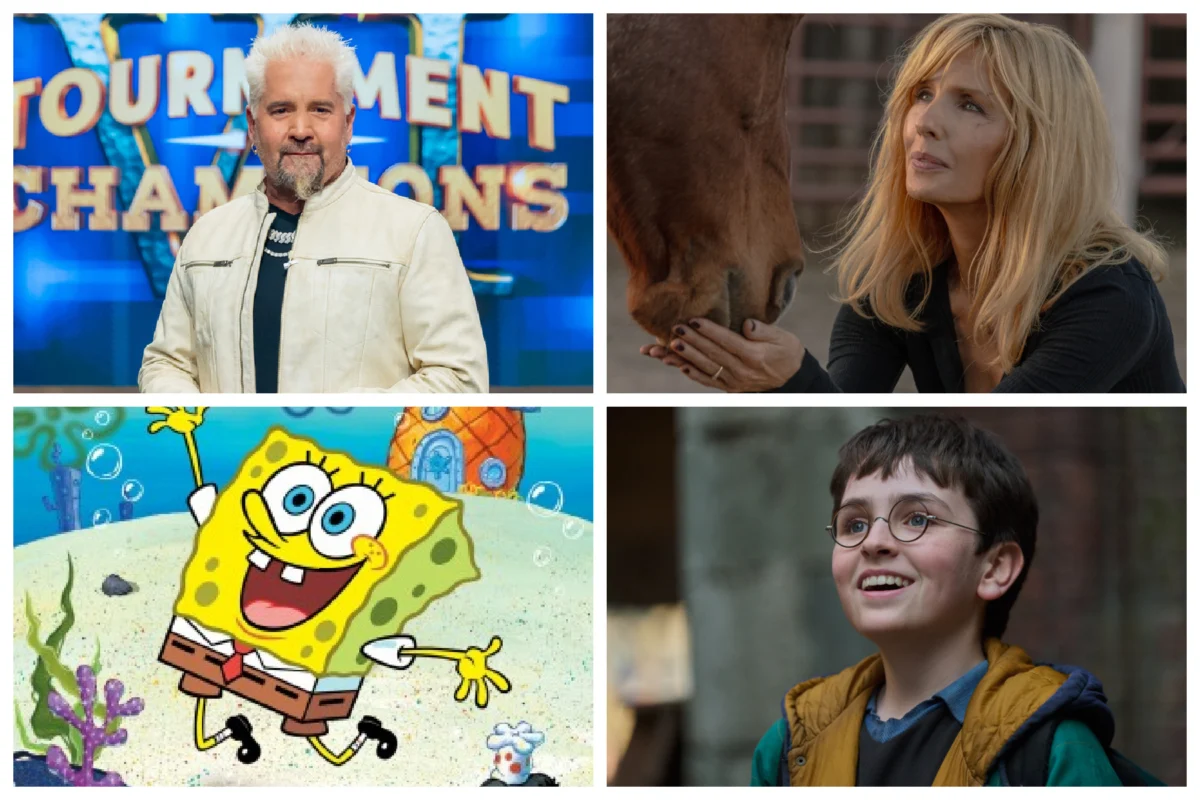
Within the Paramount ecosystem, the crown jewels include the powerhouse “Yellowstone” television universe, which has redefined modern cable and streaming drama, alongside enduring cinematic blockbusters like the “Mission: Impossible,” “Top Gun,” and “Transformers” franchises. Family and animation brands are heavily represented through Nickelodeon, bringing iconic characters and series such as “SpongeBob SquarePants,” “Teenage Mutant Ninja Turtles,” “Dora the Explorer,” “Paw Patrol,” and “Avatar: The Last Airbender” into the fold. Add in cultural touchstones like “South Park,” “Star Trek,” “The Godfather,” and the expansive library of MTV Entertainment, and the baseline asset value is already formidable.
Pairing this with the Warner Bros. Discovery portfolio elevates the enterprise to an entirely different tier of cultural dominance. WBD contributes multi-billion-dollar global phenomena including the “Harry Potter” franchise—which is currently preparing for a major television series reboot on HBO—“The Lord of the Rings,” the entire DC Universe featuring iconic superheroes like Batman and Superman, and the fantasy epic “Game of Thrones.” Furthermore, the catalog is reinforced by cinematic masterpieces and classic television staples such as “Dune” (holding distribution rights), “Friends,” “The Matrix,” “Looney Tunes,” and the brutal martial arts franchise “Mortal Kombat.”
Beyond scripted narrative entertainment, the merger also amalgamates Warner Bros. Discovery’s dominant lifestyle and unscripted brands, including popular reality and home-improvement franchises like “Chopped,” “House Hunters,” “Home Town,” “Tournament of Champions,” and “90 Day Fiancé.”
Film and Television Production Powerhouses
The operational heart of the newly merged entity will rely on a massive network of production infrastructure, spanning theatrical film studios, television production units, and specialized animation houses.
On the Paramount side, production capabilities are anchored by Paramount Pictures, one of Hollywood’s oldest and most prestigious major film studios. This is supplemented by Paramount Television Studios, MTV Entertainment Studios, CBS Studios, and the recently integrated production apparatus of Skydance Media, alongside Paramount Animation.
Warner Bros. Discovery brings an equally impressive array of creative hubs, led by Warner Bros. Pictures, Warner Bros. Television Studios, the historic New Line Cinema, and DC Studios—the latter of which has been undergoing a comprehensive strategic overhaul to build a cohesive, interconnected superhero cinematic universe.
The integration of these production entities will present both extraordinary opportunities for cross-pollination and significant logistical challenges. Executives will face the complex task of harmonizing studio pipelines, streamlining overhead costs, and managing relationships with top-tier creative talent across multiple distinct corporate cultures.
Linear Television Networks and the Cable Ecosystem
While the streaming landscape dominates modern media headlines, the combined company will also inherit a vast, highly complex empire of linear television networks. These traditional channels continue to generate substantial, albeit declining, cash flows that remain critical to corporate financial health.
Paramount’s linear portfolio features some of the most recognizable brands in television history, led by the CBS broadcast network, alongside youth and entertainment mainstays like Nickelodeon, Nick Jr., MTV, VH1, CMT, Comedy Central, Showtime, the Paramount Network, BET, and TV Land.
Warner Bros. Discovery contributes an equally massive footprint of cable networks, encompassing premier prestige television via HBO, continuous global news through CNN, and general entertainment powerhouses such as TBS, TNT, truTV, and Cartoon Network/Adult Swim. Furthermore, WBD brings the definitive leader in factual, lifestyle, and reality television, including the Discovery Channel, HGTV, Food Network, TLC, Investigation Discovery (ID), Animal Planet, OWN, and the Magnolia Network—the latter operating as a highly successful joint venture with home-design entrepreneurs Chip and Joanna Gaines.
Streaming Ecosystem: Unifying Platforms
Perhaps the most critical battleground for the newly merged company will be the digital streaming space. For years, media conglomerates have poured billions of dollars into building direct-to-consumer platforms in an effort to replicate or surpass the subscriber scale of pure-play streaming pioneers.
The transaction brings together Paramount’s streaming division—anchored by the subscription service Paramount+ and the free, ad-supported television (FAST) pioneer Pluto TV—with Warner Bros. Discovery’s digital assets, primarily HBO Max (or Max) and Discovery+.
Industry observers will be watching closely to see how leadership manages this dual-platform architecture. While maintaining separate apps allows the company to target distinct demographic segments—such as prestige drama and unscripted lifestyle content on Max versus sports, family programming, and broad entertainment on Paramount+—the long-term economic pressures of subscriber acquisition and technology overhead frequently favor consolidation into a single, unified streaming super-app.
News Divisions and Journalistic Responsibility
The merger also unites two of the most influential and storied news organizations in American history: CBS News and CNN.
CBS News brings a tradition of broadcast journalism dating back to the golden age of radio and television, anchoring public discourse through evening broadcasts, investigative reporting via programs like “60 Minutes,” and extensive morning and local news operations. CNN, meanwhile, pioneered the 24-hour global news cycle and maintains an extensive international bureau network that has defined breaking news coverage for decades.
Bringing these two powerhouses under common ownership raises important questions regarding operational integration, editorial independence, and the future of journalistic resource allocation in an era of declining traditional advertising revenue and shifting digital consumption habits.
Interactive Gaming Assets
In addition to film, television, and streaming, the combined enterprise will possess a robust footprint in the interactive entertainment and video game sector. As gaming continues to rival or exceed the revenue of traditional film and television, this asset class represents a major driver of future growth.
Paramount contributes the recently structured Paramount Games Studio, which integrates Skydance New Media and Skydance Interactive, known for developing immersive virtual reality and narrative-driven gaming experiences based on major intellectual properties.
Warner Bros. Discovery brings an established, highly successful gaming division—Warner Bros. Games—which houses prominent internal development studios including Avalanche Software (creator of the global blockbuster “Hogwarts Legacy”), NetherRealm Studios (the studio behind “Mortal Kombat”), Rocksteady Studios (celebrated for the “Batman: Arkham” series), WB Games Montréal, and TT Games (the masters of LEGO video game adaptations). The ability to seamlessly translate cinematic universes like DC and Harry Potter into blockbuster interactive experiences will provide the new company with a distinct competitive advantage.
Fact-Based Analysis of Implications
As the Paramount Skydance and Warner Bros. Discovery merger moves rapidly toward its final closing date, financial analysts and industry experts are assessing the broader implications of this historic consolidation.
On one hand, the transaction creates an undeniable titan capable of competing toe-to-toe with Silicon Valley tech giants and dominant streaming rivals. The sheer volume of intellectual property ensures that the company will maintain immense leverage in licensing negotiations, merchandising, theatrical distribution, and global platform partnerships. By combining advertising sales teams, technical infrastructure, and marketing budgets, leadership anticipates realizing hundreds of millions of dollars in cost synergies.
On the other hand, the mega-merger carries significant risks and societal concerns. Labor unions and industry advocacy groups have voiced apprehension regarding inevitable workforce reductions, corporate restructuring, and the centralization of creative decision-making in even fewer hands. Furthermore, the concentration of so many major news outlets, television networks, and cinematic franchises within a single corporate entity underscores ongoing debates about media consolidation, ideological diversity in reporting, and the preservation of distinct creative voices in Hollywood.
For David Ellison and his executive team, the immediate task following the two-week closing window will be delicate: executing a smooth corporate integration that reassures jittery creative partners, satisfies skeptical regulators, and unlocks the promised value of a truly unprecedented entertainment empire.