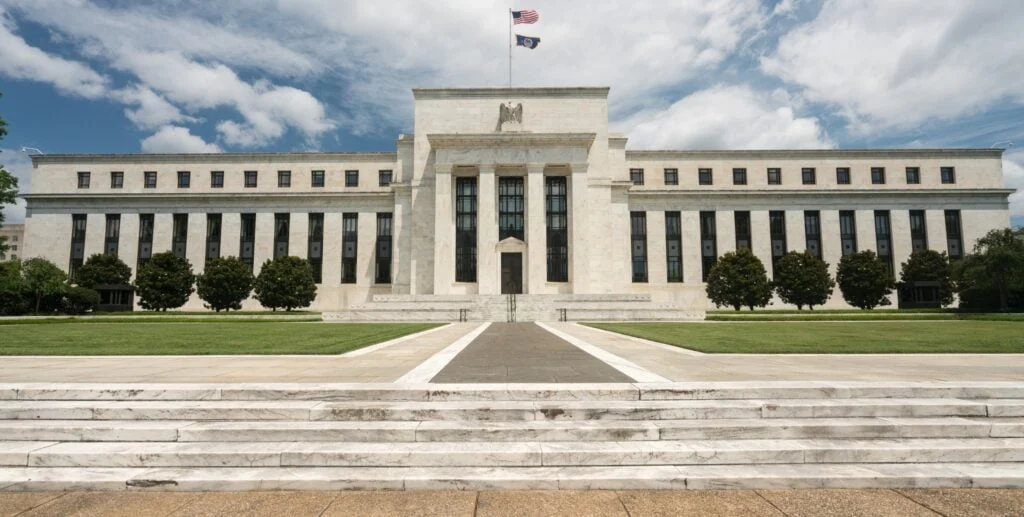
The Federal Reserve’s recent decision to implement a quarter-percentage-point interest rate hike has sent ripples through the national housing market, forcing a recalibration of investment strategies across the United States. This move, which comes amid persistent inflationary pressures and geopolitical instability, marks a continuation of the restrictive monetary policy that has defined the economic landscape since the post-pandemic recovery. For real estate investors, the hike serves as a significant inflection point, signaling that the era of "easy money" and record-low borrowing costs remains firmly in the rearview mirror.
The Macroeconomic Context and Chronological Development
To understand the current environment, one must look at the timeline of the Federal Reserve’s monetary tightening cycle. Following a period of unprecedented stimulus to stabilize the economy during the 2020 global health crisis, the central bank began its pivot toward inflation control in early 2022. The objective was clear: utilize the federal funds rate as a primary lever to cool an overheated economy and bring the Consumer Price Index (CPI) back toward the Fed’s 2% target.
The recent hike represents a continuation of this objective. While market analysts had previously anticipated a period of stabilization—or even potential rate cuts under the guidance of new leadership—the persistent nature of inflation, compounded by rising energy costs and global supply chain disruptions, necessitated further action. The federal funds rate now stands at a level that directly impacts the cost of capital, making debt-financed real estate acquisitions increasingly expensive.
Distinguishing Federal Funds Rates from Mortgage Rates
A common misconception among retail investors is the direct correlation between the Federal Reserve’s policy rate and mortgage interest rates. It is imperative to note that the Fed does not set mortgage rates. Instead, mortgage rates are primarily influenced by the secondary mortgage market, the yield on 10-year Treasury notes, and investor appetite for mortgage-backed securities (MBS).
However, the Fed’s actions exert a significant indirect influence. When the central bank signals a "higher for longer" interest rate environment, it forces investors to demand higher yields on government bonds to offset inflation risk. As Treasury yields rise, mortgage lenders adjust their offerings accordingly to remain competitive. Consequently, even before the official rate hike was announced, the industry saw mortgage rates trending above the 7% threshold, effectively pricing a large segment of first-time homebuyers out of the market.
Regional Divergence in Housing Market Performance
The impact of these rate hikes is not felt uniformly across the United States. Data from the most recent housing market reports indicate that regional differences are becoming increasingly pronounced. The Midwest, for instance, has shown a degree of resilience, with pending sales figures contracting at a slower rate compared to the more volatile coastal markets. Conversely, the South and the Northeast have exhibited unexpected buoyancy in certain sectors, despite the broader economic headwinds.
Market analysts suggest that this divergence is driven by local supply-and-demand dynamics, job market stability, and the concentration of existing inventory. In regions where housing affordability was already strained, the latest rate increase has acted as a catalyst for price corrections. Conversely, in areas with high population influx and limited housing stock, demand remains relatively inelastic, preventing significant price drops despite the cost of borrowing.
The Role of Institutional and Cash-Rich Investors
As borrowing costs climb, the composition of the buyer pool is undergoing a fundamental shift. High interest rates have historically acted as a barrier to entry for retail investors relying on conventional financing. However, for investors with significant cash reserves or substantial home equity, the current market climate presents a unique window of opportunity.
"Cash is currently the most powerful tool in the real estate sector," notes industry analyst Sarah Jenkins. "When financing becomes prohibitive, the competitive advantage shifts to those who do not require bank intervention to close a deal."
This has led to a rise in all-cash transactions, which are insulating a specific segment of the market from the volatility of interest rate fluctuations. These investors are often targeting distressed assets or properties where sellers are feeling the pressure of a stagnant market and are therefore more willing to negotiate on price. The result is a bifurcated market: one side characterized by high-cost financing and reduced activity, and the other by a surge in strategic, cash-heavy acquisitions.
Rental Demand and the Investor Response
One of the most critical implications of the current rate environment is the sustained strength of the rental market. As potential owner-occupants are sidelined by mortgage rates that render monthly payments unaffordable, the demand for rental housing remains historically high. For long-term investors, this provides a buffer against the challenges of high-interest debt.
Federal Reserve data and private sector analysis consistently show that rent growth, while cooling from its peak, remains firmly entrenched in positive territory. This stability in cash flow is prompting a shift in investor focus. Rather than pursuing aggressive, high-leverage acquisition strategies like the BRRRR (Buy, Rehab, Rent, Refinance, Repeat) method—which carries significant risk in a high-rate environment—many seasoned investors are pivoting toward operational efficiency.
Focusing on value-add projects, property upgrades, and tenant retention has become the preferred strategy for stabilizing existing portfolios. By investing in the physical quality of their assets, landlords can justify premium rental rates, ensuring that their properties remain competitive even as the broader economic landscape remains uncertain.
Strategic Considerations for Portfolio Management
For those currently managing multiple properties, the prevailing consensus among financial advisors is to prioritize liquidity and debt management over rapid expansion. The current rate environment requires a rigorous audit of existing assets to determine which properties are truly performing and which are becoming liabilities due to debt-service coverage ratios.
Key strategies for the current quarter include:
- Debt Restructuring: For investors with variable-rate debt, exploring fixed-rate refinancing options—if possible—is essential to mitigate future interest rate risk.
- Portfolio Pruning: If a property is failing to meet cash-flow expectations due to rising insurance, tax, or debt costs, selling may be the most prudent move. Taking a strategic loss now to preserve capital for future opportunities is often preferable to holding a depreciating asset.
- Operational Excellence: With the cost of capital being high, the internal rate of return (IRR) is now more dependent than ever on operational performance. Streamlining management, reducing turnover, and optimizing utility costs can have a more significant impact on the bottom line than market appreciation.
Looking Ahead: The Future of the Market
The Federal Reserve’s path forward remains contingent on incoming economic data. Should inflation continue to show signs of persistence, the possibility of further tightening cannot be entirely ruled out. Conversely, if the economy experiences a sharper-than-anticipated cooling, the Fed may be forced to pause or pivot its strategy sooner than current projections suggest.
For the real estate investor, the lesson of the past year is clear: the market is not a monolith, and the ability to adapt to changing monetary conditions is the defining trait of successful capital preservation. While the "easy" gains of the previous decade may have vanished, the fundamental need for housing remains a constant. The current period of elevated rates should be viewed not as an end to the market, but as a transition into a new cycle—one that rewards disciplined, cash-conscious, and operationally focused investors who are prepared to navigate the complexities of a high-interest economic landscape.
Ultimately, the market will continue to evolve, and investors must be prepared to adjust their sails. Whether the Federal Reserve chooses to hold, hike, or cut, the most successful market participants will be those who have built portfolios capable of weathering the storm, focusing on long-term stability rather than short-term speculative gain.