The Director-General of the World Health Organization (WHO), Dr. Tedros Adhanom Ghebreyesus, successfully concluded the first day of a critical two-day State visit to the Hashemite Kingdom of Jordan. This high-profile diplomatic and humanitarian mission was designed to underscore the robust, enduring partnership between the global health agency and the Jordanian government, focusing heavily on universal health coverage (UHC), advanced mental health frameworks, and coordinated humanitarian health action across a volatile Middle Eastern landscape.
The primary anchor of the opening day’s itinerary was an official audience and high-level meeting with His Majesty King Abdullah II in Amman. This pivotal discussion emphasized Jordan’s sustained national and international leadership in positioning public health at the forefront of development goals. High-level delegations reviewed strategies to reinforce resilient health systems, expand domestic and regional access to essential medical care, and secure long-term, sustainable support for emergency health responses. Particular emphasis was placed on the ongoing health crises affecting the Palestinian population, specialized medical evacuations of injured patients from Gaza into Jordanian facilities, and the protracted socioeconomic pressures of hosting millions of displaced refugees.
Royal Recognition and Humanitarian Partnerships
During the discussions, Dr. Tedros formally commended the Hashemite Kingdom for its extraordinary hospitality and moral clarity in managing one of the world’s largest refugee populations. Jordan currently hosts more than three million registered refugees, primarily originating from neighboring Syria and the ongoing conflict in Gaza.
"I wish to express my appreciation to His Majesty King Abdullah II for his unwavering commitment to advancing universal health coverage," Dr. Tedros stated following the presidential-level briefing. "I also extend my thanks to His Majesty and the people of Jordan for their solidarity and generosity in providing comprehensive health services to more than three million refugees, primarily from Gaza and Syria, who are living in the country."
The WHO chief explicitly highlighted Jordan’s pioneering humanitarian initiatives, drawing specific attention to the King’s Medical Corridor. This specialized operational channel has served as a vital logistical and clinical lifeline, successfully facilitating the transfer and treatment of critically ill and injured children from the besieged Gaza Strip. Through such measures, Jordan continues to demonstrate a global benchmark for prioritizing human dignity and medical neutrality amidst geopolitical strife.
On-the-Ground Engagements and Medical Evacuations
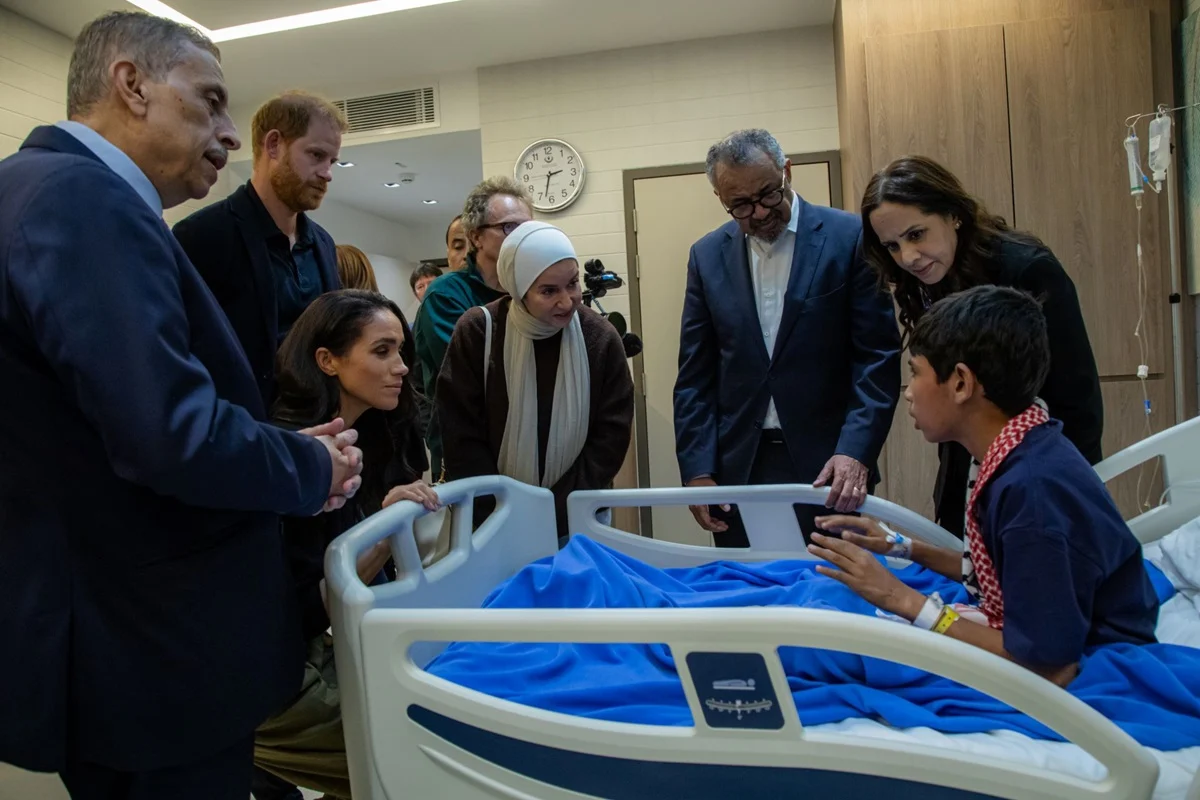
Moving beyond diplomatic talks, Dr. Tedros undertook crucial field visits to witness the practical implementation of regional health programs. He toured a specialized WHO-supported medical facility in Amman dedicated to treating pediatric patients evacuated directly from Gaza. During the hospital visit, the Director-General engaged directly with young patients, their families, and the frontline medical personnel who are administering life-saving interventions for severe traumatic injuries, pediatric oncology, and other complex, life-threatening conditions.
This on-the-ground assessment underscored the indispensable utility of Jordan’s medical evacuation corridor. It simultaneously highlighted the precarious funding landscape facing regional health actors, reinforcing the urgent necessity for sustained, predictable international donor support to guarantee that vulnerable children and other trauma victims can secure uninterrupted access to specialized tertiary care.
In parallel with clinical site visits, Dr. Tedros convened a strategic high-level roundtable discussion. The assembly brought together key health sector stakeholders, major international donor governments, United Nations agencies, and prominent philanthropic organizations. The core agenda centered on optimizing financing mechanisms to reinforce Jordan’s national health infrastructure. Discussions also addressed scaling up integrated mental health services to match rising regional demand and designing durable economic models for host nations carrying disproportionate structural burdens. Participants reaffirmed their shared commitment to targeted investments in regional health resilience.
Advancing Universal Health Coverage and Mental Health Integration
Earlier in the day, the WHO Director-General held bilateral talks with Jordan’s Minister of Health. The dialogue concentrated on domestic structural reforms aimed at fortifying the national health system and accelerating progress toward universal health coverage.
Jordan has emerged as a regional and global leader in implementing a primary health care-oriented model designed to achieve UHC. Notably, the kingdom has successfully integrated specialized mental health services directly into routine primary care networks. This progressive policy ensures that psychiatric and psychological support is treated as an inseparable component of basic clinical service delivery, rather than an isolated specialty. The WHO continues to provide technical and operational backing to these domestic reforms through the Director-General’s Special Initiative for Mental Health, establishing a replicable framework for middle-income nations worldwide.
High-Profile Advocacy and the Role of Archewell Philanthropies
A distinctive element of the delegation’s engagements was the participation of Prince Harry, Duke of Sussex, and Meghan, Duchess of Sussex. Attending in their capacities as founders of Archewell Philanthropies and long-standing global advocates for the WHO’s mission, the couple joined Dr. Tedros for several key events.
Archewell Philanthropies has historically partnered with the WHO on critical global health initiatives, ranging from advocacy for equitable COVID-19 vaccine distribution to supporting targeted medical evacuation logistics and community-level mental health programs. Prince Harry, acting as a prominent global ally for mental health advocacy, emphasized the imperative of prioritizing psychological well-being across all communities, with a distinct focus on populations affected by conflict, emergency displacement, and economic hardship—particularly men, adolescents, and children.
"I want to thank our partners, including Prince Harry, Duke of Sussex, and Meghan, Duchess of Sussex, whose commitment to mental health and humanitarian action has helped bring visibility, resources, and hope to some of the world’s most vulnerable communities," Dr. Tedros remarked. "Their collaboration is helping to advance WHO’s mission to ensure health for all."
Echoing these sentiments, Prince Harry addressed the delegation regarding the intrinsic link between psychological recovery and long-term geopolitical stability. "It is an honour to join the Director-General of the World Health Organization in Jordan, a country that is leading by example in compassion, resilience, and innovation," said Prince Harry. "Through our work with Archewell Philanthropies, my wife and I have seen first-hand the impact of WHO’s efforts to support mental health and deliver life-saving care in emergencies. We remain deeply committed to advancing awareness, reducing stigma, and expanding access to mental health support for all those affected by conflict and crisis. Mental health is fundamental to recovery, dignity, and long-term peace, and we are proud to stand with WHO and partners around the world to make it a global priority."
Chronology and Forward-Looking Itinerary for Day Two
The first day’s intensive schedule laid a comprehensive groundwork for the state visit’s concluding phase. The second day of Dr. Tedros’s mission in Jordan shifts toward specialized domestic institutions and community-level resilience frameworks.
The itinerary features a scheduled visit to Jordan’s National Center for Rehabilitation of Addicts, a specialized facility supported by the WHO that offers integrated medical, psychological, and social rehabilitation services. Following this, the Director-General is scheduled to hold consultations with prominent community leaders and grassroots women’s organizations, including representatives from the Jordanian Hashemite Fund for Human Development (JOHUD), to evaluate grassroots social welfare models.
The final leg of the visit will include a high-level tour of the internationally renowned King Hussein Cancer Center. Discussions there will center on cutting-edge advancements in regional oncology care, cancer research protocols, and cross-border clinical collaborations. The State visit will formally conclude with supplementary briefings involving humanitarian operational partners, cementing Jordan’s irreplaceable geopolitical status as an indispensable regional hub for medical evacuations, rapid emergency health responses, and systemic health resilience.
Broader Implications and Strategic Analysis
The state visit of the WHO Director-General to Jordan arrives at a critical juncture for Middle Eastern public health and international humanitarian law. By spotlighting Jordan’s dual role as a primary health innovator and a generous refuge for millions displaced by regional conflicts, the WHO is working to galvanize broader international burden-sharing.
As protracted crises continue to strain national budgets across the Levant, the financial and logistical demands of maintaining open medical corridors and inclusive health systems exceed domestic capacities. The high-level participation of international figures and philanthropic entities like Archewell Philanthropies illustrates an evolving model of multi-sectoral global health diplomacy. This approach leverages high-visibility advocacy to mobilize private resources, combat systemic stigmatization surrounding mental health in crisis zones, and secure institutional commitments from donor states.
Ultimately, Dr. Tedros’s mission serves as both an endorsement of Jordan’s exemplary domestic health policies and a stark reminder to the international community that the sustainability of regional health infrastructure remains inextricably linked to global security, human rights, and collective humanitarian responsibility.