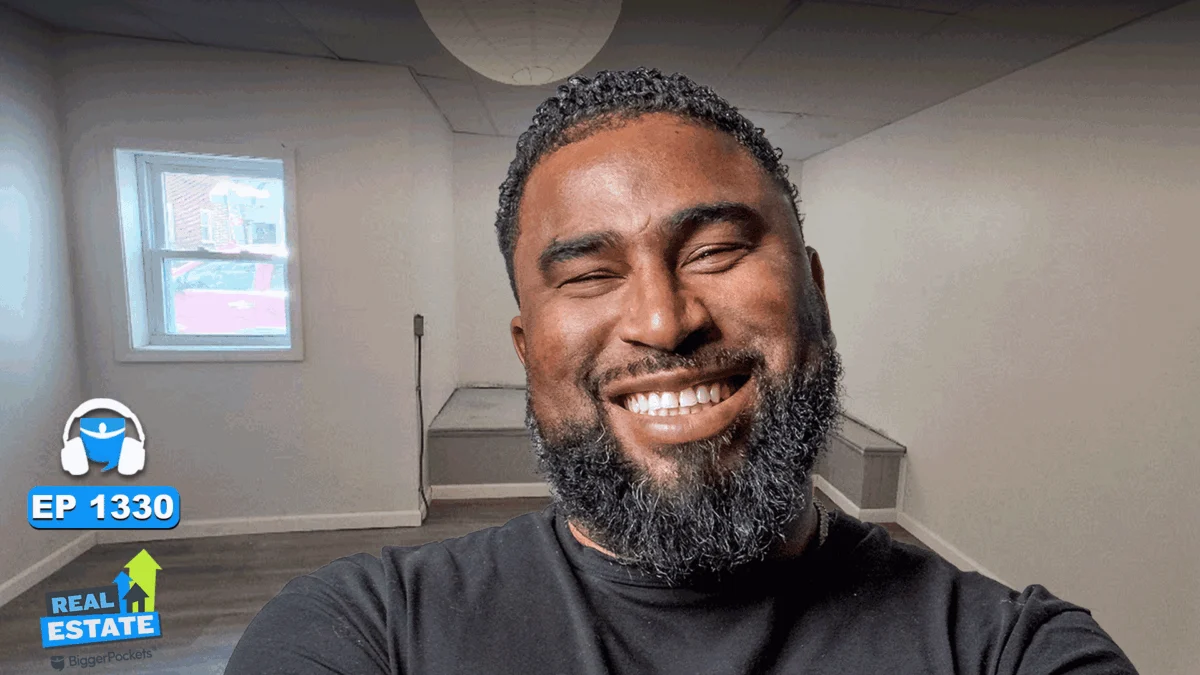
The pursuit of financial independence through passive income is a common aspiration for working professionals, yet many find that the landscape of online advice is often dominated by theoretical models rather than actionable strategies. For Kent Long, a 46-year-old regional manager in the healthcare sector, the transition from conventional employment to real estate investment was not born out of a desire for overnight success, but from the realization that tangible assets offered a reliability that digital entrepreneurship lacked. Over the past two years, Long has successfully executed a series of real estate transactions in Altoona, Pennsylvania, transforming an initial $14,000 investment into a ten-unit portfolio generating significant monthly cash flow.
The Catalyst for Change
Long’s journey began in 2024, a period characterized by high interest rates and market skepticism. While many potential investors were deterred by the perception that the real estate market had passed its peak, Long’s personal circumstances—a pending divorce and the need for independent housing—acted as a catalyst. Drawing on a background in construction and home maintenance, supported by his father’s experience as a union carpenter, Long began researching property acquisition.
His strategy shifted from exploring e-commerce ventures, which had proven costly and inefficient due to high advertising overheads, to real estate. He utilized his time spent commuting for his nine-to-five position, which required three to four days of travel per week, to consume educational content focused on real estate investment fundamentals. This research laid the groundwork for his entry into the Altoona market, a region where price points allowed for lower-barrier-to-entry acquisitions compared to major metropolitan areas.
Chronology of Acquisitions
Long’s portfolio development follows a deliberate, step-by-step methodology centered on identifying undervalued properties with the potential for conversion into multi-family units.
- July 2024: Long purchased his first property, a former duplex that had been converted into a single-family home, for $70,000. Through a $10,000 renovation that involved installing doors and minor kitchen adjustments, he successfully converted the building back into a triplex. This property currently generates $3,000 in monthly rent.
- February 2025: Leveraging the equity from his first property via a Home Equity Line of Credit (HELOC), Long acquired a second single-family home for $30,000. Following a $20,000 renovation, the property was converted into a duplex and later refinanced into a commercial loan, allowing him to pay off existing debt.
- Mid-2025: Long facilitated the purchase of a $44,000 duplex for his son. By involving his 19-year-old son and utilizing family labor, they completed a $25,000 renovation. The project provided a significant financial windfall for his son, who was able to refinance the property and secure $72,000 in equity, effectively launching a parallel investment career.
- Late 2025: The most recent acquisition involved a duplex purchased for $55,000. This project required a more intensive $30,000 renovation of a former commercial space on the first floor. Through strategic lease management and gradual rent adjustments for existing tenants, this property now contributes to a total portfolio cash flow of approximately $5,500 per month.
Financial Strategy and Risk Mitigation
The success of Long’s portfolio is rooted in a conservative financial structure. By utilizing local community banks, he has benefited from commercial loan structures that prioritize purchase price and renovation potential. His "modified BRRRR" (Buy, Rehab, Rent, Refinance, Repeat) strategy—often utilizing a HELOC rather than immediate refinancing—has allowed him to retain control over his cash flow without being burdened by the higher debt service associated with new, larger loans.
Data from his portfolio indicates a focus on "cash-flow-heavy" markets. In Altoona, while properties may lack the aggressive appreciation rates seen in coastal cities, they offer a favorable debt-to-income ratio. For instance, a property with a $600 monthly mortgage generating $3,000 in rent provides a safety margin that is difficult to replicate in high-appreciation markets. Long acknowledges this trade-off, noting that his primary goal is income generation rather than speculative value growth.
The Role of Family and Collaborative Labor
A distinguishing feature of Long’s portfolio is the integration of family resources. The inclusion of his father, a skilled carpenter, and his son, who has taken an active role in property management and renovation, has significantly reduced labor costs. This collaborative model not only serves as a cost-saving measure but also functions as a vehicle for intergenerational wealth transfer. Long’s son, now 20, has already demonstrated financial acumen by maintaining a significant portion of his equity in savings after completing his first successful renovation project.
Professional Analysis and Broader Implications
Industry analysts often note that the "mom and pop" investor remains the backbone of the American rental housing market. Long’s trajectory—moving from zero to ten units in 24 months while maintaining a full-time professional career—is a testament to the viability of part-time real estate investing.
The implications of his story are two-fold. First, it challenges the narrative that real estate investment requires large capital reserves. By focusing on low-cost markets and sweat equity, investors can achieve significant returns. Second, it highlights the importance of localized market knowledge. Long’s ability to work with local lenders who understand the nuances of the Altoona market proved as critical to his success as the renovations themselves.
However, experts caution that this strategy is not without risks. Market-specific downturns, while less likely to impact cash flow, can affect long-term exit strategies. Furthermore, the reliance on family labor, while effective for Long, is not a scalable model for every investor and can introduce complexities regarding liability and professional standards if not managed with legal and safety precautions.
Future Outlook and Retirement Goals
As of late 2025, Kent Long is nearing his objective of replacing his professional salary with rental income. His roadmap includes the acquisition of four additional properties over the next 18 months, with the goal of reaching a total of twelve to fourteen units by the time he reaches age 50. Should he achieve these milestones, he plans to retire from his position as a regional manager, 15 years ahead of the traditional retirement age, to focus full-time on his real estate holdings.
Long’s experience serves as a case study in the efficacy of disciplined, iterative investing. By rejecting the "get rich quick" promises often found in online discourse in favor of a structured, localized approach, he has built a foundation for financial independence that is both robust and sustainable. His story underscores a fundamental principle of the real estate sector: success is rarely about finding the "perfect" deal, but about consistently applying a proven strategy to the opportunities available in the current market.