World Health Organization (WHO) Director-General Dr. Tedros Adhanom Ghebreyesus successfully wrapped up the first day of a critical two-day state visit to the Hashemite Kingdom of Jordan today. The visit served to underscore the enduring, strategic partnership between the WHO and the Jordanian government across multiple vital domains, including universal health coverage (UHC), the expansion of mental health infrastructure, and robust humanitarian health action within a volatile geopolitical region.
The high-profile itinerary placed significant emphasis on Jordan’s exemplary role in absorbing and treating millions of displaced persons, spearheading regional medical evacuations, and pioneering progressive primary health care models. Throughout the day’s engagements, Dr. Tedros was notably accompanied by Prince Harry, Duke of Sussex, and Meghan, Duchess of Sussex, participating in their capacities as founders of Archewell Philanthropies and long-standing international advocates for public health, vaccine equity, and psychological support systems.
A Royal Audience: High-Level Discussions with King Abdullah II
The cornerstone of the Director-General’s opening day was an audience with His Majesty King Abdullah II of Jordan. The high-level meeting underscored the nation’s steadfast leadership in championing health as both a domestic and global security priority. Central to their bilateral discussions were strategies for reinforcing fragile health systems across the Middle East, expanding equitable access to specialized medical care, and sustaining international financial and logistical support for emergency medical responses.
Discussions heavily featured Jordan’s ongoing humanitarian commitments, specifically addressing the plight of the Palestinian population, the systematic coordination required for patients evacuated from the Gaza Strip into Jordanian medical facilities, and the protracted hosting of millions of refugees.
"I wish to express my appreciation to His Majesty King Abdullah II for his commitment to advancing universal health coverage," Dr. Tedros stated following the audience. "I also extend my thanks to His Majesty and the people of Jordan for their solidarity and generosity in providing health services to more than three million refugees, primarily from Gaza and Syria, who are living in the country."
Dr. Tedros further lauded the kingdom’s broader humanitarian footprint, highlighting His Majesty’s Medical Corridor initiative. This vital logistical pipeline has consistently delivered critical, life-saving care to critically ill and injured children evacuated from active conflict zones in Gaza. Through these sustained efforts, observers note that Jordan continues to demonstrate a global benchmark for prioritizing human dignity and health above geopolitical friction.
On the Front Lines: Visiting Evacuated Children and Specialized Hospitals
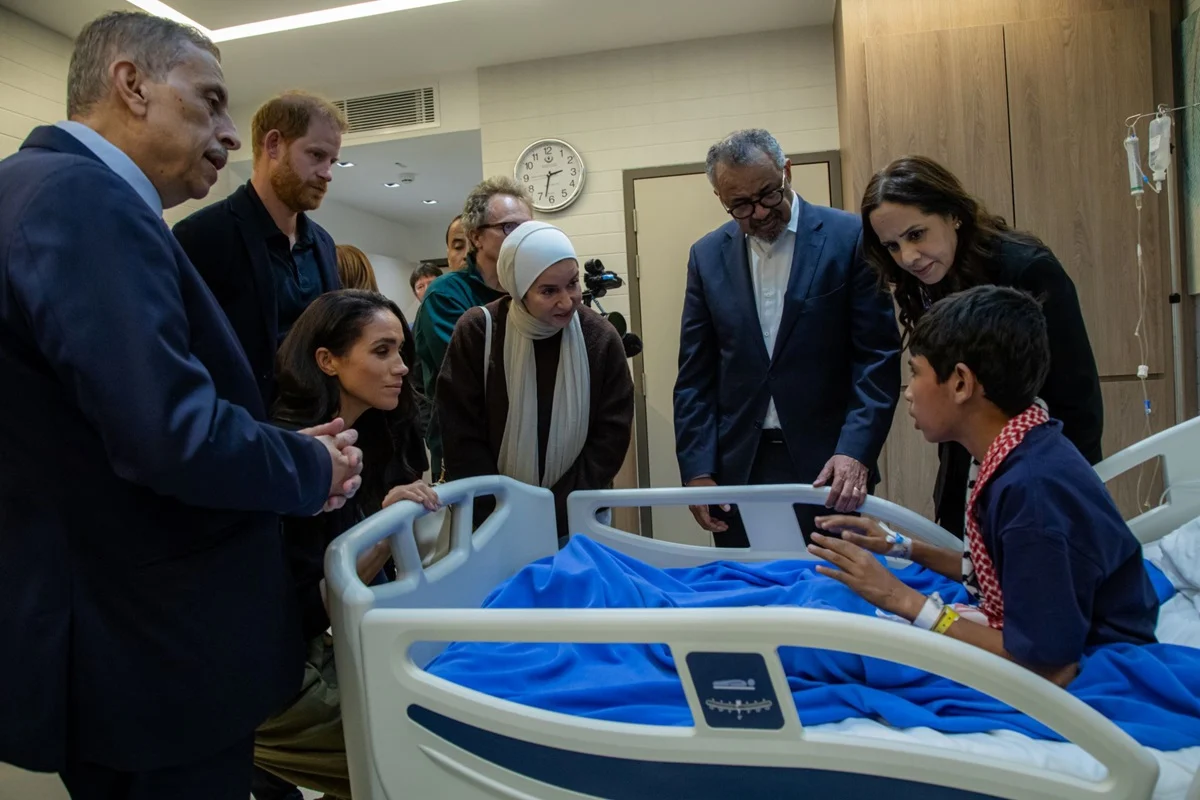
Translating high-level diplomacy into human impact, Dr. Tedros spent a significant portion of the day touring a specialized, WHO-supported hospital facility dedicated to treating pediatric patients evacuated from Gaza. During the hospital visit, the WHO chief engaged directly with young patients, their families, and the frontline medical personnel working under immense strain to deliver urgent interventions for traumatic injuries, pediatric oncology, and other complex, life-threatening conditions.
This field visit cast a sharp light on the indispensable nature of the Jordanian medical evacuation corridor. Public health officials reiterated that the corridor remains a lifeline for vulnerable demographics who would otherwise be entirely cut off from tertiary medical care due to the total collapse of local health infrastructure in conflict areas. However, international public health experts warn that these systems are operating near capacity, underscoring an urgent call for predictable, sustained international donor financing to ensure these evacuation pathways remain functional.
Mobilizing Resources: High-Level Stakeholder Consultations
Addressing the structural financial challenges facing the region’s health architecture, Dr. Tedros convened a high-level strategic roundtable later in the day. The gathering brought together key health partners, donor government representatives, United Nations agencies, and prominent international philanthropies.
The primary agenda of the summit focused on identifying and securing financing priorities designed to fortify Jordan’s national health system against future shocks. Furthermore, participants evaluated funding mechanisms for ongoing humanitarian operations, scaling up specialized mental health services, and addressing the severe strain placed on host-country infrastructure by large-scale refugee populations.
Dr. Tedros welcomed the robust collaboration demonstrated by international partners, emphasizing that sustained fiscal investment in Jordan’s health sector yields stability not only for the kingdom but for the wider Eastern Mediterranean region.
Advancing Universal Health Coverage and Mental Health Integration
In addition to multilateral meetings, the WHO Director-General held direct bilateral talks with Jordan’s Minister of Health. These discussions drilled down into the mechanics of institutionalizing universal health coverage through a robust primary health care framework.
Jordan has progressively emerged as a global case study for integrating specialized mental health care directly into routine primary health services. Rather than treating mental health as an isolated, stigmatized specialty, the Jordanian health model ensures that psychological support is accessible to everyday citizens through local clinics. This progressive integration is actively supported by the WHO through the Director-General’s Special Initiative for Mental Health.
Public health analysts note that integrating mental health into routine care is particularly crucial in nations hosting traumatized refugee populations and communities living under the chronic psychological weight of regional instability.
Philanthropic Partnerships: The Role of Archewell Philanthropies
Adding a prominent international dimension to the day’s events, Prince Harry and Meghan, the Duke and Duchess of Sussex, accompanied the WHO Director-General to several key engagements. Through Archewell Philanthropies, the couple has maintained a multi-year partnership with the WHO, supporting global initiatives ranging from equitable COVID-19 vaccine distribution to emergency medical evacuations and psychological resilience programs.
Prince Harry actively participated in the day’s health dialogues as a vocal advocate for global mental health reform. Drawing attention to the invisible wounds of conflict, he emphasized the critical necessity of scaling up investments in mental health support across communities and emergency settings, with targeted outreach to men, young people, and children who frequently slip through the cracks of traditional emergency response frameworks.
"I want to thank our partners, including Prince Harry, Duke of Sussex and Meghan, Duchess of Sussex, whose commitment to mental health and humanitarian action has helped bring visibility, resources and hope to some of the world’s most vulnerable communities," Dr. Tedros remarked. "Their collaboration is helping to advance WHO’s mission to ensure health for all."
Echoing these sentiments, Prince Harry reflected on the collaborative mission in Jordan: "It is an honour to join the Director-General of the World Health Organization in Jordan, a country that is leading by example in compassion, resilience and innovation. Through our work with Archewell Philanthropies, my wife and I have seen first-hand the impact of WHO’s efforts to support mental health and deliver life-saving care in emergencies."
The Duke of Sussex further emphasized the inextricable link between psychological recovery and lasting geopolitical stability. "We remain deeply committed to advancing awareness, reducing stigma and expanding access to mental health support for all those affected by conflict and crisis. Mental health is fundamental to recovery, dignity and long-term peace, and we are proud to stand with WHO and partners around the world to make it a global priority."
Looking Ahead: Day Two Itinerary and Broader Implications
As the state visit transitions into its second and final day, Dr. Tedros’s schedule remains intensive. Upcoming engagements include an official visit to Jordan’s National Center for Rehabilitation of Addicts—a specialized, WHO-backed facility offering integrated medical, psychological, and social rehabilitation services.
Additionally, the Director-General is scheduled to meet with grassroots community leaders and prominent women’s empowerment organizations, including the Jordanian Hashemite Fund for Human Development (JOHUD), to assess community-level resilience initiatives. The day will also feature a high-profile visit to the globally renowned King Hussein Cancer Center, where Dr. Tedros and Jordanian health officials will discuss cutting-edge advances in cancer therapeutics and avenues for expanding regional oncological collaboration.
The state visit will formally conclude with a final series of roundtables with international humanitarian stakeholders. These closing sessions are designed to cement Jordan’s strategic position as an indispensable regional hub for medical evacuations, rapid health emergency responses, and long-term health system resilience.
Fact-Based Analysis: Strategic Implications of the Visit
Public health experts and geopolitical analysts monitoring the visit suggest that the WHO Director-General’s presence in Amman carries profound implications for the Middle East’s health security landscape. By publicly validating Jordan’s model of integrating refugees into national health infrastructure, the WHO is signaling to the international donor community that funding host countries is a more sustainable, humane alternative to isolated refugee camp models.
However, analysts also caution that Jordan’s health sector remains highly vulnerable to external macroeconomic shocks, fluctuating donor aid, and the unpredictable trajectory of regional conflicts. The sustained influx of trauma patients from Gaza and the ongoing management of millions of Syrian and Palestinian refugees place an immense structural burden on the kingdom’s water, sanitation, electricity, and health care networks.
Ultimately, the high-level diplomatic alignment between the WHO, the Jordanian monarchy, and international philanthropic bodies like Archewell Philanthropies aims to convert short-term emergency relief into institutionalized, long-term resilience. By prioritizing primary health care, mental health integration, and robust medical evacuation corridors, the visit serves as both an urgent appeal for increased international burden-sharing and a celebration of a nation successfully placing health and humanity at the forefront of national policy.