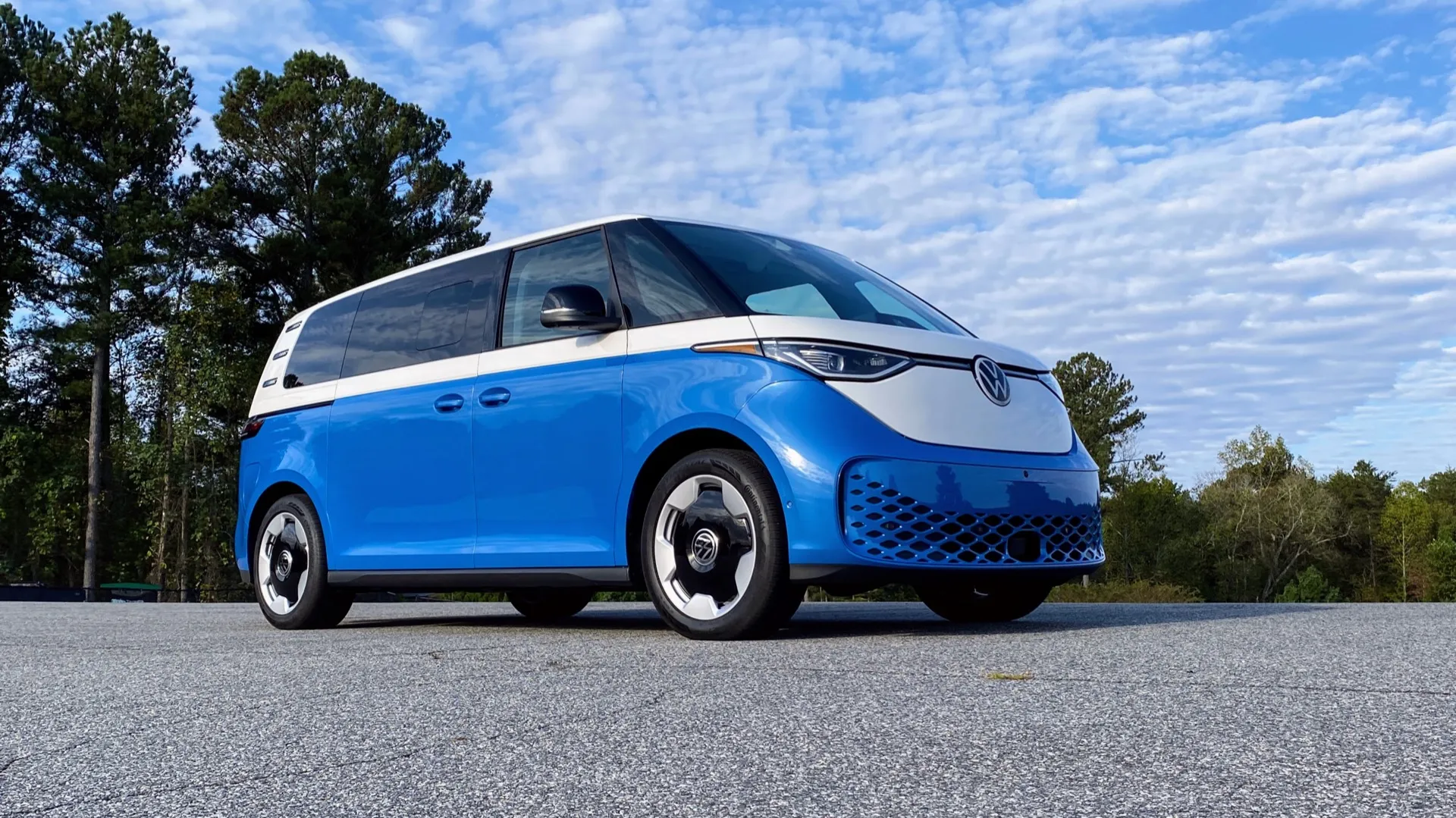
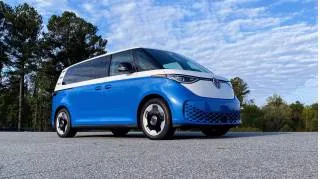
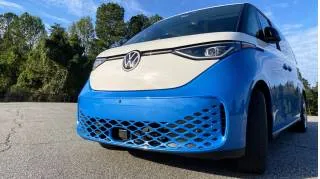
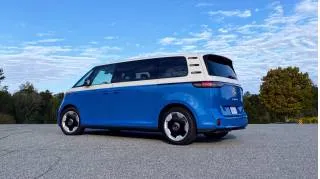
The 2025 Volkswagen ID.Buzz has officially arrived on United States soil, marking the culmination of a decades-long effort to resurrect the spirit of the legendary Type 2 Microbus for a new generation. For Volkswagen, the stakes could not be higher; the ID.Buzz is not merely a new entry into the electric vehicle (EV) segment but a high-profile attempt to bridge the gap between a storied, counterculture past and a digitized, sustainable future. By blending retro-inspired aesthetics with the modular efficiency of the MEB platform, Volkswagen has positioned the ID.Buzz as a unique lifestyle vehicle that transcends traditional automotive categories.

The Long Road to Revival: A Chronology of Anticipation
The journey to the 2025 ID.Buzz began long before the first production models rolled off the assembly line in Hanover, Germany. For over 20 years, Volkswagen teased the American public with various "reboots" of the classic Bus. The timeline of this revival is marked by several high-profile concept vehicles that failed to reach production:
- 2001: Volkswagen debuts the Microbus Concept at the North American International Auto Show in Detroit. Despite massive public interest, the project was ultimately canceled due to high projected costs.
- 2011: The Bulli Concept appears at the Geneva Motor Show, envisioning a smaller, more compact take on the classic shape.
- 2016: The BUDD-e Concept is unveiled at CES, showcasing the first hints of an all-electric modular architecture.
- 2017: The ID.Buzz Concept is revealed in Detroit, receiving a rapturous reception and a green light for production.
- 2022: The European market receives the short-wheelbase (SWB) version of the ID.Buzz.
- 2024/2025: The long-wheelbase (LWB) version, specifically engineered for North American tastes and requirements, finally reaches U.S. dealerships.
This extended gestation period has allowed Volkswagen to refine the vehicle’s identity. While the original "Hippies" of the 1960s may have retired from the road, the nostalgia for the T1 and T2 generations remains potent across demographics. The ID.Buzz arrives at a time when the American EV market is increasingly polarized, yet early field tests in regions ranging from rural Georgia to suburban California suggest the vehicle possesses a rare cross-cultural appeal.
Engineering the American Specification: Dimensions and Drivetrain
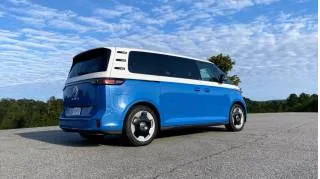
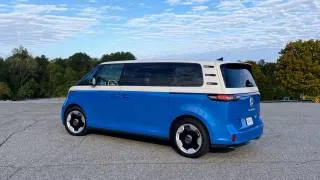
Volkswagen recognized early in the development cycle that the European short-wheelbase model would not suffice for the American market, which prioritizes interior volume and three-row seating. Consequently, the U.S. version of the ID.Buzz features a 10-inch stretch in length and wheelbase.

The vehicle measures 195.4 inches in total length, riding on a substantial 127.5-inch wheelbase. Standing 76.2 inches tall, it is roughly 10 inches taller than its sibling, the ID.4 crossover, yet it maintains a manageable 6.1 inches of ground clearance. This height provides the commanding view of the road that van enthusiasts expect, while the 78.1-inch width (excluding mirrors) ensures a spacious cabin.
Underpinning the U.S. model is a 91-kWh (gross) lithium-ion battery pack, an upgrade over the 82-kWh pack found in European versions. This battery powers Volkswagen’s latest AP550 electric drive unit.
- Rear-Wheel Drive (RWD): Features a single rear-mounted motor producing 282 horsepower and 413 lb-ft of torque.
- All-Wheel Drive (4Motion): Adds an inductive motor to the front axle, bringing total system output to 335 horsepower and 99 lb-ft of additional torque from the front.
Despite its performance credentials—achieving 0-60 mph in 6.0 seconds for AWD and 7.5 seconds for RWD—the ID.Buzz is a heavyweight. The RWD model tips the scales at nearly 6,000 pounds (5,968 lbs), while the AWD version reaches 6,197 pounds. This mass is a defining characteristic of the driving experience.
Driving Dynamics and Real-World Performance
On the road, the ID.Buzz delivers a ride quality that prioritizes comfort over cornering. The suspension is softly sprung, absorbing road imperfections with a compliance that mirrors traditional minivans. However, the low center of gravity afforded by the floor-mounted battery pack prevents the vehicle from feeling top-heavy. The steering is precise, and the turning circle for the RWD model is a remarkably tight 37.4 feet, though this expands to 42.7 feet for AWD versions.

Efficiency remains a critical metric for a vehicle of this size. The EPA has rated the ID.Buzz at 83 MPGe combined (2.5 miles per kWh) for the RWD version, with a total estimated range of 234 miles. The AWD version follows closely at 231 miles. In real-world testing across varied terrain, including mountains and highways, the vehicle has demonstrated consistent results, often averaging between 2.4 and 2.6 miles per kWh in moderate temperatures.
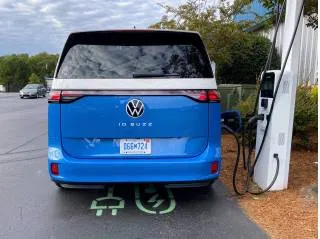
Charging capabilities are competitive within the current 400-volt architecture landscape. The ID.Buzz supports DC fast charging at rates up to 200 kW. According to Volkswagen, this allows the battery to charge from 10% to 80% in approximately 26 minutes. For home or destination charging, an 11-kW onboard charger is standard. The infotainment system includes integrated trip planning that can automatically initiate battery preconditioning to ensure peak charging speeds upon arrival at a station.
Interior Versatility and Technological Integration
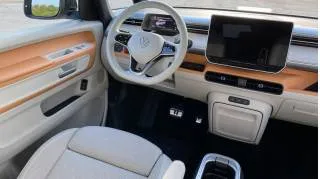
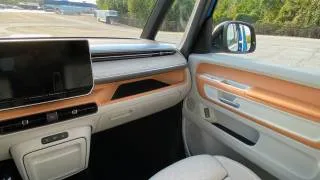
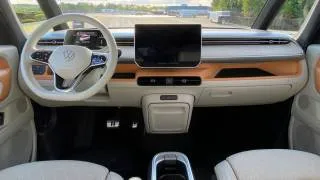
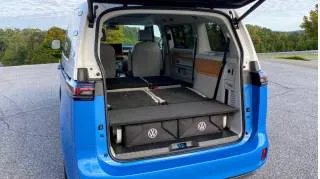
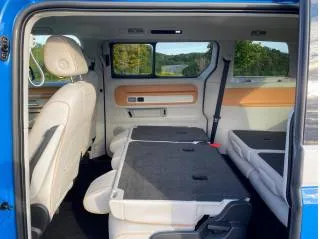
The interior of the ID.Buzz is perhaps its strongest asset, leveraging the "flat-floor" advantages of an EV platform to maximize utility. The cabin is designed to be airy and modular, with several "Easter egg" details that pay homage to the original Microbus.
Key interior features include:
- Seating Configurations: A seven-passenger layout with a middle bench is standard for RWD, while AWD models typically feature second-row captain’s chairs for a six-passenger capacity.
- Storage Solutions: The "Buzz Box" center console is fully removable and features multiple drawers and compartments. Two levels of door bins and a dash tray provide ample space for small items.
- Connectivity: Eight USB-C ports are distributed throughout the cabin, and a wireless charging shelf is positioned conveniently near the steering wheel.
- Infotainment: A revised 12.9-inch touchscreen runs the latest Volkswagen software, which addresses many of the lag issues found in earlier ID. models. It supports wireless Apple CarPlay and Android Auto.
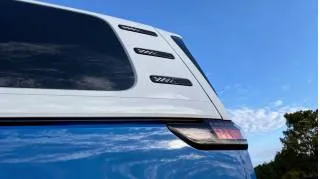
One of the more controversial carry-overs from the ID.4 is the simplified power window control system, which uses a single toggle to switch between front and rear window operation. While sleek in design, critics argue it adds unnecessary complexity to a basic function. Additionally, while road noise is well-isolated, some wind noise has been noted around the A-pillars at speeds exceeding 65 mph, a byproduct of the vehicle’s upright, boxy profile.
Pricing Strategy and Market Positioning
Volkswagen’s pricing for the ID.Buzz has sparked significant debate among automotive analysts and consumers. The vehicle enters the market as a premium niche product rather than a budget-friendly people mover.

The 2025 ID.Buzz starts at $61,545 (including destination fees) for the base Pro S trim. The mid-tier Pro S Plus begins at approximately $65,000, while the limited "1st Edition" can exceed $71,000 with AWD. For context, when the original Microbus became a cultural staple in 1965, its retail price was approximately $2,550—roughly $25,400 when adjusted for inflation today. At more than double that adjusted price, the modern ID.Buzz is positioned as a luxury lifestyle statement rather than a mass-market utility vehicle.

Compounding the pricing issue is the lack of a federal EV tax credit for U.S. buyers. Because the ID.Buzz is currently manufactured exclusively in Germany, it does not qualify for the $7,500 Clean Vehicle Credit under the Inflation Reduction Act for purchases, though lease "loopholes" may provide some relief for consumers.

Broader Impact and Industry Implications
The arrival of the ID.Buzz represents a pivotal moment for Volkswagen of America. After years of struggling to find a consistent identity in the U.S. market, the company is leaning heavily into its heritage. However, by positioning the Buzz as a premium, low-volume import, Volkswagen may be limiting its potential impact.

Analysts suggest that a "bare-bones" version of the ID.Buzz, priced closer to $40,000, could have revolutionized the commercial and family van segments. Such a model would have appealed to small business owners, younger "van-life" enthusiasts, and budget-conscious families. As it stands, the ID.Buzz faces stiff competition from established three-row electric SUVs like the Kia EV9 and the Rivian R1S.
Nevertheless, the ID.Buzz occupies a unique space. It is currently the only all-electric minivan on the American market that emphasizes design and personality over pure pragmatism. If Volkswagen can maintain the "buzz" surrounding the vehicle’s launch and manage dealer markups effectively, the ID.Buzz could serve as a powerful halo vehicle, drawing customers into showrooms and rehabilitating the brand’s image as a leader in the electric transition.
The 2025 Volkswagen ID.Buzz is more than a van; it is a test case for whether nostalgia can drive the adoption of new technology. It is heavy, expensive, and late to the party—but for many, its unmistakable silhouette and cheerful demeanor make it the most compelling electric vehicle on the road today. As it begins to populate American highways, it will undoubtedly turn heads, proving that even in the age of the algorithm, soul still matters in automotive design.