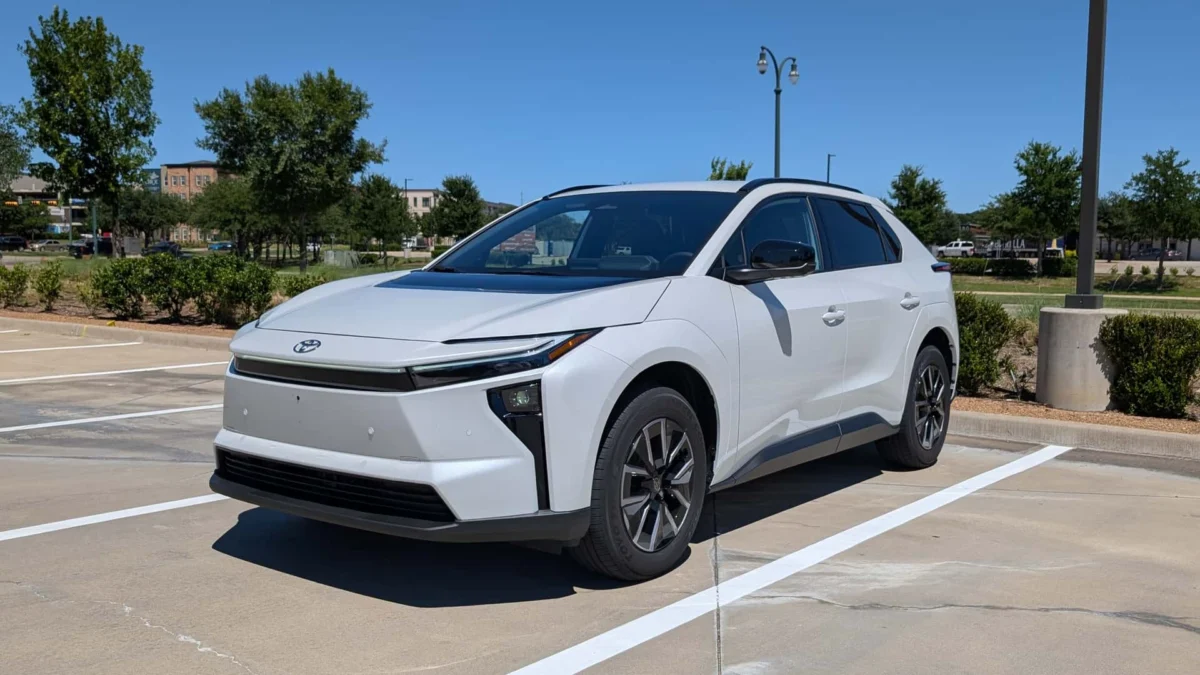
In a decisive move to consolidate its growing momentum in the electric vehicle (EV) sector, Toyota Motor North America has introduced a series of aggressive financial incentives designed to lure current EV owners away from competing brands. The centerpiece of this strategy is a new $3,000 "conquest" cash offer specifically aimed at California residents who currently own or lease an electric vehicle from a recent model year. This strategic play comes as Toyota seeks to capitalize on the surging popularity of its bZ crossover, a model that has seen its domestic sales figures double in the first half of 2026 compared to the previous year.
The "conquest" incentive is a specialized marketing tool used by automakers to "conquer" market share by incentivizing customers of rival brands to switch. In this instance, Toyota is targeting a very specific demographic: individuals who own an electric vehicle manufactured between 2020 and 2023. By focusing on this window, Toyota is positioning the bZ as the logical "next step" or upgrade for early adopters whose initial leases may be expiring or who are looking for the latest advancements in range and charging technology.
The Specifics of the California Conquest Program
The $3,000 cash-on-the-hood offer is currently restricted to the California market, which remains the most significant theater for EV adoption in the United States. To qualify for the rebate, customers must provide proof of ownership or a current lease for a qualifying EV from the 2020–2023 period. While the program is strictly targeted, Toyota has built in a degree of flexibility to maximize its reach within households. The automaker has confirmed that the incentive is transferable among immediate family members, provided they reside at the same address. This allows a household with one EV owner to apply the credit toward the purchase of a new bZ for another family member, effectively doubling the potential impact of the promotion.
Industry analysts note that this incentive arrives at a complex time for California’s regulatory and incentive landscape. The state is preparing to launch a new $3,500 EV buying incentive; however, that program is specifically structured to assist first-time EV buyers. Because Toyota’s conquest cash requires the trade-in or ownership of an existing EV, the two programs are unlikely to be stackable for a single consumer. Nevertheless, for those already entrenched in the EV ecosystem, Toyota’s $3,000 offer represents one of the most substantial manufacturer-direct rebates currently available in the Golden State.
Nationwide Incentives and the Leasing Strategy
While California receives the most localized attention, Toyota is not neglecting the rest of the American market. For consumers outside of the West Coast, the automaker has rolled out a suite of financial products designed to lower the barrier to entry for the bZ. Most notably, Toyota is offering 0% APR financing for up to 72 months for well-qualified buyers. In an era of elevated interest rates, a six-year interest-free loan provides a significant total cost of ownership advantage over competitors.
Furthermore, Toyota has prioritized its leasing arm to address consumer concerns regarding EV depreciation and evolving technology. The company is offering up to $4,000 in "lease cash," which significantly subsidizes the monthly cost of the vehicle. Under current promotional terms, a 36-month lease for a bZ can be secured for as little as $349 per month with $3,999 due at signing. This pricing puts the bZ in direct competition with mid-market internal combustion engine (ICE) vehicles, potentially attracting buyers who were previously hesitant about the "EV premium."
To further sweeten the deal, Toyota is maintaining its traditional support for specific demographics. Recent college graduates are eligible for an additional $500 rebate, while active-duty military personnel and veterans can claim a $750 credit. When combined with the nationwide lease cash, these layers of incentives make the bZ one of the most aggressively priced electric crossovers on the market today.
A Chronology of the bZ’s Market Evolution
The current sales success and aggressive incentivizing of the bZ represent a significant turnaround for Toyota’s first global battery-electric vehicle. The journey began with the launch of the bZ4X, which faced an initial period of scrutiny and a highly publicized recall shortly after its debut in 2022. However, Toyota’s engineering teams utilized the subsequent years to refine the platform.

By the 2024 and 2025 model years, the vehicle underwent several "silent" and formal updates. The 2026 model year, which is the primary focus of the current incentive push, represents the most refined version of the crossover to date. Improvements have focused on three critical areas:
- Thermal Management: Enhanced battery temperature control systems have improved DC fast-charging speeds, particularly in cold weather—a previous point of contention for early reviewers.
- Range Optimization: Through software refinements and hardware efficiencies, the bZ now offers more competitive EPA-estimated range figures, making it a more viable primary vehicle for American households.
- Packaging and Trim Levels: The introduction of the "Woodland" edition and other trim-specific enhancements has allowed Toyota to market the vehicle as a lifestyle-oriented SUV rather than just a compliance car.
Analyzing the Sales Surge: By the Numbers
The data suggests that Toyota’s strategy is yielding tangible results. In the first half of 2026, Toyota reported sales of 17,553 bZ units in the United States. To put this in perspective, this figure represents a 100% increase over the 8,700 units sold during the same period in 2025.
This growth trajectory has allowed the bZ to climb the ranks of the "non-Tesla" EV market. While Tesla continues to dominate the overall volume, Toyota’s rapid ascent indicates that brand-loyal customers who previously drove Camrys, RAV4s, or Priuses are finally finding the brand’s electric offerings to be at a price and performance parity that justifies the switch. The $3,000 conquest cash is likely the "final nudge" intended to push these sales figures even higher in the second half of the year.
Market Implications and the Competitive Landscape
Toyota’s aggressive stance is likely to trigger a response from other major players in the EV space. Competitors such as Hyundai, Kia, and Ford have also been active with incentives for the Ioniq 5, EV6, and Mustang Mach-E, respectively. However, Toyota’s focus on "conquest" cash specifically targeting existing EV owners suggests a belief that the "early adopter" phase of the market is over, and the industry is now entering a "replacement" phase where manufacturers must fight for the loyalty of current EV drivers.
From a broader perspective, Toyota’s move signals a shift in the company’s internal philosophy. Long a proponent of a "multi-pathway" approach—emphasizing hybrids and hydrogen alongside BEVs—the scale of these incentives suggests that Toyota is now fully committed to defending its market share in the pure-electric segment. By leveraging its massive financial reserves to offer 0% financing and thousands in cash rebates, Toyota is utilizing its traditional strengths to overcome its relatively late entry into the high-volume BEV race.
Future Outlook for Toyota’s Electric Lineup
As the 2026 model year progresses, the automotive industry will be watching closely to see if Toyota can maintain this growth rate without further eroding profit margins. The bZ is merely the vanguard of a broader "Beyond Zero" (bZ) sub-brand. Success here is critical for establishing the infrastructure and customer base for upcoming models, including a rumored three-row electric SUV and potentially an electric pickup truck.
For the consumer, the current environment represents a "buyer’s market" for electric vehicles. Between federal tax credits (where applicable via lease loopholes), state-level programs, and now manufacturer-direct conquest cash, the effective price of high-quality EVs like the Toyota bZ is reaching levels that were predicted but rarely seen over the last five years.
Toyota’s message to California and the wider U.S. market is clear: the company is no longer content to sit on the sidelines of the EV revolution. By targeting the owners of 2020–2023 EVs, Toyota is making a play for the heart of the market, betting that the reliability of the three-oval badge, combined with irresistible financial terms, will be enough to turn the tide of brand loyalty in the electric age.