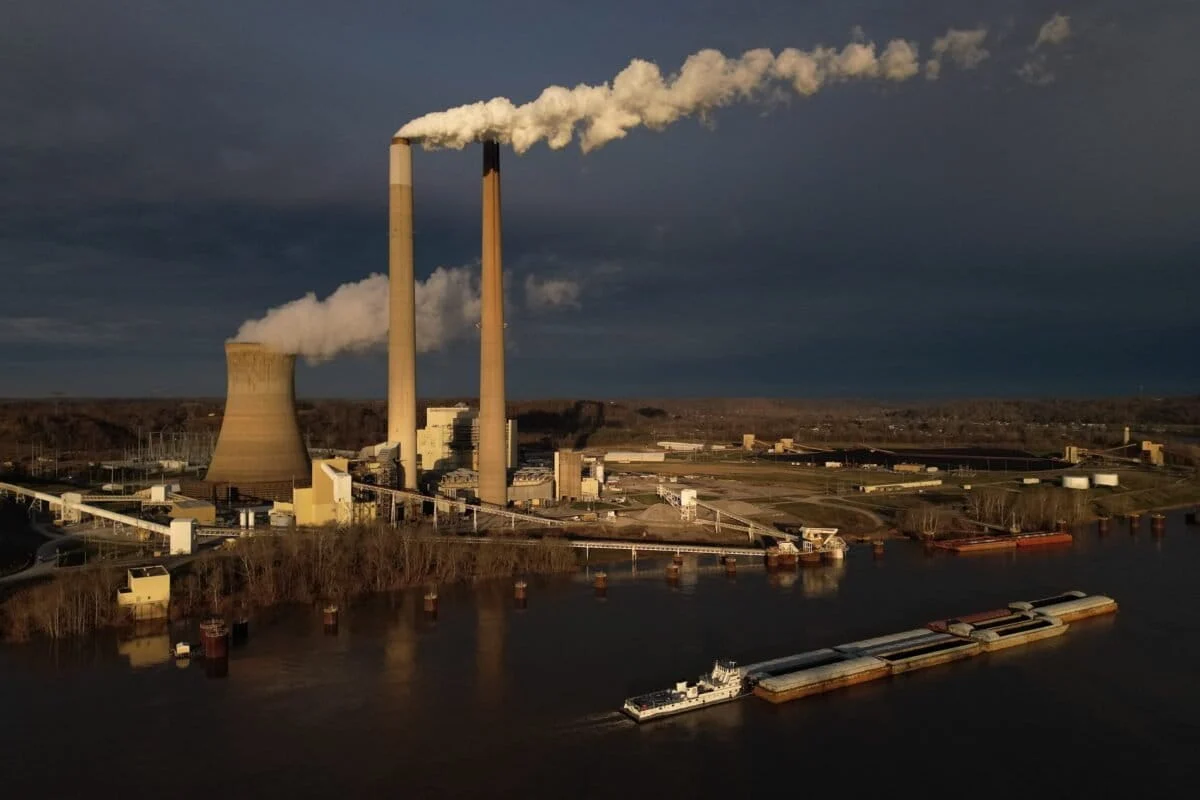
In a sweeping regulatory reversal, the Environmental Protection Agency (EPA) has officially moved to repeal long-standing federal mandates that restricted planet-warming greenhouse gas emissions from coal and natural gas-fired power plants. This policy pivot, which federal officials characterize as a strategy to "unleash" domestic energy potential, aims to eliminate more than $300 billion in projected industry compliance costs over the coming decade. The move marks a definitive departure from the climate-centric agendas of the Obama and Biden administrations, signaling a new era of regulatory leniency toward the fossil fuel sector.
The agency’s decision grants utility companies greater autonomy in determining their operational footprints, effectively ending the federal pressure to decommission or retrofit aging, carbon-intensive infrastructure. By removing these constraints, the current administration argues that it is prioritizing grid reliability and economic efficiency over the centralized mandates that critics have long labeled as federal overreach.
A Chronology of Climate Policy Flux
To understand the weight of this decision, one must view it within the context of the last two decades of American energy policy. The regulatory landscape has swung like a pendulum, creating a volatile environment for utility investment and long-term planning.
In 2015, the Obama administration introduced the Clean Power Plan, which set the first-ever national standards to limit carbon dioxide emissions from existing power plants. That policy was subsequently stayed by the Supreme Court in 2016 and ultimately repealed by the Trump administration in 2019, which replaced it with the Affordable Clean Energy (ACE) rule.
The Biden administration later attempted to impose even more stringent requirements through the EPA, focusing on carbon capture and sequestration (CCS) technologies and hydrogen co-firing. These regulations were intended to force a transition away from traditional fossil fuels toward a decarbonized grid by 2035. The current repeal essentially terminates the enforcement of these stringent benchmarks, allowing coal and gas operators to maintain legacy facilities without the looming threat of mandatory technological upgrades or early retirement.
Economic Implications and Industry Costs
The $300 billion figure cited by the EPA represents the estimated capital expenditure utilities would have faced had they been forced to adhere to strict emission reduction targets. Industry advocates argue that these costs would have inevitably been passed down to consumers, leading to significant rate hikes across the country.
Proponents of the repeal argue that the cost of compliance often creates "stranded assets"—infrastructure that is still functional but rendered economically unviable by regulation. By repealing these rules, the EPA asserts that it is protecting the financial stability of the energy sector and ensuring that power companies can utilize existing assets to meet rising demand, particularly as the industrial sector expands and the electrification of various markets increases total energy consumption.
However, independent economic analysts point to a counter-narrative: the long-term risk of climate-related damages. While the repeal offers immediate relief from compliance costs, it does not account for the potential externalized costs of climate change, such as increased frequency of extreme weather events, which can cause billions in damage to the very power grid the policy seeks to protect.
Official Responses and Stakeholder Perspectives
The reaction to the EPA’s announcement has been sharply divided, reflecting the deep ideological chasm regarding the role of government in climate mitigation.

Utility executives have largely reacted with cautious optimism. In internal briefings, representatives from regional power cooperatives have stated that the move provides "regulatory certainty," allowing them to plan their capital investments without the fear of shifting federal mandates. For these companies, the priority is maintaining base-load power—the ability to generate electricity around the clock—which they argue is more reliable when fueled by coal and natural gas.
Conversely, environmental advocacy groups have condemned the repeal as an abdication of federal responsibility. "This action is a reckless gamble with our future," stated a coalition of environmental legal defense groups. They argue that the repeal ignores the scientific consensus on the accelerating pace of global warming and abandons the United States’ international commitments under the Paris Agreement. These groups have already signaled their intent to challenge the EPA’s decision in federal court, setting the stage for protracted legal battles that could last for years.
The Impact on Power Grid Reliability
A central pillar of the EPA’s argument for the repeal is the protection of grid reliability. As the United States moves toward a more electrified economy, the demand for power is projected to grow substantially. EPA officials contend that forcing the closure of coal plants before renewable energy sources can provide sufficient baseload capacity creates a dangerous "reliability gap."
Data from the North American Electric Reliability Corporation (NERC) has periodically warned that the rapid retirement of fossil fuel plants, combined with the intermittent nature of wind and solar energy, could lead to supply shortages during extreme weather events. By allowing utilities to keep coal and gas plants online, the government aims to ensure a buffer of "always-on" power.
Yet, this strategy ignores the market-driven trends already underway. Even without federal mandates, many utility companies have been retiring coal plants simply because they are no longer cost-competitive with natural gas and renewables. The repeal removes the regulatory "stick," but it does not necessarily guarantee that coal plants will remain profitable in a market where cheaper, cleaner alternatives are becoming the standard.
Broader Implications for Global Climate Goals
The international implications of the EPA’s decision are significant. As one of the world’s largest emitters of greenhouse gases, the United States’ domestic policy carries immense weight in global climate negotiations. By loosening internal restrictions, the U.S. risks losing its position as a leader in climate diplomacy, potentially emboldening other nations to scale back their own environmental commitments.
Furthermore, the repeal challenges the notion that the U.S. economy can thrive while decarbonizing. The administration is banking on the idea that energy abundance, derived from the unrestrained use of traditional fuels, is the primary driver of economic growth. Whether this assumption holds true in a global market that is increasingly prioritizing green energy technology remains to be seen.
The Road Ahead: Litigation and Uncertainty
As the dust settles on this policy shift, the future of the power sector remains clouded in uncertainty. The repeal is likely to be tied up in the judicial system for the foreseeable future. The legal arguments will likely center on the scope of the EPA’s authority under the Clean Air Act—specifically, whether the agency has the mandate to force a fundamental change in the national energy mix, or whether its role is limited to regulating emissions at the fence line of individual facilities.
For the American public, the impact will be felt on two fronts: their monthly electricity bills and the evolving environmental quality of their communities. While the immediate economic relief of the repeal may be welcomed by those concerned about rising energy costs, the long-term environmental consequences remain a point of intense contention.
Ultimately, this move is more than just a regulatory change; it is a fundamental redefinition of the American energy philosophy. It prioritizes the immediate economic interests of the power industry and the perceived stability of the grid over the long-term, systemic risks of carbon emissions. As the country moves forward, the success or failure of this policy will be measured not just in dollars saved, but in the health of the climate and the long-term reliability of the nation’s power grid. The battle over the air we breathe and the energy we consume is far from over; it has merely entered a new, more contentious phase.