
This past summer shattered global meteorological benchmarks, pushing the planet into a punishing climate reality characterized by unrelenting heat, withered agricultural yields, and overwhelmed public health infrastructure. From the scorched earth of Western Europe to the baking valleys of North America, countries reported their highest average temperatures in recorded history. Yet, according to global health authorities and international scientific bodies, this summer’s extraordinary anomalies were merely a prelude to a far more volatile atmospheric future.
With human-induced greenhouse gas emissions continuing to accumulate in the atmosphere and a historic El Niño cycle gaining momentum, scientists warn that the coming years will likely introduce unprecedented thermal extremes. The convergence of these two planetary forces places the global community on a collision course with physical thresholds that modern infrastructure, healthcare systems, and economic models were never designed to withstand.
A Summer of Relentless Extremes and Cascading Crises
The summer months of 2026 delivered an unprecedented sequence of environmental disasters. Western Europe alone endured five consecutive, grueling heat waves that systematically baked the continent. The persistent thermal pressure stripped moisture directly from the soil, transforming native vegetation into desiccated tinderboxes that fueled extraordinary wildfires across the Mediterranean and Central Europe. Major river systems dwindled to historic lows, disrupting commercial shipping, thermal power plant operations, and aquatic ecosystems to the point where fish populations suffered mass die-offs from a lack of oxygenated water.
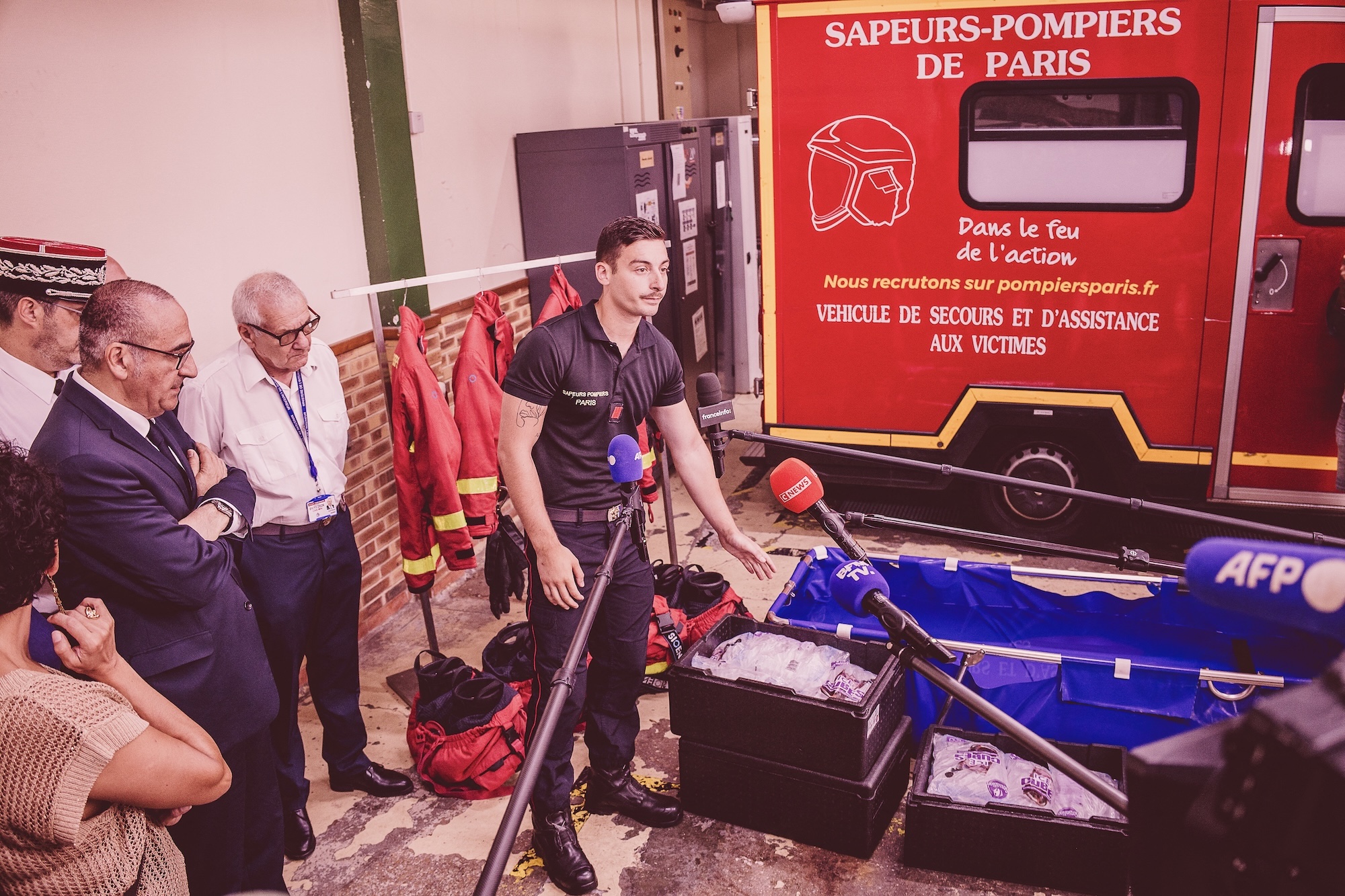
Urban centers bore the brunt of the atmospheric assault. Emergency rooms and ambulance networks found themselves severely strained as heat stroke, dehydration, and heat-exacerbated cardiovascular complications surged. Preliminary epidemiological assessments indicate that at least 35,000 excess deaths occurred across the continent during just the first four of these back-to-back thermal events, capturing only a fraction of the total geographic and temporal scope of the summer.
World Health Organization (WHO) officials characterized the season not as an isolated anomaly, but as a "dress rehearsal" for future summers that are mathematically certain to surpass these thresholds.
The Convergence of El Niño and Anthropogenic Warming
The primary catalysts for this accelerated warming trend are twofold: the cyclical emergence of El Niño and the relentless accumulation of atmospheric greenhouse gases. El Niño, a naturally occurring climate pattern characterized by the warming of surface waters in the central and eastern Pacific Ocean, typically injects significant thermal energy into the global climate system every two to seven years. The current cycle, currently in its early developmental stages, is tracking to be the most powerful in a millennium, amplifying baseline global temperatures significantly.
Compounding this natural variability is the steady upward trajectory of carbon dioxide and methane concentrations. Despite decades of international climate negotiations, global greenhouse gas emissions have not experienced the mandatory sharp declines required to stabilize the climate.

In 2015, nearly every nation adopted the Paris Agreement, committing voluntarily to pursue efforts to limit global warming to 1.5 degrees Celsius (2.7 degrees Fahrenheit) above preindustrial levels. However, a landmark United Nations environmental report released late last year concluded that the global community is virtually certain to overshoot this critical 1.5-degree threshold within the next few years. As a result, society faces an accelerated timeline of severe heat waves, prolonged droughts, catastrophic wildfires, accelerated sea-level rise, and irreversible glacier retreat.
Driven by the synergistic interaction of the super El Niño and underlying anthropogenic warming, climate modelers project that 2027 is exceptionally likely to become the hottest calendar year in recorded human history.
Historical Context and the Limits of Adaptation
To understand the current crisis, climatologists often look back to the watershed summer of 2003, when an unprecedented heat wave claimed an estimated 70,000 lives across Europe. That catastrophic event forced governments to rethink public health defenses, leading to the creation of early warning systems, designated cooling centers, and upgraded hospital preparedness protocols.
France, in particular, pioneered a robust national response plan. Following the 2003 disaster, the French government instituted mandatory air-conditioned communal spaces in nursing homes, deployed health workers to conduct physical wellness checks on elderly and frail citizens during high-temperature alerts, and launched urban greening initiatives designed to reduce the urban heat island effect.
These measures successfully altered mortality curves. "A given heat wave is now actually much less deadly in France than it was before," noted Christopher Callahan, a climate scientist specializing in heat, health, and economics at Indiana University.
However, as global average temperatures inch closer to 1.4 degrees Celsius above preindustrial baselines, scientists caution that incremental adaptation strategies are running up against hard physical limits. Callahan’s research indicates that if nations continue adapting to heat at the historical pace observed over recent decades, these measures will only prevent roughly 10 percent of the heat-related fatalities projected under future warming scenarios.
Dr. Kristie Ebi, a professor of global health at the University of Washington and a lead author of the recent U.N. assessment, emphasized that institutional preparedness has failed to keep pace with the velocity of climate change. Heat waves are increasingly materializing outside of their traditional historical windows—stretching well before mid-May and persisting past mid-September—while catching public health agencies off guard with magnitudes that exceed historical design parameters.
"The temperatures were just so high, much higher than the heat wave early warning systems were designed to manage," Ebi explained.
Redefining the Danger Zone for Human Physiology
The escalating frequency of these events has forced medical researchers to re-evaluate the physiological limits of the human body. Recent epidemiological and physiological studies indicate that the threshold at which environmental heat becomes hazardous is significantly lower than previously understood.
When high atmospheric temperatures combine with elevated relative humidity, the human body loses its primary cooling mechanism: the evaporation of sweat. Under high-humidity conditions, the danger zone can begin at ambient temperatures as low as 26 degrees Celsius (79 degrees Fahrenheit). Prolonged exposure to these conditions does not merely trigger heat stroke; it places lethal, cascading stress on vital internal organs, including the heart, lungs, and kidneys, disproportionately threatening vulnerable populations such as outdoor laborers, the elderly, and individuals with preexisting medical conditions.
"When 1.5 [degrees] was decided, there was an assumption that 1.5 degrees Celsius above preindustrial temperatures would be relatively safe," Ebi observed. "And I would say, today, that Europe does not think 1.4 degrees is relatively safe. For most of the U.S., it does not feel like 1.4 is relatively safe."
Navigating the Overshoot: Implications and Future Outlook
The U.N. report’s findings are unequivocal: there are no environmentally benign outcomes once global temperatures permanently exceed the 1.5-degree threshold. Even under the most optimistic emissions-reduction pathways, global temperatures are projected to temporarily peak around 1.8 degrees Celsius before humanity can theoretically deploy atmospheric carbon-removal technologies to coax averages back down.
Even if global temperatures are eventually reduced, the ecological toll will be permanent in many respects. Systems such as coral reef ecosystems and collapsed polar ice sheets cannot be easily resurrected or refrozen once their respective tipping points have been breached. Nevertheless, bringing peak temperatures down from higher trajectories could still mitigate the worst manifestations of terrestrial extreme heat.
To avert catastrophic societal collapse in the interim, experts argue that governments and municipal authorities must radically transform how they anticipate infrastructural vulnerabilities. Ebi advocates for the implementation of rigorous "stress-testing" protocols—methodologies traditionally utilized by central banks and military defense agencies to simulate worst-case systemic failures before they materialize in the physical world.
Without such preemptive modeling, communities will continue to discover their vulnerabilities reactively. Urban planners frequently point to the Pacific Northwest heat dome of June 2021, when temperatures in Portland, Oregon, reached an astonishing 116 degrees Fahrenheit (46.7 degrees Celsius). The unprecedented thermal load caused asphalt roads to buckle, steel bridges to warp, electrical supply cables to melt, and public transit copper overhead wires to expand and sag, effectively paralyzing the city.
"There are a million different ways in which we can imagine making our society resilient to this kind of threat," Callahan concluded, "and we just aren’t there yet."