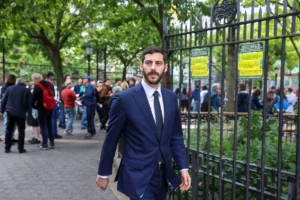
The federal justice system delivered a stern rebuke to financial misconduct this week as 38-year-old Siddharth Jawahar was sentenced to 11 years in federal prison. The sentencing, handed down in the Eastern District of Missouri, marks the conclusion of a high-stakes legal battle following Jawahar’s guilty plea to three counts of wire fraud. His firm, Swiftarc Capital LLC, which had operated since 2010, was revealed to be a vehicle for a sophisticated deception that siphoned millions from unsuspecting investors under the guise of diversified, high-growth investment strategies.
The scale of the fraud was immense, with court filings documenting that Jawahar collected approximately $35.6 million from his clients. Of that staggering sum, investigators discovered that only about $10 million was ever directed toward actual investments. The remainder of the capital was either funneled into a single, failing overseas venture or diverted to fund a lifestyle of extreme opulence. Among the victims of this scheme was Kansas City Chiefs tight end Travis Kelce, whose involvement surfaced during the sentencing proceedings, thrusting the case into the national spotlight.
A Chronology of Deception
The rise and fall of Swiftarc Capital serves as a case study in the anatomy of a Ponzi scheme. Founded by Jawahar in 2010, the firm initially presented itself as a legitimate investment house capable of navigating complex global markets. For years, Jawahar maintained a facade of success, providing investors with fabricated reports that suggested their capital was yielding significant returns.
The reality, according to federal prosecutors, was vastly different. By the mid-2010s, Jawahar had begun concentrating nearly 99% of his clients’ funds into a single entity: Philip Morris Pakistan. When that investment’s performance cratered, the collapse threatened to expose the fragility of Swiftarc’s balance sheet. Rather than disclosing the losses, Jawahar doubled down on the deception. He continued to issue false statements to clients, claiming their portfolios were thriving.
To sustain this illusion, Jawahar employed the classic Ponzi mechanism: using the principal investments of new clients to pay out "returns" to earlier investors. This cycle of redistribution allowed the fraud to persist for nearly a decade. The indictment reveals that in May 2018, for instance, Jawahar explicitly lied to two investors, claiming he was deploying $525,000 into a new venture when, in reality, no such investment ever occurred.
The scheme eventually unraveled under the scrutiny of federal authorities, leading to his indictment in December 2023. While he was originally charged with four counts—three for wire fraud and one for investment adviser fraud—a plea agreement saw the fourth charge dropped in exchange for his guilty plea in January.
The Anatomy of Greed and Lifestyle Spending
While Jawahar initially admitted to the FBI that his actions were driven by "greed," he later attempted to walk back this sentiment in his sentencing paperwork, claiming that he did not commit the crimes for that reason. Prosecutors, however, provided a comprehensive accounting of how the stolen funds were utilized, painting a picture of an individual who prioritized personal indulgence over fiduciary duty.
The documentation shows that the stolen millions were spent on an array of luxury goods and services. Jawahar’s expenses included stays at elite five-star hotels and memberships at exclusive social clubs, such as Soho House, Zero Bond, and Casa Cipriani in New York City. His real estate portfolio was bolstered by a $164,000 apartment in New York and a $363,280 residence in Austin, Texas. These expenditures underscore the central role that personal consumption played in the depletion of the firm’s assets.
Attempts to Manipulate the Judicial Process
One of the most concerning aspects of the prosecution’s case was Jawahar’s attempts to obstruct justice even after his arrest. Evidence presented in court included recorded jailhouse calls that depicted a calculated effort to influence witnesses. In one instance, Jawahar urged a victim who was scheduled to speak with the FBI to "be dedicated," a phrase that investigators interpreted as a veiled threat to suppress evidence.
Furthermore, prosecutors alleged that Jawahar attempted to destroy digital evidence by asking his sister to remotely wipe his phone. He also provided false information to pretrial services regarding his financial standing and his immigration status.
In a move described as "overly calculated" by his own consultant, Jeff Roe of the political strategy firm Axiom Strategies, Jawahar sought to manipulate public perception ahead of his sentencing. The two discussed a plan to place sympathetic media coverage and use "geofencing" technology to serve advertisements to the presiding judge, aimed at influencing his opinion. The fact that the defendant openly acknowledged the plan was "overly calculated" speaks to the brazen nature of his attempts to subvert the judicial process.
Complex Legal and Immigration Hurdles
The sentencing hearing also touched upon Jawahar’s personal life and his current legal status in the United States. Jawahar has requested permission to marry his fiancée, Caroline Tredway, while in custody. Prosecutors have vehemently opposed this request, arguing that the marriage appears to be a "pretextual attempt" to secure immigration benefits.
The suspicion is rooted in intercepted communications between the two. In a recorded call, Tredway questioned what would occur if Jawahar were deported, to which he allegedly replied, "If you don’t marry me, I guess that might happen." This intersection of criminal sentencing and immigration policy highlights the complexities often found in modern white-collar crime cases involving foreign nationals.
The Financial Toll and Victim Impact
The question of restitution remains a significant point of contention. As of the sentencing date, Jawahar has not paid any of the $31.35 million in restitution ordered by the court. His outlook on the matter is equally concerning; prosecutors noted that in a recorded conversation, he dismissed the necessity of repayment, stating that "restitution never gets paid" and suggesting that he expected the debt to be "commuted" in the future.
The inclusion of Travis Kelce as a victim adds a layer of high-profile scrutiny to the case, though it remains unclear to what extent his financial interests were impacted. The government maintains a strict policy of not discussing individual victims, leaving the details of Kelce’s involvement largely to speculation. However, the case serves as a poignant reminder that even the most sophisticated individuals are not immune to the lures of fraudulent investment schemes.
Broader Implications for Financial Regulation
The downfall of Swiftarc Capital raises critical questions about oversight in the investment sector. The length of time Jawahar was able to operate without detection—nearly ten years—points to systemic vulnerabilities that allowed a single, unchecked individual to misappropriate millions.
In the wake of the Bernie Madoff scandal, the financial industry implemented more rigorous compliance standards and reporting requirements. Yet, the Jawahar case demonstrates that determined actors can still find ways to exploit trust and information asymmetry. The use of digital tools and the ease with which individuals can fabricate performance metrics suggest that investors must remain hyper-vigilant.
As Jawahar begins his 11-year sentence, the focus shifts to the difficult task of recovering assets for his victims. Whether the court will succeed in extracting the $31.35 million in restitution remains to be seen, but the length of his incarceration serves as a firm message that the federal government remains committed to prosecuting financial predators who trade on the trust of their clients. For now, the case of Siddharth Jawahar stands as a stark warning to both the perpetrators of financial fraud and the investors who must navigate an increasingly complex and deceptive global market.