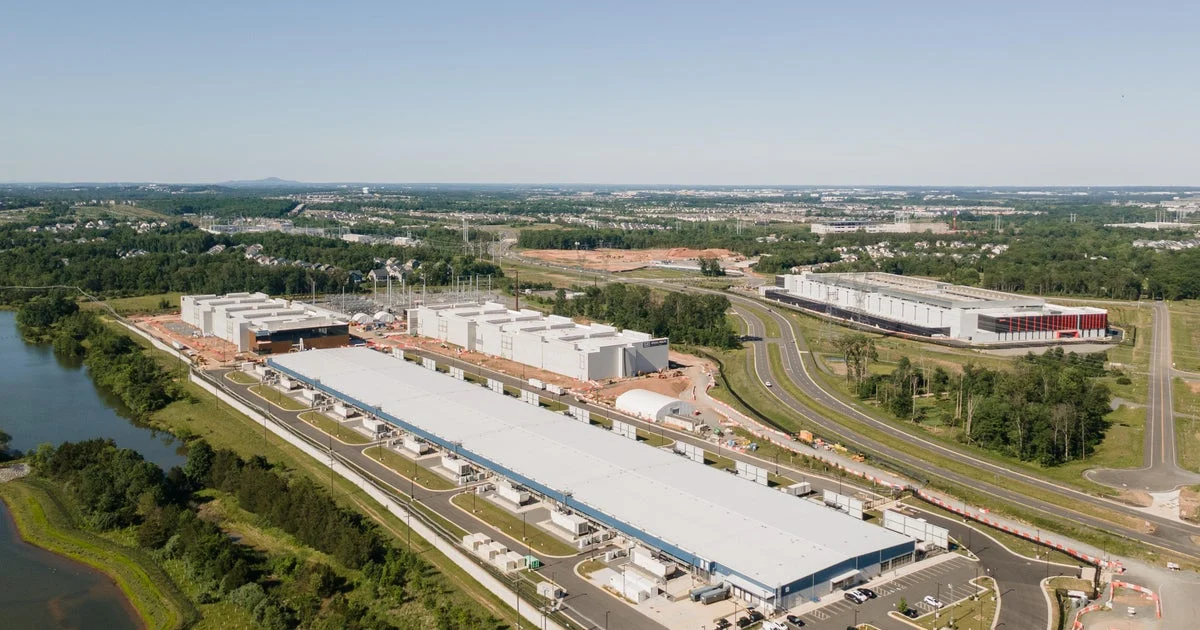
The Commonwealth of Virginia has issued the largest civil penalty against a data center in its history, levying a nearly $2.5 million fine against a Microsoft facility in Leesburg following a major emissions violation. The disciplinary action underscores mounting environmental and regulatory friction within Northern Virginia’s bustling digital infrastructure hubs. Alongside the heavy financial penalty, the tech titan has agreed to channel $2.4 million into a localized air-quality monitoring initiative. The enforcement action coincides with a decisive political maneuver by the Loudoun County Board of Supervisors, which voted to pause the approval of new data center applications for a full year amid escalating concerns from local residents regarding public health, continuous noise pollution, and environmental degradation.
Anatomy of an Emissions Violation: The June 2025 Incident
The historic penalty stems from a severe infrastructure failure that occurred in June 2025 at Microsoft’s Leesburg data center. According to compliance documents published by the Virginia Department of Environmental Quality (VDEQ), an unexpected failure at a primary electrical substation crippled the facility’s standard power supply, forcing the data center to rely on backup generation to maintain operations.
To prevent catastrophic service interruptions for cloud computing and enterprise customers, the facility brought 62 emergency diesel generators online. These heavy-duty combustion engines ran continuously for an intensive seven-day period. While the emergency operation kept digital services online, the prolonged reliance on backup power caused the facility to significantly exceed its permitted fuel emissions thresholds.
State environmental regulators determined that the facility blew past legal limits for several critical air pollutants, including carbon monoxide (CO), volatile organic compounds (VOCs), and particulate matter (PM10 and PM2.5). These microscopic particles and chemical compounds are known contributors to regional smog and respiratory ailments, making their unmitigated release a serious matter for state regulators tasked with maintaining regional air quality compliance under the federal Clean Air Act.
Environmental Settlement and Air Quality Monitoring
Rather than engaging in a protracted legal battle, Microsoft entered into a comprehensive settlement agreement with the VDEQ. Under the terms of the accord, the tech giant will pay the state penalty while simultaneously reallocating $2.4 million toward a targeted environmental project within Loudoun County.
The VDEQ plans to deploy dozens of advanced air quality monitoring sensors strategically clustered around Northern Virginia submarkets featuring the highest concentrations of data centers. This sensor network is designed to capture granular, real-time data regarding local atmospheric conditions, providing both regulators and the public with empirical insights into how massive server farms impact hyper-local airsheds.
"As part of our continued commitment to the communities where we operate, Microsoft will support VDEQ’s expansion of air-quality monitoring in Northern Virginia, as they work to deliver additional data and insight into regional air quality," Microsoft stated in an official communication to news media.
Despite the cooperative tone of the settlement, the incident has amplified anxieties in a region already wrestling with the sheer physical footprint of the digital economy.
Ground Zero: Loudoun County and the Rise of Data Center Alley
Loudoun County, situated in the outer suburbs of Washington, D.C., holds the undisputed title of "Data Center Alley." Industry estimates and local municipal records indicate that the county is home to more than 250 operational data centers. This single geographic pocket handles an estimated substantial fraction of the world’s daily internet traffic, making it the global epicenter of cloud computing, artificial intelligence processing, and data storage infrastructure.
The rapid, relentless transformation of Loudoun County from agrarian and suburban quietude into a sprawling landscape of windowless server warehouses has fueled profound cultural and political debates. While local officials initially welcomed the tech boom with open arms, the sheer scale of the expansion has strained local electrical grids, water resources for cooling systems, and acoustic environments.
The One-Year Moratorium: Political Turning Point
Recognizing the urgent need to reassess the trajectory of regional development, the nine-member Loudoun County Board of Supervisors convened for a high-stakes legislative session. Following hours of emotional testimony from residents and industry lobbyists alike, the board voted 7-1, with one abstention, to implement a one-year pause on the approval of new data center applications, effective retroactively to September 15.
While Virginia state law prevents counties from enacting an absolute, total prohibition on the submission of new land-use proposals, the board utilized a legal framework to halt the final approval and review process for a 12-month period. Developers may still submit paperwork and project blueprints, but county panels will take zero administrative or legislative action on these proposals during the duration of the pause.
County planners and supervisors intend to spend this hiatus conducting a rigorous, multi-month review of zoning codes, environmental protections, and geographic placement standards. The objective is to establish stricter guardrails that govern where future facilities can be built and what operational constraints they must obey.
Community Friction: Residents vs. Industry Advocates
The public comment period preceding the board’s vote highlighted the deep ideological and economic chasm dividing local stakeholders. Residents living within proximity of industrial server complexes voiced deep-seated frustrations regarding the status quo.
Greg Pirio, a resident of Sterling, Virginia, who lives directly across the street from a massive data center equipped with its own dedicated power generation plant, addressed the board during the heated debate. "The community must be involved in setting up the new standards and guardrails to guide data center development and to mitigate the damage that has already been done to the environment and well-being of our community," Pirio testified. For years, Pirio and fellow neighborhood advocates have sounded the alarm over relentless low-frequency hums from industrial cooling fans, potential long-term health risks from diesel emissions, and the downward pressure on residential property values adjacent to heavy industrial zones.
Conversely, industry representatives and business coalitions argue that sudden regulatory brakes could deal a severe blow to the region’s economic vitality. Proponents of continued data center expansion emphasize the immense fiscal dividends the industry yields. Projections indicate that the sector generates roughly $1.3 billion in local tax revenue annually—funds that directly subsidize public school systems, park developments, emergency services, and local infrastructure projects.
Nicole Riley, speaking on behalf of the Data Center Coalition, delivered a stark warning to the board prior to the vote. "Moratoriums and other anti-competitive policies send a signal that an area is closed for business—for data centers, for the many local businesses that provide goods and services that support the data center industry, for the trade unions and schools that are training and growing the construction and operational workforce, and for other significant economic development projects," Riley wrote in her official statement.
Scope and Future Implications
Despite the high drama surrounding the board’s vote and the record-setting Microsoft fine, local officials clarified the precise boundaries of the new policies. The one-year moratorium applies exclusively to prospective developments and unapproved applications. It exerts no legal or operational retroactivity over existing data centers already up and running, nor does it halt construction on facilities that have already secured their permits and broken ground.
Even so, the convergence of a multi-million-dollar state emissions penalty and a county-level legislative freeze marks a distinct watershed moment for Virginia’s tech economy. As the demand for artificial intelligence infrastructure and cloud storage continues to skyrocket globally, Northern Virginia finds itself at a historical crossroads. The coming year of review will test whether municipal leaders can successfully balance the lucrative imperatives of the digital age against the fundamental quality of life demanded by the communities hosting the backbone of the modern internet.