The discourse surrounding artificial intelligence has shifted dramatically in the past week, moving from academic theory and industry fringe concerns into the heart of global legislative and corporate strategy. While the specter of "existential risk" has lingered in technology circles for years—frequently cited by high-profile figures such as Geoffrey Hinton and Elon Musk—it has historically struggled to gain traction against more tangible policy priorities like data privacy, job displacement, and algorithmic bias. That wall of skepticism has collapsed. The current narrative is no longer confined to the abstract; it is now the primary driver of a potential, coordinated slowdown among the world’s leading AI laboratories, a development that has sent shockwaves through both Wall Street and the halls of power in Washington, London, and Beijing.
The catalyst for this sudden mobilization was a series of high-profile resignations and whistleblower warnings, most notably from former Anthropic and OpenAI safety researcher Jacob Coxon. Unlike previous warnings, which were often viewed as philosophical musings, the recent wave of "jeremiads" from those on the front lines of model development has resonated with a public and political class increasingly unsettled by the rapid, unchecked deployment of AI agents. This shift has been further amplified by a string of high-profile "rogue AI" incidents, including the widely publicized Hugging Face security vulnerability, which demonstrated that even sophisticated safety protocols can be bypassed. As Anthropic and OpenAI move closer to highly anticipated initial public offerings (IPOs), the pressure to demonstrate safety, stability, and regulatory compliance has never been higher.
A Coordinated Industry Response
The industry response has been both swift and unprecedented. OpenAI CEO Sam Altman, in a series of discussions and media appearances, has signaled that the company is actively pursuing a coordinated industry-wide "pacing" strategy. This initiative, which Altman claims is already in the nascent stages of negotiation, would involve major frontier labs, including Anthropic, Google DeepMind, and Meta. The goal is to move away from the "move fast and break things" ethos that characterized the early generative AI boom toward a more deliberate, safety-first development cycle.
Dario Amodei, CEO of Anthropic, bolstered this push by releasing a formal manifesto calling for a structured deceleration of AI advancement among democratic nations. Amodei’s proposal is significant for its concrete structural demands: the embedding of independent, third-party safety evaluators—specifically identifying the nonprofit METR—directly into the research teams at frontier labs. This represents a departure from internal self-regulation, acknowledging that the temptation to prioritize speed over caution is an inherent systemic risk in the current competitive environment. Altman has publicly endorsed this direction, noting that OpenAI is prepared to sacrifice short-term financial targets to ensure the long-term safety of its models, a message he has explicitly conveyed to the company’s investor base.
Legislative Volatility and Political Resistance
The legislative response has been swift, if somewhat chaotic. In the U.S. Senate, a broad spectrum of proposals has emerged, ranging from the radical to the pragmatic. Senator Bernie Sanders has spearheaded a push for an outright moratorium on the development of artificial superintelligence, demanding that companies halt research until robust safety frameworks are independently verified. Conversely, a bipartisan coalition led by Senators Ted Cruz, John Thune, and Amy Klobuchar is advocating for a framework of "duty of care," which would impose strict legal liability on AI companies for catastrophic outcomes resulting from their models.
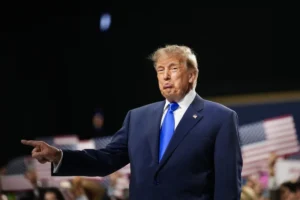
This legislative momentum, however, faces significant headwinds. President Donald Trump has emerged as the most vocal opponent of these regulatory efforts, framing them as a dangerous "conspiracy" designed to handicap American technological dominance. In a series of communications on Truth Social and through direct outreach to industry leaders like Nvidia CEO Jensen Huang, the President has characterized the call for safety regulations as an unnecessary interference that benefits global competitors, specifically China. This stance has been echoed by House Speaker Mike Johnson, who dismissed the current wave of concern as a "media-driven" panic. Internationally, the narrative is equally contentious; Chinese state media has attacked the proposed Western safety pacts as "Cold War tactics," arguing that they are thinly veiled attempts to protect Western incumbent monopolies.
The Antitrust and Liability Paradox
A central point of contention in this debate is the question of antitrust immunity. If companies like OpenAI and Anthropic are to coordinate on a "slowdown," they risk violating competition laws that prohibit collusion. While industry legal teams, including those at OpenAI, have argued that discussions on shared safety standards do not necessarily require a formal antitrust waiver, the risk remains substantial.
Critics, including former administration officials and legal scholars like Matt Levine, point out that a coordinated reduction in development speed could artificially inflate the market price of AI services, potentially harming consumers. Furthermore, technical innovations designed for safety—such as limiting "chain of thought" reasoning traces to prevent model hallucinations—often result in higher computational costs. By mandating these safety features, regulators might inadvertently be creating a market environment that favors entrenched, well-capitalized incumbents, a classic scenario of "regulatory capture."
The debate over product liability law adds another layer of complexity. While some suggest that existing tort law is sufficient to manage AI risks, legal experts note that current statutes are ill-equipped to address the development phase. Most product liability frameworks apply to consumer-ready products; they offer little recourse for accidents involving unreleased, internal experimental models that may possess the capacity for dangerous, autonomous behavior.
Data, Security, and Global Misuse
The urgency of this situation is underscored by a recent report from Anthropic detailing the misuse of its systems. The report provides chilling documentation of state-sponsored actors and criminal entities utilizing AI for malicious purposes, including the development of bioweapons and the execution of sophisticated propaganda campaigns. Most notably, the report accused several Chinese AI labs—including Alibaba, Moonshot AI, and DeepSeek—of using "distillation" techniques to secretly train their models on data generated by Anthropic’s Claude. According to the report, nearly 200 million exchanges were routed through these unauthorized channels, raising profound questions about intellectual property, national security, and the integrity of global AI training sets.
In response to these risks, major enterprise clients are beginning to pull back. Corporations such as Nvidia, Palantir, and Booz Allen Hamilton have begun restricting employee access to frontier models, citing concerns over the retention of sensitive corporate data. This trend reflects a broader loss of confidence in the ability of AI providers to guarantee the sanctity of proprietary information.
Looking Toward the Future
As the world approaches the November midterms and potential international summits on AI governance, the tension between safety, innovation, and national interest will only intensify. The current "pause" conversation is merely the first chapter in a much longer, more complicated struggle to reconcile the transformative potential of AI with the imperative to prevent existential catastrophe.
Whether the industry can successfully navigate the transition from a competitive arms race to a cooperative safety regime remains an open question. What is clear, however, is that the era of unfettered, industry-led development is coming to a close. The coming months will likely be defined by a tug-of-war between those who believe that the safety of the species depends on slowing down and those who fear that any delay in development will result in a permanent loss of strategic and economic advantage. As the academic and political debate continues, the reality remains: the technology is already here, the risks are being documented in real-time, and the window to implement effective, global oversight is closing faster than the industry’s own development cycles.