In a decisive move that underscores the Federal Reserve’s intensifying battle against persistent inflation, the Federal Open Market Committee (FOMC) voted unanimously on Wednesday to raise the federal funds rate by 25 basis points. This hike, which brings the benchmark rate to a range of 3.75 percent to 4 percent, marks the first increase in borrowing costs since July 2023. The decision signals a definitive end to a prolonged period of monetary policy stability, reflecting the central bank’s growing anxiety over an inflationary environment exacerbated by geopolitical volatility, specifically the ongoing conflict in Iran.
A Departure from Policy Stasis
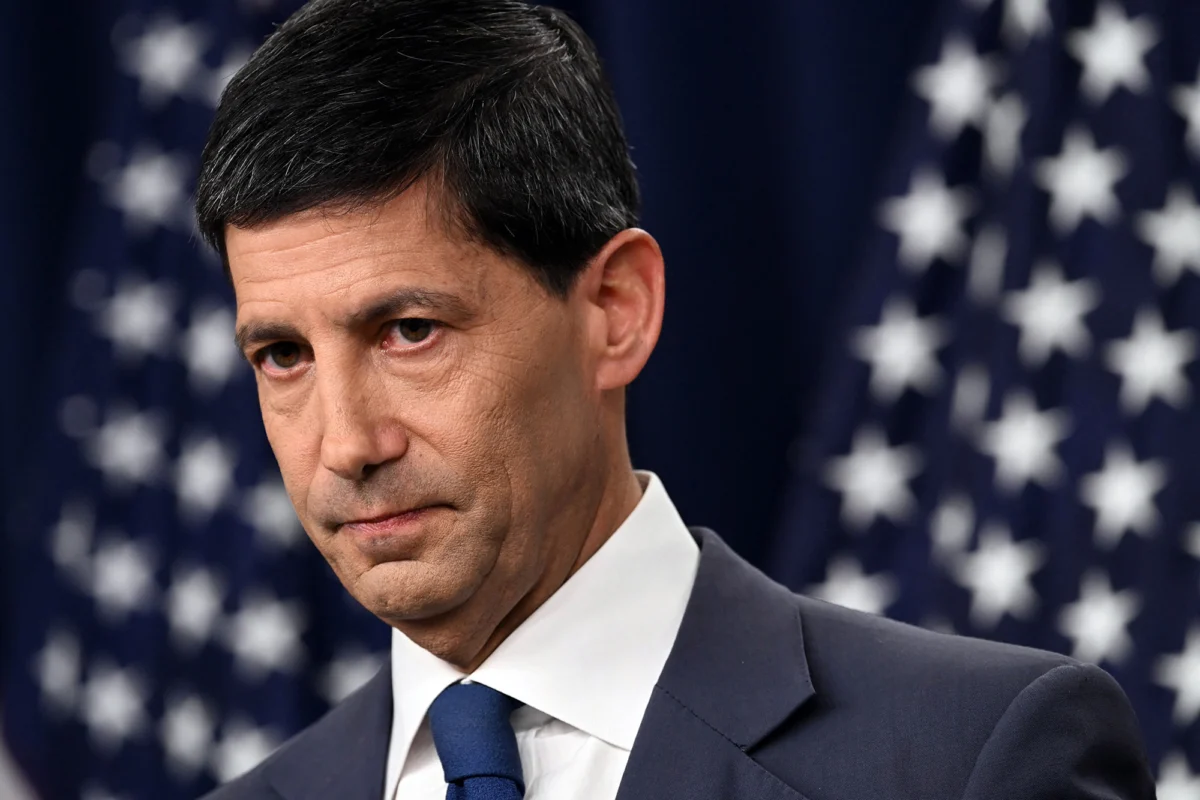
The decision to raise rates follows five consecutive meetings where the FOMC opted to hold interest rates steady. For market observers, this pivot is more than a mere numerical adjustment; it represents a tactical shift by Fed Chairman Kevin Warsh. Since assuming the leadership of the central bank in June following the tenure of Jerome Powell, Warsh has navigated a complex landscape marked by both economic headwinds and external political pressure.
The move comes despite vocal pushback from the White House. President Donald Trump, who nominated Warsh to the position earlier this year, has been a frequent critic of the Fed’s potential for tightening credit. In a September 4 post on Truth Social, the President explicitly urged the central bank to consider rate cuts, even suggesting a potential shift in international trade policy should the Fed maintain its restrictive stance. Despite this, the FOMC’s 12-0 vote demonstrates a unified commitment to prioritize price stability over political friction.
The Dot Plot and Future Outlook
The Fed’s updated "dot plot"—a visual representation of where individual committee members believe interest rates should be at the end of each year—paints a hawkish picture. Sixteen of the eighteen committee members indicated support for at least one additional rate hike before the conclusion of 2026. Projections place the federal funds rate at 4.1 percent by year-end, a level expected to persist throughout 2027.
During a post-meeting press conference, Chairman Warsh was blunt regarding the necessity of the hike. "The plain fact is that inflation is too high, and has been for too long," Warsh stated. "This summer’s inflation readings do not tell me that underlying trends have meaningfully improved." His comments reflect a central bank that has abandoned the "transitory" narrative of previous years, focusing instead on the long-term structural challenges of achieving a 2 percent annual inflation goal.
Commercial Real Estate: A Sector in Transition
The impact of this rate hike on the commercial real estate (CRE) sector is immediate and multifaceted. As borrowing costs rise, the cost of capital—the lifeblood of real estate development and acquisition—has become significantly more expensive.
Joseph Fingerman, president of commercial real estate at Peapack Private Bank & Trust, notes that the industry is currently undergoing a painful recalibration. "Elevated interest rates have slowed transaction activity, as higher debt service costs reduce loan proceeds on deals," Fingerman explained. "This has created a widening gap between the price expectations of buyers and sellers, effectively forcing borrowers to increase their equity contributions to bridge the funding shortfall."
The implications are particularly severe for rent-regulated multifamily properties. In these assets, where revenue growth is often capped by government mandates, the inability to pass rising costs on to tenants puts immense pressure on debt service coverage ratios. "This environment widens the divide between well-capitalized sponsors who can inject fresh equity and overleveraged owners who are facing imminent maturity challenges," Fingerman added.
The Treasury Yield Reality Check
The sentiment in the real estate sector was already fragile prior to the FOMC meeting. The broader debt markets had been signaling a shift for weeks. On Monday, the 10-year Treasury yield—the benchmark for long-term commercial mortgage rates—crossed the 5 percent threshold, reaching levels not seen since 2007.
This rapid climb in yields has effectively reset the floor for commercial lending. Lenders are now forced to underwrite new originations using significantly higher stressed rates, ensuring that projects can remain solvent even if interest rates continue their upward trajectory. The era of cheap, easily accessible debt has definitively closed, replaced by a climate of risk mitigation and strict underwriting.
Strategic Resilience and Opportunistic Investing
Despite the tightening of credit, not all market participants view the rate hike as a death knell for investment. Jay Neveloff, partner and chair of U.S. real estate at HSF Kramer, argues that for sophisticated investors, the current volatility is simply part of the market cycle.
"While interest rate hikes certainly influence pricing, they will not deter the growing number of investors looking for opportunities in New York City and across the nation," Neveloff said. "I see an increase in land plays and potential assemblages. For the smart investor who is not looking to stay on the sidelines, the opportunity remains. A 25-basis-point move does not necessarily move the needle for long-term value creation."
However, Neveloff warned that the Fed must maintain transparency. He expressed concern that any departure from the central bank’s long-standing "forward guidance" policy—the practice of signaling future policy intentions—could introduce dangerous uncertainty. "Forward guidance helps market participants avoid shocks," he noted. "Without it, the stability required for long-term capital allocation becomes much harder to achieve."
The End of "Kicking the Can"
The transition into a higher-rate environment is forcing a change in how distressed assets are handled. Ryan Koehler, managing director for originations at NewPoint Real Estate Capital, observes that lenders have largely exhausted their patience for extending the maturities of non-performing loans.
"We are seeing a marked shift in how deals are structured in 2026 compared to the previous few years," Koehler said. "There is a rise in cash-in refinances and recapitalizations, but more importantly, we are seeing a wave of lender-controlled transactions."
According to Koehler, the strategy of "kicking the can" down the road—a common practice during the low-interest-rate environment of the early 2020s—is no longer viable. As equity buffers are depleted and property valuations are adjusted to reflect the new cost of debt, many owners are finding their equity positions entirely wiped out. "Lenders are recognizing that the market is structurally different now," Koehler noted. "They are increasingly willing to accept losses today rather than continue to carry underperforming assets. This willingness to recognize impairments is accelerating the cycle of loan sales and asset turnover."
Broader Economic Implications
The Fed’s current trajectory suggests a long road ahead before inflation returns to its target levels. With the war in Iran continuing to disrupt global supply chains and commodity prices, the Fed faces a "higher for longer" scenario that may test the resilience of the U.S. economy.
For the CRE industry, the implications are clear: the next 18 to 24 months will be characterized by a "flight to quality." Capital will likely flow toward assets with strong cash flows and low leverage, while speculative developments and highly leveraged properties will struggle to secure financing.
As the market absorbs the reality of a 4 percent benchmark rate, the focus will shift from growth at any cost to operational efficiency and prudent risk management. While the Federal Reserve remains committed to its mandate of price stability, the real estate market is already bracing for the next phase of this economic cycle. Whether the economy achieves a "soft landing" or experiences a more pronounced correction remains the central question for investors, lenders, and policymakers alike. The coming quarters will serve as a definitive test of the industry’s ability to adapt to a landscape where the cost of money is no longer a tailwind, but a significant hurdle.