The Federal Reserve’s definitive decision to elevate its benchmark interest rate to a target range of 3.75% to 4% has sent immediate, profound ripples across the entire American housing sector. Following a unanimous 12-0 vote by the Federal Open Market Committee (FOMC), this aggressive monetary policy shift—marking the first rate increase after five consecutive meetings where rates were held steady—has profoundly altered the calculus for real estate professionals, prospective homebuyers, and steadfast sellers alike. Industry brokers, analysts, and executives are now aggressively bracing for a prolonged period of market contraction that threatens to further marginalize first-time buyers while forcing pandemic-era sellers to drastically recalibrate their pricing expectations.
Although mortgage rates are fundamentally anchored to long-term Treasury yields rather than the federal funds rate directly, the psychological and economic impact on the real estate marketplace has been instantaneous and severe. Real estate veterans note that consumer confidence has taken a direct hit as everyday Americans process an increasingly restrictive borrowing environment. For agents on the front lines, the immediate challenge is twofold: managing deeply entrenched seller expectations and engineering creative financing strategies to keep fragile real estate transactions alive in an unforgiving economic climate.
A Retrospective Chronology: The Road to 4%
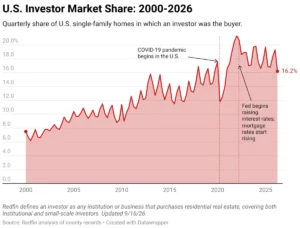
To understand the gravity of the Federal Reserve’s recent policy shift, it is essential to examine the chronological progression of post-pandemic monetary policy. In early 2020, as the global COVID-19 pandemic paralyzed economic activity, the Federal Reserve slashed its benchmark interest rate to near-zero levels (0% to 0.25%) to stimulate borrowing and prevent a severe economic depression. This unprecedented monetary easing sparked a historic housing boom. Driven by ultra-low mortgage rates that dipped below 3%, demand skyrocketed, home prices surged at double-digit annual rates, and inventory plunged to historic lows.
However, the massive influx of capital, combined with global supply chain disruptions and sweeping fiscal stimulus, eventually ignited rampant inflation. By early 2022, consumer price inflation reached multi-decade highs, forcing the Fed into an aggressive tightening cycle. The central bank rapidly hiked rates throughout 2022 and 2023, pushing borrowing costs up at a historically unprecedented pace.
After a brief pause across five consecutive FOMC meetings where policymakers evaluated the lagged effects of prior hikes, persistent inflation pressures and stubborn labor market resilience forced the committee’s hand. The unanimous vote to raise the target range to 3.75% to 4% signals that the central bank remains deeply committed to stamping out inflation, even at the expense of interest-rate-sensitive sectors like housing.
Macroeconomic Pressures: Oil Shocks and Government Deficits
The housing market does not exist in a vacuum; it is inextricably linked to broader macroeconomic indicators, chief among them commodity prices and federal fiscal policy. National Association of Realtors (NAR) Chief Economist Lawrence Yun recently highlighted the alarming convergence of rising oil prices, escalating mortgage rates, and massive federal deficits as the primary headwinds currently battering the housing sector.
Average 30-year fixed mortgage rates have experienced a meteoric climb, shifting from roughly 6% in late February to a punishing 7% threshold. This dramatic escalation is largely attributable to a massive resurgence in energy costs. U.S. and global oil prices have steadily climbed to near four-month highs, trading between $97 and $108 per barrel. This represents an alarming 19% increase over the span of a single month and a staggering 57% surge compared to the same period in the previous year, fueled primarily by intensifying geopolitical conflicts in the Middle East. Because energy costs permeate every facet of the manufacturing, transportation, and construction industries, sustained high oil prices act as a persistent engine for broader consumer inflation.
Compounding these energy shocks is the ballooning federal deficit. As the federal government borrows heavily to finance its ongoing expenditures, it crowds out private-sector capital. This dynamic reduces the overall capital pool available for commercial lending and residential mortgages, keeping long-term borrowing costs artificially elevated. Yun projects that 7% mortgage rates may well represent the "new normal" for the foreseeable future, noting that relief will likely depend on a sustained retreat in global oil prices, the implementation of credible federal deficit-reduction plans, and potential productivity gains driven by emerging technologies like artificial intelligence.
The Affordability Crisis and First-Time Buyer Sidelining
The direct consequence of surging mortgage rates combined with persistently high home prices is an unprecedented affordability crisis. First-time homebuyers, who rely heavily on debt financing and do not possess equity from a previous home sale, are bearing the brunt of this monetary tightening.
Mike Miedler, President and CEO of Century 21, emphasizes that housing affordability must be viewed through a holistic lens rather than simply as a headline mortgage rate. "Affordability isn’t just the mortgage rate you see on the screen; families are making a housing decision alongside the cost of groceries, gas, childcare, and everything else in their budget," Miedler explained. As inflation erodes consumer purchasing power, the debt-to-income ratios required to qualify for conventional mortgages have become insurmountable for millions of median-income households.
Consequently, first-time buyers are being systematically priced out of the market. This structural exclusion risks creating a widening generational wealth gap, as younger demographics are delayed or entirely prevented from accumulating home equity—historically the primary engine of middle-class wealth creation in the United States.
Industry Perspectives: Navigating the New Normal
Real estate professionals across the country are rapidly adapting their advisory strategies to guide clients through uncharted economic waters. Abraham Sarway, a prominent broker for Douglas Elliman in New York City, notes that the overarching hurdle is psychological as much as financial.
"It’s a confidence thing for the marketplace—meaning that clients, buyers, and sellers are adjusting to a higher rate environment, higher than we’ve seen," Sarway remarked in an interview with industry analysts. "With what’s going on in the world geopolitically, keeping the 10-year Treasury high is also the issue. It’s like a two-for-one, a buyer confidence issue rather than just a knee-jerk reaction price change."
For sellers accustomed to the hyper-competitive, bidding-war-heavy environment of the pandemic era, adjusting to the reality of a 4% federal funds rate and 7% mortgage rates requires difficult conversations. Sarway points out that there is no universal playbook for homeowners locked into sub-3% mortgages from years past. Instead, agents must conduct comprehensive balance-sheet reviews with their clients, evaluating holistic financial health rather than merely focusing on the immediate transaction.
Furthermore, Louis Puopolo, head of Douglas Elliman’s New York City commercial division, highlights the labor market’s unexpected resilience as a key driver of the Fed’s aggressive stance. As long as employment figures remain robust and wage growth continues to fuel consumer spending, the central bank maintains the policy latitude necessary to prioritize price stability over economic stimulus. A stable labor market removes the primary constraint preventing further rate hikes, ensuring that restrictive monetary policies will remain in place until inflation decisively trends down toward the Fed’s 2-percent target.
Transaction Volume vs. Asset Pricing
A central question facing real estate economists is whether prolonged high interest rates will trigger a widespread correction in home prices. While economic theory suggests that higher borrowing costs should depress asset values by reducing buyer purchasing power, current market dynamics are proving more complex.
Sarway argues that the primary pressure point in the current market is not necessarily home valuation, but rather overall transaction volume. "When the economic cycle is getting less certain, you’ll notice that transaction volume will go down," Sarway explained. "A Fed rate hike will, overall, impact somebody’s income, business owners, and so on. I don’t think pricing will be impacted, especially in the short term. I think that pricing is more impacted by local legislation, like a pied-à-terre tax."
In many metropolitan and suburban markets across the United States, inventory remains severely constrained. Homeowners holding ultra-low mortgage rates refuse to list their properties, creating a severe supply shortage that artificially props up median home prices even as demand drops. This phenomenon—widely referred to in the industry as the "lock-in effect"—has created a stagnant market characterized by low transaction counts, frustrated buyers, and hesitant sellers.
Broader Economic Implications and Future Outlook
As the Federal Reserve’s updated economic projections indicate that policymakers expect at least one additional rate increase before the conclusion of the calendar year, the horizon offers little immediate relief for the housing sector. The persistent affordability squeeze will likely continue to suppress transaction volumes across both residential and commercial real estate markets.
For real estate brokers, mortgage originators, and industry executives, the coming quarters will demand exceptional adaptability, innovative financing structures, and a steady commitment to realistic client counselling. As the broader economy grapples with stubborn inflation, volatile energy markets, and tightening monetary conditions, the American housing market stands at a critical historical juncture, forced to permanently transition away from the artificially cheap credit era and adapt to the rigorous realities of a normalized, higher-rate macroeconomic framework.