Legendary American landscape photographer and environmentalist Ansel Adams dedicated much of his life not only to capturing the majestic, untamed beauty of the American West through his iconic monochrome lenses, but also to actively advocating for the protection of public lands. Best known for his breathtaking depictions of Yosemite National Park, the Grand Tetons, and the Sierra Nevada, Adams understood that the value of the natural world extended far beyond tangible resources like timber, water, and minerals. Throughout his decades-long career, he maintained a steadfast belief that human beings rely fundamentally on nature for psychological renewal, spiritual grounding, and profound creative inspiration.
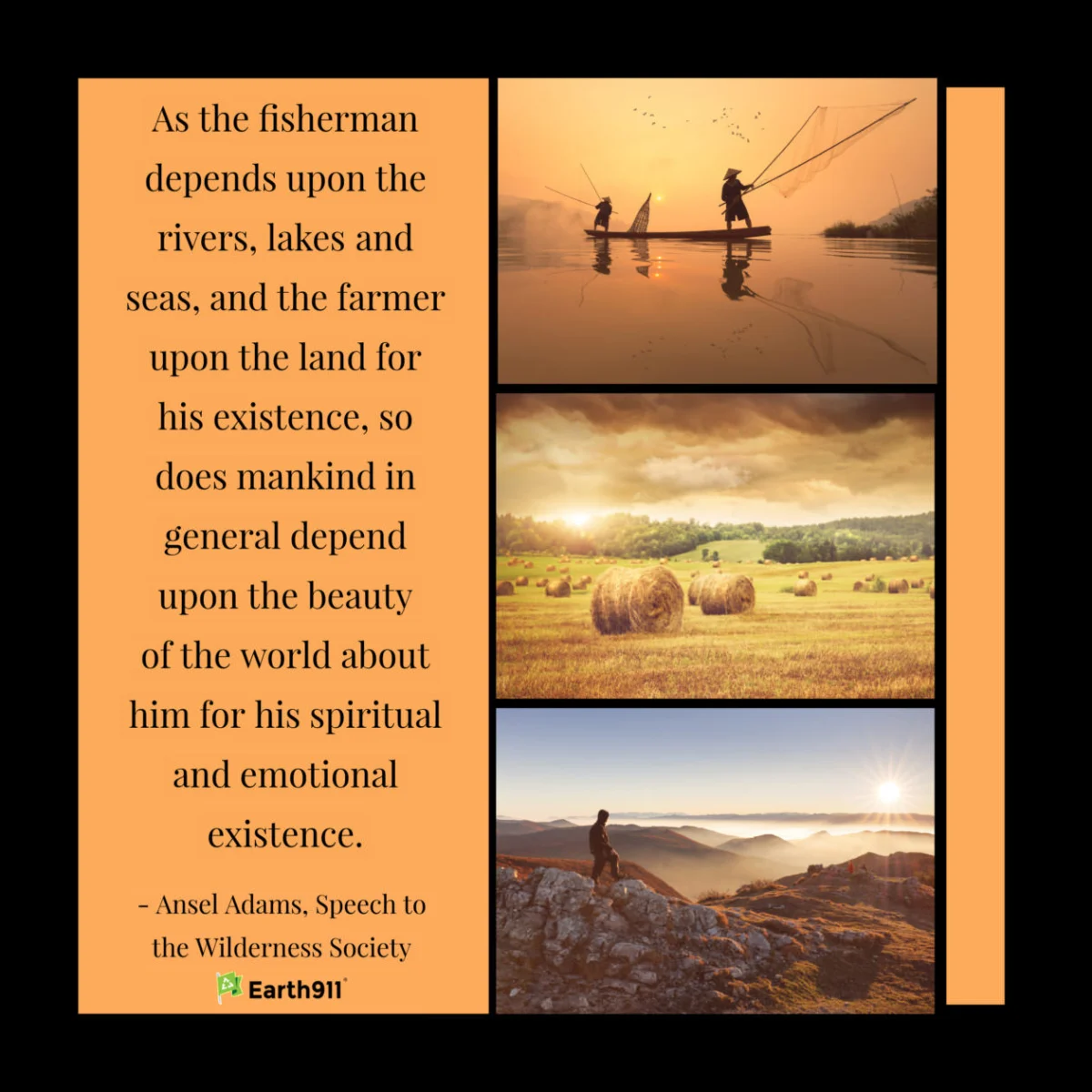
In historical addresses and correspondence directed toward organizations such as The Wilderness Society—a leading American conservation non-profit co-founded by Benton MacKaye, Robert Marshall, and other conservation pioneers in 1935—Adams frequently issued urgent warnings about the trajectory of human development. In one particularly poignant message to the society, Adams confronted his contemporaries with a sobering challenge regarding the legacy left to future generations. He famously remarked on the alarming path toward the destruction of natural beauty, questioning whether humanity intended to leave behind a world stripped of easy access to the extraordinary wonders of the natural environment. This philosophy remains a cornerstone of modern environmentalism, highlighting the intricate relationship between ecological preservation and the human spirit.
Background Context and Historical Foundations of American Conservation
The intersection of art and environmental activism in the United States has a rich history, with figures like Ansel Adams serving as crucial bridges between aesthetic appreciation and policy advocacy. During the mid-20th century, the rapid post-World War II industrial expansion, suburban growth, and infrastructure development placed unprecedented pressure on wild spaces across North America. Rivers were dammed, forests were cleared for timber, and mineral extraction projects encroached upon previously pristine wilderness areas.
Organizations like The Wilderness Society emerged precisely to combat this systematic conversion of wildlands into commercial commodities. Founded in response to the growing motorized recreation and industrial encroachment into federal lands, early conservationists recognized that once an ecosystem is fragmented or destroyed, its intrinsic value is permanently lost. Adams joined the governing council of The Wilderness Society in 1934 and remained an active, influential board member for decades. His photographs were not merely artistic expressions; they served as powerful political instruments. When policymakers in Washington, D.C., debated the fate of national parks and monuments, Adams’ prints were frequently deployed to demonstrate precisely what was at stake, swaying public opinion and legislative votes in favor of conservation.

Chronology of Ansel Adams and The Wilderness Society Partnership
The alliance between Ansel Adams and the broader American conservation movement evolved across several pivotal decades, shaping national environmental policy and public awareness:
- 1902: Ansel Adams is born in San Francisco, California, developing an early, formative appreciation for the natural landscapes of the American West during family visits to Yosemite National Park.
- 1916: Adams receives his first camera, a Kodak Brownie, during a fateful family trip to Yosemite, sparking a lifelong dedication to photography and environmental documentation.
- 1934: Adams meets conservationist and Sierra Club leader Francis Farquhar and is elected to the board of directors of the Sierra Club, beginning his formal involvement in environmental advocacy. That same year, he connects with the newly forming leadership of The Wilderness Society.
- 1935: The Wilderness Society is officially incorporated, with Adams aligning closely with its mission to secure the preservation of American wilderness through advocacy, education, and strategic lobbying.
- 1938: Adams publishes his influential book Sierra Nevada: The John Muir Trail, which is utilized heavily by lawmakers to lobby for the establishment of Kings Canyon as a national park.
- 1940s–1950s: Adams utilizes his photography to support the creation of new national monuments and parks, lobbying presidents and congressional leaders while continuously reminding organizations like The Wilderness Society of the psychological and inspirational perils of environmental degradation.
- 1980: President Jimmy Carter awards Ansel Adams the Presidential Medal of Freedom, the nation’s highest civilian honor, recognizing his lifelong contributions to photography and environmental protection.
- 1984: Ansel Adams passes away at the age of 82, leaving behind an indelible archive of photographic work and an enduring blueprint for marrying artistic vision with ecological stewardship.
Quantitative Perspectives: Ecosystem Services and the Economic Value of Nature
While Adams focused heavily on the aesthetic and inspirational dimensions of the wilderness, contemporary environmental science and economics have formalized these concepts into what researchers call "ecosystem services." These are the multifaceted benefits that the natural environment provides to human societies, categorized broadly into provisioning services (such as food, fresh water, and fuel), regulating services (such as climate regulation, flood control, and water purification), supporting services (such as nutrient cycling and soil formation), and cultural services (such as recreation, spiritual enrichment, and aesthetic inspiration).
According to comprehensive reports compiled by international bodies like the Intergovernmental Science-Policy Platform on Biodiversity and Ecosystem Services (IPBES), human activities have significantly altered approximately 75 percent of the terrestrial environment and roughly 66 percent of the marine environment. Furthermore, the global economic value of ecosystem services has been estimated by researchers to be tens of trillions of dollars annually—far surpassing global Gross Domestic Product (GDP).
| Ecosystem Service Category | Description | Direct Human Benefit |
|---|---|---|
| Provisioning Services | Material outputs from ecosystems | Food production, raw materials, fresh drinking water, and medicinal resources. |
| Regulating Services | Ecosystem control of natural processes | Carbon sequestration, climate stabilization, pollination, and natural hazard mitigation. |
| Supporting Services | Fundamental ecological functions | Soil formation, primary production, and foundational nutrient cycling. |
| Cultural/Inspirational | Non-material enrichment | Recreational opportunities, mental health benefits, artistic inspiration, and spiritual connection. |
Data from environmental psychology studies increasingly support Adams’ intuitive assertions regarding human reliance on nature for psychological well-being. Research published in peer-reviewed journals such as the International Journal of Environmental Research and Public Health indicates that regular exposure to natural landscapes significantly reduces cortisol levels, lowers blood pressure, mitigates symptoms of anxiety and depression, and enhances cognitive function. When Adams warned of a world lacking access to the "extraordinary wonder of nature," he anticipated what modern medical and psychological data now confirm: disconnection from the natural world carries profound costs to human health.
Official Responses and Perspectives from Modern Conservationists
In contemporary discussions, modern environmental organizations, public land managers, and cultural institutions continue to echo the warnings and philosophies articulated by Ansel Adams decades ago. Representatives from organizations dedicated to public land stewardship emphasize that the threats identified by Adams during the mid-20th century have only scaled in complexity and urgency amid contemporary challenges such as climate change, habitat fragmentation, and rapid urban sprawl.

A spokesperson for prominent wilderness advocacy groups noted that Adams’ legacy serves as an essential reminder that conservation is not merely a technical or economic challenge, but a deeply moral imperative. "When Ansel Adams photographed the rugged peaks of the American West, he was not just recording topography; he was recording our cultural soul," said a representative from a leading national conservation alliance. "His warnings to organizations like The Wilderness Society challenge every generation to evaluate what kind of world we are constructing. If we pave over every wild space, we deny future generations the spark of wonder that drives human creativity, empathy, and innovation."
Similarly, public land policy analysts point out that legislative protections for wilderness areas—such as the Wilderness Act of 1964, which established the National Wilderness Preservation System in the United States—were heavily influenced by the cultural momentum generated by artists and photographers. These policies codified the idea that certain landscapes should remain unblemished by permanent roads or mechanical intervention, ensuring that future citizens could experience the same untouched majesty that inspired historical environmental leaders.
Broader Implications and Long-Term Environmental Analysis
The ongoing relevance of Ansel Adams’ philosophy underscores a critical juncture in global environmental policy. As nations grapple with ambitious global biodiversity targets—such as the international goal to protect 30 percent of the planet’s land and ocean areas by 2030 (frequently referred to as the "30×30" initiative)—policymakers are increasingly forced to balance industrial development with ecological preservation.
The implications of failing to protect these spaces extend far beyond the loss of individual species or scenic views. From a macroeconomic perspective, the degradation of natural ecosystems accelerates climate destabilization, diminishes freshwater availability, and undermines global food security. From a sociopolitical standpoint, the shrinking access to natural wonder exacerbates disparities in environmental justice, as low-income communities and marginalized populations frequently bear the brunt of industrial pollution while having the least access to green spaces and pristine wilderness areas.
Adams’ challenge to leave behind a world rich in natural wonder remains a powerful benchmark for evaluating modern environmental stewardship. As anthropogenic pressures continue to test the resilience of global ecosystems, the integration of ecological science with cultural appreciation—pioneered by figures like Adams and championed by organizations like The Wilderness Society—remains vital. The preservation of nature is thus revealed not as a peripheral luxury, but as an indispensable prerequisite for the flourishing of human civilization, creativity, and well-being for generations to come.