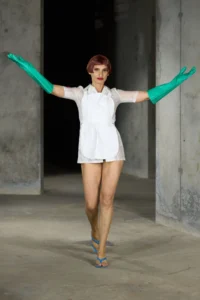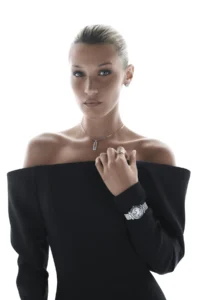
For a designer whose career has long been defined by high-octane runway presentations, bustling backstage preparations, and the relentless speed of the global fashion calendar, 2026 has marked a profound turning point in creative introspection. Jason Wu, a stalwart of New York Fashion Week and a favorite of global tastemakers, spent the greater part of the year operating far beyond the traditional confines of the seasonal fashion cycle. Rather than staging a conventional, high-capacity runway show for his Spring collection, Wu opted for an intimate, one-on-one presentation format titled Salon. This strategic pivot allowed the designer to step away from the theatrical rush of mass productions and refocus on the foundational tenets of his craft: exquisite textiles, structural precision, and a deeply personal dialogue between fashion and the broader arts.
The decision to scale down the presentation format mirrors a broader professional expansion that has occupied Wu throughout the year. His multidisciplinary endeavors in 2026 have spanned museum-curated exhibitions, historical preservation, and cross-disciplinary artistic collaborations. By the time editors, private clients, and select retailers gathered to view the Spring collection in a quiet, personalized setting, Wu was coming off a rigorous schedule that cemented his status not merely as a commercial dressmaker, but as a significant cultural contributor.
A Year of Cultural Curation and Artistic Intersect
To understand the understated elegance and refined focus of Wu’s Spring collection, one must examine the extraordinary timeline of projects the designer undertook leading up to its debut. The year began with Wu stepping into the historical and cultural arena by creating custom mannequins and lending his curatorial expertise to the landmark exhibition Fashioning Chinese Women: Empire to Modernity at the Los Angeles County Museum of Art (LACMA). The critically acclaimed exhibition explored the evolution of female identity, empowerment, and sartorial expression in China across transformative historical epochs, an exercise that deeply influenced Wu’s understanding of garment construction as a vehicle for narrative.
Following his work at LACMA, Wu crossed international borders in August to launch Common Threads, a groundbreaking museum exhibition in Taiwan. In this unique conceptual space, original works by American abstract master Robert Rauschenberg were placed in direct dialogue with the contemporary Wu dresses they inspired. The exhibition highlighted Wu’s ongoing fascination with texture, collage, and the intersection of fine art and wearable design. By examining the physical and conceptual parallels between Rauschenberg’s pioneering use of mixed media and his own textile manipulations, Wu cultivated a renewed appreciation for material integrity.
Reflecting on this whirlwind period of artistic exploration and physical travel, Wu acknowledged the toll and the necessity of the creative pause. “I love the runway, there’s no energy like it, but we need to recharge,” the designer noted during the Salon presentations. This need for renewal directly informed the aesthetic parameters of the collection. Eschewing the noise and fleeting spectacle of a stadium-sized audience, Wu chose an appointment-based, up-close format designed to highlight the tactile and intimate qualities of his garments. “It’s about building a really chic wardrobe with really beautiful fabrics,” he explained, signaling a deliberate return to tactile luxury over ephemeral trends.
Textile Innovation and Structural Deconstruction
At the heart of the Spring collection was an uncompromising commitment to fabric development and surface interest. The standout offering of the presentation was a luscious quilted jacquard, engineered with botanical motifs that appeared to float effortlessly across a surface reminiscent of liquid metal. The fabric captured light dynamically, offering a modern, futuristic sheen while maintaining a classical silhouette.
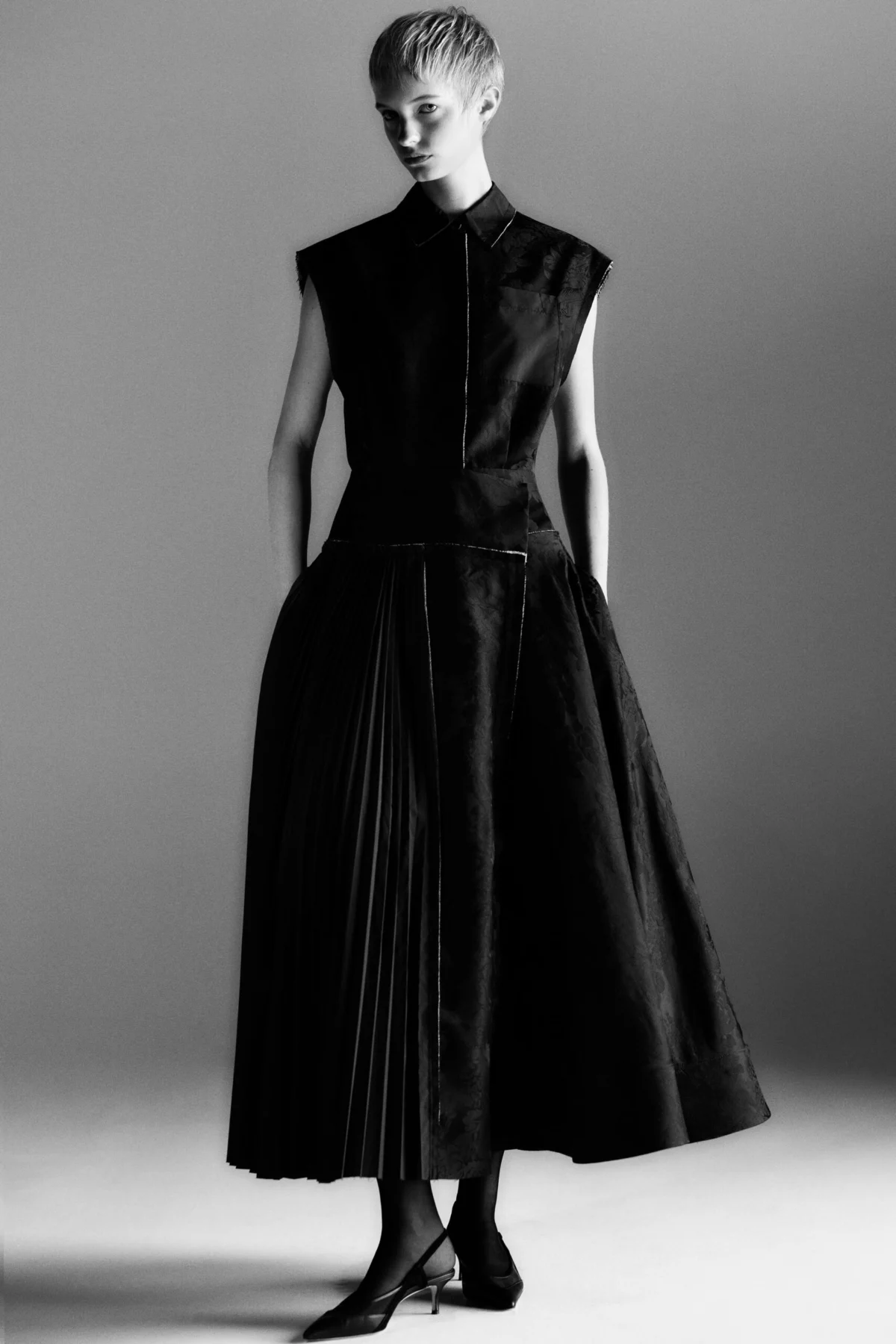
True to Wu’s design ethos, the collection was primarily anchored in a sophisticated dichotomy of pink and black. The black options proved particularly potent, highlighted by a masterfully tailored corset cut and paired with sharply structured trousers that commanded attention through their precision rather than excessive ornamentation. Wu has long excelled at balancing rigorous structure with fluid grace, and this collection showcased his ongoing fondness for deliberate deconstruction.
Throughout the lineup, jacquards featured raw, frayed edges that added a raw, tactile edge to otherwise polished ensembles. In a particularly striking display of technical craftsmanship, delicate Chantilly lace was meticulously sewn directly into the side seams of a strappy slip dress. Suspended seemingly in mid-air, the lace created an architectural outline that traced the wearer’s silhouette, blurring the line between garment and negative space.
For the eveningwear segments, Wu leaned into heritage techniques, utilizing elaborate, labor-intensive embroideries crafted by master artisans in India. While the execution required cutting-edge technical precision, the resulting silhouettes remained firmly rooted in classic eveningwear codes. This blending of traditional handiwork with modern, streamlined shapes underscored the collection’s overarching narrative of timeless elegance.
Redefining Femininity: A Juicier, Less Ladylike Approach
While Wu has historically been celebrated for his immaculate, impeccably refined, and strictly ladylike aesthetic—qualities that earned him early global recognition and a loyal following among political figures and Hollywood royalty alike—the Spring collection introduced a subtle, refreshing edge. Infused with a slightly less conventional spirit, the lineup featured pieces that pushed the boundaries of his signature femininity into more playful, contemporary territory.
Among the unexpected highlights was a snug, shrunken cardigan trimmed with delicate lace, purposefully proportioned to expose the midriff. The piece offered a youthful, relaxed contrast to the structured tailoring that dominated the rest of the collection. Similarly, a sheer tulle blouse featuring a dramatic, ruff-like Victorian collar introduced an element of theatrical romanticism, while remaining entirely wearable for the modern wardrobe.
Other notable looks featured layered organza, a notoriously difficult fabric handled here with characteristic dexterity. In one instance, organza was used to encase a printed textile underneath, creating a muted, dreamlike depth; in another, it was worn completely sheer over vibrant, mango-toned satin lingerie.
“I just wanted the collection to feel really feminine and a little bit juicy,” Wu remarked, summarizing the sensory and emotional intent behind the garments. By infusing classic silhouettes with unexpected textures, exposed midriffs, and rich, saturated color accents, Wu successfully expanded his vocabulary of femininity, ensuring it remained relevant to a younger, more adventurous demographic while honoring his core clientele.
Broader Implications and Industry Shift
Wu’s strategic pivot away from the traditional runway format toward the intimate Salon presentation reflects a wider recalibration currently taking place within the global fashion industry. As major luxury houses and independent designers alike grapple with the escalating financial costs, environmental footprints, and sensory fatigue associated with traditional fashion week spectacles, a growing number of creatives are reevaluating how collections are communicated to the public.
By opting for a one-on-one presentation model, Wu not only mitigated the logistical burdens of a large-scale runway show but also elevated the consumer experience. In an era where digital saturation often devalues physical craftsmanship, allowing clients, stylists, and editors to inspect raw edges, embroidered details, and liquid-metal jacquards at close range reinforces the intrinsic value of luxury goods. This intimate approach fosters deeper brand loyalty and encourages a more thoughtful, considered approach to fashion consumption.
Furthermore, Wu’s busy 2026 trajectory—spanning museum curation in Los Angeles, contemporary art dialogues in Taiwan, and private salon presentations in New York—demonstrates the viability of a hybrid creative career. Modern designers are increasingly expected to function as cultural arbiters, bridging the gap between historical preservation, fine art, and commercial apparel. Through his multi-pronged initiatives, Wu has positioned his brand at the intersection of these disciplines, ensuring that his creative output resonates far beyond the confines of seasonal trends.
As the industry looks toward the remainder of the decade, Jason Wu’s Spring collection stands as a testament to the power of artistic recharge and material mastery. By stepping back from the frantic pace of the traditional fashion apparatus, Wu has not retreated; rather, he has sharpened his focus, delivering a collection that is as intellectually grounded as it is visually captivating. In doing so, he has offered a compelling blueprint for how contemporary designers can successfully navigate the demands of modern luxury while remaining true to the foundational artistry of their craft.