The quest to replace traditional lithium-ion batteries with all-solid-state alternatives has long been viewed as the "holy grail" of the electric vehicle (EV) revolution. For years, the industry has grappled with the inherent limitations of liquid electrolytes, which are flammable and energy-constrained. Massachusetts-based startup Factorial Energy, which successfully went public on the Nasdaq in June, is now pivoting toward a collaborative, supply-chain-focused strategy to overcome the technical and manufacturing barriers that have kept this technology locked in laboratory settings for decades.
This week, the company announced a significant joint development agreement with Japanese firm Mitsui Kinzoku. The partnership centers on the integration of Mitsui’s advanced solid electrolytes into Factorial’s proprietary battery architecture. This deal is merely the latest in a robust series of partnerships that the company has cultivated, signaling a departure from the "go-it-alone" mentality that often characterizes early-stage energy hardware firms.
The Shift from Vertical Integration to Strategic Coalitions
For nearly a decade, the narrative surrounding battery development was defined by intense vertical integration. Many startups attempted to develop every component of the battery—from the anode and cathode materials to the electrolyte and final cell housing—in-house. Factorial Energy CEO Siyu Huang argues that this approach is no longer viable given the sheer complexity of material science and mass-market manufacturing requirements.
In an exclusive interview, Huang emphasized that the current industry landscape requires a specialized ecosystem. "We’re driving a very strong coalition among all of the supply chain," Huang stated. "There are still significant technical challenges to unlock. It’s very important for us to go beyond the existing mindset and framework for lithium-ion and focus on a technology that goes beyond."
By assembling a network of companies that specialize in specific components—such as Posco Future M for anodes and cathodes, and Phil Energy for manufacturing tooling—Factorial is essentially crowdsourcing the expertise necessary to solve the "finish line" problems that have hampered competitors.
Understanding the Technical Divide
The fundamental difference between the batteries powering today’s EVs and the next-generation cells being developed by companies like Factorial lies in the electrolyte. Conventional lithium-ion batteries utilize a liquid chemical to shuttle ions between the anode and the cathode. While effective, these liquids are inherently flammable if the cell is punctured or overheats. Furthermore, they impose limits on how quickly a battery can charge and how much energy it can store within a given volume.
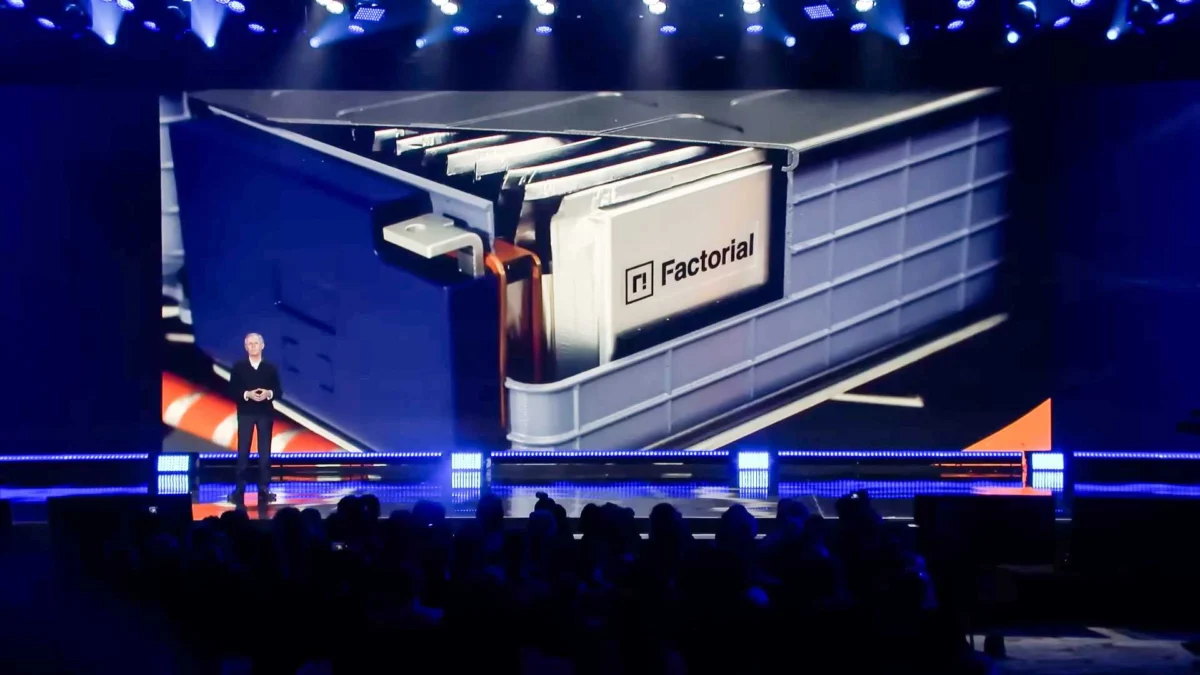
All-solid-state batteries replace this liquid with a solid material. Theoretically, this shift allows for the use of high-capacity lithium-metal anodes, which significantly boost energy density. While today’s top-tier lithium-ion cells hover around 250–300 watt-hours per kilogram (Wh/kg), solid-state designs like Factorial’s Solstice cell target upwards of 450 Wh/kg. This increase in energy density could allow automakers to either shrink battery packs to reduce vehicle weight or maintain the current size while offering vastly improved range—potentially exceeding 600 to 700 miles per charge.
Chronology of Development and Scaling
Factorial’s path to commercialization has been methodical, marked by a series of critical milestones:
- Foundation and Early Development: Founded with a focus on electrolyte material science, the company initially gained traction with its FEST (Factorial Electrolyte System Technology), a semi-solid-state solution that utilizes a gel-like electrolyte.
- The Pilot Phase: Factorial established early credibility by demonstrating its technology in laboratory and small-scale automotive testing environments.
- OEM Integration: The company secured high-profile partnerships with automotive giants, including Volkswagen Group’s PowerCo and the Hyundai Motor Group, to test the integration of these batteries into future vehicle platforms.
- Market Entry: In June 2024, Factorial went public on the Nasdaq, providing the capital necessary to transition from prototyping to pilot-line production.
- The Coalition Era: Following the IPO, the company began formalizing its supply chain through agreements with firms like SK On, Posco Future M, and most recently, Mitsui Kinzoku.
Why the Mitsui Partnership Matters
The collaboration with Mitsui Kinzoku is specifically aimed at the Solstice all-solid-state battery. According to Factorial, the partnership provides access to foundational intellectual property regarding solid electrolytes that would be prohibitively expensive and time-consuming to develop from scratch.
"Having access to this material is very important to enhance the performance of this battery," Huang explained. "That’s why we’re able to get really strong performance and high-temperature thermal stability, something we couldn’t get without them." Thermal stability is a critical metric; as EVs become more capable of ultra-fast charging, the heat generated during the ion exchange process can degrade traditional batteries. A stable solid electrolyte mitigates this, potentially extending the lifespan of the battery pack significantly.

The Competitive Landscape
Factorial is not alone in this race. The sector is currently crowded with well-funded competitors, each betting on different material compositions and manufacturing techniques.
In California, QuantumScape has been a long-time industry leader in solid-state development, focusing on its own proprietary ceramic separator technology. In Colorado, Solid Power is working closely with partners like BMW and Ford to implement its sulfide-based solid electrolyte technology. Meanwhile, global giants such as Toyota, CATL, and BYD are pouring billions of dollars into their own R&D pipelines.
The central question facing the industry is whether the "coalition model" preferred by Factorial will prove more efficient than the "vertically integrated model" favored by some of its competitors. Proponents of the coalition model argue that by using existing industrial giants for manufacturing and material supply, a startup can reach economies of scale much faster than a firm that must build its own factories and supply chains from the ground up.
Commercialization Roadmap and Industry Impact
While no production vehicle is currently on the road with a full solid-state battery, the transition to commercialization is already underway. Factorial’s semi-solid-state FEST technology is currently being tested in prototype vehicles from major manufacturers, including the Mercedes-Benz EQS and the Dodge Charger Daytona.
The company has also reached beyond the automotive sector, securing its first commercial aerospace order for drone batteries. This diversification is a strategic hedge; aerospace applications require high energy density and safety, and they often command higher price points than the mass-market EV sector, allowing for smaller-scale production runs while the technology matures.
The automotive rollout is slated for the latter half of the decade. Karma Automotive has indicated it intends to be among the first to bring a production vehicle with semi-solid-state battery technology to market by 2028. For larger OEMs, the timeline remains dependent on rigorous safety validation and the ability to manufacture these cells at a cost parity with traditional lithium-ion batteries.
Economic and Supply Chain Implications
The movement toward these advanced batteries also carries geopolitical weight. Much of the current EV supply chain, particularly for refined lithium and battery components, is dominated by Chinese firms. By building a network of partners that includes American, Korean, and Japanese firms, Factorial is effectively crafting a Western-allied supply chain.
This is particularly important for automakers in North America and Europe who are seeking to comply with regional content requirements for government tax credits and incentives. "We’re very well settled for both North American and European volumes," Huang noted, suggesting that the company’s supply chain strategy is designed with trade compliance and domestic production mandates in mind.
Conclusion
As the automotive industry faces the dual pressure of increasing EV adoption and reducing costs, the success of companies like Factorial will depend on their ability to bridge the gap between laboratory innovation and mass-market production. By shifting the burden of innovation across an entire coalition of industry experts, Factorial is betting that the path to the next generation of energy storage is not through solitary brilliance, but through orchestrated, cross-industry integration.
Whether the solid-state revolution arrives in 2028 or later, the blueprint Factorial is building—a web of strategic partnerships, shared intellectual property, and industrial-scale manufacturing—may well become the standard operating procedure for the next wave of energy technology companies. The challenge remains the same as it has been for a decade: proving that these cells can withstand the rigors of the road, the fluctuations of temperature, and the demands of cost-effective, high-volume manufacturing. If the current momentum holds, the industry may finally be approaching the finish line.