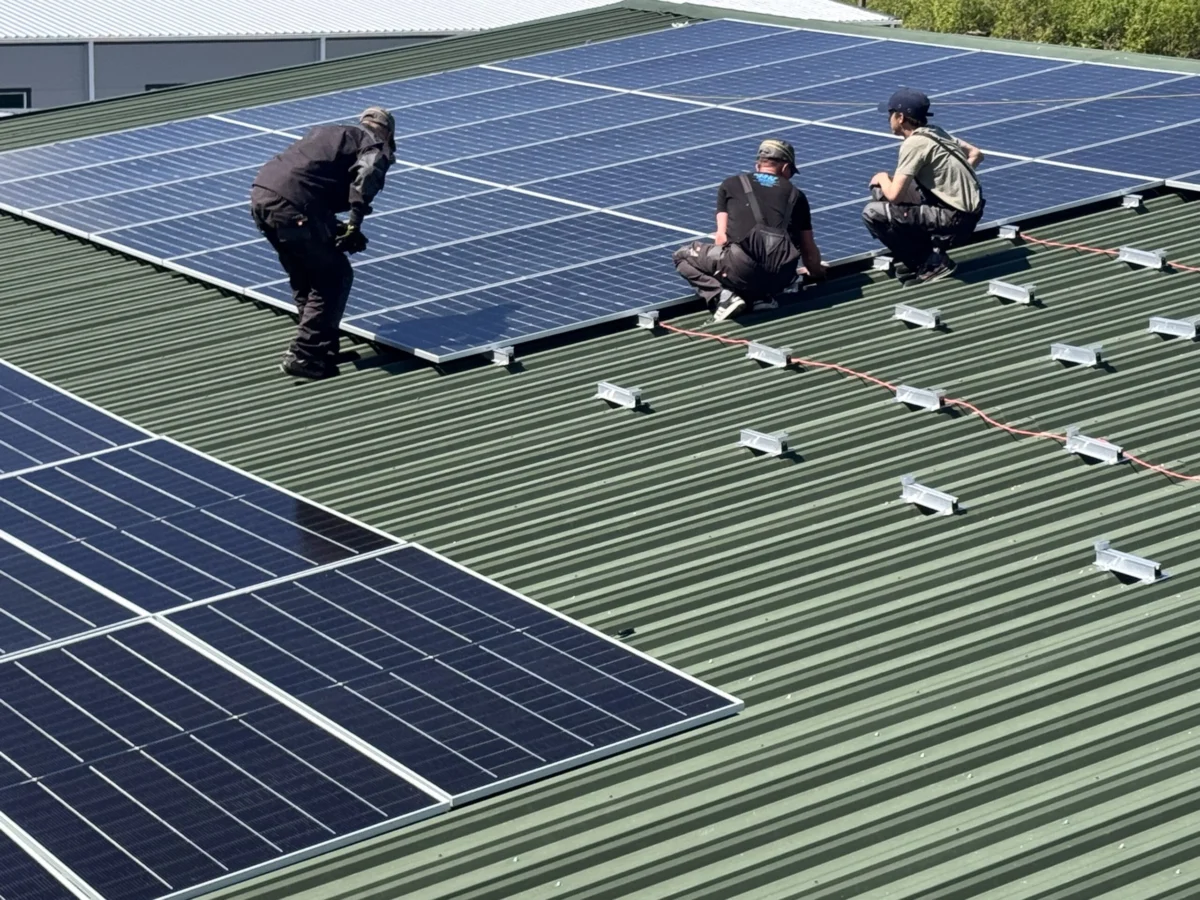
The sound of air raid sirens has become a somber metronome for daily life across Ukraine, but high above the central town of Bila Tserkva, a quieter transformation is underway. On a crisp spring morning, a team of ten technicians stood atop the flat roof of a door manufacturing facility, methodically securing rows of photovoltaic panels against the sky. For the factory’s owner, Yaroslav—who, like many citizens interviewed for this report, requested the omission of his surname and specific operational details for fear of targeted military reprisals—this rooftop installation represents far more than a corporate sustainability initiative. It is an urgent matter of economic survival.
Since the full-scale Russian invasion commenced in February 2022, Bila Tserkva has absorbed repeated aerial bombardments, triggering crippling, systemic power outages. For a manufacturing plant reliant on continuous electricity to power heavy machinery, maintaining production lines has grown increasingly precarious. The crisis reached acute levels during the bitter winter months, when severely constrained power generation forced nationwide rolling blackouts. Under these extreme conditions, factory employees occasionally resorted to burning scrap wood in makeshift fireplaces just to keep the primary warehouse above freezing.
Although the facility maintains backup diesel generators, their operational costs are prohibitively high for long-term use. Exhausted by their vulnerability to a centralized energy grid targeted relentlessly by Russian cruise missiles and loitering munitions, Yaroslav made the definitive choice earlier this year to pivot toward decentralized solar power.
"Switching to solar energy will enable us to further expand our capacity and be a bit more independent from the general grid," Yaroslav said, surveying the growing array of panels. "It will be cheaper, more economical, and more ecological."
Yaroslav’s pragmatic pivot reflects a profound structural transformation sweeping across Ukraine. Facing the systematic destruction of its traditional power infrastructure, the country is quietly executing one of the fastest wartime transitions to renewable energy in modern history. Driven by necessity, ingenuity, and vital government incentives, Ukrainian businesses, residential cooperatives, and frontline communities are decentralizing the nation’s power grid, turning rooftops into resilient bastions of independent energy.
The Anatomy of a Devastated Grid
To understand the urgency driving Ukraine’s solar boom, one must examine the legacy of its pre-war energy architecture. Before the 2022 invasion, Ukraine operated a heavily centralized, capital-intensive electricity grid heavily dominated by nuclear power. More than half of the nation’s total electricity generation was supplied by four sprawling nuclear power plants. Meanwhile, domestic coal and natural gas accounted for roughly a quarter of the energy mix, providing foundational baseload power.
Renewable energy sources constituted a relatively modest fraction of the national portfolio, though the sector had experienced rapid expansion in the years leading up to the war. This initial surge was largely propelled by the government’s "green tariff" program, established to incentivize private investment in solar and wind generation by guaranteeing above-market rates for electricity fed back into the national grid. Ukrainian legislative frameworks have protected these tariffs through 2030, framing the policy as a crucial stepping stone toward full integration into the European Union’s broader energy market.
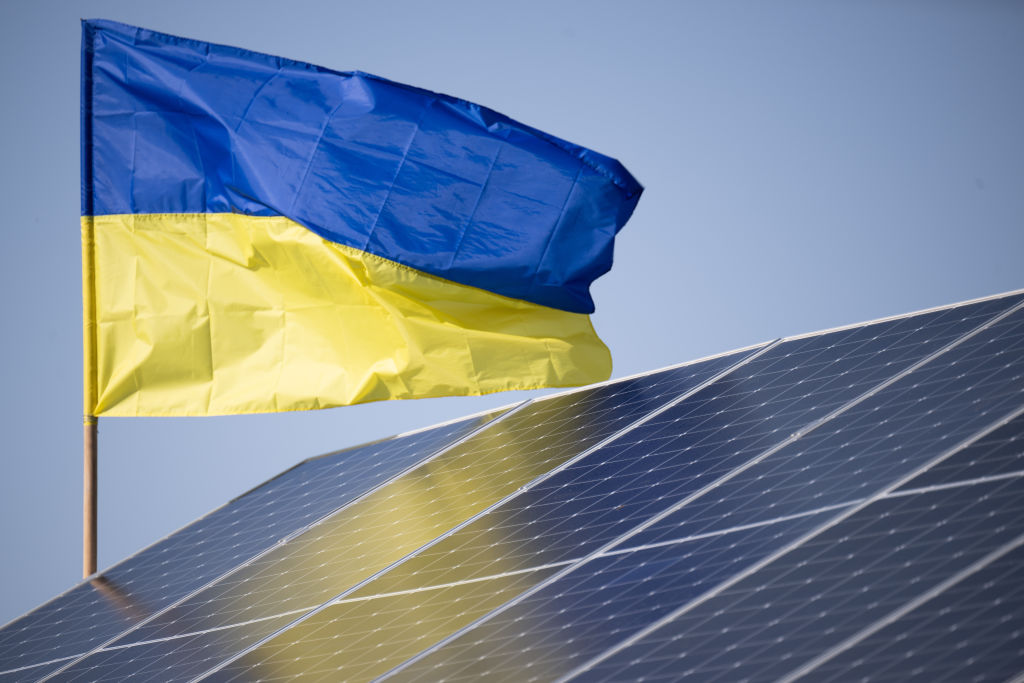
By the time Russian tanks rolled across the border in early 2022, these fiscal incentives had successfully spurred the installation of approximately 8 gigawatts of solar capacity nationwide. However, the onset of hostilities fundamentally shattered this centralized model.
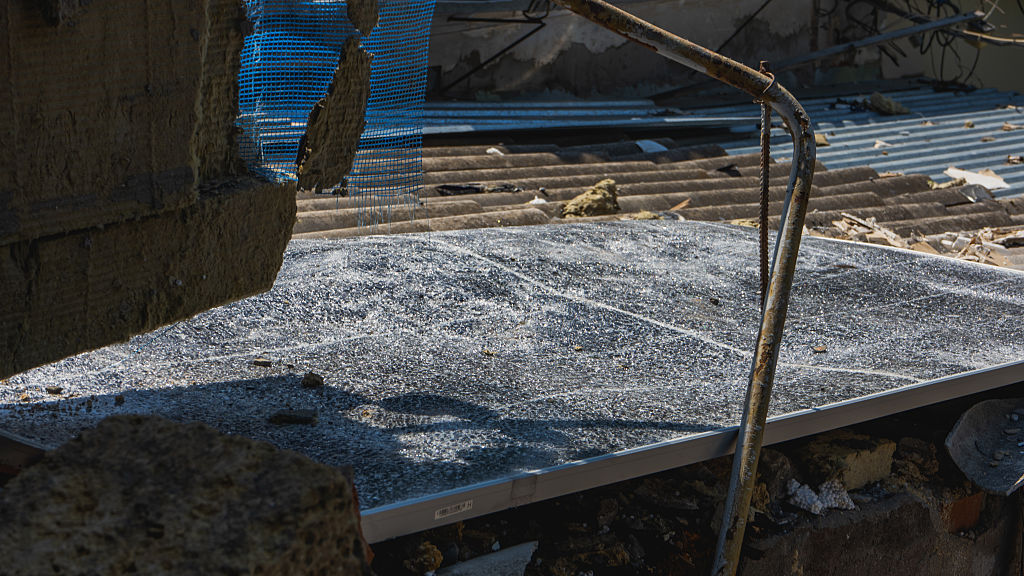
Over the subsequent years, precision missile strikes and kamikaze drone attacks systematically targeted thermal power plants, regional electrical substations, and high-voltage transmission lines. The human and infrastructural toll has been staggering. Approximately 30 percent of Ukraine’s pre-war solar capacity, alongside the vast majority of its 36 commercial wind farms located primarily in the southern steppes, has been destroyed, captured, or left completely unaccounted for.
Compounding the crisis, the Zaporizhzhia Nuclear Power Plant—the largest nuclear power station in Europe, situated in southeastern Ukraine—has remained forcibly shut down and under illegal Russian military occupation since the earliest days of the invasion. For a population still living under the generational shadow of the 1986 Chernobyl disaster, the militarization of nuclear facilities has heightened acute anxieties regarding the catastrophic potential of another nuclear accident.
The cumulative impact of these infrastructure attacks has triggered protracted, debilitating electricity deficits. In major urban centers such as Kyiv, authorities have been forced to implement rigid electricity rationing schedules, leaving neighborhoods without power for hours at a time. The National Bank of Ukraine noted in its economic outlook that persistent Russian strikes on energy facilities have significantly worsened national electricity deficits, forcing policymakers to revise downward assumptions regarding generation capacity and economic recovery.
Government Backing and the Rise of Distributed Generation
Recognizing the fatal vulnerabilities inherent in large, centralized power stations, the Ukrainian government, private utility providers, and international financial institutions have aggressively accelerated a pivot toward distributed generation. This strategy prioritizes smaller, modular, and geographically dispersed energy sources—predominantly commercial and residential rooftop solar paired with battery storage systems—that are fundamentally harder for adversaries to knock offline.
This shift is significantly propelled by targeted financial instruments designed to ease the capital burden on businesses and citizens. Earlier this year, Yaroslav partnered with Yasno, a prominent private Ukrainian electricity and gas supplier, to engineer and deploy the solar array on his warehouse roof. Yasno clients typically finance their installations by leveraging supportive government initiatives, most notably the "Affordable Loans 5-7-9" program.
Designed to stimulate economic resilience during wartime, the program offers preferential loans specifically earmarked for the purchase of renewable energy equipment, including solar panels and energy storage banks. Depending on the corporate classification and size of the enterprise, interest rates are heavily subsidized to 5, 7, or 9 percent, with these specialized commercial loans covering up to 80 percent of total installation and procurement costs.
Volodymyr Hershtun, a service maintenance manager at Yasno who spearheaded the Bila Tserkva project, emphasized that the rapid proliferation of renewables is inextricably linked to national security and operational resilience.
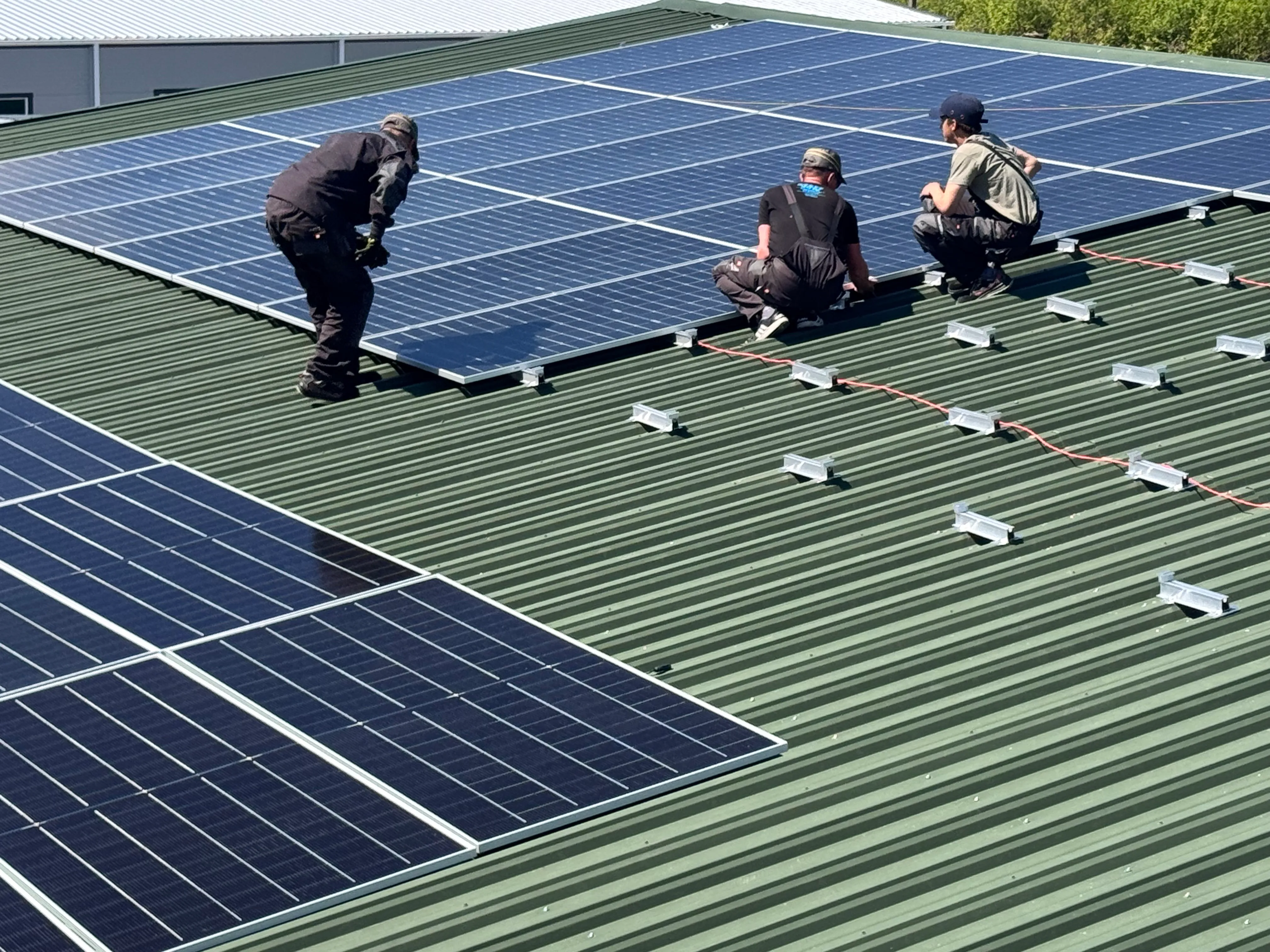
"The enemy is trying to destroy energy infrastructure, and we are building what is very easy to restore," Hershtun said. "And those same systems can store electric energy."
Yasno’s operational trajectory underscores the speed of this transition. After pausing commercial installation projects during the chaotic first two years of the full-scale war, the company resumed operations in the summer of 2024. Since then, Yasno has installed solar panels across 117 distinct industrial and commercial sites, accumulating a combined generation capacity of 23 megawatts.
Data compiled by the Solar Energy Association of Ukraine illustrates the staggering momentum of this sector. In 2025 alone, an estimated 1.5 gigawatts of new solar capacity was constructed nationwide—nearly double the volume added in the previous year. Industry analysts project that installations throughout 2026 will match or even exceed this blistering pace.
"Renewables have become the very obvious choice for Ukraine when the full-scale invasion started and when Russia started deliberately and heavily attacking the energy infrastructure, especially the centralized generation facilities," explained Anastasia Vereshchynska, director of the European-Ukrainian Energy Agency, a nonprofit organization dedicated to advancing energy efficiency and renewable resource integration in Ukraine.
Weathering the Brutal Wartime Winters
The strategic imperative of decentralized renewable energy becomes starkly apparent as winter approaches. Last year, as Siberian cold fronts drove ambient temperatures down to a brutal -1 degree Fahrenheit, relentless Russian bombardments decimated remaining heating and electrical nodes. The capital city of Kyiv was left with barely half of the electricity supply required to sustain basic municipal functions, prompting President Volodymyr Zelenskyy to declare a formal state of emergency.
For ordinary citizens, the impacts of these thermal and electrical blackouts were deeply personal. Volodymyr, a taxi driver residing in Kyiv who requested his surname be withheld for security reasons, recalled the harrowing conditions of the previous winter. When missile strikes knocked out power to his multi-story apartment building, heating and running hot water ceased entirely.
"During last winter’s attacks, our apartment building lost power, leaving my family without heating and hot water," Volodymyr said. Fortunately, his flat benefited from a southern exposure, allowing natural sunlight to provide modest daytime warmth.
Seeking to prevent a recurrence of these life-threatening outages, the management company overseeing Volodymyr’s residential complex recently voted to install rooftop solar arrays integrated with backup battery systems. Funded in part through the government’s 5-7-9 financial incentive framework, the system is designed to keep building boilers operational and maintain elevator service during grid failures.
"It’s a cool thing that the government covers at least part of the cost," Volodymyr remarked. "In emergency cases, during power outages, you could turn to the solar panels. There is no harm to the planet. It’s a good thing."
Frontline Realities and Grassroots Resilience
While urban centers utilize commercial loans and municipal partnerships to transition their infrastructure, the need for decentralized renewable energy is even more acute in communities situated directly along the active war zones.
As Russian forces pressure frontline positions, nearby towns and villages are frequently severed from the national grid entirely. Artillery duels and drone patrols regularly shear through power lines, while the constant threat of targeted shelling makes traditional utility repair crews unable or unwilling to enter hyper-dangerous zones. In numerous remote villages, repairing downed high-voltage lines has become an impossible luxury, stranding elderly residents in total darkness without electricity, telecommunications, or access to outside emergency services.
In these high-risk areas, traditional corporate utilities often cannot operate, leaving a critical vacuum filled by grassroots volunteer networks and nongovernmental organizations. Denny Ugorchuk, founder of Kosmo Tabir, an NGO specializing in deploying off-grid solar and battery installations to frontline Ukrainian settlements, noted that major projects rely heavily on Western philanthropic partnerships, while localized community initiatives are sustained by domestic grassroots donations.
Ugorchuk recounted instances where small-scale residential solar systems transformed isolated lives. In one heavily damaged village near the front, a photovoltaic kit installed at a private home restored sufficient electricity to allow a 50-year-old resident to reconnect with the internet, enabling her to continue her university education despite the ongoing shelling.
For communities under siege, Ugorchuk argues, renewable energy transcends traditional environmentalism. In wartime Ukraine, he says, solar panels represent a fundamental human right.
"People should have access to communicate with one another," Ugorchuk said. "You can call a doctor, the police, and it helps you feel safe."
As the conflict grinds forward into its fifth year, Ukraine’s energy landscape has undergone a permanent psychological and structural shift. What began as an emergency stopgap to survive targeted destruction has matured into a comprehensive reimagining of national power distribution. By decentralizing generation through solar arrays and storage networks, Ukrainian industry and civil society are forging a robust shield against energy weaponization—proving that even amid the devastation of war, the sun can provide a reliable foundation for recovery and independence.