The Immigration and Customs Enforcement (ICE) officer who shot a Venezuelan delivery driver in Austin, Texas, was not wearing a body-worn camera at the time of the incident, according to sources familiar with the ongoing federal investigation. The shooting, which occurred on a Sunday afternoon, has intensified local and national scrutiny regarding the tactics and accountability of federal immigration enforcement under President Trump’s heightened deportation framework.
The victim, 28-year-old Wilber Rafael Garces Perez, a Venezuelan national working locally for DoorDash, sustained a gunshot wound to the upper torso. Federal authorities have confirmed that Garces Perez was subject to an active deportation order. The agent responsible for the shooting is a relatively recent addition to ICE, having transferred to the agency last year after previously serving as a border patrol officer within U.S. Customs and Border Protection (CBP).
The absence of body camera footage has become a central point of contention, escalating tensions between local communities, federal agencies, and immigrant advocacy groups. The revelation underscores persistent gaps in the Department of Homeland Security’s (DHS) technology deployment, contradicting recent assurances from top administration officials regarding transparency and accountability measures within federal law enforcement.
Background Context and Enforcement Environment
The shooting in Austin takes place against a backdrop of intensified federal immigration enforcement nationwide. Under the administration’s aggressive crackdown on undocumented populations, ICE and CBP personnel have expanded operations into local communities, frequently collaborating with or operating independently within metropolitan areas. These high-visibility enforcement actions have routinely triggered localized protests, constitutional challenges, and friction with municipal leaders who advocate for community trust and public safety policies.
Delivery drivers, gig economy workers, and individuals going about daily routines have increasingly found themselves caught in the crosshairs of heightened sweeps. For Garces Perez, a routine DoorDash delivery shift abruptly turned critical when federal agents confronted him. The exact sequence of events leading up to the discharge of the weapon remains a subject of intense dispute between federal authorities and the victim’s legal representation, making the lack of definitive video evidence a critical hurdle for investigators seeking an objective account.
Chronology of Events and Medical Controversies
The timeline of Sunday’s shooting and its aftermath highlights a rapid succession of legal, medical, and administrative developments:
- Sunday Afternoon: The ICE officer confronts Wilber Rafael Garces Perez in Austin, Texas, while the 28-year-old is working. During the encounter, the agent discharges a firearm, striking Garces Perez in the upper torso.
- Sunday Evening: Following emergency medical treatment and hospitalization for his injuries, Garces Perez is taken directly into ICE custody. DHS officials publicly state that he is unlawfully present in the United States and subject to a final order of removal.
- Monday: Democratic Representative Joaquin Castro of Texas reports that Garces Perez has been rushed back to a hospital. The detainee complained of a loss of feeling on the left side of his body and expressed belief that the bullet remained lodged in his back. Meanwhile, attorney Kate Lincoln-Goldfinch files a formal habeas corpus petition seeking Garces Perez’s immediate release on constitutional grounds. U.S. District Court Judge Orlando Garcia intervenes, ordering an in-person hearing for September 30 and temporarily halting any potential deportation proceedings.
- Tuesday: Garces Perez is transferred back from the hospital to the ICE South Texas Detention Complex in Pearsall. His legal counsel publicizes concerns regarding his medical management and detention conditions, noting that he has been placed in isolation and restricted from communication tools.
- Wednesday and Beyond: Congressional visits are scheduled to inspect conditions, while legal battles continue to determine whether Garces Perez will remain in federal custody or be granted relief pending judicial review.
Official Statements and the Body Camera Controversy
The disclosure that the ICE officer was not equipped with a body-worn camera has brought renewed attention to federal procurement and deployment timelines. Earlier in the month, Homeland Security Secretary Markwayne Mullin addressed the media at a press conference in New York, stating that the agency was on track to outfit all ICE personnel with body cameras by the end of September.
"We’re getting close," Mullin stated at the time. "By the end of September, I’m pretty sure we will be there."
However, the absence of the technology during a critical use-of-force incident highlights the gap between departmental goals and field reality. Representatives for the Department of Homeland Security did not immediately respond to repeated inquiries regarding why the officer involved in the Austin shooting lacked the equipment. Legal experts and civil rights advocates argue that without body camera footage, independent investigations into use-of-force incidents rely heavily on conflicting testimony from law enforcement and witnesses, complicating efforts to establish transparency and public trust.
Medical Status and Conditions of Confinement
The handling of Garces Perez’s medical recovery while in federal custody has drawn sharp criticism from lawmakers and legal advocates. Following his discharge from initial medical care, his transfer to a detention facility rather than a prolonged medical observation period prompted concern from congressional leaders.
Representative Joaquin Castro highlighted the detainee’s alarming neurological symptoms, including reported paralysis-like sensations on the left side of his body and suspected residual bullet fragments. These concerns were compounded by statements from his attorney, Kate Lincoln-Goldfinch, who took to social media to criticize the quality of care provided within the detention environment.
"Today, he tells me he is receiving only Tylenol and ibuprofen for pain," Lincoln-Goldfinch wrote on X. "He remains in isolation, on a flat bed, and without the tablet he previously used to communicate."
The strict isolation protocols and limited access to communication devices have further isolated Garces Perez from his support network and legal representatives, prompting urgent judicial intervention.

Legal Interventions and Judicial Halt
Faced with the imminent threat of deportation while recovering from major trauma, Garces Perez’s defense team pursued immediate judicial relief. Lincoln-Goldfinch filed a habeas corpus petition challenging the legality of his continued detention under constitutional due process guarantees.
Acting swiftly, U.S. District Court Judge Orlando Garcia ordered Garces Perez to appear for an in-person hearing scheduled for Wednesday, September 30. Crucially, the federal judge’s order acts as an injunction, temporarily blocking ICE from executing any removal orders and ensuring that Garces Perez remains within the jurisdiction of the United States court system while his constitutional claims are evaluated.
Broader Implications and Public Fallout
The shooting in Austin and the subsequent controversies surrounding body camera accountability, medical care, and detention conditions carry significant implications for federal immigration enforcement policy.
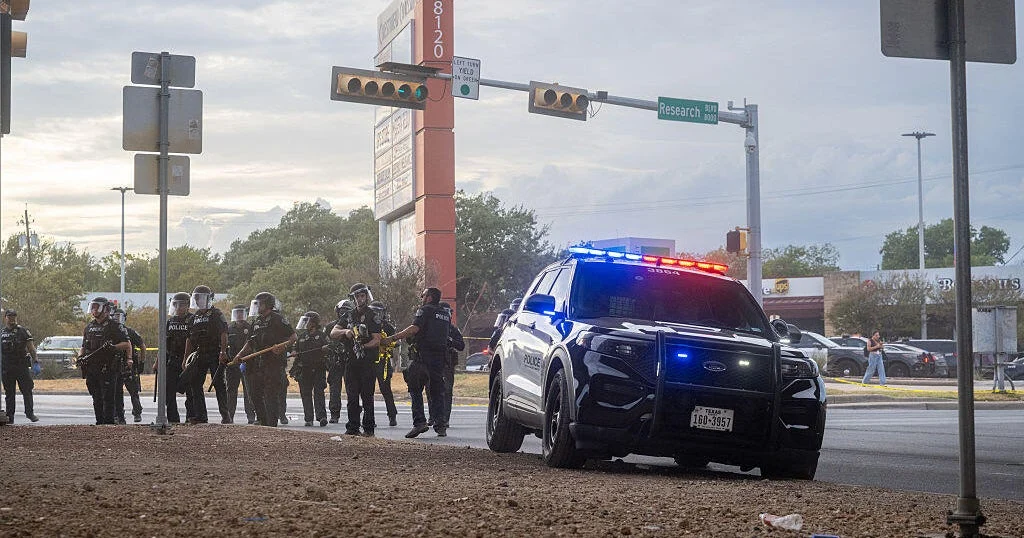
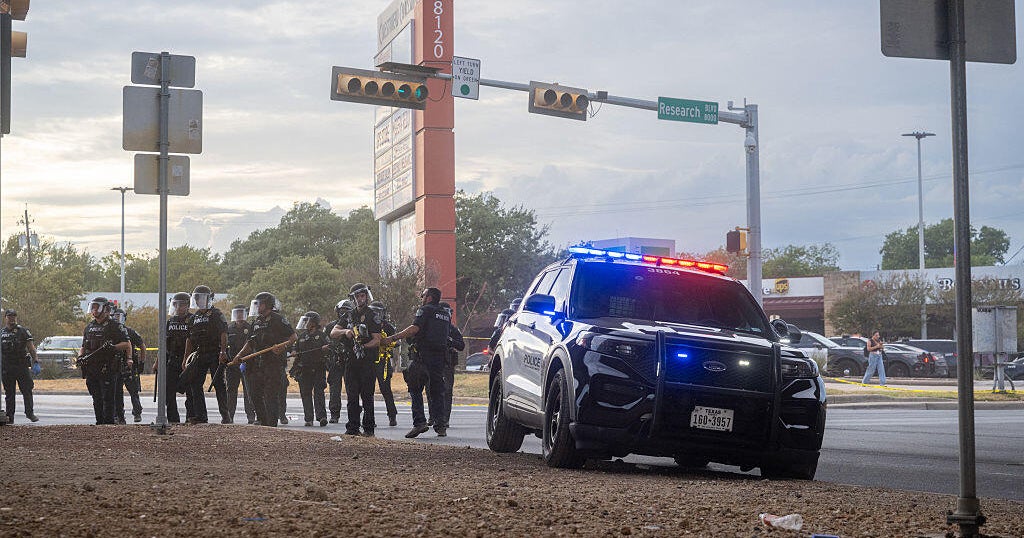
First, the incident has catalyzed local protests, with demonstrators gathering in Austin to demand accountability, greater oversight of federal agents, and an end to aggressive enforcement tactics in civilian spaces. The visible retreat of law enforcement during certain demonstrations underscores the volatile climate surrounding immigration enforcement in urban centers.
Second, the lack of body camera footage intensifies pressure on the Department of Homeland Security to accelerate the full implementation of recording devices across all operational divisions. As public scrutiny mounts, civil rights organizations and lawmakers from both sides of the aisle are likely to demand stricter oversight, clearer operational guidelines for federal agents operating in local communities, and independent investigations into use-of-force incidents involving immigration personnel.
As the legal proceedings advance toward the September 30 federal court hearing, the case of Wilber Rafael Garces Perez remains a focal point in the broader national debate over immigration enforcement, officer accountability, and the constitutional rights of individuals caught within the federal detention apparatus.