The landscape of American higher education is undergoing a period of profound turbulence, characterized by skyrocketing tuition costs, the erosion of the traditional entry-level labor market due to artificial intelligence, and a growing skepticism toward the necessity of a four-year degree. Into this fray steps Andreessen Horowitz (a16z), the powerhouse venture capital firm, which has officially announced the launch of a new, experimental educational initiative: the Academy. Backed by $42 million in funding from a16z and a consortium of individual investors, the Academy aims to provide a "future-forward" alternative for the next generation of elite talent, beginning with a pilot class of 50 students in San Francisco in September 2027.
The Genesis of an Alternative Institution
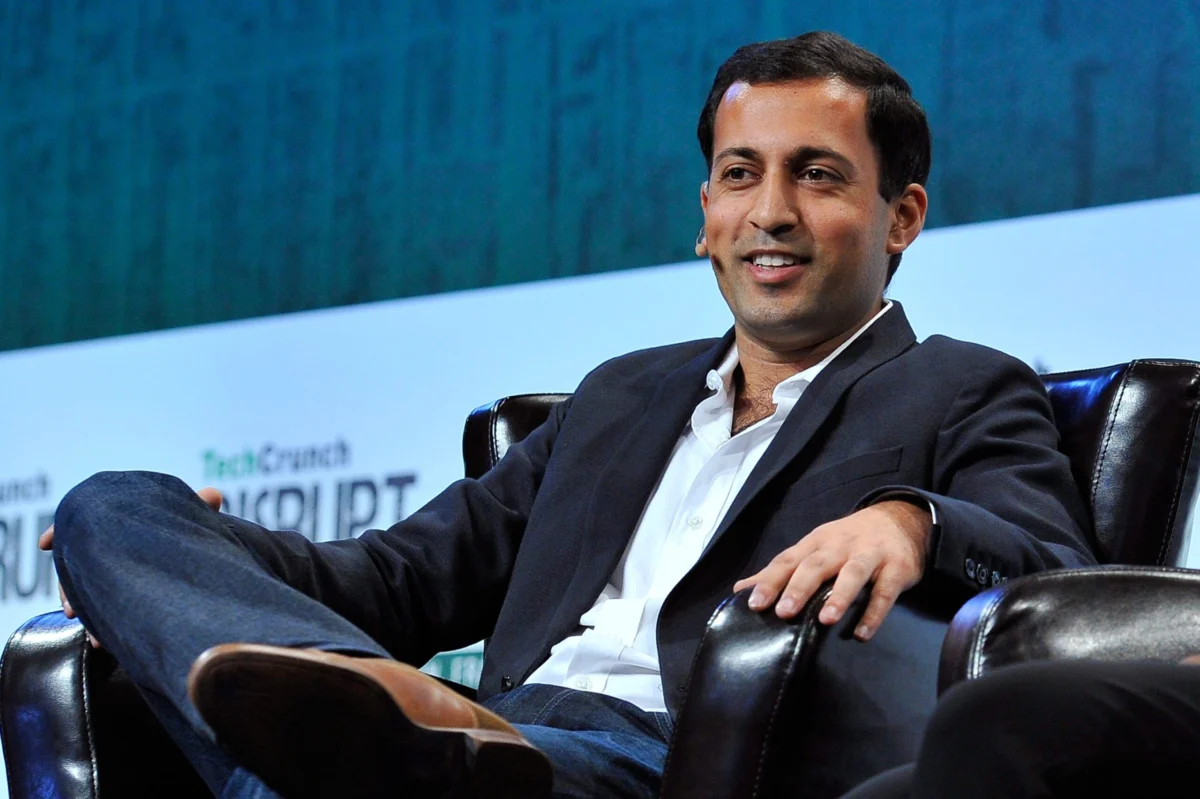
The Academy is the brainchild of Gagan Biyani, a co-founder of the $3.2 billion ed-tech unicorn Udemy. Biyani, who now serves as the head of this new for-profit entity, posits that the $2 trillion higher education sector is ripe for disruption. Unlike traditional universities, the Academy will not seek accreditation, will not issue degrees, and will explicitly decline participation in federal student aid programs. Instead, it offers an intensive, one-year immersive program designed to bridge the gap between high school graduation and professional entry into the tech industry.
For its inaugural cohort, the Academy has opted for a bold incentive structure: tuition is entirely free. Furthermore, the program provides each student with $50,000 in compute credits and a $5,000 travel budget, effectively removing the immediate financial barriers that typically deter young, ambitious innovators. The curriculum is focused on "pre-idea founders"—young individuals who demonstrate exceptional technical proficiency or entrepreneurial drive but may lack the institutional support to scale their ambitions.
A Curriculum Defined by Industry Titans
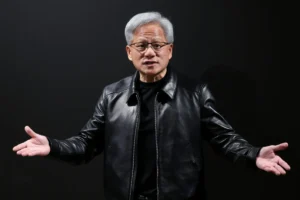
The pedagogy of the Academy eschews traditional academic lecture formats in favor of direct engagement with the architects of the modern tech ecosystem. The institution’s promotional materials highlight a rotating roster of guest speakers that reads like a list of Silicon Valley royalty: Sam Altman of OpenAI, Jensen Huang of Nvidia, Satya Nadella of Microsoft, and legendary venture capitalist and firm co-founder Marc Andreessen himself.
However, the program distinguishes between "guest speakers" and "faculty." The latter group consists of seasoned industry veterans who have committed to multi-session courses. Confirmed faculty include Instacart co-founder Max Mullen and former Windows president Steven Sinofsky. The coursework is intentionally pragmatic, covering topics ranging from "AI Inference Engineering" to "The Craft of Selling" and "Origins and Innovations in Digital Computing 1940–2025."
Biyani emphasizes that the primary objective of the Academy is not academic instruction in the classical sense, but rather the provision of agency. The program is structured into three distinct phases: an eight-month residency in San Francisco, one month of international travel, and a three-month professional co-op at a partner firm.
The Network Effect: Institutional Partnerships
A critical component of the Academy’s value proposition is its network of corporate partners. Ten founding partners—including tech giants such as Google, Meta, Nvidia, OpenAI, Anthropic, Palantir, Coinbase, Stripe, Anduril, and Replit—have agreed to participate. While these companies are not formally obligated to hire every student, they have pledged to engage with the cohort, providing either technical infrastructure, mentorship, or interview opportunities.
Beyond the ten founding partners, an additional 50 companies have agreed to consider Academy students for potential placement. This model relies heavily on the existing influence of Andreessen Horowitz, leveraging its extensive portfolio and ecosystem to create a closed-loop system of recruitment and talent development. For the students, this provides a direct pipeline into high-growth environments that typically require years of experience or a prestigious Ivy League degree to access.
Market Context and Historical Precedent
The launch of the Academy arrives at a time when the return on investment for a bachelor’s degree is under intense scrutiny. According to data from the National Center for Education Statistics, the average cost of tuition, fees, room, and board for a first-time, full-time undergraduate student at a four-year institution has consistently trended upward, often exceeding $50,000 to $70,000 annually at private, non-profit institutions. Simultaneously, the rise of generative AI has disrupted entry-level roles in software engineering, copywriting, and data analysis—the very roles that were once the reliable destination for new graduates.
Economist Bryan Caplan, a professor at George Mason University and author of The Case Against Education, has long argued that the primary value of a college degree is "signaling"—a way to prove to employers that a candidate possesses traits like conscientiousness and intelligence. From this perspective, the Academy is essentially creating a new, high-prestige signal. By selecting only 50 students, the Academy ensures that its credential remains scarce and highly sought after, effectively mitigating the risk that employers would otherwise associate with an unaccredited program.
Expert Skepticism and Future Hurdles
Despite the enthusiasm surrounding the announcement, the Academy faces significant structural challenges. Ryan Craig, a managing director at Achieve Partners, notes that the transition from a specialized bootcamp to a sustainable university model is notoriously difficult. "It’s a bootcamp with a plan to be a college, but I’d say not a realistic plan to be a college," Craig noted.
The primary obstacle is economic: public universities benefit from massive government subsidies that keep tuition lower than the true cost of education. For-profit institutions that rely entirely on private funding or student tuition often struggle to match the resources, research facilities, and cultural permanence of established universities like MIT or Stanford. Biyani has acknowledged that the program intends to seek regulatory approval for a two-year format by 2028, with projected tuition fees ranging between $60,000 and $90,000 per year. Whether the market will support such a price tag for an unaccredited program remains an open question.
Furthermore, the "co-op" model faces a scalability issue. For students to fund their own tuition through these placements, corporate partners would need to offer compensation packages nearing six figures—a significant financial commitment for firms that currently view these students as interns or apprentices.
The Broader Implications for Higher Education
If the Academy succeeds, it may signal a fundamental shift in how the tech industry views human capital. Rather than waiting for the traditional four-year cycle to produce graduates who require additional "onboarding" or training, firms may increasingly prefer to "grow their own" through intensive, industry-aligned programs.
However, the Academy’s model is currently restricted to a tiny elite. Even if it scales to 500 or 1,000 students, it does not offer a solution for the millions of students navigating the broader higher education system. The project reflects a broader trend of "unbundling" education, where skills, networking, and credentials are decoupled from the traditional campus experience.
As the Academy prepares for its 2027 launch, it will be closely watched by policymakers, educators, and the venture capital community. Whether it becomes a viable blueprint for the future of professional development or remains a niche experiment for the ultra-ambitious depends on its ability to prove that its graduates are, in fact, more valuable to the labor market than their peers with traditional degrees. For now, the Academy stands as a definitive, high-stakes wager that the future of work requires a new kind of school—one that values output over credits and industry access over academic tradition.