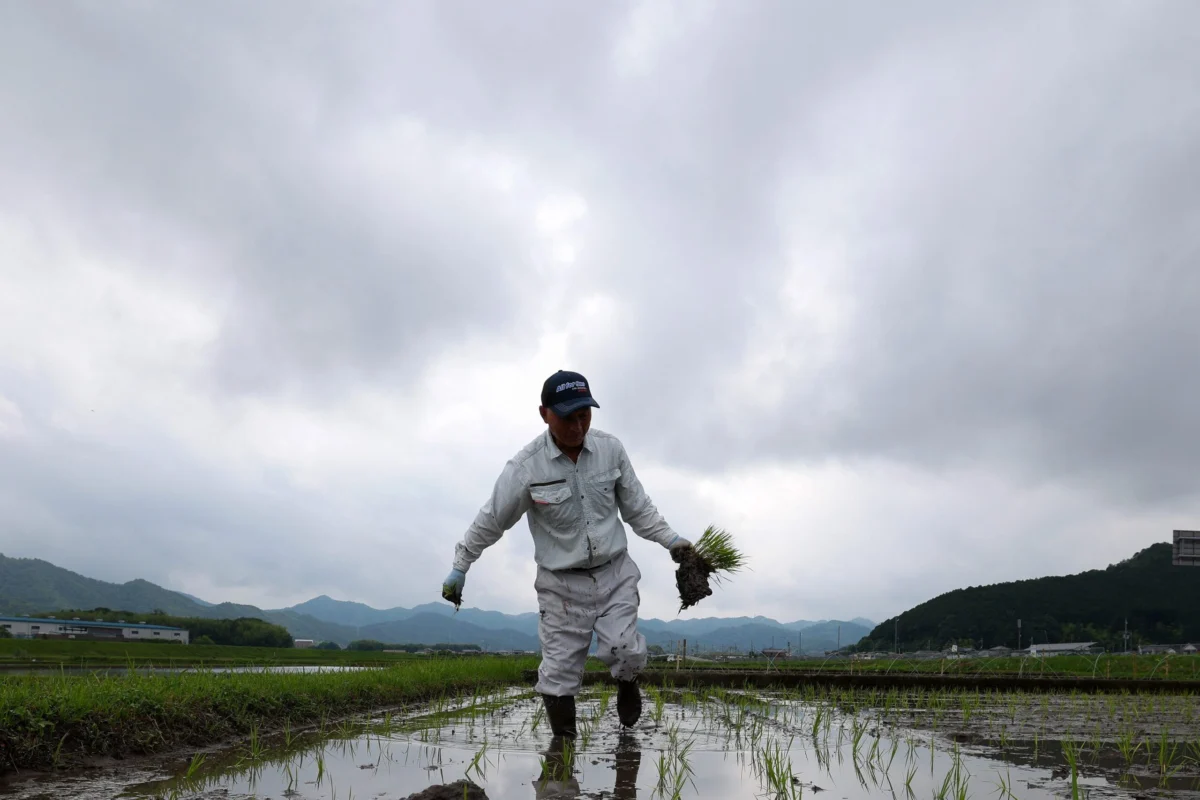
In 2023, extreme heat and drought severely damaged Japan’s rice crop, creating a national shortage so profound that it led to a cabinet-level resignation, only for the country to swing into a record-breaking surplus by 2026 that now threatens to collapse market prices. The volatility of Japan’s staple grain market has left agricultural economists and policymakers grappling with a fundamental question: how did a nation characterized by rigid, controlled agricultural systems experience such a violent oscillation between scarcity and oversupply in a mere 24-month window?
The answer lies in a confluence of climate-induced crop failures, a reactive and opaque distribution system, and the unintended consequences of government intervention.
A Chronology of the 2023–2026 Rice Volatility
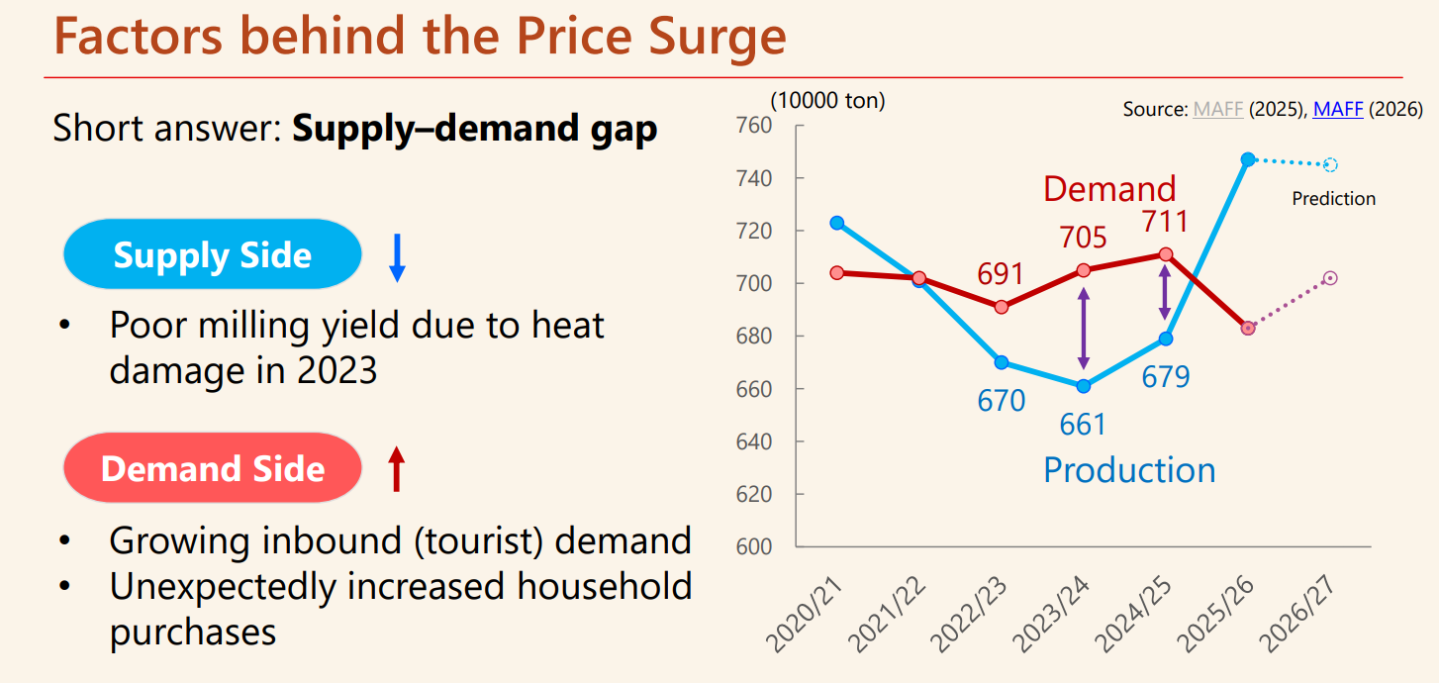
The instability began in the summer of 2023, when record-breaking temperatures and persistent drought conditions across Japan’s primary rice-growing regions hindered the grain-filling stage of development. The resulting heat stress did not just reduce total yield; it significantly degraded the quality of the harvest. A substantial portion of the crop failed to meet the criteria for "first-grade" rice, creating a supply crunch for high-quality domestic grains.
This environmental catastrophe was compounded by human behavior. The nation saw an unexpected surge in demand driven by a post-pandemic tourism boom, which increased domestic consumption, and a wave of panic buying sparked by government-issued earthquake warnings. As consumers hoarded supplies, private rice stocks plummeted from an annual average of approximately 2 million tons to a precarious 1.5 million tons.
By early 2024, the impact was visible at the register. The price of a standard five-kilogram bag of rice surged from roughly ¥2,000 ($13) to a staggering peak of ¥4,300 ($27) by 2025. In an unprecedented move, the government authorized the release of its emergency, disaster-preparedness rice reserves—the first time this mechanism had been utilized since its inception in 1995. The delay in this release, however, triggered significant public outcry, ultimately forcing a government minister to resign as the administration faced criticism for its slow response to the cost-of-living crisis.
The Overcorrection: How Incentives Drove a Glut
The subsequent surplus was not a result of favorable weather alone; it was a direct reaction to the price signals sent by the 2024 shortage. Farmers, seeing the potential for higher returns, aggressively expanded their cultivation efforts. By mid-2026, private stocks had rebounded to 2.43 million tons, far exceeding the typical storage levels.
This rapid expansion has created a new dilemma: a price collapse that threatens the viability of small-scale farmers. With prices sliding back toward the ¥3,300 ($21) mark, the Ministry of Agriculture, Forestry and Fisheries has been forced to intervene in the opposite direction. This month, the government announced it would purchase 210,000 tons of rice to pull excess supply from the market, effectively attempting to artificially stabilize prices to prevent a total collapse.
Ryosuke Inoue, a visiting fellow at the CSIS Japan Chair in Washington, D.C., notes that this level of volatility is fundamentally uncharacteristic of the Japanese market. "Every expert is actually surprised by this fluctuation," Inoue stated. "The supply-demand gap was there, but it is not such a huge gap. It could happen in the United States, but in the U.S., the price fluctuation is not so high. This reveals a structural issue in how Japan manages its food security."
Structural Opacity and the Distribution Challenge
The core of the issue, according to agricultural analysts, is the lack of transparency in the rice distribution pipeline. Unlike many global commodities markets, the Japanese rice supply chain is famously opaque. "Many distributors are trying to maximize their profit, and even the government doesn’t know exactly how the rice was distributed from the farmers to the final consumers," Inoue explained.
This lack of visibility meant that when the 2023 shortage hit, regulators were effectively flying blind. They lacked the real-time data necessary to assess whether the scarcity was a result of genuine production failure or inventory hoarding by intermediaries. This information vacuum prevented a measured response, leading to a "panic-driven" market environment where both the government and the private sector were reacting to incomplete data.
The Geopolitical Dimension of Food Security
The rice shortage also served as a flashpoint in international trade, particularly regarding the U.S.-Japan economic relationship. Historically, Japan has maintained a highly protectionist stance regarding its domestic rice industry. However, during the height of the 2025 crisis, the scarcity made the traditional resistance to foreign imports politically untenable.
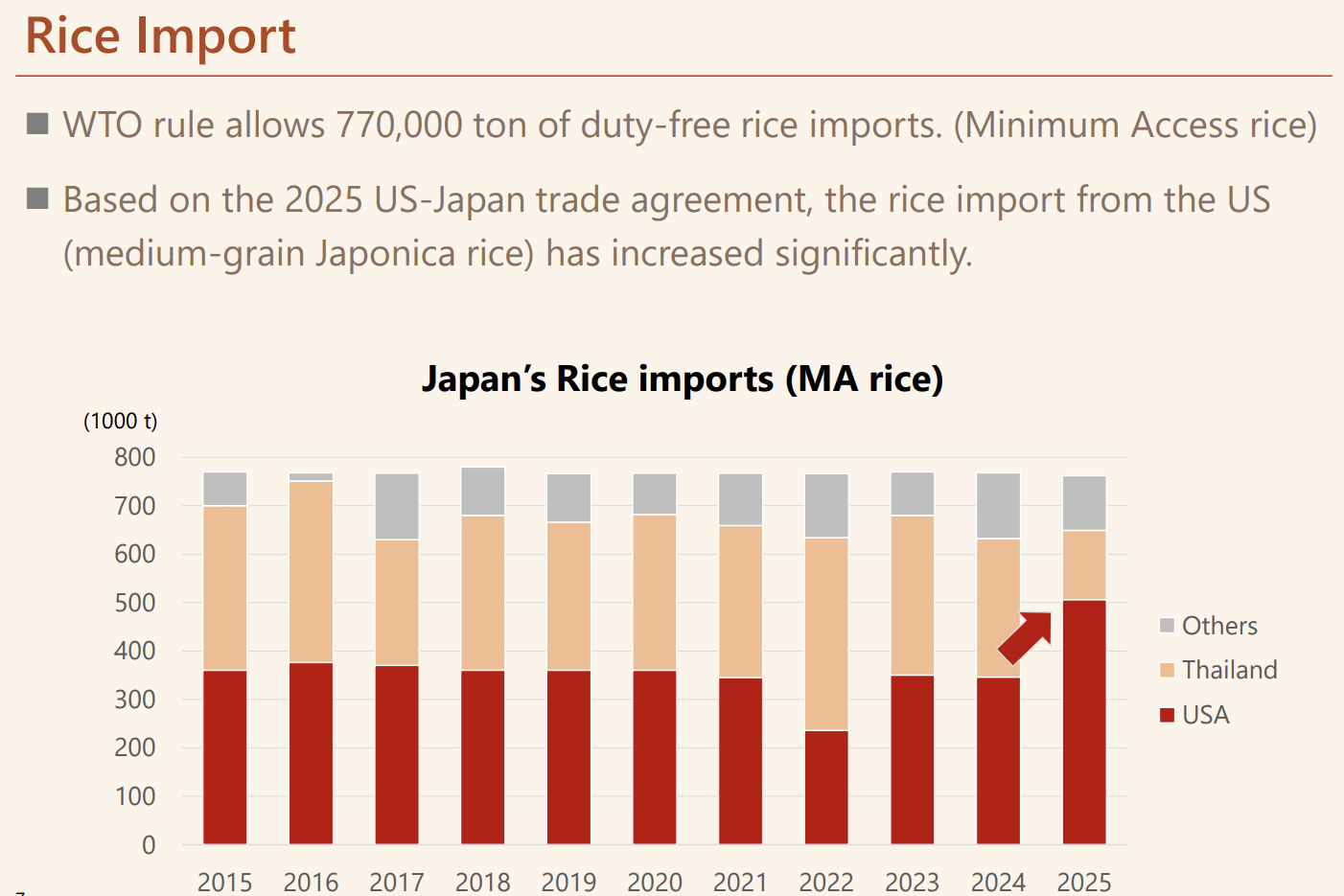
In June 2025, the U.S. government—then led by President Donald Trump—publicly criticized Japan’s trade barriers, noting that the country was suffering a massive deficit in domestic supply while refusing to accept more American grain. Following subsequent trade negotiations, Japan agreed to boost its U.S. rice imports by 75%.
This influx of foreign grain is now hitting the market just as domestic production has recovered, exacerbating the current surplus. While the deal was intended to alleviate a crisis, it has created a long-term supply headache, as Japan is now contractually obligated to import a volume of grain that the domestic market currently struggles to absorb.
The Demographic and Geographical Hurdle
Beyond the immediate market mechanics, Japan faces a systemic demographic challenge that complicates its agricultural future. The average age of a Japanese rice farmer is now 67.7 years, with less than 1.2% of the workforce under the age of 30.
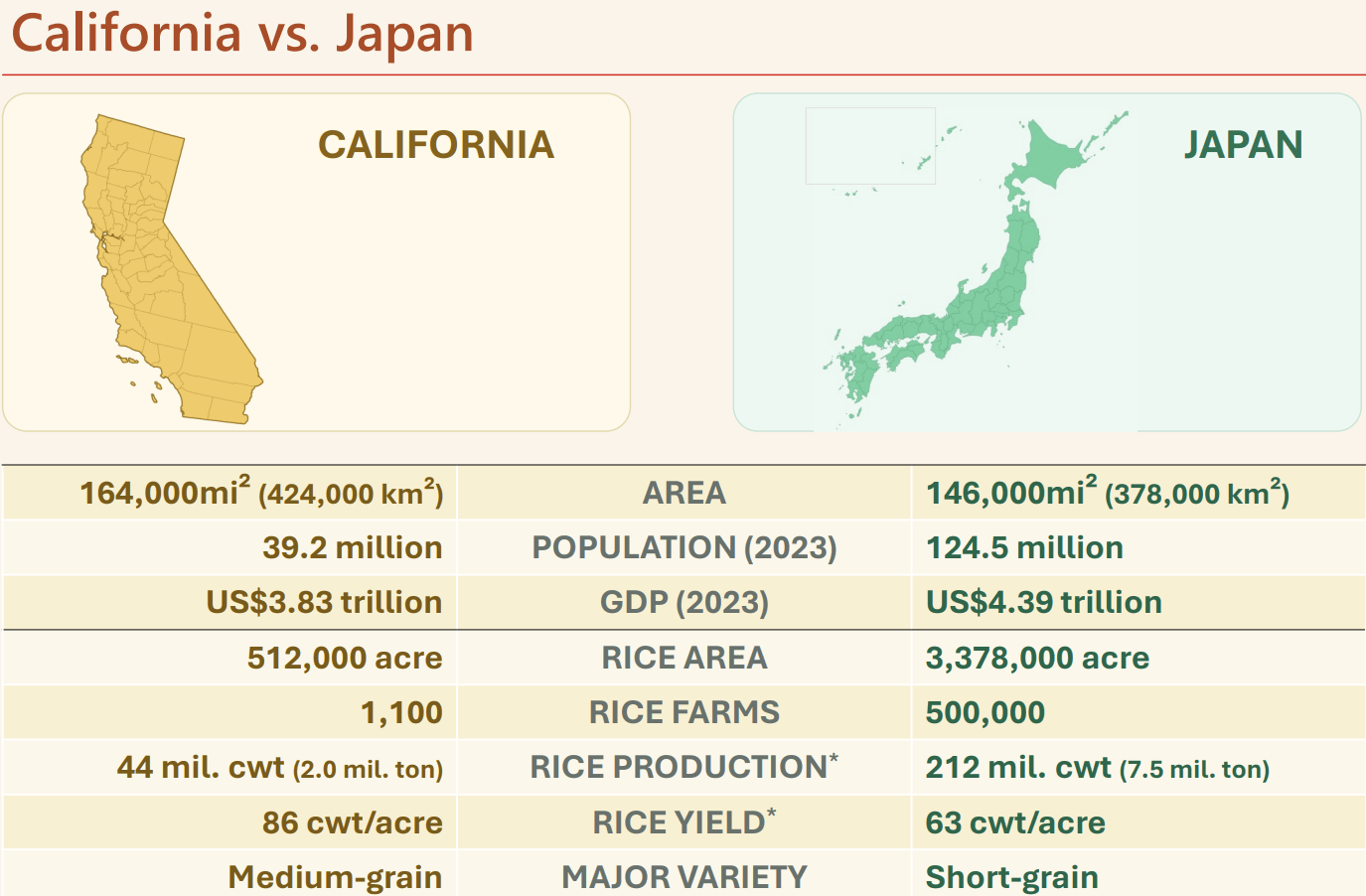
The scale of farming in Japan also presents a logistical nightmare compared to Western counterparts. While the United States manages its rice production through massive, industrial-scale farms—such as those in California, where roughly 1,100 farms cover over 500,000 acres—Japan relies on approximately 500,000 small, fragmented plots spread across 3.4 million acres. Much of this land is located in difficult-to-reach, mountainous terrain. When an elderly farmer retires, the land is often abandoned because it is not economically viable for large-scale consolidation. Once this land is left fallow, it is notoriously difficult to reclaim for agriculture, permanently reducing the nation’s total arable capacity.
Future Outlook and Policy Proposals
Inoue and other experts suggest that the current "boom-and-bust" cycle is unsustainable. He proposes a transition toward a "Price Loss Coverage" model, similar to systems utilized in the United States. Under this framework, the government would provide subsidies only when market prices drop below the cost of production—estimated at approximately ¥2,800 ($18) per five kilograms.
"I think now is the time," Inoue argued, suggesting that a safety net would allow the market to function more freely, removing the need for production caps that have historically distorted the sector. By providing a floor for farmers, the government could encourage a more stable, market-responsive output rather than the reactive, desperate planting surges seen over the last two years.
However, the shadow of climate change looms over any potential policy reform. Temperatures in Japan have trended consistently above historical averages from 2023 to 2026, and meteorologists warn that current drought patterns in western Japan mirror the worst conditions of the last three decades. While the adoption of heat-tolerant rice varieties is growing, they currently account for less than 20% of total plantings.
As Japan moves toward 2027, the challenge for the agricultural ministry is two-fold: it must successfully manage the current surplus to prevent a catastrophic price crash for its aging farmer population, while simultaneously building a resilient, transparent system capable of weathering the next inevitable climate-driven shock. The experience of the last two years has served as a stark reminder that in an era of climate volatility, the most dangerous thing a nation can have is a rigid, opaque food system. Whether Japan can modernize its agricultural infrastructure in time to prevent a repeat of the 2024 chaos remains the defining question for the country’s food security.