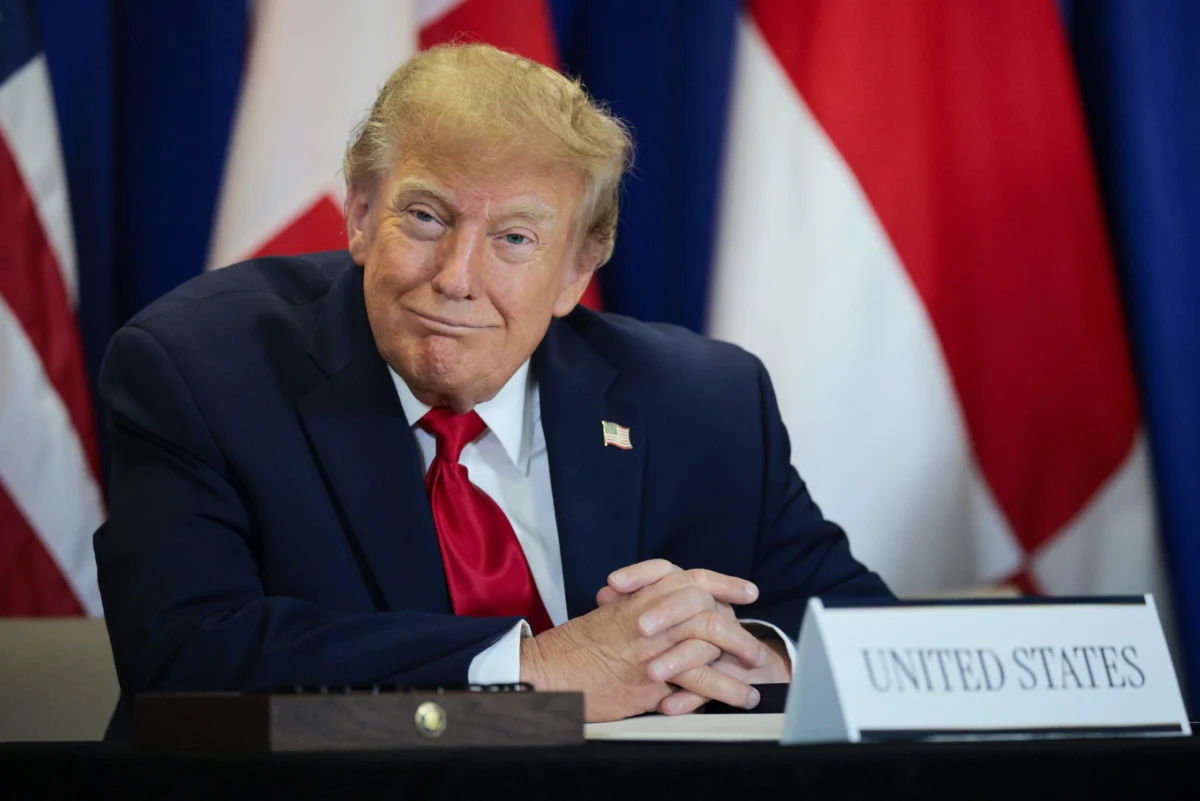
The intersection of executive communication and private profit has reached a flashpoint as a coalition of 53 former federal prosecutors and law enforcement officials has filed an amicus brief in the Southern District of New York. This legal intervention marks a significant escalation in the ongoing controversy surrounding the Truth API, a data-licensing product from Trump Media & Technology Group (TMTG) that offers institutional clients early access to posts from Donald Trump and other prominent accounts for a monthly fee of $100,000.
The signatories, whose combined service to the federal government spans over 880 years and touches upon 11 presidential administrations, are formally supporting a preliminary injunction request initiated by The Intercept and the Freedom of the Press Foundation. The core of their argument is that the commodification of presidential communication creates an unprecedented conflict of interest that may trigger a host of federal criminal statutes, including those governing insider trading, public corruption, and the misuse of official office for personal gain.
A Chronology of the Truth API Controversy
The controversy emerged in mid-2026 as TMTG sought to diversify its revenue streams beyond social media advertising. In July 2026, regulatory filings revealed that the company was preparing to launch the Truth API, pitched specifically to high-frequency trading firms and financial institutions. The selling point was clear: speed. By paying the monthly six-figure subscription fee, these firms could bypass the public feed, receiving "market-moving" information seconds or milliseconds before it reached the general public.
By early August 2026, reports indicated that approximately a dozen financial firms had already secured access to the service. The reaction from the legal and academic communities was immediate. Economists, including NYU Stern School of Business professor Gian Luca Clementi, characterized the arrangement as "insider trading by definition," arguing that the timing advantage provided to subscribers allows them to exploit the volatility inherent in a president’s social media feed for private profit.
On September 14, 2026, the coalition of 53 former officials filed their amicus brief. This move was preceded by a separate legal action brought by the City of San Francisco, which accused TMTG of violating California’s unfair competition laws and federal securities regulations. The cumulative effect of these filings has placed the parent company of Truth Social at the center of a mounting legal storm, one that threatens to define the boundaries of executive ethics in the digital age.
The Legal Arguments Against Monetized Access
The central premise of the amicus brief is that the "Truth API" scheme violates the spirit and letter of the Securities Exchange Act. The former prosecutors argue that because Donald Trump serves as both the President of the United States and a primary beneficiary of TMTG, his official communications are effectively being converted into proprietary financial data.
"There is no legitimate, let alone significant, government interest in allowing public officials to profit personally by selling early access to official government announcements," the brief states. The authors contend that the arrangement creates an environment where investors are incentivized to pay for, and act upon, information that is fundamentally public in nature. This, they argue, constitutes "unlawful insider tips."
Renata O’Donnell, senior legal counsel at the Campaign Legal Center, which collaborated with the firm Singleton Schreiber on the filing, notes that the implications extend beyond the company itself. "There is potential criminal liability for folks who have paid the $100,000," O’Donnell explained. "We are in an environment where we all want to be looking to the founders, right? They came over because they were in a situation where they saw that a government all in the hands of one person was not a success—and they tried to insulate the president constitutionally."
The brief further outlines several potential areas of legal exposure, including:
- The Securities Exchange Act: The potential for market manipulation through the sale of non-public, material information.
- The Trade Secrets Act: Questions regarding whether government-generated information can be legally classified as a "trade secret" for the benefit of a private entity.
- Public Corruption and Gratuity Statutes: The argument that the payment of high fees to a company owned by the President constitutes an illegal gratuity or illicit compensation for federal employment.
Broader Context: The TMTG Business Ecosystem
The Truth API is merely one component of a broader, aggressive expansion strategy by TMTG. Since its inception, the company has sought to move beyond simple social media, pivoting toward a conglomerate model that mirrors the diversified interests of its namesake.
Current business operations under the TMTG umbrella include:
- Truth+: A proprietary streaming service focused on content delivery.
- Truth.Fi: A financial services brand that includes investment products and a digital-asset strategy. SEC filings have confirmed that this arm is exploring a bitcoin treasury, signaling a deeper commitment to the cryptocurrency space.
- Exchange-Traded Funds (ETFs): TMTG has recently launched a suite of ETFs linked to sector-specific themes, including American defense and energy security, which some analysts suggest may also be sensitive to the policy signals emitted on the Truth Social platform.
This diversification is mirrored in the Trump family’s personal business ventures, most notably World Liberty Financial. According to 2025 financial disclosures, the former president reported over $1.4 billion in income from crypto-related ventures, including nearly $800 million from World Liberty Financial and $635 million from the sale of "memecoins." These figures highlight the massive financial scale of the Trump brand’s current operations and raise questions regarding the extent to which official policy positions might inadvertently or intentionally influence the valuation of these varied assets.
Analysis of Implications
The challenge to the Truth API is a stress test for the American legal system’s ability to keep pace with rapid technological shifts in political communication. Traditionally, the "public square" was governed by equal access—news organizations and the public received presidential announcements simultaneously. By moving to a model of tiered access, TMTG has fundamentally altered the information landscape.
From a regulatory perspective, the core issue is the definition of "material, non-public information." Historically, the SEC has regulated how corporations disclose information to prevent market distortions. Applying these standards to a sitting president, however, introduces constitutional complexities regarding the separation of powers and the extent to which the executive branch can be held liable under commercial regulations.
Furthermore, the involvement of the City of San Francisco suggests that state-level attorneys general may increasingly rely on "unfair competition" laws to challenge federal actions that they believe undermine local market integrity. If the court grants the requested preliminary injunction, it would set a significant precedent that private, for-profit platforms cannot be used as an exclusive, paid conduit for government communications.
As of this writing, TMTG has not provided a formal, detailed response to the specific allegations contained in the amicus brief. The company has historically maintained that its business practices are lawful and that it operates as a private entity entitled to monetize its technological infrastructure.
Conclusion
The outcome of the litigation in the Southern District of New York will likely have lasting impacts on how future administrations communicate with the public. Should the court find that the Truth API constitutes a violation of federal law, it would effectively mandate a return to "open-access" protocols for government messaging. If, however, the court allows the service to continue, it would signal a major shift in the political economy of the United States, where the boundary between public office and private commercial enterprise becomes increasingly blurred.
For now, the 53 former officials have succeeded in bringing a heightened level of scrutiny to a model that many in the legal community view as a direct affront to the principle of democratic transparency. Whether the judiciary agrees that this model crosses the threshold into criminal behavior remains the defining question of this legal challenge. As the case proceeds, the focus will remain on the delicate balance between the rights of a private company to innovate and the public’s right to equal access to the words of its elected leader.