Between 2.5 and 2 billion years ago, Earth underwent the most profound chemical metamorphosis in its geological history. As atmospheric oxygen levels surged for the first time, the planet’s surface environment shifted from a reducing, anaerobic state to one capable of supporting aerobic life. This Great Oxidation Event (GOE) is widely credited as the prerequisite for the eventual emergence of complex, multicellular organisms roughly 500 million years ago. However, a new study led by researchers at the California Institute of Technology (Caltech) suggests that one of the primary pillars of evidence used to define this era—the Shunga-Francevillian carbon-isotope anomaly—may have been a localized phenomenon rather than a planet-wide environmental shift.
The Shunga-Francevillian Event and the Global Carbon Cycle
For decades, geologists have pointed to the Shunga-Francevillian event as a hallmark of Earth’s early instability. This event is characterized by a specific and unusual carbon-isotope signature preserved in sedimentary rocks from the Paleoproterozoic era. Isotopes are variants of elements that possess the same number of protons but different numbers of neutrons; because biological organisms preferentially uptake lighter isotopes, the ratio of heavy to light carbon in rock records serves as a proxy for the intensity of biological activity and carbon burial at the time of deposition.
The traditional interpretation of this isotopic signal held that a massive, global-scale burial of organic matter occurred across Earth’s oceans approximately 2 billion years ago. This burial was thought to have trapped vast quantities of carbon within the crust, causing a global imbalance in the carbon cycle. This theory served as a cornerstone for models attempting to map the rise of oxygen, providing a convenient "smoking gun" for how the atmosphere reached the tipping point necessary to support life.
Re-examining the Zaonega Formation
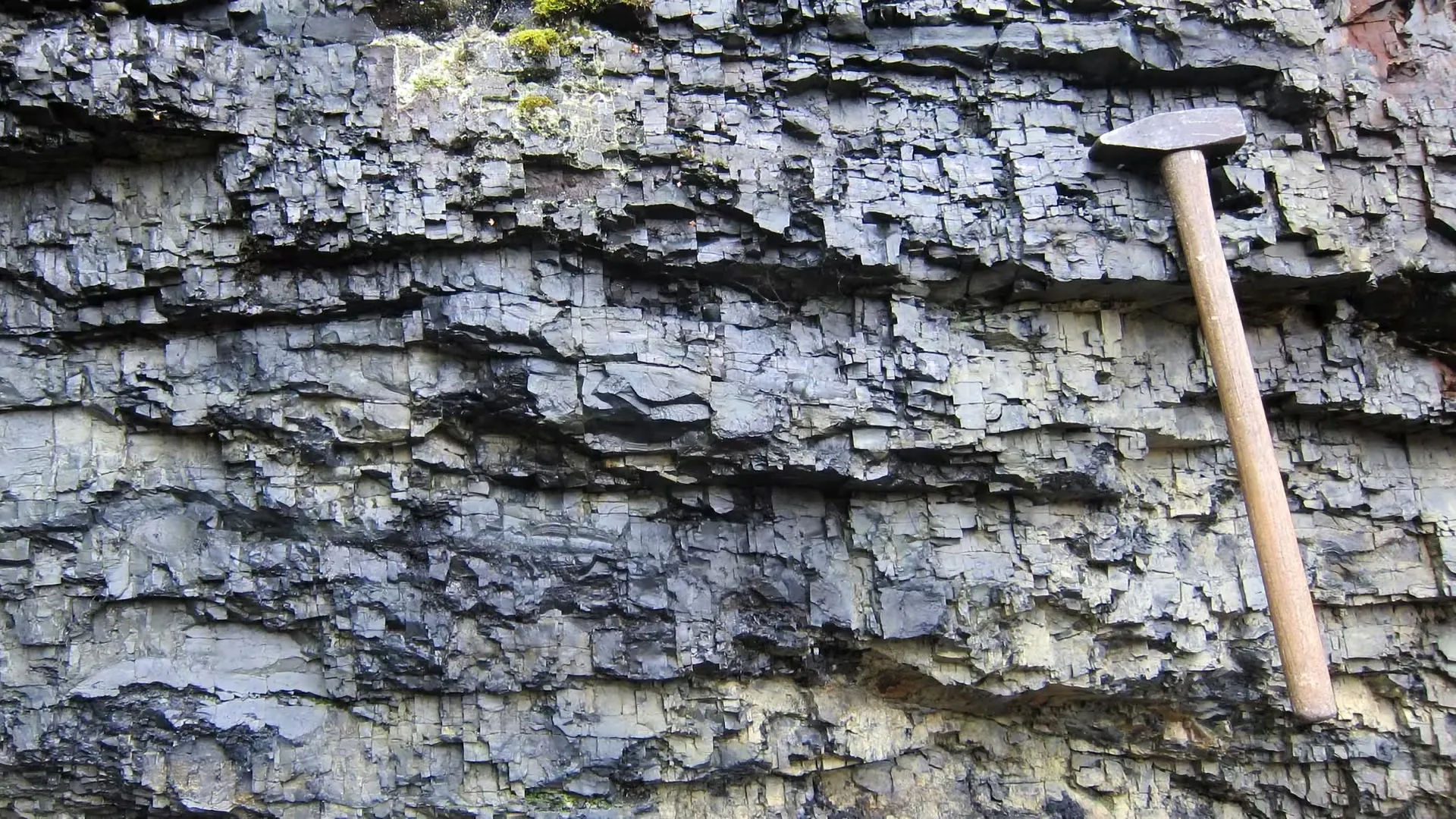
The core of the recent challenge to this theory lies in the Zaonega Formation in Karelia, Russia—a site renowned as one of the oldest fossil oil fields on the planet. Researchers have long treated the Zaonega drill cores as the definitive reference point for the Shunga-Francevillian event. However, a team of geologists led by Nivedita Thiagarajan, a senior researcher at Caltech, decided to look closer—literally.
By analyzing gases trapped within microscopic fluid inclusions inside pyrobitumen—a solid, insoluble form of organic carbon created when crude oil is subjected to intense heat deep underground—the team uncovered a narrative that deviates sharply from the accepted global-event model. Utilizing advanced isotope analysis techniques, the researchers determined that the carbon-isotope anomalies in the Zaonega rocks were likely the result of localized thermal processes rather than a sweeping, worldwide environmental crisis.
Magma, Methane, and the Mechanics of a Localized Anomaly
The study, published in the journal Geology, proposes a "bottom-up" geological model. According to the team, approximately 2 billion years ago, a sheet of molten magma forced its way through marine sediments beneath an ancient ocean. As this magma intruded into the seafloor, it acted as a massive heating element.
The heat radiated from the magma intrusion warmed the surrounding sediments, which were already rich in organic material. This thermal stress triggered the generation of hydrocarbons, including methane and propane. These gases migrated upward through the sedimentary layers, eventually reaching the seafloor, where they were consumed by methane-oxidizing microbes. It is these specific microbial communities, feeding on the thermally-derived methane, that produced the unique isotopic signatures now preserved in the rock record.
The thermal gradient measured by the team confirms this hypothesis. The researchers identified temperatures reaching approximately 350 degrees Celsius in close proximity to the magma intrusion, with temperatures dropping to roughly 72 degrees Celsius at an ancient seafloor asphalt spill located about 300 meters above the intrusion site. This localized heating and subsequent biological response effectively mimic the geochemical signals associated with modern oil and gas basins, providing a compelling alternative explanation for the "global" signature previously observed.
Implications for Earth’s Early History
If the Shunga-Francevillian signal is indeed a localized phenomenon driven by magmatic intrusion, the scientific community faces a significant task: recalibrating our understanding of the Paleoproterozoic carbon cycle. If this signal is not a global marker of oxygen-driven carbon burial, then the existing models of how Earth transitioned to an oxygenated atmosphere must be revisited.
"Earth, in a way, went crazy during that time interval when oxygen appeared in the atmosphere," says Aivo Lepland of the Geological Survey of Norway (NGU), a co-author of the study. "What we are trying to assess are the causes and consequences of Earth oxygenation. This information is archived in the rocks, so, in order to study what happened, you have to study rocks."
The findings do not suggest that the oxygenation of Earth did not happen, nor that the carbon cycle remained static. Instead, they highlight a cautionary tale in planetary science: the danger of extrapolating data from a single, high-profile location to the entire planet. The researchers emphasize that while they cannot rule out other global factors, the Zaonega data shows that local geological and biological processes are fully capable of producing signals that look, to the untrained eye, like global environmental shifts.
Moving Forward: The GOE-DEEP Project
The next phase of this research is already underway and is expected to provide a definitive test of the Caltech team’s findings. The researchers are turning their attention to the Francevillian Basin in Gabon, the other primary site that shares the anomalous isotopic signature of the Russian site.
The investigation is supported by the GOE-DEEP project, an initiative co-funded by the International Continental Scientific Drilling Program (ICDP). In 2025, a multi-national team led by Aivo Lepland completed a massive drilling campaign in Gabon, recovering deep rock cores that have since been transported to the NGU laboratories.
Beginning later this year, an international coalition of scientists representing 18 different countries will begin a comprehensive analysis of these Gabonese samples. By applying the same analytical framework used on the Russian Zaonega cores, the team aims to determine if the isotopic anomalies in Gabon were also produced by local magmatic heating or if they represent a different process entirely.
A Paradigm Shift in Geochemistry
The collaboration between Caltech’s John Eiler—a leader in the study of isotope geochemistry—and the Geological Survey of Norway represents a new standard for interdisciplinary geological research. By bridging the gap between deep-crustal magmatic processes and surface-level microbial activity, the study provides a more nuanced view of Earth’s history.
This research underscores the evolving nature of geological interpretation. As analytical tools become more sensitive, the "records" left behind in ancient rocks are being decoded with greater precision. What was once viewed as a simple global pulse is now revealing a complex tapestry of localized events. For the scientific community, the conclusion is clear: the history of Earth’s oxygenation is not a single, uniform event, but a multifaceted transformation that requires a deeper understanding of the interplay between the planet’s interior heat and its surface life.
As the international team prepares to process the new data from the Gabonese cores, the broader scientific community remains attentive. If the results confirm the "local process" theory, it will necessitate a significant rewrite of the textbooks regarding the Paleoproterozoic era, shifting the focus from global catastrophe toward a more complex, nuanced, and locally-driven evolution of our planet’s environment.