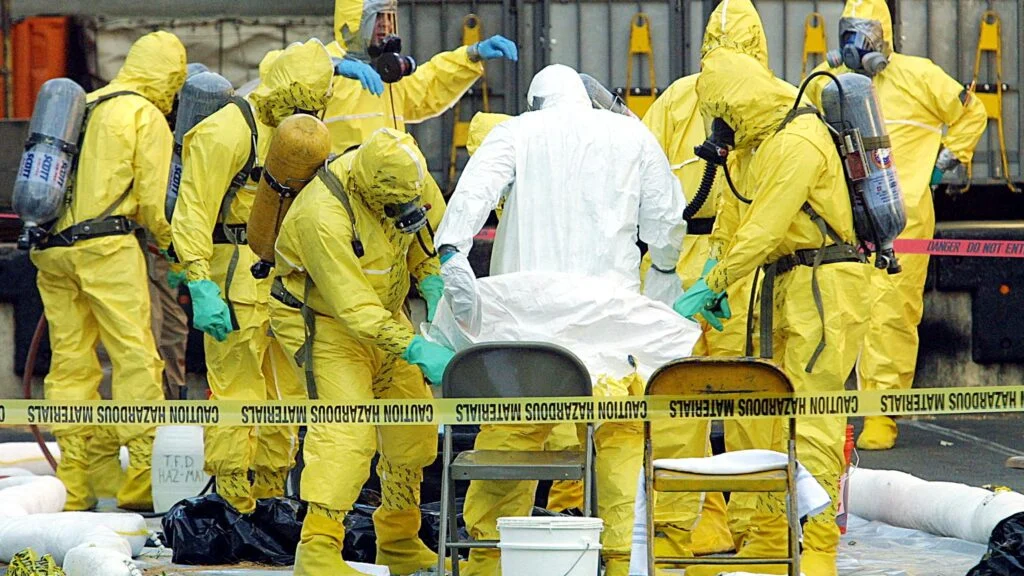
Twenty-five years ago, as the United States navigated the immediate, harrowing aftermath of the September 11 terrorist attacks, a second, invisible front emerged within the nation’s postal system. Between September and October 2001, a series of envelopes laden with weaponized Bacillus anthracis spores were dispatched to high-profile media outlets and congressional offices. The resulting public health crisis produced 22 confirmed cases of anthrax disease, claimed five lives, and triggered a massive, multi-billion-dollar mobilization of federal resources. As the nation marks the 25th anniversary of these events, the lessons learned from that period offer a critical framework for evaluating contemporary biodefense vulnerabilities in an era defined by artificial intelligence, geopolitical instability, and a fraying public health infrastructure.
A Chronology of the 2001 Bioterrorism Campaign
The onset of the attacks was marked by clinical uncertainty. The first confirmed case, an employee at American Media Inc. (AMI) in Florida, presented with symptoms that initially confounded local medical professionals. It was only through the vigilance of an astute clinician who performed a spinal tap that the presence of Bacillus anthracis was identified. This discovery, occurring mere weeks after the 9/11 attacks, instantly shifted the national security focus from conventional terrorism to the threat of biological warfare.
The timeline of dissemination followed a calculated, albeit evolving, pattern:
- September 18, 2001: The first wave of letters was mailed from Trenton, New Jersey. These envelopes contained a "clumped" or granular form of anthrax, which investigators later dubbed "crunchy" anthrax. The primary recipients included media organizations such as The Sun and NBC News.
- October 9, 2001: A second, more lethal wave of letters was dispatched. These contained a highly refined, "fine powder" formulation, designed to maximize aerosolization. These letters were directed toward the offices of U.S. Senators Tom Daschle and Patrick Leahy.
- October–November 2001: As the scope of the contamination widened, the infection moved beyond the intended targets. Postal workers, who had no direct link to the recipients, began falling ill. This revealed a critical flaw in initial assumptions: the belief that only the primary recipients of the letters were at risk.
Epidemiological Analysis and Technical Findings
The CDC’s response, led by its newly established Laboratory Response Network, utilized advanced molecular testing—a diagnostic modality that was considered cutting-edge at the time. By comparing isolates from patients, environmental samples, and the four recovered envelopes, researchers confirmed that all samples were indistinguishable, pointing to a singular source.
The investigation revealed that the formulation of the pathogen dictated the clinical outcome. The "crunchy" anthrax from the September 18 mailing was primarily linked to cutaneous (skin) infections among media personnel, as the particles were too heavy to remain suspended in the air for long. Conversely, the "fine powder" utilized in the October 9 mailing was highly aerosolizable, leading to the more lethal inhalational form of the disease. This differentiation suggested a crude, experimental approach by the perpetrator, using varying formulations to gauge different epidemiological impacts.
The public health response was unprecedented. An estimated 32,000 individuals were placed on antimicrobial prophylaxis, such as ciprofloxacin or doxycycline, to prevent infection. The fact that no further cases were identified among those who strictly adhered to the prophylactic regimen remains a testament to the efficacy of the massive intervention, even in the face of limited early data.
Challenges to Pre-Existing Models
The most sobering realization from 2001 was the failure of existing predictive models. Prior to the attacks, the scientific consensus held that the risk of re-aerosolization—where spores settled on surfaces are kicked back into the air—was minimal. This led to guidance that focused narrowly on immediate decontamination of the specific point of delivery.
The infection of postal workers proved this assumption dangerously flawed. Spores were migrating through high-speed automated mail-sorting machinery, contaminating entire facilities and putting workers who had never touched the envelopes at risk. This necessitated a wholesale revision of environmental sampling and decontamination protocols. The "white powder" incidents that followed in the months and years after the event forced a permanent change in how law enforcement and public health agencies interface during suspicious material incidents.
The Modern Threat Landscape: AI and Emerging Risks
Today, the biosecurity environment has been fundamentally transformed. The U.S. Postal Service now employs rigorous screening technology, and the volume of physical mail has declined significantly. Furthermore, the implementation of "select agent" regulations has tightened oversight of high-consequence pathogens.
However, these improvements are offset by the erosion of institutional capacity. The Center for Strategic and International Studies (CSIS) has recently warned that Americans face greater risks from biological threats than at any time this century. This shift is driven by three primary factors:
- Technological Acceleration: Artificial Intelligence is lowering the barrier to entry for the synthesis and development of biothreat agents. AI models can potentially facilitate the design of pathogens with increased virulence or environmental stability, effectively democratizing the ability to cause mass harm.
- Institutional Attrition: The Bipartisan Commission on Biodefense has noted that the infrastructure required to respond to these threats is increasingly fragile. The CDC, which served as the operational anchor in 2001, has seen its scientific staff levels fluctuate, with recent reports indicating a significant decline in personnel compared to 2024 levels. The loss of subject-matter experts and institutional knowledge during recent years has created a "readiness gap."
- Cross-Sector Disconnect: In 2001, the CDC operated with a high degree of autonomy and scientific focus. Current observers express concern that the politicization of public health and the degradation of independent, evidence-based decision-making could hamper a rapid, coordinated response to a future bioterrorism event.
Lessons for the Next Quarter-Century
As the nation reflects on the 25th anniversary of the anthrax attacks, three fundamental pillars of preparedness remain essential:
I. Rapid Interpretation of Signals: Detection is only the first step. The ability to interpret a signal—whether from a natural outbreak or an intentional release—and move toward immediate action is paramount. Without a culture that prioritizes evidence over political narrative, the time between detection and intervention will inevitably widen, to the detriment of public safety.
II. Embracing Scientific Uncertainty: The 2001 response succeeded because investigators were willing to discard outdated assumptions regarding re-aerosolization and infection pathways when faced with new evidence. Maintaining an internal culture that welcomes dissenting scientific dialogue and rapid course correction is vital. Any organization that penalizes internal debate loses the ability to recognize when its initial strategy is failing.
III. Sustained Institutional Capability: Technology—no matter how advanced—cannot replace the "human infrastructure" of experienced epidemiologists, established communication networks, and trusted institutional relationships. These are not assets that can be "switched on" during an emergency; they must be maintained and exercised during times of peace.
The recent string of outbreaks—including hantavirus, Ebola, and measles—serves as a reminder that the public health system is under constant strain. The specter of a deliberate, human-engineered biological threat is no longer a distant theoretical concern, but a persistent feature of the modern risk environment.
Twenty-five years after the first anthrax envelope was opened, the primary lesson remains: the initial signal of an outbreak is rarely the full story. The strength of a nation’s response will not be measured by its ability to identify a single threat, but by the resilience of the people and institutions charged with understanding and containing it. As the biothreat landscape evolves through the influence of AI and global volatility, the mandate for cross-sector coordination and rigorous, science-driven assessment has never been more urgent. The 2001 attacks were a turning point in public health history; whether they serve as a foundation for a robust defense or a warning of missed opportunities depends entirely on the actions taken in the coming years.