For the vast majority of the human population, the 24-hour day is an absolute constant, a foundational metric upon which civilization, commerce, and timekeeping are built. However, for geophysicists and chronometrists, the day is a fluid, dynamic measurement subject to the chaotic and complex behavior of the planet’s deep interior. While a standard day is defined as 86,400 seconds, Earth’s actual rotation is never perfectly uniform. Subtle, millisecond-scale variations occur regularly, driven by an intricate exchange of angular momentum occurring thousands of kilometers beneath our feet.
The Physics of Rotational Flux
To understand why the length of a day (LOD) fluctuates, one must look at the law of conservation of angular momentum. Earth functions as a closed system; therefore, if one component of the planet speeds up, another must compensate by slowing down to ensure the total angular momentum remains constant.
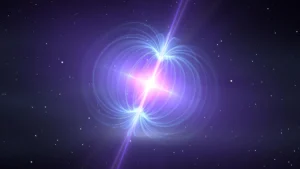
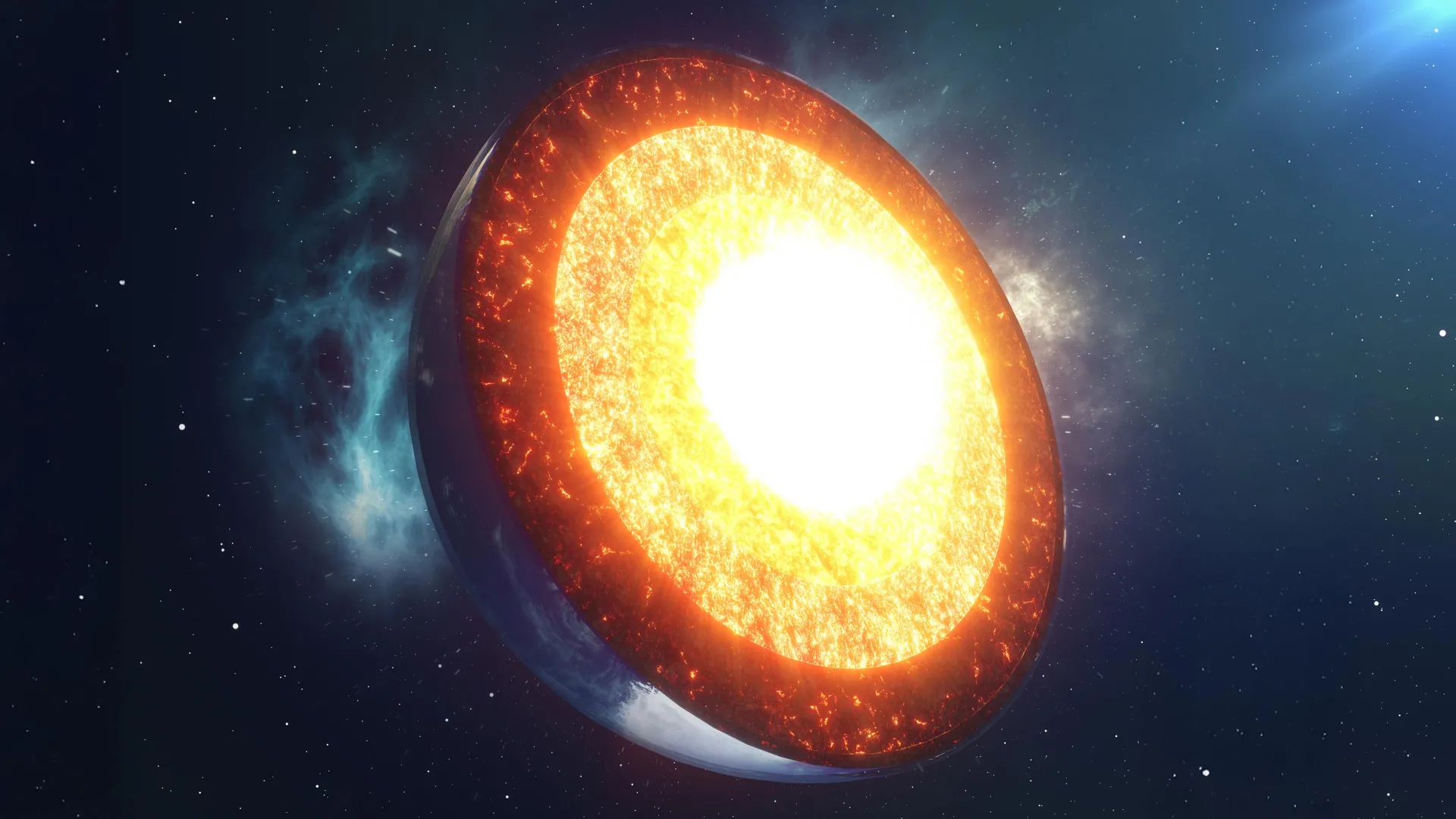
For roughly three decades, the scientific community has been aware that Earth’s liquid outer core does not rotate in perfect synchronicity with the solid mantle—the 3,000-kilometer-thick layer of silicate rock that extends from the base of the crust to the outer core. Through measurements of the Earth’s magnetic field, which is generated by the movement of molten iron in the outer core, researchers have observed that the core undergoes decadal oscillations. It will gradually accelerate over a period of 20 to 30 years, only to decelerate during the subsequent decades.
When the liquid outer core gains speed, the overlying mantle experiences a corresponding drag, causing it to slow down. Conversely, when the core loses momentum, the mantle accelerates. Because the mantle is the reference frame for our clocks, these infinitesimal changes in rotational velocity translate into the millisecond-scale variations in the length of a day that have perplexed scientists for generations.
Unlocking the Gravitational Torque Mystery
For years, the mechanism driving this "tug-of-war" between the core and the mantle remained a subject of intense academic debate. While electromagnetic coupling was long suspected to be the primary driver, it could not fully account for the observed magnitude of the fluctuations.
A significant breakthrough arrived on September 23, in a study published in the journal Nature by University of Alberta researchers Huifeng Zhang, a PhD student, and Dr. Mathieu Dumberry. Their research identifies a critical piece of the puzzle: gravitational torque.
The researchers propose that the solid inner core—a sphere of iron and nickel roughly the size of the Moon—is not perfectly spherical. Because it possesses an uneven distribution of mass, its rotation creates a gravitational interaction with the mantle. As the inner core’s speed changes, it exerts a "gravitational torque" on the mantle. This interaction effectively acts as a physical tether, influencing the mantle’s rotation and, by extension, the length of the day.
This discovery is transformative because it shifts the focus from purely electromagnetic interactions to gravitational mechanics. By modeling these interactions, Zhang and Dumberry have provided a robust theoretical framework that aligns with observed historical data on Earth’s rotation.
The Competing Forces of Earth’s Interior
The rotational stability of our planet is governed by a precarious balance of forces at the core-mantle boundary. Beyond the gravitational torque identified by the University of Alberta team, the system is also influenced by "core-mantle boundary torque." This encompasses the friction and electromagnetic drag that occur at the interface between the molten outer core and the solid mantle.
These forces act in opposition to one another. While gravitational torque may act to accelerate or decelerate the mantle, electromagnetic drag provides a resistive force. The variations in the length of a day that we observe at the surface are essentially the "net result" of these two competing physical processes. The interplay between them acts as a regulatory mechanism, preventing wild swings in Earth’s rotational speed that would otherwise have catastrophic implications for global climate patterns and atmospheric circulation.
A More Dynamic Deep Interior
One of the most surprising implications of the Zhang-Dumberry study is the insight it provides into the physical state of the inner core. To reconcile their models with the observed fluctuations in the length of the day, the researchers had to conclude that the inner core undergoes "viscous deformation" over decadal time scales.
Traditionally, the solid inner core was thought to be relatively rigid. However, the data suggests that it is far more dynamic, capable of changing shape and responding to gravitational stresses over a period of roughly 10 years. This implies that the planet’s deepest interior possesses a degree of plasticity previously underestimated by geophysicists. This discovery not only resolves a long-standing mystery regarding timekeeping but also opens new avenues for studying the thermodynamics and material properties of the Earth’s center.
Chronology of Rotational Observations
The study of Earth’s rotation has evolved significantly alongside advancements in instrumentation.
- 1950s: The advent of atomic clocks allowed scientists to measure time with unprecedented precision, finally confirming that the Earth’s rotation was not perfectly constant.
- 1970s–1980s: Satellite laser ranging and Very Long Baseline Interferometry (VLBI) provided the data necessary to map the decadal fluctuations in rotation with high accuracy.
- 2000s: Researchers began to correlate magnetic field shifts with rotational changes, solidifying the theory of core-mantle coupling.
- 2024: The publication of the Nature study by Zhang and Dumberry provides the definitive link between gravitational torque and these observed rotational variations, marking the culmination of decades of interdisciplinary research.
Broader Implications and Scientific Reaction
While the variations in the length of a day are measured in mere milliseconds, their implications are profound. Precise knowledge of Earth’s rotation is essential for the global positioning system (GPS), space navigation, and the synchronization of global financial and communication networks. Any error in calculating the "wobble" or the speed of the Earth can lead to significant discrepancies in satellite tracking.
The scientific community has largely welcomed these findings as a missing link in geophysics. Dr. Dumberry noted in supplementary discussions that this research demonstrates that the Earth is not merely a collection of static layers, but a highly coupled system where events in the deep interior have direct, measurable consequences at the surface.
Furthermore, this research invites a re-evaluation of how the Earth’s magnetic field is generated. If the inner core is indeed deforming viscously, it may influence the convective flows in the liquid outer core, which are responsible for the geodynamo. This could, in turn, provide clues about the long-term evolution of the magnetic field and how it might change over the coming millennia.
Future Research Directions
The work of Zhang and Dumberry sets a new standard for future geophysical modeling. Researchers are now looking toward high-resolution seismic imaging to confirm the extent of the inner core’s deformation. Additionally, as our ability to measure these fluctuations improves, scientists hope to use the length of the day as a "proxy" to monitor the health and activity of the Earth’s core, which remains one of the least accessible regions of our planet.
Ultimately, the revelation that our days are being tugged and pushed by the gravitational heartbeat of a deformable inner core serves as a humbling reminder. The stability of our daily lives, as measured by the clock, is a delicate byproduct of a violent, swirling, and deeply active planet that is constantly in flux. As we continue to refine our understanding of these deep-earth processes, we gain not only a better grasp of the time we keep but also a deeper appreciation for the complex machine that is Earth.