An ordinary commercial flight from the United Arab Emirates to Israel transformed into a scene of harrowing terror when a pilot allegedly attacked his colleague mid-flight, attempting to crash the aircraft and wipe out all 174 lives on board. The incident, which unfolded over Saudi airspace, has triggered international security reviews, diplomatic inquiries, and widespread alarm across the Middle East. While disaster was narrowly avoided through the extraordinary bravery of the wounded captain, off-duty relief pilots, and courageous passengers, the event has laid bare profound vulnerabilities in regional aviation security and reawakened historic fears of airborne terrorism.
The unfolding crisis on the Flydubai flight—subsequently identified as flight FZ 1073 en route to Ben Gurion International Airport near Tel Aviv—has prompted high-level investigations involving Israeli, Saudi, and Emirati authorities. As details continue to emerge from intelligence agencies and eyewitness accounts, the exact motives behind the violent cockpit intrusion remain a central focus of international scrutiny.
Chronology of a Mid-Air Crisis
The sequence of events on Wednesday morning began routinely, roughly two and a half hours after the aircraft departed from Dubai. Cruising at altitude over the Arabian Peninsula, the flight appeared entirely normal to the passengers in the cabin. However, deep inside the flight deck, a catastrophic altercation erupted.
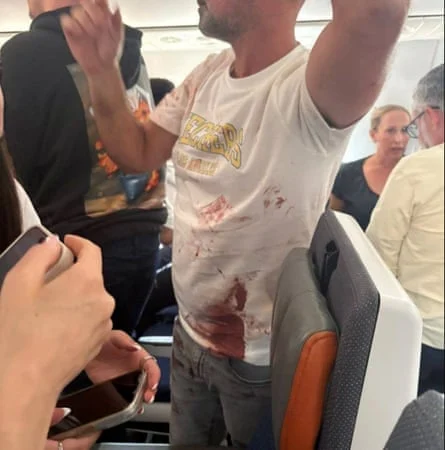
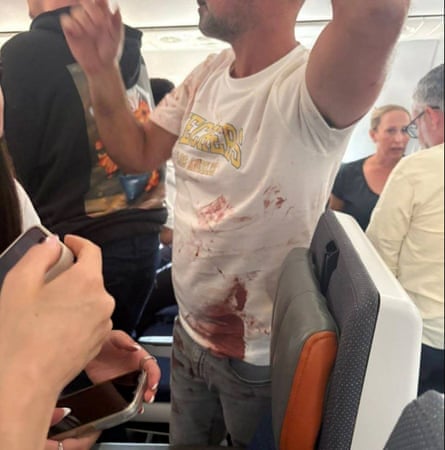
According to preliminary official findings and passenger testimonies, one of the pilots—subsequently identified by anonymous officials as an Omani national—produced a knife and launched a sudden, violent assault on his co-pilot, Indian national Captain Smit Machchhar. The attacker reportedly tried to barricade himself inside the cockpit alongside the bleeding and severely injured officer, systematically attempting to disable critical flight instruments and throw the plane into a terminal dive.

As the controls were manipulated downward, the aircraft experienced an alarming, near-vertical descent, plummeting 17,000 feet in a span of just two minutes. The sudden drop generated intense gravitational pressure and widespread panic in the cabin. Passengers reported hearing blood-curdling screams from the front of the cabin as the plane shuddered and lost altitude precipitously.
Amid the chaos, the flight crew activated emergency squawk codes. Initially, the cockpit transmitted squawk code 7700, indicating a general emergency, which was quickly followed by code 7500, the universal indicator for an unlawful interference or potential hijacking attempt.
Realizing the existential threat, the wounded Captain Machchhar managed to display remarkable resilience. Despite sustaining serious stab wounds, he fought off the assailant long enough to unlatch the cockpit door, leaving it ajar. This crucial action enabled passengers, flight attendants, and off-duty relief pilots traveling in the cabin to storm the flight deck.
Among those who rushed to intervene were an off-duty British pilot and European relief crew members meant for subsequent rotations, alongside vigilant passengers and Israeli security personnel. Yaniv Hayoun, a passenger who helped subdue the attacker, recounted putting the assailant in a chokehold and dragging him away from the instrument panel as the man tried to smash the flight controls. With the attacker restrained, the relief pilots seized the yoke, pulled the nose of the aircraft back up, stabilized its altitude, and successfully navigated toward a diverted emergency landing.
Emergency Landing and Regional Response
With the immediate threat neutralized, the flight diverted sharply from its intended path, making an emergency landing at Prince Sultan bin Abdulaziz International Airport—commonly known as Tabuk Airport—in north-western Saudi Arabia.

Emergency responders met the aircraft on the tarmac. Saudi authorities immediately took the suspected attacker into custody for questioning, while medical personnel rushed the wounded pilots and traumatized passengers off the plane. Captain Machchhar and his injured colleague received urgent medical treatment for their stab wounds before being transferred under medical supervision.
The diplomatic dimensions of the emergency landing were complex. Israel and Saudi Arabia do not maintain formal diplomatic relations, though regional aviation corridors have expanded significantly in recent years. The cooperation of Saudi air traffic control and airport security in accommodating the emergency landing and handling the subsequent investigation has been acknowledged by regional observers as a critical factor in preventing a higher death toll.
Passengers remained in Saudi Arabia temporarily before boarding a replacement flight provided by the airline, ultimately landing safely in Israel on Wednesday evening—roughly eight hours after the initial emergency declaration.
Official Statements and Security Assessments
Political leaders in Israel reacted swiftly to the news, framing the incident not merely as a workplace dispute or isolated assault, but as a deliberate act of cross-border terrorism targeting Israeli citizens.
Prime Minister Benjamin Netanyahu heaped praise on the crew and passengers whose swift actions averted a catastrophe. "Despite being stabbed and seriously injured, he fought back, resisted, opened the cockpit door, and enabled passengers and crew to overpower the attacker—preventing a catastrophic mid-air disaster," Netanyahu stated, crediting Captain Machchhar and the intervening passengers with saving 174 lives.

Israeli Defense Minister Israel Katz went a step further, categorizing the incident explicitly as an "attempted jihadist attack." Katz asserted, "The terrorist had a single objective: to crash the plane, killing everyone onboard," adding that the disaster was averted solely due to the "heroism of several passengers."
Security officials speaking on the condition of anonymity confirmed that the primary working hypothesis of Israeli defense and intelligence agencies is that the Omani pilot acted with extremist motivations, seeking to inflict mass casualties on an Israel-bound flight. Neither the government of Oman nor officials from the United Arab Emirates had issued formal public statements regarding the suspect’s background or the carrier’s vetting procedures at the time of reporting.
The domestic political fallout in Israel was immediate. Chief of General Staff Lt Gen Eyal Zamir postponed a crucial, high-level visit to the United States—where he was scheduled to meet with the US Joint Chiefs of Staff and the head of US Central Command—to manage the defense establishment’s response to the crisis.
Concurrently, a minor political debate sparked regarding intelligence forewarning. The incident occurred merely days after Prime Minister Netanyahu publicly warned of indications that adversaries might attempt attacks during Israel’s upcoming October elections. However, opposition figures, including former Prime Minister Yair Lapid, questioned any direct link to Netanyahu’s warning, noting that recent military security briefings had contained no specific intelligence pointing to a commercial aviation plot.
Broader Implications for Aviation Security
The incident has sent shockwaves through international civil aviation circles, raising urgent questions about pilot mental health evaluations, background vetting, and cockpit security protocols.
Commercial aviation has operated under heightened cockpit security rules since the September 11, 2001, terrorist attacks in the United States, which saw the widespread adoption of reinforced, bullet-resistant cockpit doors designed to keep unauthorized personnel out. However, the flydubai incident underscores a terrifying paradox: when the threat originates from inside the flight deck, reinforced doors can become barriers that trap victims and prevent timely outside intervention.
Security analysts point out that while flight deck crew undergo rigorous psychological evaluations, background checks, and recurrent simulator training, identifying a rogue pilot determined to bypass security remains one of the aviation industry’s most intractable challenges. The involvement of pilots in intentional downings is exceedingly rare, though historical precedents—such as the 2014 disappearance of Malaysia Airlines Flight 370 or the 2015 Germanwings Flight 9525 crash—have periodically forced aviation regulators to re-evaluate psychological screening standards.
Furthermore, the geopolitical context of the flight adds layers of complexity. Flights connecting Dubai and Tel Aviv were established following the historic signing of the Abraham Accords in 2020, opening vital economic and tourism bridges between the UAE and Israel. Security on these specific routes has traditionally been managed with exceptional stringency, incorporating specialized pre-boarding checks and intelligence sharing. The successful infiltration of a hostile actor into the cockpit of an Israel-bound aircraft will likely trigger a comprehensive overhaul of security clearances for flight crews operating throughout the Gulf region.
As Saudi authorities continue their formal investigation into the suspect and the weapon’s origin, and as Israeli ministries coordinate joint defense reviews, the survivors of flight FZ 1073 begin the long process of psychological recovery. What began as a routine three-hour journey across the Middle East has instead left an indelible mark on modern aviation history, reminding the global community of the fragile margins separating routine travel from catastrophic tragedy.